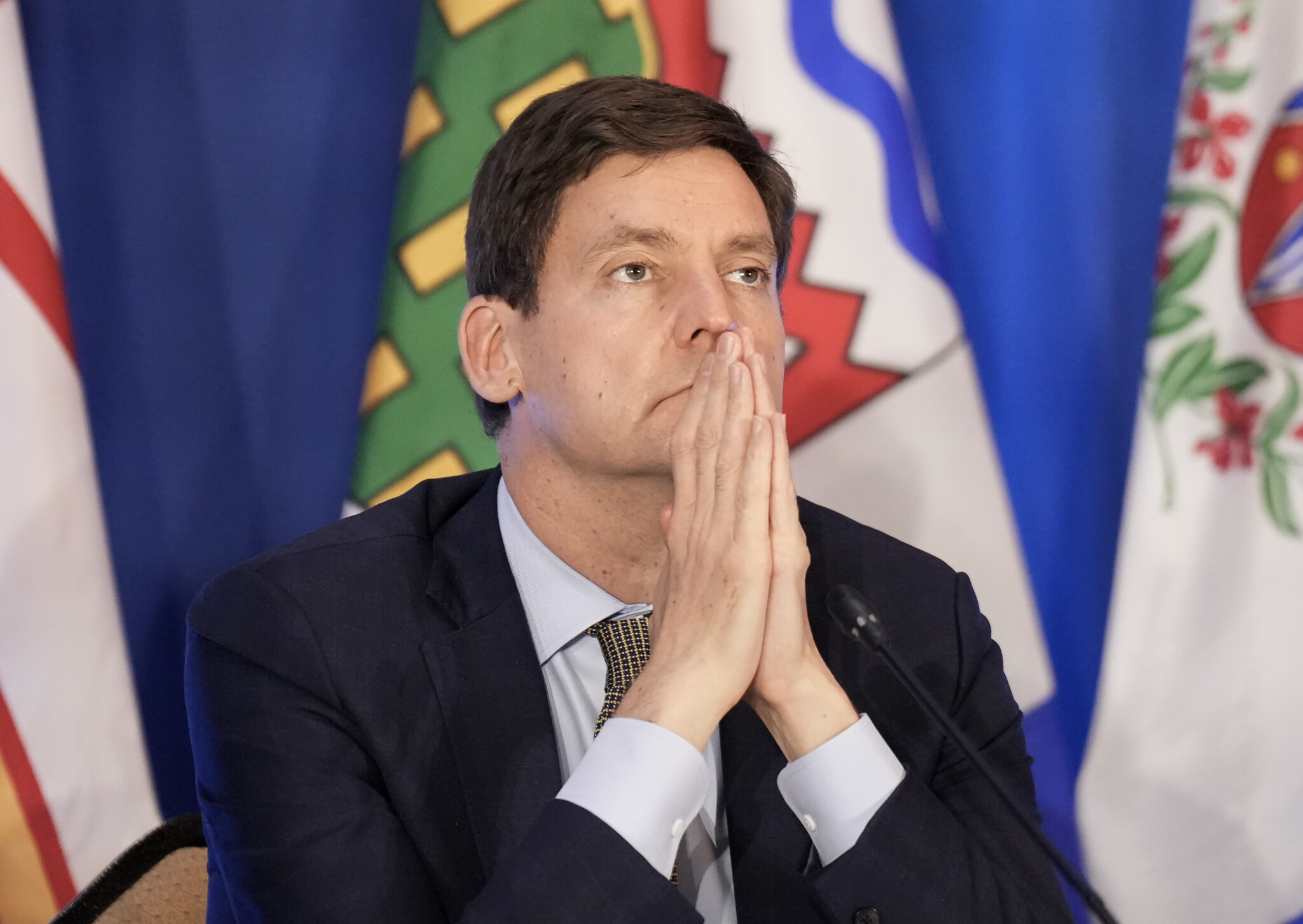

David Eby’s pipeline problem is one he built for himself, and it’s fast becoming a political reckoning.
Most every political leader eventually hits the moment when the province they think they’re governing collides with the province that actually exists. The B.C. premier has reached that moment on the question of a northern pipeline. He shouldn’t be surprised.
The premier finds himself isolated politically, geographically, economically, and increasingly morally on a file where British Columbians and Indigenous nations do not agree with him and Ottawa and Alberta are aligned against him. It is rare for a B.C. premier to be the lone voice in a room this crowded.
This is not a fight over a project from the past decade’s pipeline wars. This is a new conversation, shaped by Indigenous ownership, global energy security, and a B.C. electorate that is far more pragmatic than absolutist. Eby seems to be the only major figure approaching the file as if the 2010s never ended. He conveniently forgets that he won last year’s election primarily because voters were only slightly less confident in John Rustad’s BC Conservatives, not because his own brand was the move-forward consensus.
And, it ought to be noted, he is opposing a project still with enormous odds against its viability and without an obvious benefactor on a deadline to proceed, not to mention a possible timeline that won’t see it built until well after he’s departed the scene.

The country has moved on, but the premier hasn’t. The current northern pipeline discussions Ottawa and Alberta have been advancing are not the old battles over Enbridge or Kinder Morgan. The landscape is different. Indigenous nations want co-ownership and revenue shares, not exclusion. Environmental oversight is expected and engineered from the start. Northern communities want generational economic grounding. Investors want predictability in an age of geopolitical instability.
British Columbians themselves have shifted. It’s not as if they are demanding pipelines, but what they want are responsible opportunities. Polling consistently shows strong support for projects with Indigenous leadership, rigorous environmental protections, and shared benefits. Eby is standing apart from the public, not with it.
Is David Eby's opposition to the northern pipeline a political misstep or a principled stand?
How has the landscape of pipeline development changed, and why is Eby seemingly out of step?
What are the core contradictions in British Columbia's current approach to energy and development, according to the article?





Comments (21)
More and more people are realizing that FN are actually hijacking BC’s prosperity. They are 5% of the population and seem to control ALL decisions for the 95% of us who work and pay taxes. WHAT OTHER COUNTRY IN THE WORLD STARTS EVERY DISCUSSION OF RESOURCE DEVELOPMENT ALWAYS STATING “WITH FN APPROVAL”! This whole situation is gotten way out of control. Why are our “ pristine waters” any more pristine than the English Channel which sees hundreds of oil tankers going by the “white cliffs of Dover”!