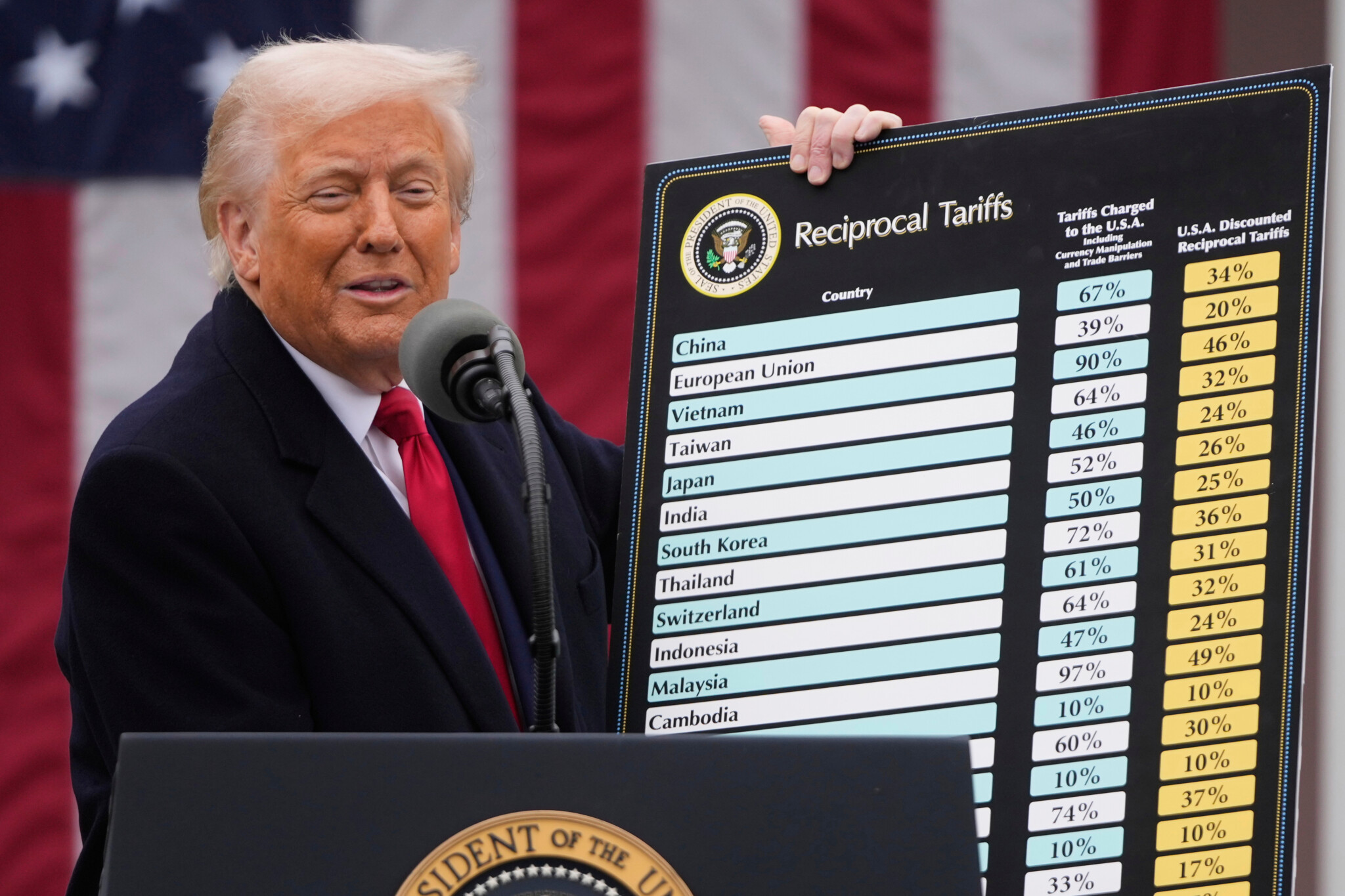
‘Huge implications’: The Roundtable on the U.S. Supreme Court’s bombshell tariff ruling against Trump
You can listen to free versions of this episode on Amazon, Apple, and Spotify.
Episode Description
Rudyard Griffiths and Sean Speer discuss the U.S. Supreme Court’s landmark 6-3 decision striking down President Trump’s emergency tariffs. They examine how this ruling undermines Trump’s trade agenda and creates uncertainty for U.S. businesses and fiscal policy. They also examine how the court’s ruling impacts Canada and whether this would further inflame Trump’s foreign policy agenda.
In the second half, they discuss the explosive growth of government employment in Canada and the stagnation of entrepreneurship. They argue that this trend makes Canada vulnerable, especially when economic resilience is most needed against U.S. economic pressure.
Episode Summary
The United States Supreme Court has delivered a significant blow to the Trump administration’s trade agenda, striking down the president’s use of emergency powers to impose tariffs in a 6-3 decision. The ruling represents a major institutional check on executive authority and carries profound implications for American fiscal policy, international trade relations, and Canada’s economic future.
The decision marks a notable moment for American democratic institutions, with two Trump-appointed justices joining the majority opinion that found the president exceeded his statutory authority granted by Congress. This bipartisan judicial consensus suggests the court prioritized constitutional principles over political considerations, reinforcing the system of checks and balances that underpins American governance.
The immediate impact extends far beyond legal precedent. American businesses have paid billions in tariff duties over the past year, and questions now arise about potential reimbursements from the Treasury. The ruling also undermines the fiscal foundation of recently passed tax legislation, which relied heavily on projected tariff revenues to offset costs. Financial markets responded swiftly, with bond yields rising as investors reassessed Washington’s fiscal trajectory and borrowing capacity.
For Canada, the decision presents a complex mixture of relief and concern. While the ruling removes the immediate threat of arbitrary tariffs imposed under emergency declarations, it may paradoxically increase pressure on existing trade agreements. With emergency powers no longer available as a tool for economic coercion, attention will likely shift toward renegotiating or potentially abrogating established trade frameworks. The current free trade agreement between the United States, Mexico, and Canada could become a primary target for an administration seeking alternative mechanisms to achieve its trade objectives.
The broader uncertainty affects businesses and governments worldwide that have spent months adjusting strategies based on assumptions about American tariff policy. Companies made significant investment decisions anticipating a particular trade environment, while countries engaged in negotiations presuming tariffs would remain a permanent feature of American economic policy. This sudden reversal leaves all parties recalibrating their approaches.
The ruling also raises questions about how the administration might respond to this constraint on its authority. While previous Supreme Court decisions on other matters have been respected, the centrality of tariffs to the current political agenda creates unique pressures. Trade policy represents a cornerstone of efforts to reshape American political economy and restore manufacturing employment, making this setback particularly consequential.
Looking forward, the decision may push policy responses in unexpected directions. Economic tools having been curtailed, there remains concern that foreign policy objectives previously pursued through tariff threats might now be addressed through more direct means. The intersection of trade policy, fiscal planning, and international relations creates a volatile environment where outcomes remain highly unpredictable.
This summary was prepared by NewsBox AI. Please check against delivery.
How does the Supreme Court's ruling on Trump's tariffs create uncertainty for U.S. businesses and fiscal policy, according to the article?
Beyond the US, what impact does the article suggest the Supreme Court's tariff ruling could have on Canada?
What connection does the article draw between government employment growth in Canada and its vulnerability to U.S. economic pressure?

Comments (0)