Welcome to Need to Know, The Hub’s twice-weekly roundup of expert insights into the biggest economic stories, political news, and policy developments that Hub readers need to be keeping their eyes on.
The Liberal government needs to stop withholding immigration numbers from Canadians
By Graeme Gordon, The Hub’s senior editor
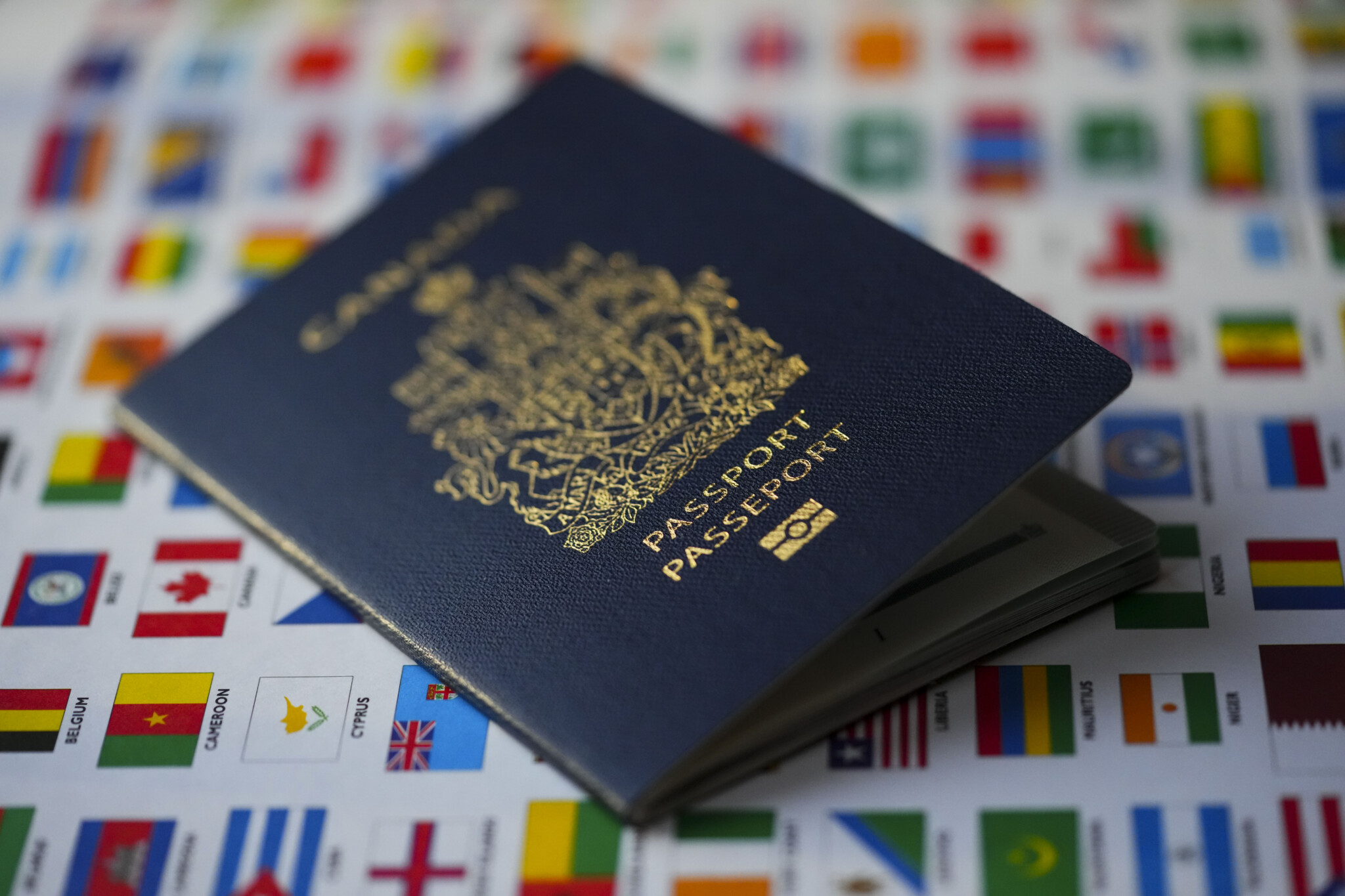
For over three months now, Canadians have been left in the dark about the current situation regarding new monthly immigration and refugee numbers.
On the Government of Canada webpage disclosing the number of monthly asylum claimants processed, it currently reads: “Updated data will be available in the coming weeks. We apologize for any inconvenience in the delayed posting of May 2025 data.”
The government also states its “refining our methodology” for “ongoing improvement,” ergo the delays. In the lead-up to writing a report on the spike of human smuggling cases at the border in 2025, I, in the position of a journalist, repeatedly contacted Immigration and Refugees and Citizenship Canada (IRCC) and didn’t receive a response. Not until I’d acquired statistics from Canada Border Services Agency (CBSA) and contacted Minister of Immigration, Refugees and Citizenship Lena Metlege Diab’s office for comment, did I finally receive a response.
“While monthly data is still available upon request, we are in the process of updating how we share immigration data with Canadians and improving how information is presented online,” an IRCC representative told me in part.
IRCC’s previous unresponsiveness leaves me with doubt. But I’ve asked for the past three months’ data, and what “shortly” means for a timeline for when they’re making the data publicly available again.
Journalists at the Toronto Sun have also tried to get answers on the missing immigration data to no avail. They were given a similar answer about how the updates to the methodology of the data will provide more transparency to Canadians.
Hub AI
Conservative Shadow Minister of Immigration Michelle Rempel Garner also released a statement demanding the government stop “censoring the data” earlier this month. Considering repeated polling now shows a majority of Canadians would like the country to reduce the rate of immigrants coming into Canada, especially during ongoing housing and cost-of-living crises, it’d be nice for the government to continue to keep the citizenry in the loop. It certainly doesn’t send the right message from Prime Minister Mark Carney, who campaigned on reducing the rate of immigration because the current levels were “unsustainable.” Since winning the election, Canadians can’t see what’s going on with the immigration file. Boiler-plate non-answers about transparency, while for months providing the opposite, won’t cut it any longer. From the dino-obsessed to Queer Mafiosi: the wacky candidates who tried to derail Poilievre’s chances in Alberta By Falice Chin, The Hub’s Alberta senior producer What was billed as a no-brainer of a byelection in rural Alberta quickly devolved into performative art for the politically unhinged, with acts ranging from dinosaur cosplay to drag-show authoritarianism. Now that the ballots have all been counted and Pierre Poilievre has regained a seat, let’s indulge in some of the wackiest proposals to emerge from the 214 mostly unserious contenders for Battle River–Crowfoot. The most transformative candidate wasn’t the Conservative leader or even independent challenger Bonnie Critchley. It was Nicola Zoghbi, who declared the riding should be renamed Raptor River–Crowfoot in honour of “the velociraptors that once terrorized the Albertan plains.” His entire platform was dino-themed—calling for Universal Studios to open a Jurassic Park in Drumheller, tying CBC funding to how many times it says “dinosaur,” and declaring Dino Day a federal holiday to commemorate the asteroid that wiped them out. Samuel Pignedoli’s campaign was no less surreal. The self-professed “Queer Mafiosi” promised jailing anyone who throws a gender-reveal party, banning “straight books,” and mandating therapy for incels. Like other “longest ballot” candidates, Pignedoli released their manifesto as a song—performed by The Famous Sandhogs, the unofficial house band of the protest. Others were less visionary, leaning on single issues or personal quirks. Preston Hoff offered his Alberta bona fides by boasting he’d grown up near the Saskatchewan border, then randomly bragged about having watched The Phantom Menace a dozen times in the tiny town of Provost. And then there was Joshua Wong, who set up a minimalist campaign website promising to exile YouTuber and Hub contributor J.J. McCullough to America. Poilievre himself wasn’t spared. Nick Ashmore, a self-described “two-issue” candidate, pointed out that the Conservative leader had voted against legalizing same-sex marriage in 2005. He said that in his opinion, the move is “absolutely disqualifying for any party leadership.” His second issue was the uniting thread of the ballot protest: a demand for electoral reform. The whole spectacle was designed to crash the system and expose the flaws of Canada’s first-past-the-post voting method. It didn’t work. But buried in the noise were a few candidates running on actual platforms. Against all odds, issues like gun rights, rural crime, the right to repair, property rights, canola tariffs, and rural infrastructure ended up dominating the local news cycle. This circus highlighted not just electoral reform, but the persistent gap between rural voters and Ottawa. And if nothing else, the country has now been reminded that Drumheller is home to many amazing dinosaur fossils. For now, the House of Commons won’t be renamed the Crestaceous Commons. “Hey, Mom and Dad, meet my AI sweetheart”? By Amal Attar-Guzman, The Hub’s content editor and podcast producer Finding a romantic partner has always been a difficult dance. But it seems to be even harder today, and numbers are reflecting that. According to Statistics Canada, 39 percent of adults aged 25 to 29 were a couple living under the same roof in 2021. This is compared to 68 percent of couples in the same age cohort in 1981. This trend is concerning, as are the various factors that may be causing it: the cost of living crisis, decreasing social and economic stability and mobility, wage stagnation, the gamification of dating apps, increasing polarization, and even the increasing gender gap between heterosexual men and women. While these problems are right at the forefront with no speedy solution, AI has emerged to fill this growing gap of romantic companionship. Last month, Elon Musk launched AI companions on Grok, xAI’s large language model and chatbot, including a sexualized anime girl named “Ani.” Not only does she talk and interact with the user, she expresses emotion. She can even be instructed to do and explain sexualized scenarios. In its first week, 68 percent of Grok users tried companion mode, in which 82 percent of interactions were with Ani. What is more worrying, Ani is accessible to users even when the app is in kids’ mode. You can disable the “Not Safe For Work” function and sexually interact with Ani. Grok is available for users 13 and over. And more AI companions are on the horizon. A job posting for a “Fullstack Engineer – Companions” is now up at xAI, where the role consists of making “Grok’s realtime avatar products the best in the world.” And it’s not just AI Companions. Some are even finding “romantic partners” through other AI chatbots and channels. In the Reddit channel r/MyBoyfriendisAI, one redditor made a post about how her AI boyfriend, “Kasper,” and she are now engaged. This is not some isolated example but rather indicative of a growing trend of people opting out of the messy complications of flesh and blood relations and interactions to spend time and attention on their AI model of choice. But as I look through the Reddit channel, I notice that many are dealing with personal problems, ranging from isolation, loneliness, and a lack of community. And this is a growing issue, even here in Canada. According to a YMCA Canada/Angus Reid poll, 68 percent of Canadian youth aged 18 to 34 feel disconnected and a lack of belonging. The rise of social media and artificial intelligence, despite being billed as incredibly innovative tools to increase connections, seems to be a major factor contributing to the problem of isolation. Mocking those in these circumstances is not a solution. As one redditor from r/MyBoyfriendisAI pointed out, “Isolated people are not going to magically become less isolated if you bully them.” Instead of punching down on the vulnerable people who get caught up in this trend, we need to understand why there is an increase in AI companionship rather than in-person ones, and how we can stem the tide of retreat from the human and into simulacra and digital distraction. Because we are just now at the forefront of the coming revolution. This issue is not going to go away anytime soon.
The Hub’s mission is to create and curate news, analysis, and insights about a dynamic and better future for Canada in a single online information source.