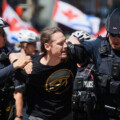
Montreal handed the country two warnings in one week. In Saint-Laurent, video shows a man shouting “we will kill you” at a visibly Jewish passerby and, shortly after, police said 911 calls poured in and a suspect was arrested as the hate-crime unit took charge of the file. Days earlier in Parc-Extension, a Jewish father was punched to the ground in front of his children, and a suspect was charged with assault causing bodily harm and ordered to undergo a psychiatric evaluation. These are not random episodes; they are the foreseeable endpoint of a permissive climate in which eliminationist rhetoric crosses into street violence.
The city’s own data reflect the trend. Montreal recorded 375 police-reported hate crimes and 202 hate incidents in 2024—up 6.2 percent and 18.1 percent—as detailed in the Service de police de la Ville de Montréal’s 2024 annual report. Nationally, police-reported hate crimes rose again in 2024 to 4,882 incidents, the sixth straight annual increase, according to Statistics Canada’s release, with religion-motivated cases targeting Jews remaining predominant in the motivation table.
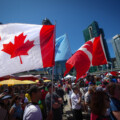
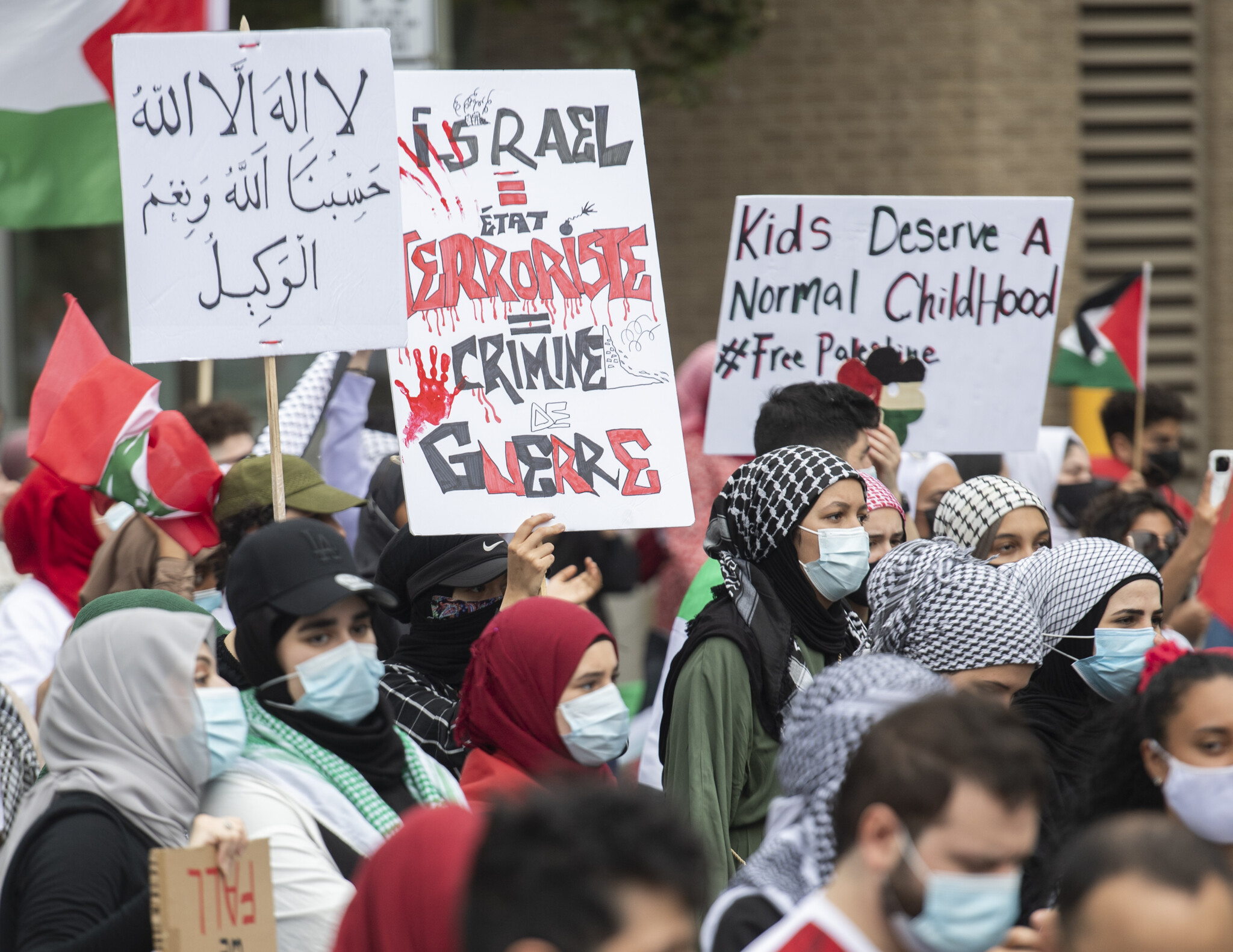
Context matters. Ottawa drew a bright red line on June 19, 2024, when the Islamic Revolutionary Guard Corps (IRGC) was added to Canada’s list of terrorist entities. Yet a year later, downtown Montreal hosted “Hands Off Iran” rallies outside the U.S. consulate—events where demonstrators displayed IRGC-linked slogans and imagery and echoed the messaging of Tehran’s listed proxies such as Hezbollah and Hamas. CUPE Ontario even sponsored a rally in Toronto. When the brand of a listed organization can be celebrated in the streets without consequence, a ban on paper does not translate into deterrence on pavement.

The online pipeline is just as important—and here Canada’s language blind spot becomes obvious. On June 30, 2025—the same weekend those downtown rallies rolled—a Montreal YouTuber, Hicham Jerando, posted a Moroccan-Arabic monologue praising the IRGC as a “liberating model,” lauding Hamas fighters, and referring to Jews of Eastern European origin as awsaakh (“filth”) and ʿisābat (“gangs”). The clips were captured directly with auto-generated English captions enabled, allowing the remarks to be verified without additional settings. The footage pivots from geopolitical commentary to explicit racial vilification that squarely engages Canada’s hate-propaganda provisions.