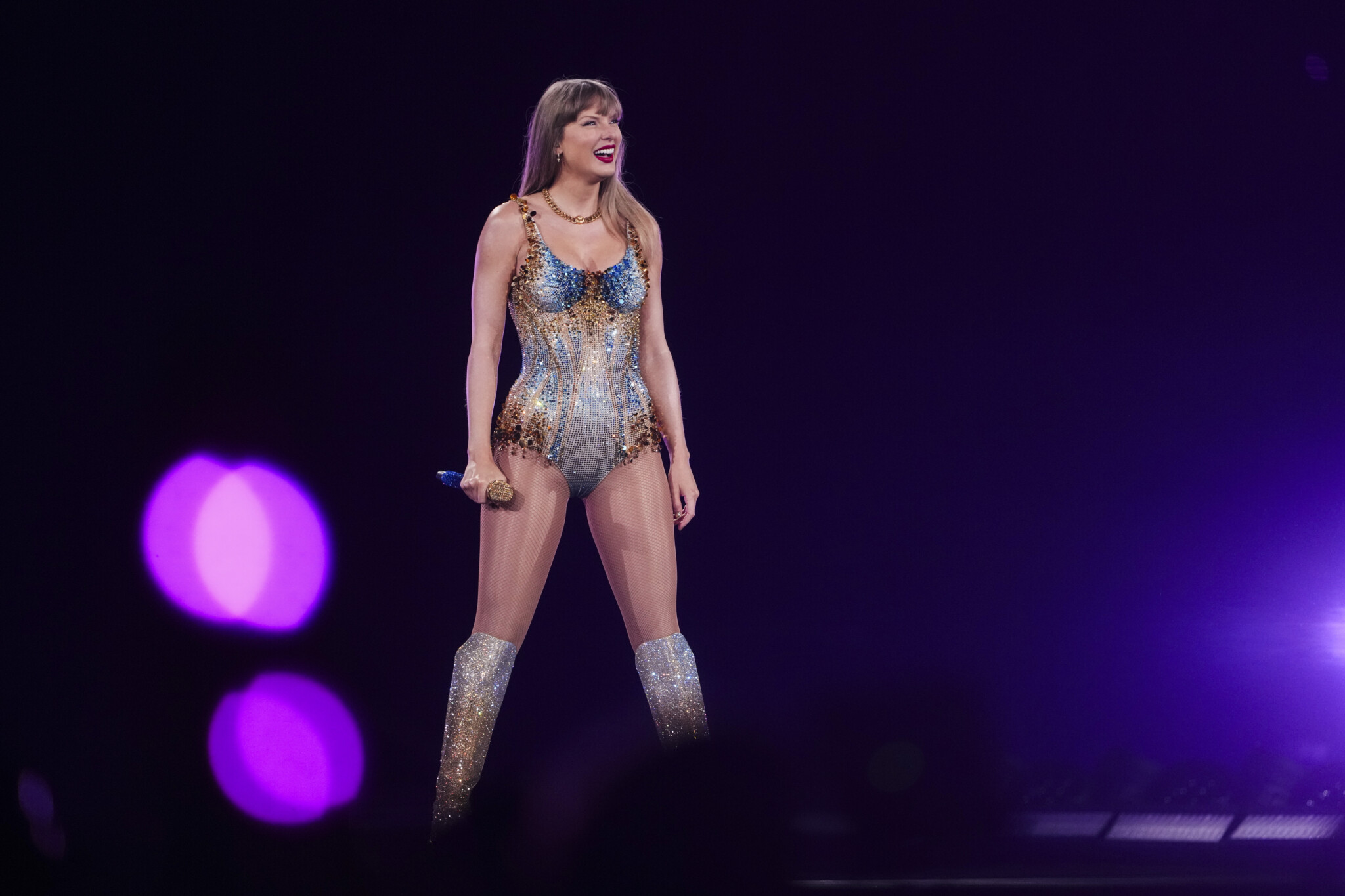
This week, we got the engagement heard ‘round the world. Taylor Swift and Travis Kelce announced that they are tying the knot. Of course, I wish my deepest congratulations to the happy couple. But Swift has done more this summer than just get engaged—far from it. She is, perhaps, the most powerful player in music, and her shrewd business decisions have helped usher in new discussions about artists’ financial rights in the age of digital streaming and digital music consumption.
In the wake of her engagement, streams on Swift’s song “So High School”—the one she added as a soundtrack to her Instagram announcement—have soared 400 percent, according to Spotify. Similar bumps have happened during other major Swift events, including when she announced she’d secured the rights to her own catalogue earlier this summer, which saw her albums’ streaming numbers soar 110 percent to 430 percent per title.
Because of streaming, the revenue an album generates is no longer just collected up front with a single sale but rather doled out in royalty payments over time, and these bumps in plays thus represent significant increases in financial value, especially when calculated at the volume of listens Swift generates.
Streaming has essentially revolutionized the way music as an asset is discussed and thought about. Because the financial life cycle of a record no longer begins and ends with a single physical purchase, the rights of music catalogues are now seen as stable assets ripe for investment. Over the last few years, this has spurred an intense fervour of dealmaking activity, a conversation that admittedly predated Swift and her re-recordings but that she helped bring into the popular public consciousness. If you need a refresh, take yourself back to 2019, when it was announced that Big Machine, the label Taylor had been signed to, was sold to former music manager Scooter Braun’s holding company. Swift’s entire back catalogue of masters—essentially, the rights to the actual recordings of the song—was thus owned by Braun. This practice isn’t uncommon in the industry, and disputes around who actually owns the intellectual property behind artists’ output have been ongoing for years. But what this meant was that Braun—and later a company called Shamrock Holdings, which Braun sold the catalogue to—was the one who profited anytime her songs were streamed or bought. Her decision to re-record her entire catalogue ensued. For Swift, owning the rights to her masters was personal (and, yes, a bit of business). It was her entire life’s work on the table, not just a fancy investment. But outside the Swift-verse, there’s an incredibly complex conversation that’s been playing out on how to value music masters (and copyrights), when to hold them, when to sell them, and who should get them in the first place. Because albums are played over and over and over again on streaming services, artists recoup royalties from those platforms on a regular basis. Every time you hear a song in a social media snippet, play it from Spotify or Apple in the car, or hear it in a TV show, that song is generating revenue for the person who owns its IP. With online trends allowing these songs to essentially live (and thus generate revenue) forever, this makes the catalogues of music superstars prime assets. Streaming has also made it such that music discovery doesn’t just bend towards new albums anymore. By having all of recorded music at one’s fingertips, listeners are often eager to dip back in the past and discover the old as well as the new. For catalogue owners, this is a trend that bodes well. While Swift chose to seek ownership of her masters, others have taken a different path. Justin Bieber, for example, sold his catalogue to Hipgnosis for $200 million, a catalogue-owner now backed by Blackstone. Bob Dylan sold his catalogue to Universal Music Group for $300 million. And it was just reported last week that The Weeknd is now looking to raise $1 billion in financing with his catalogue, a deal which, if successful, could be the biggest of its kind. Major financial players are entering this space, eager to get a piece of the pie that is music royalties and rights, too. KKR, Blackstone, and others have all developed catalogue-purchasing competencies and have been eager to partner with songwriters, artists, and labels to get in on the action. Of course, smaller artists are not seeing the same kind of windfall. The current royalty models of streaming disproportionately advantage superstars like Swift and Bieber, while artists who are often considered in music’s “middle class” of stardom are having a much harder time. But as streaming becomes further entrenched in the audience’s listening habits, the conversations around catalogues and catalogue ownership will only continue to heat up in tandem. Above almost any other star, Swift has proved that. So when an artist like Swift enters the public conversation in the way she did this week, it’s no longer only a moment that generates internet buzz. It’s also a major market mover.
Laura David is a Hub editorial intern this summer and a recent graduate of Brown University. She has worked in several media organizations and major corporations, including NBC’s Meet the Press and Spotify. She will be attending Cambridge for her MPhil this fall.