Over the past month, you might have noticed two concurrent headlines concerning Canada, one from American media, the other from Canadian. The conceptual gap between the two was highly telling.
The Canadian headline published by the CBC discussed a new type of euthanasia. “New end-of-life care home in Quebec highlights growing demand for MAID” read the headline. The American one, a long feature article on the same subject in The Atlantic was much blunter: “Canada is Killing Itself.”
It’s telling that one had to go outside the country for such a direct treatment of a highly consequential Canadian policy. But this was in many ways characteristic—for it is the inclination of our country’s expert class to defend rather than critique its major institutions. From the postal service to the CBC to public safety, suggestions that all is not well are invariably met with condescending explanations to the contrary.
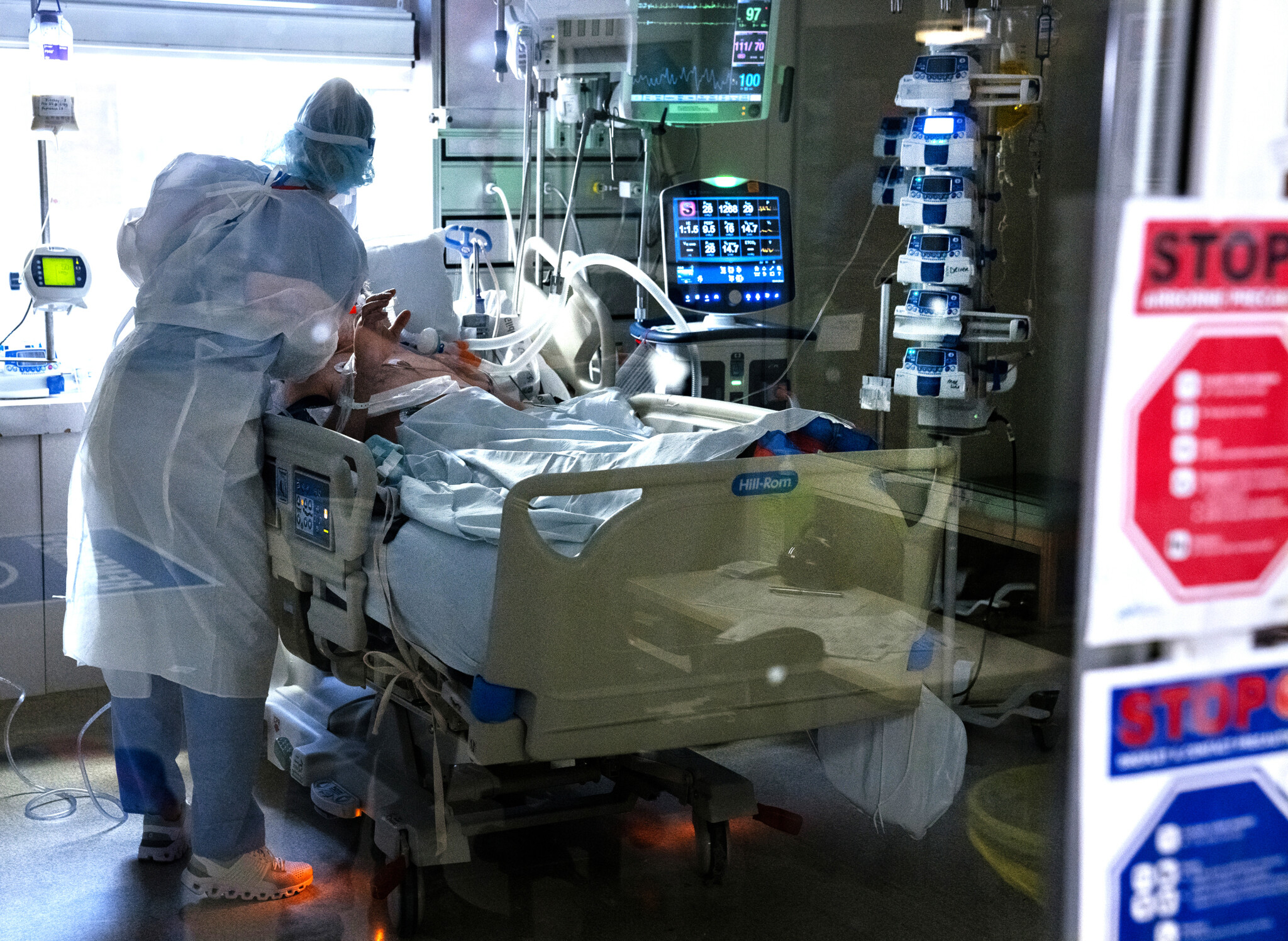
More broadly, it is striking how many pundits and public figures seem to understand their task as defending or justifying the status quo to their fellow citizens. I have said before that for all intents and purposes nominal liberals are now in fact conservatives, as their main purpose appears to be to preserve Canada’s institutions as they are, rather than to accept the need for reform. The decline is there for all to see There are few areas where these questions are as fraught and the stakes as high as those concerning Canada’s medical system. Part of this has to do with the place that universal and publicly-funded healthcare occupies as part of the country’s national identity in the minds of both Canadians and non-. In particular, there is a tendency to view any critique of the system as a comparison with the United States’ (also suboptimal) model. But part of it is simply intrinsic. Systemic inefficiencies with Canada’s postal service result in delayed mail, but systemic inefficiencies with its hospitals is literally a matter of life and death. This reality was recently highlighted by a heartbreaking story, in which a teenager died in the hospital after waiting more than eight hours for a diagnosis. This was hardly the first instance in which delays and inefficiencies in ER triage resulted in preventable deaths. Perhaps inevitably, this story triggered the usual defenses of the status quo, including from medical practitioners themselves, who admittedly still save more people than they fail. But aside from the callousness of these responses is how they abstract from common sense. This rhetorical approach can work for a time, of course, especially when practitioners invoke their credentials to impress the audience (as they frequently do). But it becomes more difficult to sustain the more that the ordinary citizen’s practical experience is at odds with what they are being told by the experts. At times, it can feel a bit like gaslighting. The argument that most young people don’t die in triage is cold comfort not just to the bereaved but to anyone who can imagine their own family members in that same situation. It is akin to insisting that rising crime shouldn’t be a source of concern, given that most people aren’t criminals. But a reasonably public-spirited individual views rising crime as an indication of social failures, just as they view the visible decline in Canadian healthcare as an indication of social failures. The Liberal government is adding more strain on the system A pervasive elite tendency to circle the wagons is an obstacle to serious discussion about the condition of our country across any number of domains: housing, immigration, public safety, economic indicators, national security, and so on. Meanwhile, amidst passionate debates over the unprecedented rate of immigration in the past decade, Immigration, Refugees and Citizenship Canada recently announced that some 18,000 Canadians would have the opportunity to sponsor parents and grandparents for permanent residency. If the government is seriously considering adding a demographic that disproportionately draws on the healthcare system more than it pays into it, it is as clear a sign as can be imagined that its leaders have no grasp of the severity of the present crisis. It is yet another instance in which the experience of ordinary citizens is a better guide to grasping the reality of an overburdened system. One suspects that many parents, having spent countless hours in Canada’s ER waiting rooms themselves, felt no small measure of pity and terror upon reading this latest story of tragedy. Certainly, I am one of them. Even those who have been spared the worst have more close calls than we’d like to acknowledge. Last year, my wife very nearly died from a pulmonary embolism arising from a broken leg. We were ultimately saved not by the efficiency of the system, but by four fortuitous factors. The first is that we were already en route to the hospital for a scheduled appointment with a surgeon when the symptoms set in. The second was that the surgeon’s own team went beyond their duties to assist in fast-tracking her into the emergency room system, thus cutting down the triage time from 12 hours to six. Third, she was wearing an Apple Watch that raised the fact that her heart rate was unreasonably high. Finally, there is the fact that my wife, who happens to be a cancer survivor, had already learned the hard way to trust her own intuitions and assume the worst. All of these factors are external to the ordinary functioning of the emergency system. I still believe their absence would have proved fatal. I think of that day frequently, and when I see those who should know better placidly arguing that all is well with this and other Canadian institutions, my reaction is not really printable, and so I will stop here.
David Polansky is a Toronto-based writer. His work has appeared in The Globe and Mail, The Washington Post, and Foreign Policy. Follow him on X, and read him at Strange Frequencies.