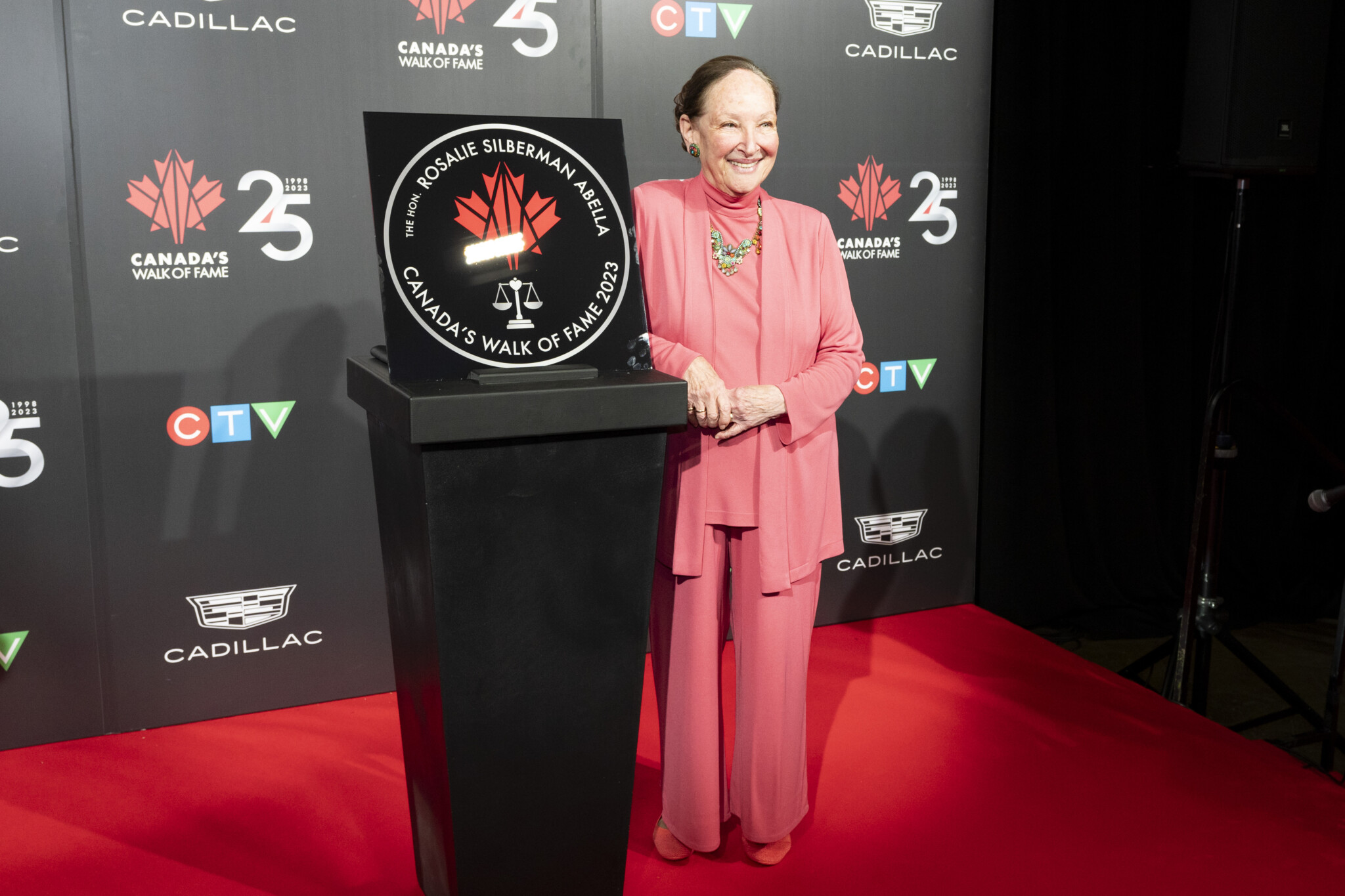
The Honourable Rosalie Silberman Abella was appointed to the Ontario bench in 1976, at the age of 29. She had spent four years at the bar and became the youngest judge in Canadian history. She retired from the Supreme Court of Canada in 2021, having served 45 years as a judge.
This may well be some sort of modern record. Lord Denning, the face of the common law for most of the 20th century, only sat for 38 years, and that was with the benefit of a lifetime appointment (Canadian judges retire at 75). Beverley McLachlin, Abella’s chief justice for many years, only managed 36 years; even if we add her six-year stint as a part-time judge in Hong Kong’s increasingly morally dubious courts, she would still fall short of Abella’s tenure .
Abella’s judicial longevity is remarkable. And by all accounts, she is a charming, friendly woman, with refined cultural tastes. Whether she was a good judge, or indeed whether it is good for anyone to spend most of their life judging others and being bowed to, is another matter.
But those are not questions which caused much anxiety to the contributors of a new book Justice Rosalie Silberman Abella: A Life of Firsts, celebrating her legacy. Indeed, one would not expect an overtly critical volume to emerge from a two-day conference advertised as “AbellaFest” (it even had its own Twitter hashtag, back when respectable people still congregated there).
Yet, since the majority of the 31 contributors are academics, and as it was published by an academic publishing house, it seems worthwhile to take a slightly more rigorous look at its contents. If they tell us something about Abella as a person and as a lawyer, they also reveal much, albeit often unintentionally, about the state of the Canadian academic and legal professions.
First forays
Whatever may be said about her legacy, it is undeniable that Abella’s early life was an eventful one. As law professor Eric Adams chronicles in the book’s first chapter, she was born in a displaced persons camp in Germany in 1946, the daughter of Holocaust survivors. They eventually moved to Canada, where her father, not being a Canadian citizen, was prevented from qualifying as a lawyer, something that rankled her. Nevertheless, there would be no tales of immigrant hardship: her father ended up selling insurance, and Abella grew up in middle-class comfort.
She attended the University of Toronto, seemingly as a matter of course, and after her B.A., continued to read for a law degree. Canadian law school did not impress young Abella. Adams writes that:
She admits to looking to the United States Supreme Court and the jurisprudence of the Warren Court with envy. “[W]hat did we learn from our 700-page casebook [in Constitutional Law]?” she once remarked to a US audience. “Who was in charge of egg marketing boards — the federal or the provincial government.”

This was a strange remark to make for someone from a country that is perpetually moving from one federalism crisis to another, and where disputes about farm products have outsized political significance. For that matter, her American audience must all have learned about Wickard v. Filburn in law school, the landmark U.S. Supreme Court federalism case about wheat production quotas.
But her point was clear enough. She did not like the traditional emphasis in Canadian legal education on federalism and the BNA Act . How could she, when there were such exciting things happening in courthouses south of the border, with Earl Warren and Warren Burger inventing constitutional protections out of the “penumbra and emanations” of the American bill of rights? Not for the first nor the last time, a bright young Canadian lawyer would be seduced by the intellectual odours of the imperial metropole. Luckily for her, the winds of change would be blowing north.
After law school, Abella practiced family law for a few years in Toronto. She seemed to have been a good networker, as evidenced by her membership on various boards and voluntary organisations. In 1976, she was appointed to the provincial family court by Ontario Progressive Conservative stalwart Roy McMurtry, who was looking to diversify the bench. Family court was not a traditional route for higher office, but Abella “jumped at the opportunity.”
By the time she was appointed to the Ontario Court of Appeal in 1992 by Kim Campbell (“I don’t know what Rosalie Abella’s partisan view was,” she said later, displaying the forensic insight for which she is rightly famous), Abella had spent most of her judicial career engaged not, like most of her colleagues, in trying cases, but in a succession of policy roles, chairing royal commissions and the like on subjects such as equality and law reform. In 1988, she even moderated the federal leaders’ television debate, a curious assignment for a provincial court judge.
Little wonder, perhaps, that her understanding of the judicial function was so radically different from that of most of her contemporaries. When she was nominated to the Supreme Court in 2004 by Paul Martin, even judicial supremacist-in-chief Andrew Coyne was moved to complain that “Ms. Abella is so far out of the mainstream, even among liberal jurists, that her appointment can only be seen as a deliberate provocation.” Two decades on, Abella was firmly in the Supreme Court’s—and Canadian law’s—mainstream. It was all a very long way from family court.
A way with words
Traditionally, a common law judge is judged first and foremost by their written judgments. In their chapter on “Abella by the Numbers,” Stephen Bindman and Keenan Macneal tell us that Abella “wielded an expansive vocabulary as a writer, using 24,846 unique words across her written opinions” while at the Supreme Court.
Some of the words she used have rarely graced the pages of the law reports. One of them was “benediction,” which before Justice Abella’s time on its bench had appeared three times in the Supreme Court Reports, once to describe the opening ceremony of a dam, and twice in relation to religious rites.
But in Saskatchewan Federation of Labour v. Saskatchewan (2015), Abella mused that “[i]t seems to me to be the time to give this conclusion constitutional benediction,” the conclusion being that there was a constitutional right to strike. Generations of jurists before her had failed to discover such a right in the Charter, but Abella was undeterred, swiping away decades of settled precedents with a judgment which preferred to cite the constitutions of France, Italy, Portugal, South Africa, and Spain to support her position.
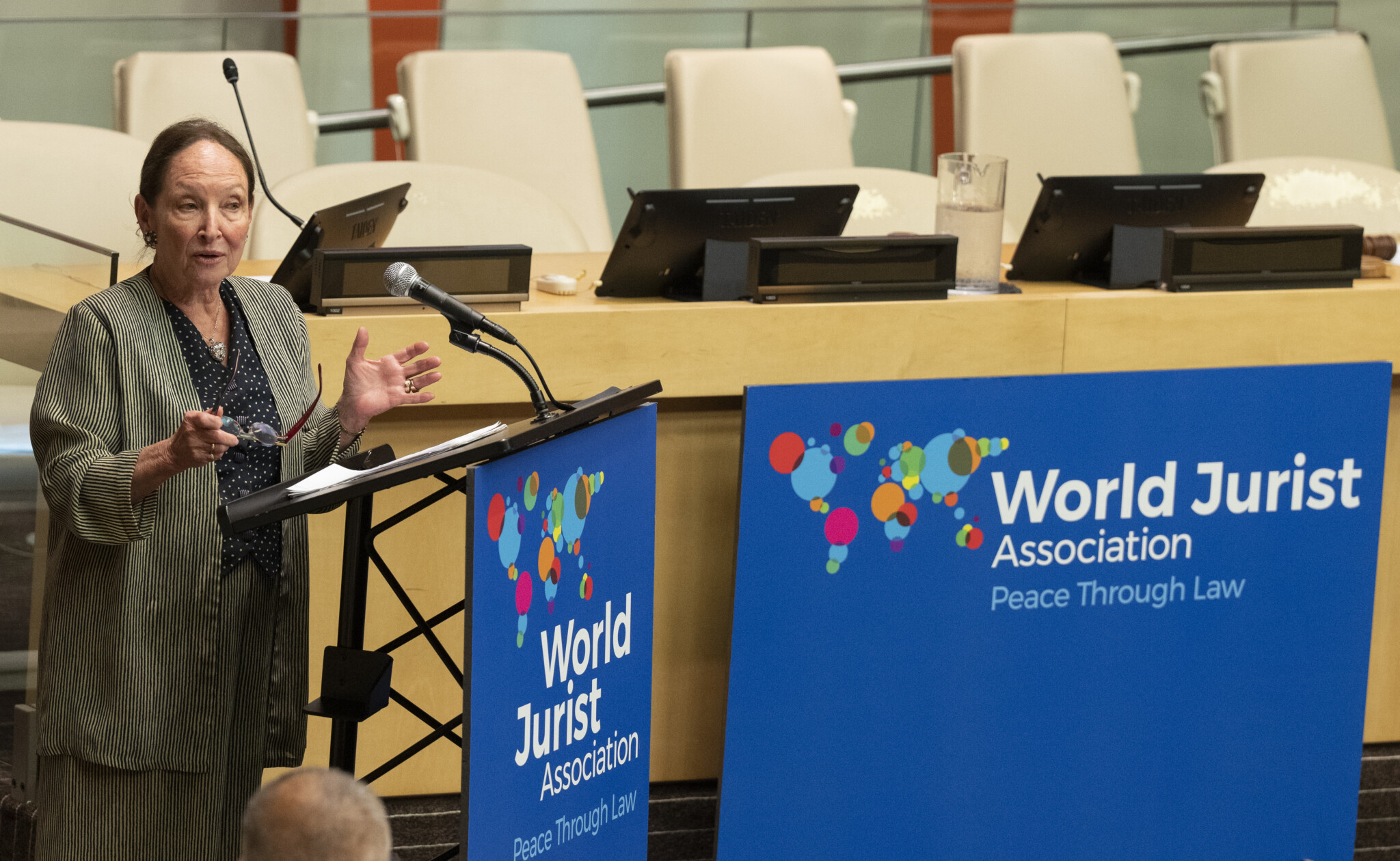
Justice Rosalie Silberman Abella speaks after being awarded the Ruth Bader Ginsburg award at the United Nations on July 21, 2023. Christinne Muschi/The Canadian Press.
Even Justice Richard Wagner (as he then was), a fan of foreign trips and not known for his love of judicial restraint, was appalled: the majority, he wrote in a joint dissent, “so inflated the right to freedom of association that its scope is now wholly removed from the words” of the Charter in a way that “threatens to undermine Canada’s constitutional order.”
Another word in Abella’s vocabulary that appears seldom in her colleagues’ opinions is “phoenix.” In Nevsun Resources Ltd. v. Araya (2020), she wrote that “[m]odern international human rights law is the phoenix that rose from the ashes of World War II and declared global war on human rights abuses.”
The case was not ornithological but concerned whether a company could be held liable for breaches of customary international law, that is, the portion of international law established through the practice of states. In this case, Eritrean workers sued a Canadian mining company, alleging human rights violations committed at an Eritrean mine owned by the company.
Nevsun was so noteworthy that three chapters discuss it in detail. One of them is by Harold Koh, a Yale professor who wrote the Obama administration’s legal justifications for illegally bombing wedding parties in ostensibly friendly countries—this, after having built an entire career by attacking the Bush administration’s disregard for international law. Not that this has affected his friendship with Abella, phoenixes and all that.
Professor Koh is too modest to mention that Abella’s Nevsun judgment relied heavily on his writing on the subject—she mentions him 12 times, much to the fury of the dissenters, who pointed out that a single speculative essay by a single law professor could not be used as evidence of the state practice of 200-odd nations. International law, after all, is meant to be international, not made up unilaterally in Ottawa on the basis of some tortured avian metaphor. “I love pretty much everything about Rosalie Silberman Abella, as a judge and as a person,” says Koh. After Nevsun, he had even more cause to do so.
Although Koh is American, his cosy personal relationship with Abella illustrates a key dynamic in Canadian law, namely the mutually constitutive, indeed parasitic, relationship between legal academics and judges, of which AbellaFest is but one example. This is a relatively recent development: once upon a time, legal scholars were held in such low regard that lawyers were forbidden from citing legal textbooks in court unless the author was dead. Judges viewed Canada’s few law professors as second-rate lawyers who could not make it at the bar.
Today, by contrast, judges regularly cite law review articles in their judgments, lending them both prestige and influence. Legal academics return the favour by lavishing praise upon senior judges. Moreover, many law professors now begin their careers as law clerks to judges. Despite the modest title, judges often delegate the writing of judgments to their clerks, who are mostly recent law school graduates.
Since the prestige of a clerkship is contingent on the prestige of the judge (or of the court, in the case of lower courts), ex-clerks have every incentive to promote their former bosses. Conversely, more than one scholar has been blacklisted from Canadian law schools because they did not show proper deference to the senior judiciary.
Of the book’s 25 chapters, only one betrays any sign of doubt as to the wholesomeness of Abella’s legacy. In her chapter on Abella and freedom of expression, retired law professor Jamie Cameron admits that she disagrees with Abella’s approach (roughly speaking, Abella tends to uphold the legality of limits on freedom of speech if she thinks the speech harms minority groups).
Yet, Cameron’s admission is buried on the penultimate page of the chapter, which begins and ends with praise every bit as sycophantic as that of every other chapter (“words cannot easily convey my gratitude and thanks to Justice Abella for what I have learned from her and for the myriad ways she has informed and enriched my experiences as an academic and occasional advocate at the Supreme Court”). I have no reason to doubt the sincerity of Professor Cameron’s profusion; yet one cannot help but think that what AbellaFest really needed was a devil’s advocate.