The article argues that violence is not an argument. How does this event challenge the concept of 'safe speech' in the US?
The author laments the potential for rationalizing Kirk's death. What does this say about the state of political discourse and persuasion?
The first column I ever penned for The Hub was an obituary, for the late Norm Macdonald, and I didn’t expect it would become a pattern. As I said at the time, hagiography in the tear-blurred afterglow of death is a cheap trick, and this won’t be that. But death has a way of clarifying. It strips away the noise, forces us to see what mattered.
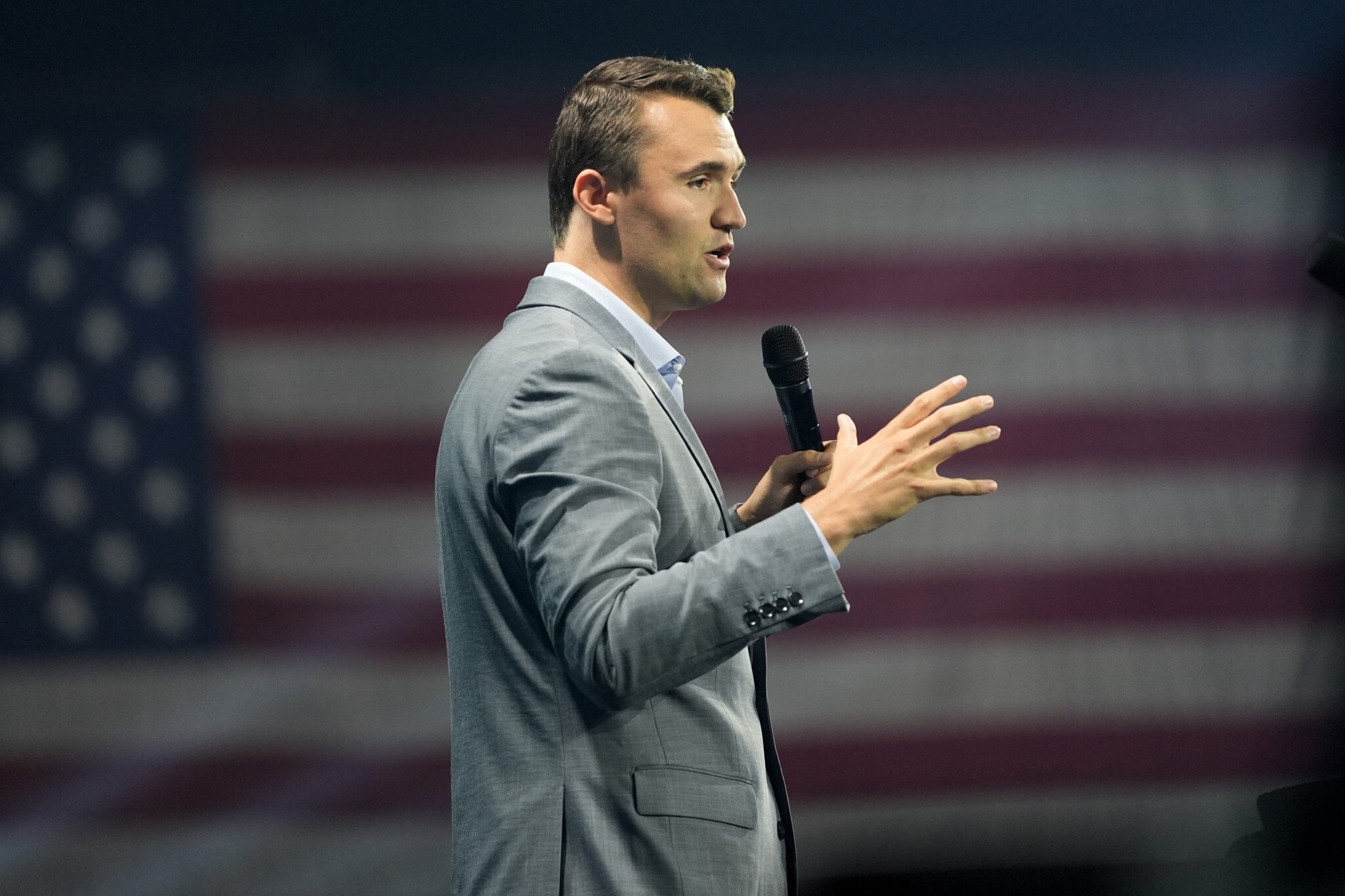
Charlie Kirk was assassinated on Wednesday. The influential young conservative was shot in the middle of doing what defined him: sitting under a pop-up tent, on a folding chair, taking questions from strangers who came to argue with him. It was political theatre at its most democratic. He offered no filter, no staffer whispering talking points, no protection from the rough-and-tumble of real debate. And for that, he was gunned down.
The article argues that violence is not an argument. How does this event challenge the concept of 'safe speech' in the US?
The author laments the potential for rationalizing Kirk's death. What does this say about the state of political discourse and persuasion?
The article states Kirk's 'gig' was free speech and open argument. What are the potential societal consequences if persuasion truly ceases to matter?
I am as close to a free-speech maximalist as you can get, and generally revel in the torrent of information modern technology puts at our fingertips. But this horrific event made me long for the days when snuff films were buried in the darkest corners of the internet. I wish I had never seen the clips of Kirk’s murder. They don’t enlighten, they brutalize. One need not admire Kirk to recognize his role. He provoked, he needled, he infuriated; but he did so with civility and a smile. But he also embodied something essential: openness. He believed the public square belonged to anyone bold enough to step into it. That was his genius, and his threat. In the United States of 2025, many speak of “safety” as if it were the highest civic virtue. Safe spaces, safe speech, safe politics. Kirk rejected all of it. He preferred the harder road of open argument. And now, his blood stains that road. Violence is not an argument. A bullet is not a rebuttal. Yet in our toxic, polarized politics, I fear the onslaught of voices willing to excuse, to equivocate, to mutter that perhaps he “brought it on himself” by being offensive. A corollary of those who defend the brutal murder of Brian Thompson, the CEO of United Healthcare, late last year. That line of thinking is poison. Words are not violence. Violence is violence. Confusing the two is not just intellectual laziness; it is moral corruption. Kirk leaves behind a wife and young children. That fact alone should stop the mouths of those trying to rationalize his death. Political violence does not just silence a man; it orphans families, it shatters homes. It teaches that debate is futile and that only force prevails. It is barbarism. Kirk’s critics called him a provocateur, and they were right. But provocateurs are meant to be debated, ridiculed, and argued down—not shot. To kill him is to declare that persuasion no longer matters. And if persuasion no longer matters, what can be salvaged from our modern political project? Persuasion is at the core of every peaceful democratic process, and that was attacked on Wednesday, along with Kirk. When I wrote about Norm Macdonald, I quoted his line about life being “the greatest gig in the world.” Kirk’s gig wasn’t comedy, but it was no less human: the gig of free speech, of argument in the open, of wrestling with ideas without fear. It could be flawed, and grating, but it was free. And freedom is the only way our society can endure. The folding table is empty now, and the pop-up tent collapsed. The temptation is to rush and make even his death into politics, as though one more battle line could be drawn in the culture war. But Kirk was more than a cause, more than a controversy. He was a man made in the image of God, a father, a husband, and now a devastating absence in the lives of those who loved him. That reality is weightier than politics, deeper than ideology. May we all, regardless of political view, mourn his loss and pray for the family who must carry on without him.
Stephen Staley is the Director of Fault Lines and a longstanding contributor to The Hub on Canadian policy, culture, and civic life. He is a senior advisor at the Oyster Group, one of Canada’s leading communications and public affairs firms. He formerly served as executive assistant to Prime Minister Stephen Harper and as an executive at one of Canada’s largest banks, where he led strategy and communications for its Canadian business.