In the aftermath of the assassination of American conservative commentator Charlie Kirk, an uncomfortable debate has been forced into the open. It’s one that many in the media and political class would prefer to avoid. The question is stark: Does the Left have a problem with political violence?
We believe the answer is yes. And it’s a problem that demands serious introspection rather than the equivocation and rationalization that we’ve seen from the political Left too often in recent days.
Let us be clear from the outset: This argument isn’t that there are no excesses on the Right. There is indeed a far-Right, and its extremes must be consistently called out. We’ve tried to do so over the years, including talking and writing about anti-World Economic Forum conspiracies, the elevation of fringe elements during the pandemic, and the ongoing issue of young men being radicalized by far-Right ideas and voices online. These efforts at self-policing may turn off some prospective readers or subscribers, but we think it’s important for The Hub and conservatism itself.
What’s become alarmingly apparent, however, is the absence of a strong self-policing instinct on the Left. In the wake of Kirk’s killing and Hamas’ horrific attacks of October 7, we’re seeing a pattern emerge within the fringe Left: outrageous statements reveling in violence, followed not by condemnation from within their own ranks, but by a deafening silence or, worse, attempts at justification, followed by more acts of violence and intimidation.

This failure stems from two fundamental sources. First, many on the Left have so persuaded themselves they are in an existential battle against “fascism”—principally embodied by Donald Trump and his supporters—that they’ve come to rationalize alliances with radical activists or organizations (“no enemies to the Left”) or opted to overlook the rise of radicalism within their movement altogether. This mindset produces a blame-the-victim mentality: “Of course, Kirk shouldn’t have been killed, but he was a proto-fascist.”
Second, the dynamics of elite influence are inverted. On the Right, the task of self-policing regularly falls to conservative elites trying to guard against the excesses of extreme elements on their Right flank. On the Left, many of the radical voices are frequently elites themselves— in journalism, universities, unions, and the NGO movement. Instead of clear, forthright condemnation, the elite Left now regularly loses itself in moral cul-de-sacs of “on one hand this, and on the other hand that,” and other ambiguous ethical formulations.
But the challenge is deeper than a simple failure of self-policing; it’s ultimately ideological. This isn’t, by the way, about the centre-Left and its support for a larger state, or strong unions, or other debatable yet thoroughly mainstream ideas. This is about the far-Left activists who have bought into an ideology with a theory of violence at its core.
This ideology, drawing from thinkers like Frantz Fanon, sees the world through a lens of colonizer and colonized, oppressor and oppressed. From this perspective, violence is a legitimate, even liberating, tool for the “resistance” to use. This is a vision that has left behind the principles the rest of us ground ourselves in—ideas rooted in philosophy, history, and tradition that rightly abhor violence as a means of political change.

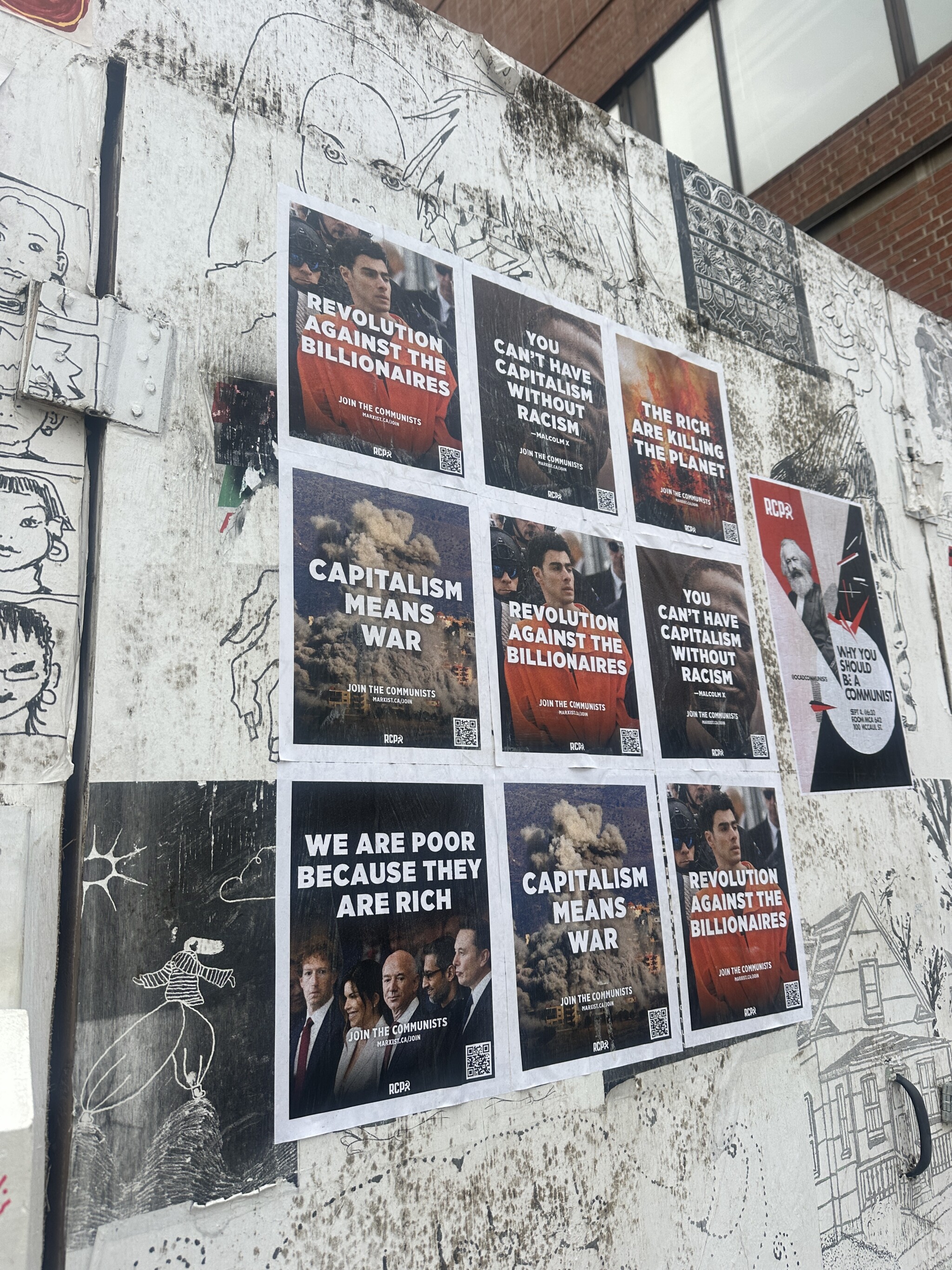
We see the evidence of this ideology valorizing violence on our streets. In downtown Toronto, posters on lamp posts heroize Luigi Mangione, the man who assassinated the UnitedHealth CEO in cold blood—an act with chilling parallels to the Kirk murder. These posters were put up by a communist group to glorify a killer in order to mobilize the young. It’s a safe bet that we will soon see similar posters celebrating Kirk’s assassin.
This creates a predictable and dangerous cycle: far-Left violence begets a reaction from the far-Right, and on we go, descending further into darkness. In a fragmenting world, the role of gatekeepers—those who call out evil in their own ranks—is more vital than ever.
To his great credit, New York Times columnist Ezra Klein, a progressive, has done this work. He has stood up to say, “It’s ghoulish to mock or justify the shooting of Charlie Kirk.” Tim Miller at The Bulwark has done the same. We need to see more of this type of clear thinking and less of the contextualization that has played out on the editorial pages of other major newspapers.
The key message ought to be straightforward and unequivocal: Killing anyone for whatever reason in cold blood is evil, full stop. It doesn’t need to be rationalized or placed in a broader context. It needs to be isolated, ostracized, and prevented from festering in our politics. The Left has a serious problem. It’s time its leaders acknowledged it and took responsibility for confronting it head-on.
Generative AI assisted in the production of this story.