Recently, the U.S. administration announced a suite of measures to tackle what it dubbed “the autism epidemic.” A nuanced read of the news release has the government encouraging physicians to exercise caution when prescribing Tylenol to pregnant mothers, given the potential causal link between acetaminophen use and autism.
However, the gap between the words in the release and the comments made by the president and the health secretary during the announcement is vast. President Trump proclaimed, “Don’t take Tylenol. Don’t take it. Fight like hell not to take it.” Secretary Kennedy, meanwhile, echoed these comments and urged more research into the repeatedly debunked link between vaccines and autism.
As a sibling of a young man on the autism spectrum and as someone who believes in sound, evidence-based public policy, this announcement concerned me. Let’s break down some of the issues:
What did U.S. officials base their announcement on?
Let’s start by giving the administration its due. A suggested association between acetaminophen use and autism comes largely from a Harvard study, which found “evidence consistent with an association between exposure to acetaminophen during pregnancy and offspring with […] autism spectrum disorder […], though observational limitations preclude definitive causation.” Officials repeatedly referenced this study in their announcement as an evidentiary basis for their decision.
Causation is the keyword here. Dr. Diddier Prada, who was first-author on the above-noted study, told the New York Times that “we cannot answer the question about causation—that is very important to clarify.”
In other words, while there may be a correlation worth exploring, we don’t yet have a scientific consensus on causation.
Correlation ≠ causation
There are plenty of things that are correlated. Per capita mozzarella consumption mirrors the number of civil engineering degrees awarded in the U.S. Likewise, the age of Miss America winners and deaths by steam in America track each other. Neither of these examples involves causation. Your cheese consumption won’t result in better bridges.
Sometimes, studies find evidence of correlation, which leads to further questions. That’s why consensus in science is so important. Scientists publish their methodologies (how they performed their study) in their papers so that other researchers can try to replicate their findings. While we rarely reach perfect unanimity in science, we strive for broad consensus before advocating action. As more studies pile up with the same statistically relevant findings, we get closer to a consensus.
That hasn’t happened on this topic. For example, the largest study done to date—a 2024 paper out of Sweden which looked at approximately 2.5 million children—found that “acetaminophen use during pregnancy was not associated with children’s risk of autism.” How could these findings be so different from the study referenced above?
The answer lies in how researchers evaluate and control for outside factors. In the initial study conducted by the Swedish research team, they did find evidence of a correlation between acetaminophen use and autism. In order to get more clarity, they zeroed in on siblings in the study, which provided a useful way to isolate the impacts of an intervention (in this case, Tylenol use during pregnancy) while controlling for outside factors by looking at mothers with multiple children. When considering this population group, the correlation disappeared.
This nuance was important because mothers taking Tylenol aren’t random—they are typically using Tylenol to treat an underlying pain or illness. Without proper study controls, we can’t rule out the possibility that those underlying conditions may actually be responsible for the earlier noted correlations.
Because of the nuance between correlation and causation, it is vitally important that governments carefully review the evidence and consult widely in order to ensure that they aren’t confounding the two. Before encouraging the public to avoid something based on correlated data, governments need to be confident about causation.

Eileen Lamb, who was diagnosed with autism as an adult, works with her daughter Billie and son Jude, who also has autism, Monday, May 12, 2025, in Austin, Texas. Eric Gay/AP Photo.
But why are the rates of autism rising? What is the cause?
Back in April, Secretary Kennedy vowed to find the cause of autism by September. It was an admirable goal, albeit overly ambitious. To understand this issue, we need to separate the question of what causes autism and what has caused increases in prevalence. The answers aren’t the same.
Rates today of ASD in Canada are around 1 in 50 children. There is a large gender gap, with the numbers being approximately one in 32 boys versus one in 125 girls. Researchers have long posited that this may be because the signs of autism are easier to spot amongst boys. Put simply, it is more socially acceptable for girls to be shy than boys, who are expected to be rambunctious.
While these rates have increased over the past decades, it is likely that this increase is a result of better detection. We have become more sensitive to identifying autism amongst girls, for example. Researchers have updated the diagnostic criteria in 1994 and 2013. We have developed better tools for detecting autism. And we have more medical professionals trained to recognize it. Many children in the past were likely not diagnosed.
Unfortunately, the answer to the question of what causes autism is not so clear. Autism is complex. As humans, we all want simple answers to complicated questions. Complex neurological conditions like autism defy simple explanations. Extensive research from brilliant teams around the world continues to better understand the genetic and environmental components that may be involved. Hundreds of genes have been implicated, and environmental risk factors are still being mapped. There is no new “landmark study” that definitively identifies a single, simple cause—despite headlines that may suggest otherwise.
Why is this announcement harmful?
Well, for a couple of reasons. Let’s focus first on the individuals and move towards the broader implications.
Firstly, blame is harmful. Placing blame on mothers and leading parents to feel guilty without rock-solid evidence is at best irresponsible and at worst cruel. Imagine you are the mother of a young man on the autism spectrum. During your pregnancy, you suffered from a high fever and took Tylenol as prescribed by your physician. Now, the president is telling you that you shouldn’t have taken it because you might have caused your son’s autism. The guilt would be terrible.
I would never want to put a mother in that situation unless I was absolutely certain that the advice I was offering was backed up by solid evidence. One would hope that government officials would want to be careful about announcements that could cause emotional distress. Given the research available, that level of confidence is impossible.
Next, even assuming that the administration’s goal was admirable—warning future parents of a potential risk—that still doesn’t excuse sensational rhetoric. Leaders must be able to communicate nuance. This is most important when making science-based policy. Public policy practitioners should rely on scientific “honest brokers” who can navigate uncertainty carefully and communicate nuance. Leaders should ensure announcements emphasize what is known and what is not known so people aren’t misled or panicked. I believe this announcement failed to meet that standard.
Medical standards already encourage women to work closely with their physicians when considering any medication taken during pregnancy. That standard hasn’t changed. But the sensational rhetoric of this announcement could convince future mothers to ignore medical advice from their physicians when dealing with issues like a fever (which is also dangerous in pregnancy!), with no consensus to back up their decision.
Lastly, language about “causes” and “cures” moves us further away from discussing what matters: support for children and adults with autism and their families. It also perpetuates a dialogue rejected by many more high-functioning individuals with autism that they are “broken” or that autism is a “disease.”
When people seek to provide unfounded, easy answers, it is not consequence-free. It leads to a belief that robust supports are superfluous on the basis that the problem is “solved,” when in reality, families and individuals with autism still rely on support. We must reject fanciful announcements that undermine our ability to make meaningful public investments into helping parents support their children and supporting adults on the spectrum.
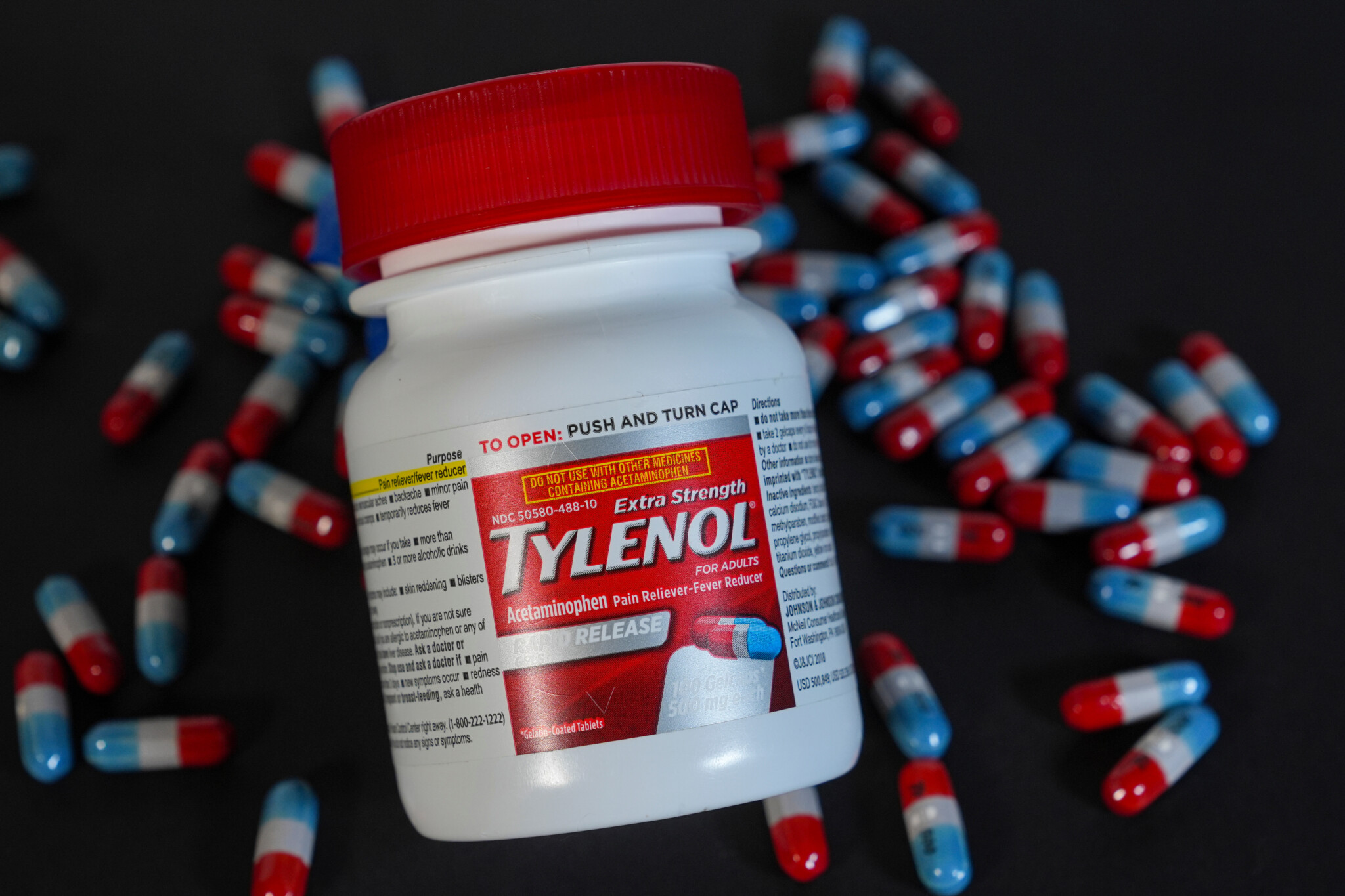
Extra Strength Tylenol is shown in Carmel, Ind., Tuesday, Sept. 23, 2025. Michael Conroy/AP Photo.
Moreover, as anyone who has had an individual with autism in their life knows, we have a lot to learn from them. Autism is a spectrum disorder, meaning that individuals have different degrees of functionality. You might meet someone like my brother, who is non-verbal, wears yellow soundproof headphones, and waves his hands in the air. Likewise, you might be working with an individual on the spectrum today and have no idea. From experiencing joy in its purest forms when spending time with someone like my brother, to seeing the enormous contributions that individuals with autism are making in our workplaces thanks to their unique skills, we can always take time to appreciate how neurodiversity enriches our lives.
We can simultaneously work to better understand, support, and improve outcomes for children with autism, while also respecting individuals on the spectrum and avoiding unhelpful labels.
A more productive path forward
Like the debunked study that linked autism to vaccines (which remains disproven), announcements like this one perpetuate fear and misinformation that distract from the important conversations.
I’m all for governments paying closer attention to the topic of ASD. We need to continue to have robust discussions on investment in independent research, supports for individuals and families, and how we can build a more inclusive society. Unfortunately, this announcement does not, in my view, advance that goal.
Moreover, we need to demand better from our elected officials when it comes to science-based policymaking. Most of us are not PhD researchers or MDs, and neither are most of our decision-makers. But neither are we ignorant. Policymakers in health need to trust us to consider nuance rather than spoon-feeding us simple antidotes. The challenges that face us are often immense, but clear, honest, and informed communication will help set us up for success.