The 80th annual session of the U.N. this year will not prevent the increasing irrelevance of the world’s major global institution. The most glaring flaw is the failure to challenge the Russian invasion of Ukraine which undermines the basic U.N. principle about the sanctity of sovereignty. Vladimir Putin is an acknowledged war criminal primarily due to his kidnapping and indoctrination of thousands of Ukrainian children, and yet he pays no price for flouting basic international norms. The illegal invasion of Ukraine should have prompted eviction from the U.N., and yet Russia continues to sit prominently on the Security Council and General Assembly, positions that enable it to squelch any U.N. action on Ukraine.
The absence of the U.N. on the conflict in Gaza and its checkered record of providing humanitarian assistance is another black mark that cannot be attenuated by feel-good diplomatic posturing to recognize a Palestinian state that does not exist. Nor will it contribute to the ideal notion of a two-state solution.
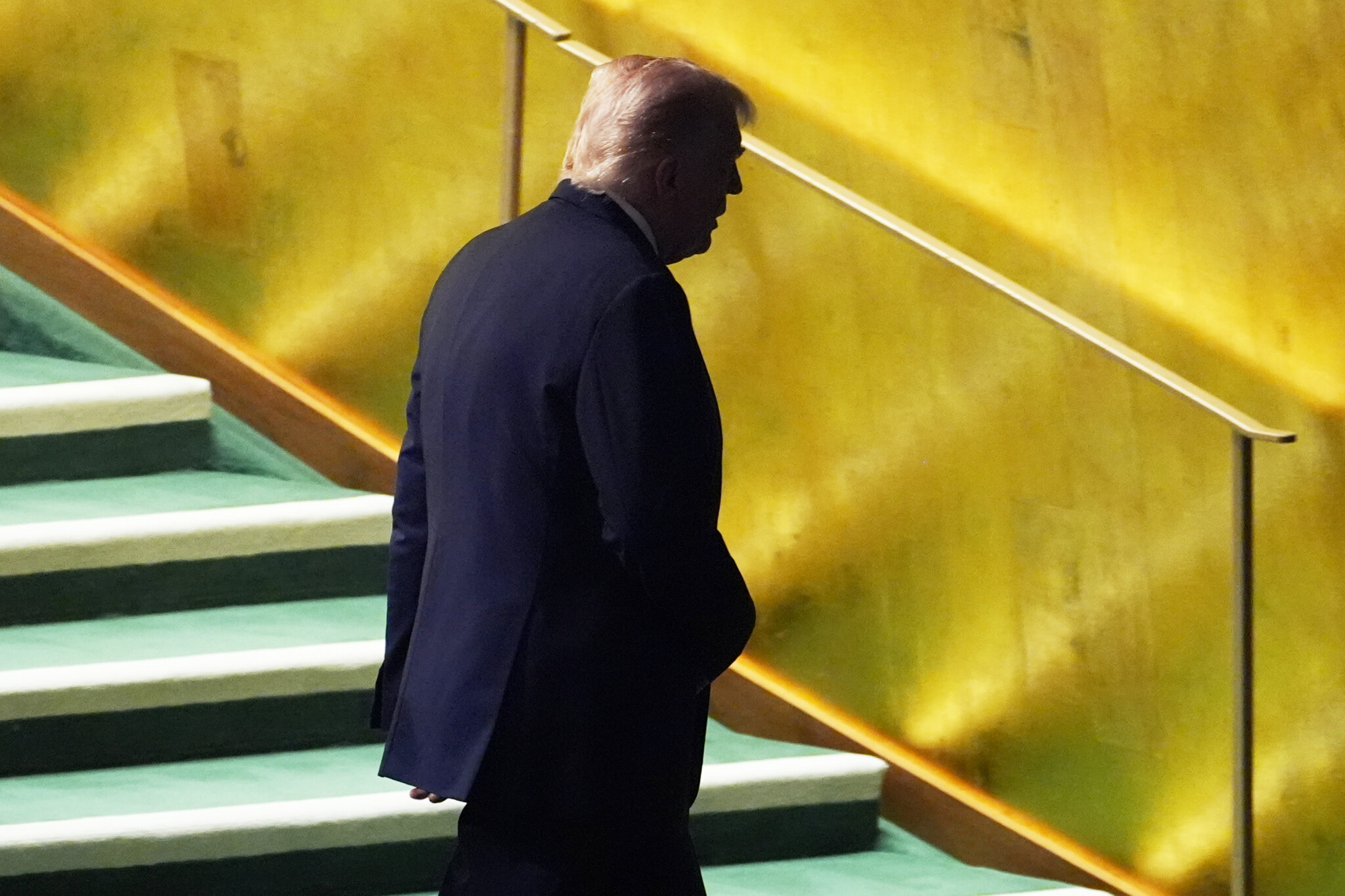
In his speech to the U.N. General Assembly, President Trump combined grievances and braggadocio to mock and scold the institution while ignoring U.S. failures to meet its commitments. The U.S. has already drastically cut back on its funding from U.N. peacekeeping operations and humanitarian assistance and is in substantial arrears on most commitments.
Without strong leadership and support from the U.S., the U.N. organization is in real jeopardy, as is the host of multilateral agreements that contribute to global security and prosperity. China may try to fill the vacuum, but it is not a credible alternative to the U.S.
The U.N. does have administrative or organizational flaws and shortcomings. The Security Council is outdated and seriously in need of reform. The veto powers given to permanent members are a recipe for paralysis on major global crises. As Secretary General Guterres lamented recently, the U.N. “is gridlocked in colossal global dysfunction.”
As one of the top U.N. funders, Canada has failed recently to gain a seat on the Security Council, where membership among the non-permanent members routinely goes instead to regional fiefdoms in Asia, Africa, and Latin America.
Trump claims to have done more to negotiate peaceful resolutions of global disputes than the U.N., but his record is mixed. He claimed to have brokered peace between India and Pakistan, which both parties denied. He lauded his efforts to have intervened successfully in a conflict between Thailand and Cambodia, but skirmishes continue. Trump may not have ended the conflict between Rwanda and the Democratic Republic of Congo, but he at least stalled the conflict for now.
Ayla Gol, a senior lecturer in international relations at York St. John University, said that the U.S.-brokered peace agreement between Azerbaijan and Armenia in early August this year “marked a historic milestone in this 35-year conflict.”
Trump’s 20-point plan for peace in Gaza may gain traction, but his attempts to broker peace between Russia and Ukraine have so far been a dismal failure. Trump has been played like a poodle by Putin, and that may explain his recent about-face on Ukraine. In an abrupt switch, signaling his disappointment with Putin, Trump suggested that Ukraine could win the war and regain all its lost territories. He urged the Europeans to take the lead on moves to increase sanctions on Russia.
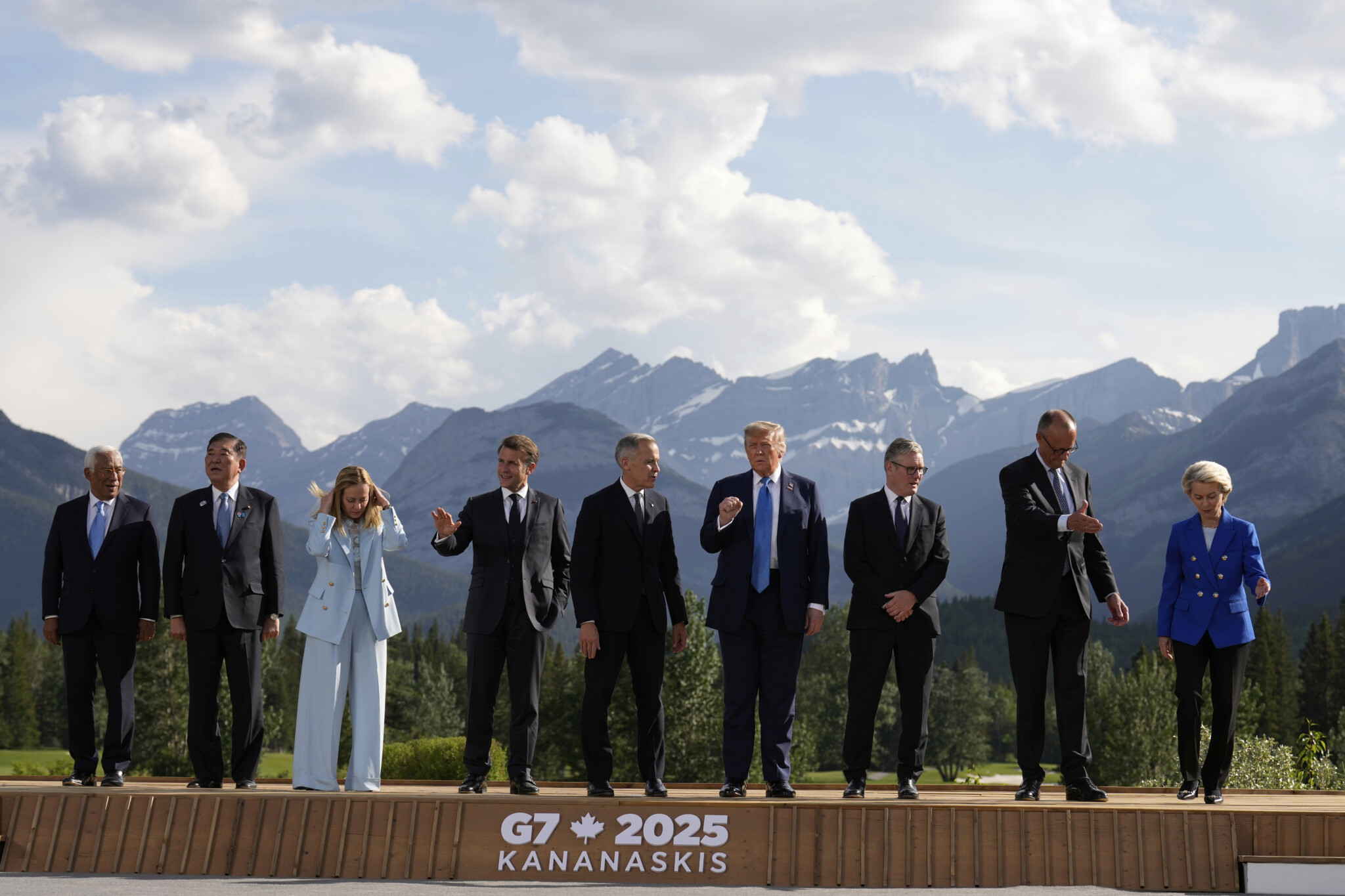
From left, European Council President Antonio Costa, Japan’s Prime Minister Shigeru Ishiba, Italy’s Prime Minister Giorgia Meloni, France’s President Emmanuel Macron, Canada’s Prime Minister Mark Carney, President Donald Trump, Britain’s Prime Minister Keir Starmer, Germany’s Chancellor Friedrich Merz, and European Commission President Ursula von der Leyen depart after a group photo at the G7 Summit, Monday, June 16, 2025, in Kananaskis, Canada. Mark Schiefelbein/AP Photo.
His sweeping executive order, issued in February 2025, aimed at ending decades of American global engagement, is more ominous. He directed the Secretary of State to conduct a comprehensive review of all multilateral organizations to which the U.S. belongs to determine whether such support should be withdrawn.
The Trump administration has already withdrawn from the Paris Climate Agreement and declared that it intends to leave the WHO.
Additionally, the order indicated that the U.S. would withdraw from the U.N. Human Rights Council, reconsider membership in UNESCO, and stop all funding for the U.N. relief agency for Palestinian refugees.
Worst of all, especially for Canada, the president is in the process of dismantling all international trade rules in favour of a “law of the jungle” trade world with one-sided bilateral, reciprocal tariffs—all take and no give by the world’s largest economy—signaling effectively the end of the WTO. International financial institutions like the World Bank may be the next to lose U.S. support.
Conceivably, the “America First” foreign policy may oblige the U.S. to leave the U.N. altogether and remove the organization from the U.S., an action many Republicans would support. Sadly, that would replicate the U.S Senate’s 1919 decision to reject the Covenant of the League of Nations.

Trump’s ambition is clear. As Stewart Patrick writes in The Death of the World America Made, “Rather than a global order that constrains real power privilege, he envisages a regionalized one in which powerful nations pursue spheres of influence and throw their weight around, browbeating, lesser nations (like Denmark and Panama, say). In this purely transactional vision, substantive multilateralism yields to bullying bilateralism…Every interaction is an opportunity for one-sided bargaining to improve America’s relative position against all others in the world.”
What is certain is that, if the U.S. withdraws from the U.N., the global organization will follow the fate of the League of Nations. A significant global crisis—either military or economic—may reverse the deteriorating trend, but that would require a degree of leadership or statesmanship that is not evident anywhere today.
The rupture of multilateral institutions of this magnitude would jeopardize the achievements in terms of stability, security, and prosperity that America led over the past eight decades.
As an organization, the U.N. can only be as strong or assertive as its key members will permit. These days there is a stunning lack of resolve among those most capable of providing leadership. Narrow self-interest is not the fault of the U.N. If the organization fails to reform itself, it will mainly be because the country that created the multilateral world order has decided that an America First foreign policy is now the preferred course of action. Those who ignore the lessons of history are doomed to repeat them. But the negative fallout will be global, including for Canada.