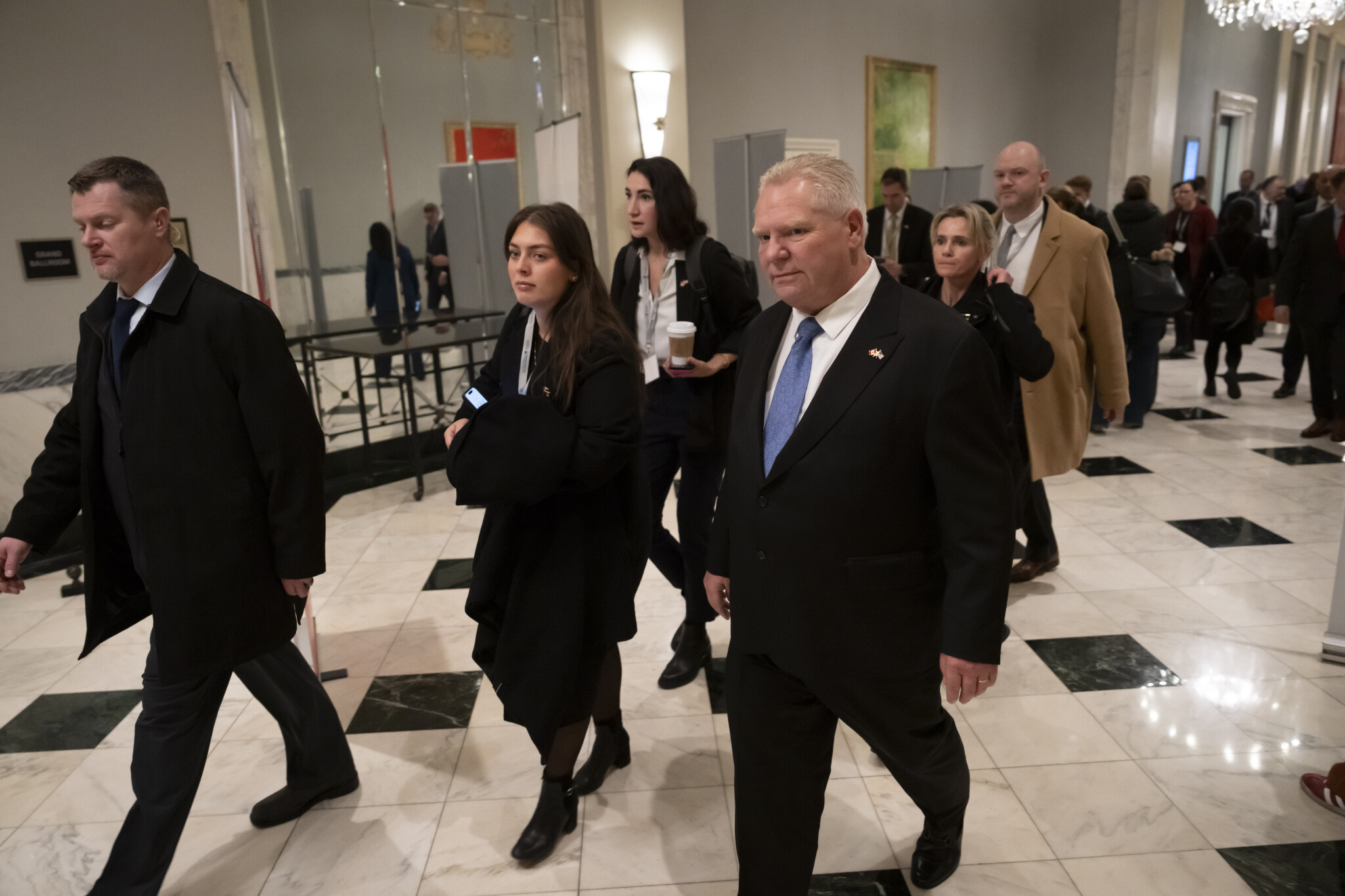
In the lead-up to the inaugural Project Ontario event—held at the Gardiner Museum in Toronto Tuesday evening—Ontario Premier Doug Ford denied both knowing anything about the nascent conservative advocacy group trying to push him rightward, while simultaneously casting aspersions that they were political extremists.
“I’m tough on crime and a prudent fiscal manager. I don’t know who these yahoos are,” Premier Ford told journalists in Hamilton on Monday when asked about Project Ontario challenging his conservative bona fides. “It sounds like some radical right group, probably tied to maybe a federal party or something.”
The premier’s comments, exemplifying the Streisand effect, certainly helped give the new outfit, run by former Progressive Conservative Party of Ontario members and supporters, a lot of publicity. The Globe and Mail, National Post, Toronto Star, Toronto Life, Juno News, and others covered Ford’s comments, while also profiling Project Ontario.
“So I saw the premier’s comments yesterday…he is obsessed with who’s in this room tonight [and] what we’re talking about,” former Conservative candidate and 640 AM talk radio host Greg Brady told the crowd of 150 professionals (everyone from an MP and MPP, to economists, lawyers, lobbyists, bankers, accountants, to a geologist and a mayor). The event included speeches, round table discussions, and cocktails. “We’re in his head,” another organizer said during the mingling portion of the night.
“We definitely blew past expectations in terms of attendees and energy. I thought it was a really positive vibe,” Project Ontario co-founder and Toronto real estate developer Matthew Spoke told The Hub at the tail end of the event. Spoke, his brother Chris, and other Project Ontario members have previously contributed op-eds to The Hub as part of their project.
“Every one of us voted for Ford in 2018. Many of us voted for him in 2022, but many of us fell off the Ford bandwagon by 2025. Yet I would consider myself like a Ford Nation guy,” Spoke said, explaining how Project Ontario’s goal isn’t to unseat Ford, but to apply pressure, through riding associations and party members, on him to follow through on what they see as conservative Ontarians’ priorities.
The speeches and conversations centred around the Progressive Conservative government failing to uphold campaign promises, including school choice, reducing government spending, cutting red tape on housing development, lowering taxes, and getting the cost of living under control. The grievances of the seven-year-old Ford government’s lacklustre record included the affordable housing crisis, youth leaving the province, the high unemployment rate, health-care wait times. They also point to Ontario having the lowest GDP per-person growth (only a little over half that of Quebec) over the last couple of decades, while also recently surpassing la belle province for corporate subsidies.
“Let’s say we were talking about choice in education, parental choice…you start to identify who are the constituents that care about that issue? Where do they [live]? [Are they] votes that matter? All of a sudden, now [Ford] can’t ignore the issue anymore, because you’ve organized people that care about that,” Spoke explained. “I think that’s true on housing, it’s true on health care.”
The panellists also discussed a feeling that the premier’s time in office now resembles the “status quo” tenure of previous premier Kathleen Wynne’s government. They see the premier as reactive with no ideological moorings. They added that a stagnant economy and an increase in government handouts have led to a culture of “zero-sum” politics, where, instead of a growth mindset, lobbying for government money has become the normalized pattern of behaviour for Ontario businesses.
“We as conservatives, we can look to past governments [like Mike Harris’] in the 90s, when the economy was in a bad spot, and they made some tough, reformist policy decisions that they then implemented to turn it around,” said Ginny Roth, partner at Crestview Strategy, to the well-heeled crowd. “And I think you can draw a pretty straight line between some of those reforms and the economy improving drastically on a lot of measurable fronts.”
Cardus president Brian Dijkema expanded on that theme during a panel discussion: “We live in a world where the pie is [a finite] size. ‘We’ve got to get ours’…that seems to be the mentality that we’re living with in Ontario, you do as many transactions with the right connected people to get your share.”
Project Ontario faces an uphill battle in getting the government to change course. Premier Ford’s PC party, sitting at 53 percent approval, currently enjoys a 26-point lead over the Liberals. Ford has won a historic three straight majority governments since 2018. His supporters would argue that the record speaks for itself–that achieving and maintaining power is the point of politics, not ticking off ideological policy boxes. They have added their belief that Tories in Ontario have historically stayed closer to the centre of the political spectrum.
Spoke and his fellow political action group members believe Ford isn’t an ideologue, citing his glad-handing with Liberal politicians and his recent flip-flop on speed trap cameras.
The current economic downturn, on the verge of recession, and a potentially resurgent Ontario Liberal Party, which the PCs will need to distinguish themselves from, may provide the opportunity to steer Ford’s government rightward.

Graeme Gordon is The Hub's Senior Editor and Podcast Producer. He has worked as a journalist contributing to a variety of publications, including CBC,…