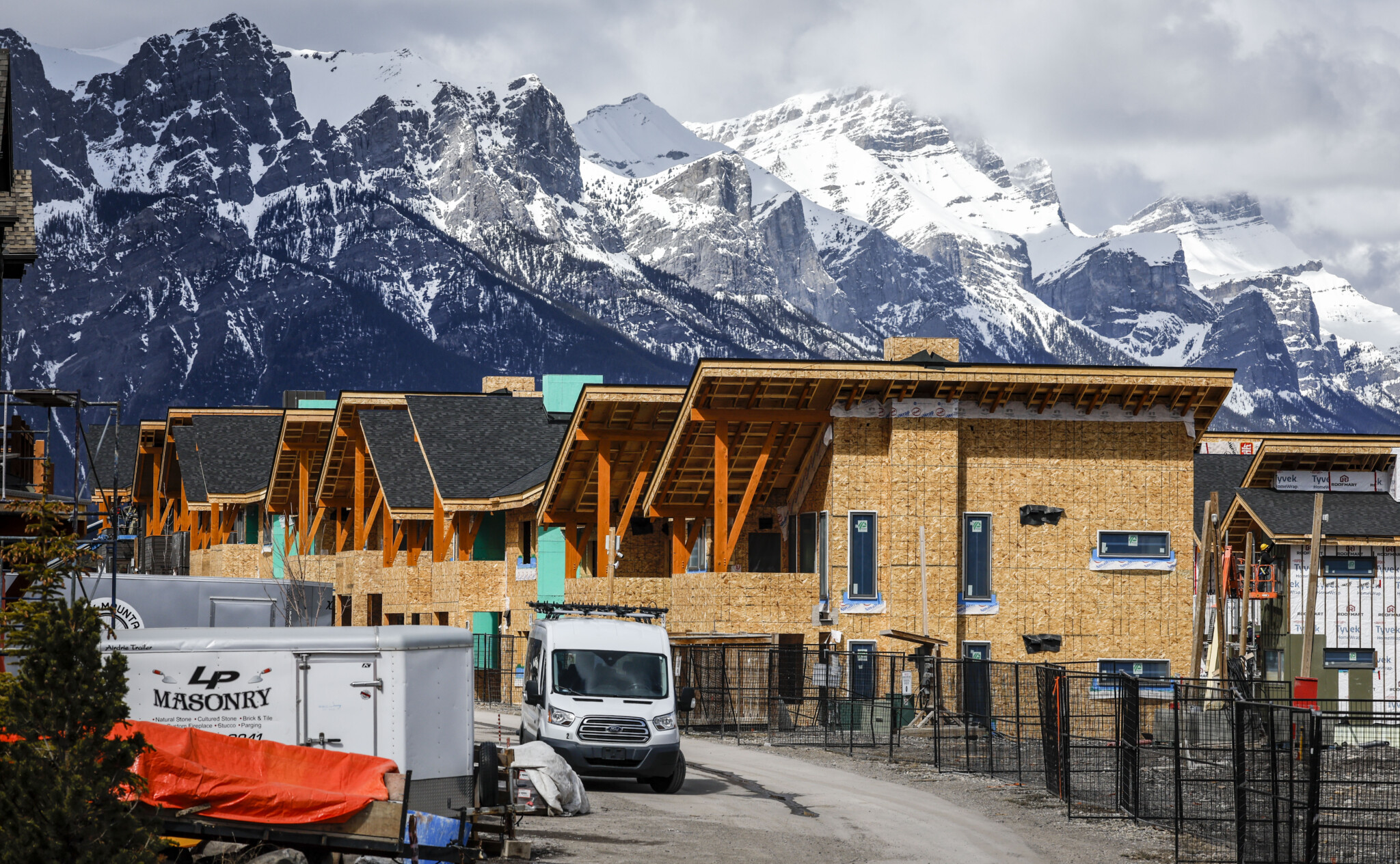
Across much of Canada, home prices and rents have fallen in recent years. For households that have spent years on the outside looking in, that should be cause for relief. However, home prices in much of the country remain at levels that make it impossible for middle-class families to afford a mortgage. And while prices have fallen, the cost to build new homes remains stubbornly high.
In many markets, the total cost of construction now exceeds what families are willing, or able, to pay. That gap has left us with a market where homes are both unaffordable to buyers and economically unviable to build. The only pathway to having home prices that are attainable for the middle class and robust new housing construction is through lower construction costs.
Housing starts are misleading us
On the surface, Canada’s housing starts still look relatively healthy. Outside Ontario, numbers remain elevated, giving the impression of resilience. But housing starts are a lagging indicator. They capture projects that were financed, approved, and pre-sold under the hotter market conditions of 2021 and 2022.
The true real-time indicator is new home sales. And here, the story is bleak. A recent report authored by MMI’s Jesse Helmer finds that sales of new homes across the Greater Toronto Area and Greater Golden Horseshoe are down over 80 percent from 2021 levels. This collapse is not confined to downtown Toronto condos. Sales have declined across the spectrum, including detached homes, townhouses, and mid-rise apartments, as well as in other major markets such as Vancouver and Calgary.

The Canada Mortgage and Housing Corporation has been clear: Falling sales today will mean falling starts tomorrow. Their latest forecast indicates that housing starts will decline by approximately 30,000 units between 2024 and 2027.
If that projection holds, the impact on employment will be severe. Based on Statistics Canada multipliers, a drop of that scale would translate into 100,000 jobs lost across the country. That includes not only the direct trades, framers, plumbers, and electricians, but also the supply chains that provide everything from windows to lumber.
When the 2008 financial crisis put 15,000 auto manufacturing jobs at risk, Ottawa and Queen’s Park recognized the danger. They moved swiftly to stabilize the sector, recognizing that losing skilled workers and shuttering plants would have a ripple effect throughout the entire economy.
The situation today is even more urgent. Housing isn’t a discretionary consumer product; it is essential infrastructure. If 100,000 skilled jobs vanish from the construction sector, Canada’s already slim chance of doubling housing starts, as both federal and provincial governments have promised, becomes impossible.

Taxes are making homes economically unviable to build
Governments often say they want more homes, but their tax policies say otherwise. From the GST and PST on new homes to development, the tax burden on new housing is crushing. In London, Ontario, I purchased a brand-new home in 2004 for $168,000. To build the same home in the same city today, the taxes and government fees alone are near this level.
These taxes are not incidental. They directly determine whether a new project can proceed. When costs exceed what households can pay, projects stall. That’s exactly what we’re seeing.
Governments argue that cutting taxes on new homes would cost too much. But inaction has its own fiscal cost. Our estimates indicate that the federal government alone will lose over $3 billion annually in tax revenues from the GTA and Vancouver if construction continues to decline. That is more than the entire budget of Build Canada Homes, Ottawa’s flagship housing program.
Put simply, governments are losing more money from declining construction than they would from cutting taxes.

Ottawa’s plans are inadequate
The federal government points to new initiatives, such as Build Canada Homes and the First-Time Home Buyer GST rebate, as evidence that it is sufficiently tackling the crisis. But they have provided no forecasts, no modelling, and no evidence that these measures will be sufficient to reduce the decline in housing starts, let alone meet the government’s commitment to double homebuilding. Meanwhile, CMHC’s own projections show starts declining year after year. The gap between political rhetoric and market reality is widening.
The solution is clear: All three orders of government must commit to substantial reductions in the cost of homebuilding. That means cutting GST and PST on new homes. It means rethinking the scale of development charges that make new housing unaffordable before a shovel even goes in the ground. And it means aligning fiscal policy with the urgent need to expand supply, rather than working at cross purposes.
Ottawa has rightly recognized that “the right to adequate housing is a fundamental human right affirmed in international law.” However, Canada is treating new housing as if it were a luxury good, piling on taxes and fees. In 2022, to much fanfare, the federal government imposed a 10 percent luxury tax on million-dollar yachts, ensuring oligarchs paid their fair share. Meanwhile, a middle-class family buying a semi-detached home in Scarborough can pay around 15 percent of the home’s price in development charges and land-transfer taxes. And, like with the yachts, they must pay GST and PST on top of that.
If we want to make quality homes affordable to the middle class again, we need to stop taxing them out of existence. We need to stop taxing new modest middle-class homes at higher rates than luxury yachts.
The choice is clear: Act now to cut the cost of homebuilding, or face the double blow of fewer homes and 100,000 lost jobs.

Mike Moffatt is the founding director of the Missing Middle Initiative and co-host of the Missing Middle Podcast.






Comments (8)
Unfortunately we crossed an invisible line some time ago where the size and cost of government ballooned beyond our ability to support it. Further evidence is our narrowing tax base – those who pay more than they consume. Now we are in a mad scramble to support an unsustainable government burden. It’s going to be really ugly – we exited the boiling frog phase and this is just the beginning of the visible pain with data that is now in everyone’s face.