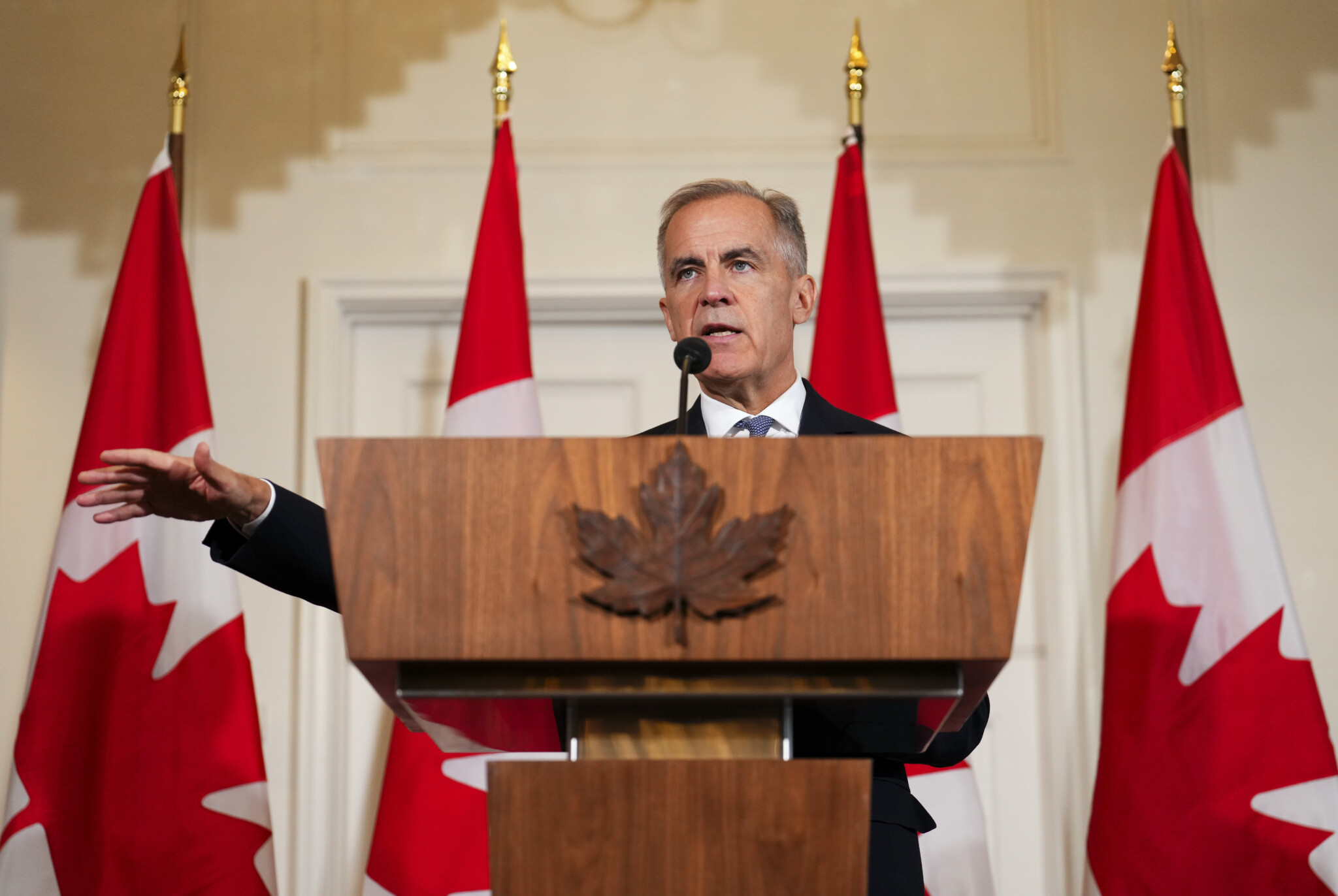
Former Alberta premier Jason Kenney is raising concerns about Prime Minister Mark Carney’s apparent hesitation on pipeline projects, despite Carney’s explicit election campaign promises to accelerate approvals and establish “one Canadian economy” by removing interprovincial trade barriers.
Kenney expressed confusion, in an interview with The Hub, at the federal government’s apparent willingness to give veto power to B.C. and Quebec over interprovincial energy infrastructure—a position he argues contradicts both the Constitution and Carney’s own campaign commitments to become an energy superpower.
Alberta Edge podcast host Ryan Hastman spoke with Kenney to better understand his perspective on Canada’s energy infrastructure challenges and opportunities.
Here are five key takeaways from the conversation:
1. Prime Minister Carney must reconcile rhetoric with action on pipeline development: Carney campaigned on a promise to speed up approvals and knock down interprovincial barriers, yet the PM appears to have a more restrictive stance than Liberal predecessor Justin Trudeau.
2. Keystone XL 2.0 offers the most viable path forward for Canadian energy exports: The existing infrastructure and Trump’s support provide significant advantages over West Coast alternatives.
3. Government de-risking may be necessary to overcome regulatory uncertainty: Following precedents set by previous Alberta governments in developing the oil sands, some level of government de-risking may be necessary.
4. B.C. Premier David Eby is unconstitutionally blocking interprovincial pipeline development: The premier is violating federal jurisdiction over interprovincial infrastructure according to Kenney, citing recent court decisions.
5. Bay Street investors are frustrated with regulatory dysfunction: Despite strong public and business support for energy infrastructure development across Canada, the government hasn’t yet made the necessary changes to attract investment for new projects.

Prime Minister Carney must reconcile rhetoric with action on pipeline development
Kenney expressed concern that Prime Minister Carney’s recent federal statements have effectively given veto power to Quebec and B.C. over interprovincial energy infrastructure.
“Based on those comments where basically Prime Minister Carney and Energy Minister Hodgson seem to have given a veto to Quebec and British Columbia now on blocking interprovincial energy pipelines, which was not the position of Justin Trudeau,” Kenney stated.
“Justin Trudeau bought TMX. He built it against the objections of the B.C. NDP government. He took them to court and won. And I can’t believe I’m saying this, but Justin Trudeau was more in favour of coastal pipelines and one Canadian economy and federal paramountcy when it comes to national infrastructure like this than apparently, Mr. Carney is.”
Kenney emphasized that Carney’s election platform explicitly promised to achieve “one Canadian economy” that “knocks down interprovincial barriers” and make Canada a “global energy superpower,” yet the federal government’s recent approach appears to contradict these commitments.
Kenney called on Carney to “meet the rhetoric and the expectations with action” and reminded him of former Prime Minister Pierre Trudeau’s constitutional principle that “it is not Ottawa’s job to be the head waiter to the provinces.”

Keystone XL 2.0 offers the most viable path forward
Kenney argued that reviving the Keystone XL, which would connect from Hardisty, Alberta to Steele City, Nebraska, represents a “judo move” that could bring Trump closer to Canada while demonstrating the mutual benefits of the bilateral energy relationship.
“The chances of getting something like that done, and another major pipeline carrying Alberta oil to the U.S. Gulf coast is much greater than the chance of a West Coast pipeline,” Kenney explained. “Because it would be a hell of a lot cheaper, simpler, and faster.”
The project benefits from existing infrastructure investments made during Kenney’s tenure as premier, including pipe already in the ground between Hardisty and the Montana-Saskatchewan border.
Government de-risking may be necessary
While preferring market-based solutions, Kenney acknowledges that government intervention may be required to overcome political and regulatory uncertainties that have deterred private investment in major pipeline projects.
“My preference is never for government to risk tax dollars. But if there’s no alternative, I think we need to look at it,” Kenney stated, drawing parallels to Peter Lougheed’s creation of the Alberta Energy Corporation in the 1970s to capitalize on early oil sands developments.
Kenney suggests various partnership models, from loan guarantees to tripartite joint ventures between Canada, Alberta, and the United States. He argues that the potential returns—tens of billions in future royalties and taxes—justify government involvement.
B.C. premier blocking constitutional pipeline development
Kenney reserved his harshest criticism for B.C. Premier Eby, whom he accuses of unconstitutionally attempting to block interprovincial pipeline development despite clear federal jurisdiction over such infrastructure.
“This is a guy who’s in office who wants to use his political authority to block a prospective interprovincial pipeline which is, according to the clear letter of the Constitution, a matter of exclusive federal jurisdiction,” Kenney argued, citing recent unanimous court decisions supporting federal authority.
He contrasted Eby’s approach with that of his predecessor NDP Premier John Horgan, who Kenney says committed to supporting the Trans Mountain pipeline (from Edmonton, Alberta to Burnaby, B.C.) after losing court challenges. Kenney argues that Eby represents what Horgan called the “mud hut wing” of the B.C. NDP.
Bay Street frustrated with regulatory dysfunction
Despite policy challenges in Ottawa, Kenney reports strong support for energy infrastructure development among Toronto’s financial community, reflecting broader Canadian public opinion that has shifted toward supporting pipeline projects.
“People get it,” Kenney said of his recent interactions on Bay Street. “There’s trillions of dollars of capital around the world looking for a good returns…What we don’t have is a functional regulatory process.”
This frustration extends beyond energy to critical minerals, mining, and data centre development, suggesting systemic regulatory problems that extend far beyond the energy sector. Kenney notes that polling shows over 70 percent support for additional oil pipelines across Canada.
Does Prime Minister Carney's approach to pipelines align with his 'one Canadian economy' promise?
Is government de-risking a necessary evil for Canada's energy infrastructure?
How significant is the frustration of Bay Street investors with regulatory dysfunction?






Comments (0)