DeepDives is a bi-weekly essay series exploring key issues related to the economy. The goal of the series is to provide Hub readers with original analysis of the economic trends and ideas that are shaping this high-stakes moment for Canadian productivity, prosperity, and economic well-being. The series features the writing of leading academics, area experts, and policy practitioners.
For decades, the postsecondary system has been an integral part of the Canadian story, serving as a source of discovery, a ladder of opportunity, and an anchor in communities across the country.
That compact is fraying. Budgets are under acute stress. Programs and even campuses are closing. Confidence in the sector’s financial stability and ability to respond to labour-market needs has eroded, with each problem compounding the other. The uncomfortable throughline is that institutions are making short-term decisions to survive, not long-term decisions to build national prosperity. Like the broader economy, postsecondary education needs to pivot.
This DeepDive distills and expands on two recent RBC Thought Leadership papers that drew on advice from leaders across the country. The first, “Testing Times,” follows a series of national dialogues and sets out five requirements to steer Canadian higher education out of crisis. A follow-up report, “Powering a Postsecondary Pivot,” draws from a Summit of about 60 CEOs and postsecondary presidents and focuses on three cases of national ambition—defence and space, frontier technology, and major energy projects. It outlines concrete ideas for delivering mission-ready talent, faster technology diffusion, and tighter institution-industry coordination.
Together, the reports make the case that if Canada wants productivity, innovation, and inclusive growth, we need a strong, financially stable postsecondary sector with differentiated mandates, modern programs, nimble governance, and mission-driven research that solves real problems. Our DeepDive lays out the five change requirements covered in “Testing Times” with integrated ideas from the Summit for powering the pivot.

A new financial arrangement
Start with the money, because everything else depends on it. Canada once ranked among global leaders in public funding for postsecondary institutions. That’s no longer true. Public spending has slipped from a peak of 1.47 percent of GDP in 2011 to about the OECD average of 1.1 percent today.
Measured against economic growth, governments are spending roughly $13 billion less than they would have if support had merely kept pace with GDP over the last decade and a half. The shortfall is structural, not cyclical.
Meanwhile, domestic tuition hasn’t filled the gap: Provincial caps have kept most undergraduate tuition effectively flat in real terms, even as costs—from technology to student supports—have risen. The result is precisely what students experience on the ground: large classes cross-subsidizing expensive programs like medicine, fewer options, and stretched services.
Into that gap rushed international student tuition. Between 2010 and 2023, fees from international students accounted for all new operating revenue growth in the sector—100 percent. It was a lifeline, but a fragile one.
In 2024, the federal government capped study permits and restricted access to post-graduation work permits to programs tied to national labour shortages, then updated the eligible program list multiple times in a single year. Planning around “moving goalposts” is almost impossible.
Ontario, the province most exposed to the international pivot, has already seen losses, cuts, and deficits in excess of $140 million across six institutions, while one tracking effort counts more than 850 program suspensions or closures and 35 institutions with 100 or more job impacts since the caps. None of this is a recipe for building the talent base Canada needs.

There is no pain-free fix, but there are credible options:
Rebuild public investment—and be clear about what it buys. Provinces and the federal government can increase base funding to stabilize operations and protect quality, especially in regions where campuses are essential to local labour markets and demographic vitality. Given competing fiscal pressures—from health care to defence—new dollars should be tied to transparent outcomes: student success, regional priorities, and credential pathways that align with economic strategy.
Offer measured tuition flexibility paired with access guarantees. More price flexibility would let institutions calibrate to demand and cost, encouraging innovation in delivery and responsiveness to student and employer preferences. Protecting access will be essential. Major energy projects, for example, will not go ahead without increasing the supply of skilled workers—we need to expand the reach of training, not restrict it. To protect access, governments should require that a share of any new tuition revenue flows into means-tested student aid while strengthening provincial and federal assistance so affordability does not become the casualty of reform.
Stabilize international student policy. If international tuition remains material to the system’s finances—especially for colleges—Canada needs fewer policy whiplashes and more multi-year targets that square national skills needs with institutional planning horizons.
Stability isn’t an end in itself; it’s the precondition for a sector that can credibly promise students, employers, and communities that it will deliver what the economy now demands.
Responsive mandates
Even if the dollars stabilize, they won’t deliver growth unless mandates do. On paper, Canada’s postsecondary system looks highly differentiated: universities, colleges, polytechnics, institutes, apprenticeship providers, and more. In practice, the distinctions are often murky. The gravitational pull toward the “university model”—“academic drift”—has nudged many institutions toward sameness, not specialization. College bachelor’s degrees, and the push into master’s-level offerings, are symptoms of a system trying to capture revenue within existing regulatory confines rather than orient around social and economic needs.
A more responsive postsecondary landscape would lean into true diversification. Colleges would be enabled—and funded—to expand hands-on, equipment-intensive, small-cohort training across ages, from trades to mid-career upskilling. Universities would double down on deep disciplinary strengths and mission-driven research partnerships that translate into productivity gains here at home.
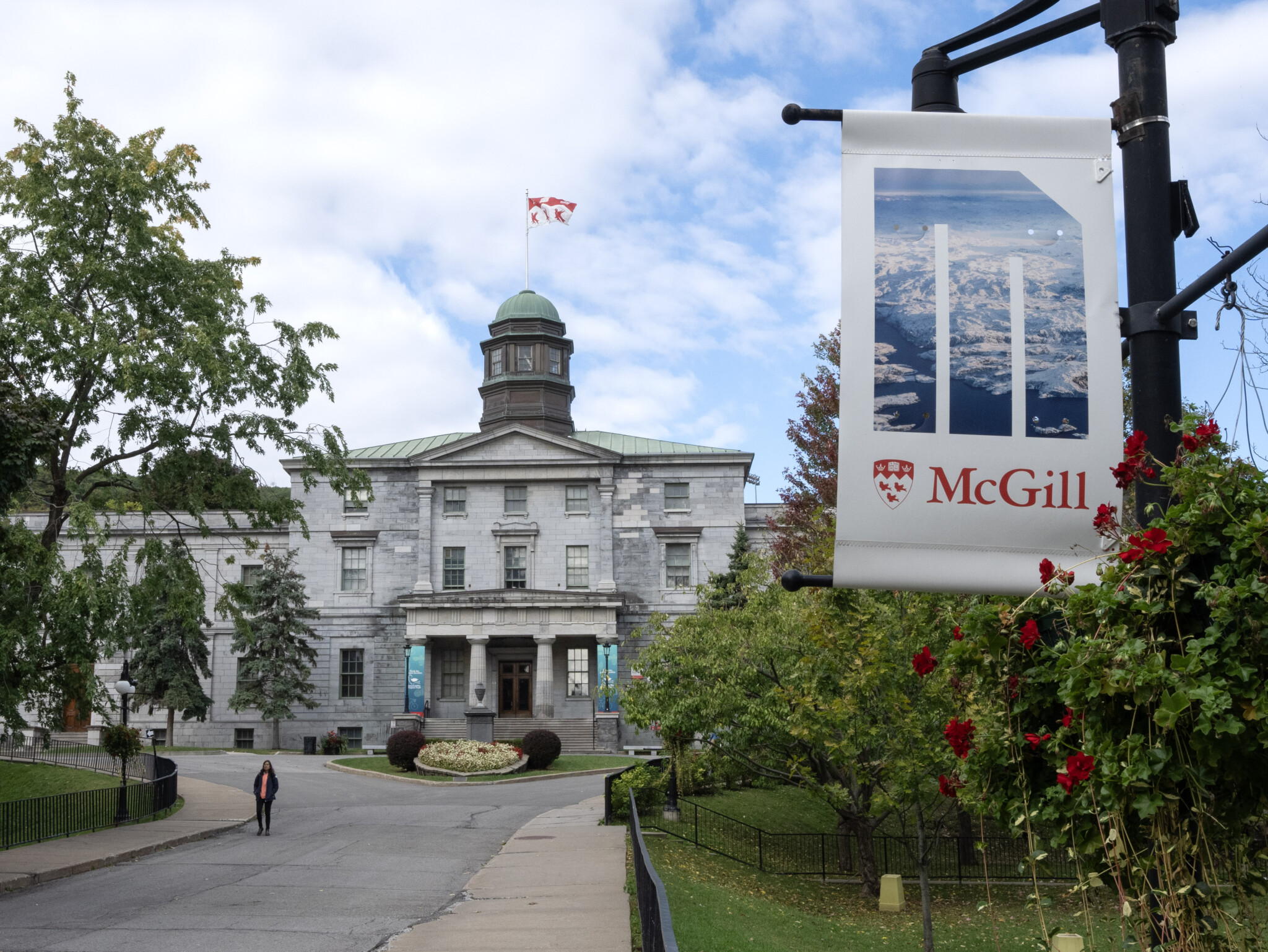
McGill University is seen Friday, October 13, 2023, in Montreal. Ryan Remiorz/The Canadian Press.
Within those broad families, individual institutions would develop thematic reputations informed by local industry and community needs: the Summit’s themes are great examples, as are agriculture and health care—there are many; institutions could also lean into serving particular learner demographics, pioneering flexible and work-integrated learning models, for example.
Data is the missing infrastructure needed to guide strategic differentiation. Compared to peer jurisdictions, Canada collects surprisingly little information on how the system functions at a program level, how student outcomes vary by credential and mode, and how credentials “stack” across a lifetime. Good data would let institutions test whether particular demographics thrive in certain formats, or whether micro-credentials meaningfully move careers in targeted industries. It would help provinces coordinate mandates to avoid redundancy, and it would give learners confidence that their time and money are buying labour-market value.
The federal government can help set common standards and support granular, up-to-date data platforms, and draw on that data for its planned Workforce Alliances, which should cover defence and energy, and include postsecondary partners ready to co-design training with employers and unions, say Summit participants.
Markets can also play a constructive role, where measured tuition flexibility would push institutions toward areas where they genuinely create value, while stronger outcomes-based funding would reward those who do. Mandates are not marketing slogans; they’re operating systems. When they’re crisp and supported by incentives, the system stops trying to be all things to all people and starts building complementary strengths.

Modernized programs and services
The world students are entering, and the technologies they will wield, have changed faster than most curricula. Traditional models presumed scarce information and prized recall. In an era of ubiquitous AI, the premium has shifted to higher-order capabilities: analytical reasoning, problem-framing, creativity, communication, and the ability to learn and relearn across a career.
Employers have been remarkably consistent about the skills they seek: adaptable thinkers with entrepreneurial mindsets who can collaborate, communicate, and deploy technology intelligently. Every program, from humanities and health to trades and tech, should embed these transferable competencies through applied projects, co-ops, internships, and real-world problem-solving.
On the technical side, demand for digital skills (from big data to AI-assisted workflows) is growing fastest. Powering a Postsecondary Pivot is clear: we need to reframe AI from a niche specialization to a literacy that every graduate possesses, regardless of discipline. Understanding where and how to use AI productively, judging risk, quality, and bias, and integrating tools into domain-specific workflows—from nursing and law to logistics and advanced manufacturing.
Institutions themselves must model the behaviour they want students to master. That means integrating AI and predictive analytics into advising and student-success systems; modernizing assessments to use AI, not pretend it doesn’t exist; and training faculty and staff to offload rote tasks to tools so they can spend more time teaching and mentoring. Leading institutions elsewhere offer a playbook: Arizona State uses predictive analytics to trigger proactive supports and AI tools to guide learners through program and career decisions; Canadian campuses can adapt, not copy, those ideas to their own contexts.
Modernization is equally about who learns and how. Economic volatility makes lifelong learning the new baseline. Mid-career learners have, bills to pay, kids to care for, and limited time to waste on content they have already covered. They will choose flexible, career-relevant pathways that build on what they already know and can do. Powering a Postsecondary Pivot recommends competency-based education programs for auto-workers to transition to defence and space sectors, letting workers with relevant skills move through programs quickly–saving time and money–on their way to an industry-recognized credential.

Energy—spanning generation, transmission, storage, critical minerals, and the surge in power demand from computing and electrification—is another sector of rapid, mid-career retraining near project sites. Because many projects intersect with Indigenous lands and leadership, stakeholders should emphasize community-led partnerships that bring together technical training, environmental monitoring, and ownership pathways, ensuring benefits flow locally while speeding up execution. The model blends speed with legitimacy. Build the workforce faster, but do it with partners who anchor projects socially and economically.
The practical checklist for institutions is clear: redesign curriculum around transferable skills; embed work-integrated learning across programs; adopt technology to personalize supports and reduce friction; expand hybrid, modular, and competency-based offerings; and expect students to cycle in and out of learning throughout their working lives. Governments can accelerate the shift by aligning aid, credit recognition, and quality assurance with learning outcomes—and by funding pilots that prove out new models.
Updated governance structures
If mandates set direction and programs deliver value, governance determines speed. Canada is poised to invest heavily in national projects, ranging from rearmament and continental security to space-based infrastructure and sensing, accelerated AI adoption, and energy build-outs to support digital demand. Yet, the talent and innovation backbone that should make those investments pay is not moving at the speed or scale the moment demands. Postsecondary institutions can be a force multiplier rather than a bottleneck, helping Canada achieve its national strategic goals.
Right now, too much of the system is stuck in first gear. Externally, regulatory and funding frameworks are often mismatched to the agility the moment requires. Ontario’s college funding model, for instance, discourages the creation of part-time programs that would appeal to upskilling adults.
One of the leaders RBC Thought Leadership engaged summarized the dilemma: Leaders are told to run institutions like businesses but hemmed in by a public-service legal and regulatory architecture where 80 percent of revenue and 85 percent of expenses are controlled by others, accountability is fragmented, and industry operates on weekly cycles. It’s a structural recipe for obsolescence, not because leaders lack capacity but because the machinery resists change.
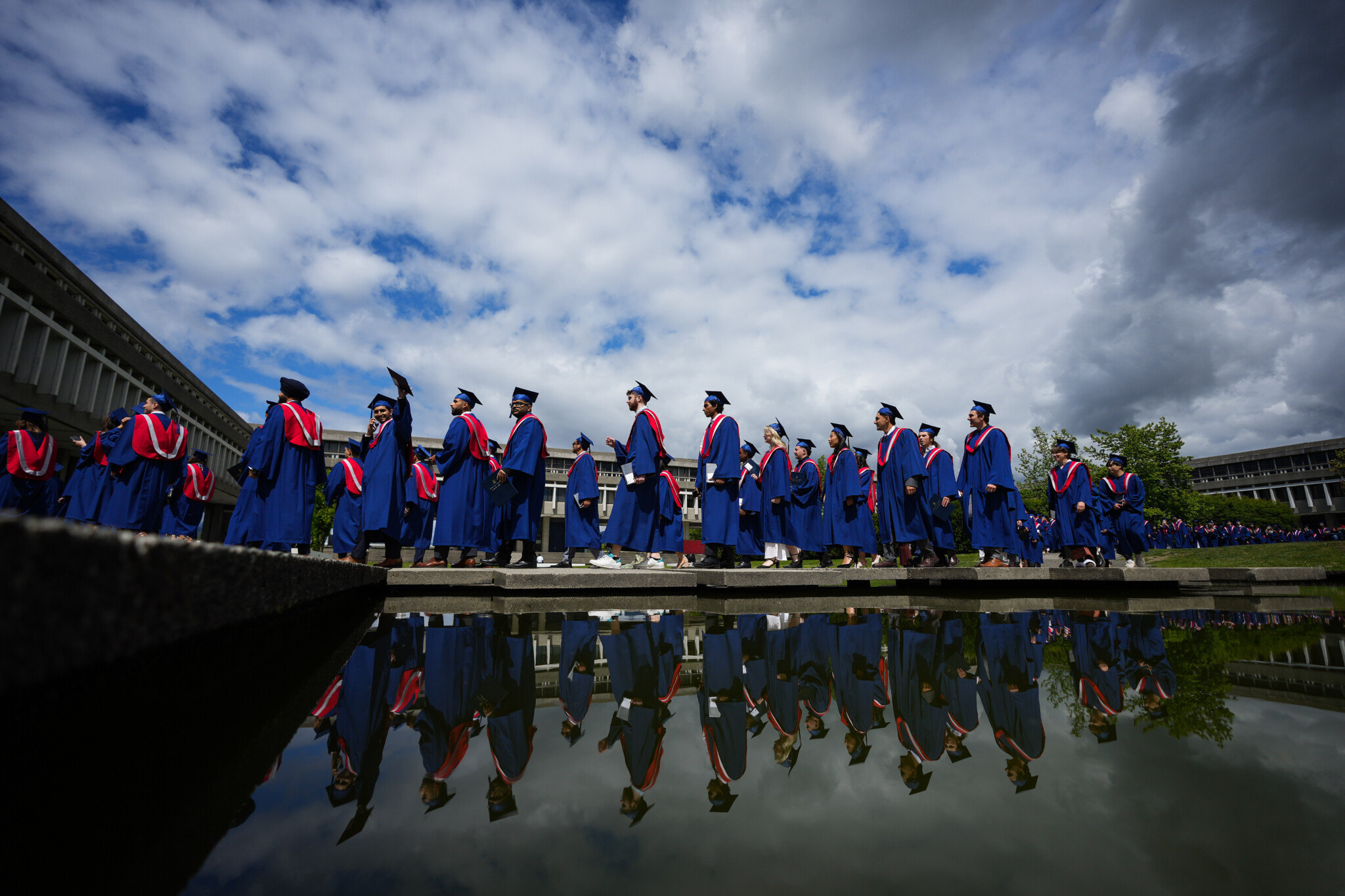
Graduating at a convocation ceremony at Simon Fraser University, in Burnaby, B.C., June 12, 2024. Darryl Dyck/The Canadian Press.
The path forward is not deregulatory zeal; it is smart flexibility. Provinces can work with institutional leaders to identify and dismantle roadblocks, including modernizing how professional regulatory bodies recognize innovative programs. Institutions and unions can revisit collective agreements and HR policies to balance job protection with institutional viability, codifying new expectations around technology use, pedagogy, and continuous program refresh.
Governing boards can tighten accountability for outcomes while freeing management to choose the means. Quality assurance can pivot from inputs and hours to evidence of learning and labour-market relevance. The goal is a governance architecture that still protects students and the public interest, but lets institutions pivot as quickly as the labour market they serve.
None of this is easy. It touches identities, incentives, and long-standing norms. But the alternative is worse: a system that drifts into irrelevance as employers build their own pipelines and learners vote with their feet. Governance is where Canada either chooses to unlock institutional talent—or keeps it bottled up.
Practical, mission-driven research
Research is Canada’s innovation engine, but it’s sputtering where we most need torque. Compared to peers, Canada’s overall spending on research and innovation is persistently low, largely because our business sector is dominated by SMEs with thin R&D budgets and branch-plant multinationals whose head offices do the inventing elsewhere.
Counterintuitively, higher education’s share of R&D spending is comparatively high; universities are carrying more of the national load. Yet the incentives inside the academy still tilt toward publications and citations rather than patents, prototypes, and productivity-raising diffusion. Promising ideas often stall at the ideation stage, and talented individuals leave to join ecosystems that know how to bridge the final mile from lab to market.
A mission-driven research agenda would rebalance the portfolio. Discovery science remains essential; some of Canada’s greatest scientific achievements—from particle physics to AI breakthroughs—grew out of curiosity-driven work.
But the moment calls for a stronger applied vector: research organized around national priorities (like defence and space, AI, energy, food security, health, and aging), funded and measured to reward tangible progress, IP creation, and diffusion into Canadian firms.

That means updating federal granting councils to incentivize problem-solving and commercialization, while preserving protected lanes for blue-sky inquiry. It means rewriting tenure and promotion criteria to value innovation, community impact, and industry collaboration. It means focusing institutional strategies—especially at research-intensive universities—on a few areas where Canada can lead and where partnership with firms and public agencies will convert insights into jobs and exports. And it means new collaborations, like the “relay race” partnership approach proposed in “Powering a Postsecondary Pivot”: university ideation, college or polytechnic application, industry deployment.
There is also a once-in-a-generation opportunity to crowd in investment via national missions. Canada’s renewed defence-spending commitments could catalyze an ARIA- or DARPA-style entity—call it BOREALIS—to fund high-risk, high-reward projects with clear milestones, drawing on university and industry strengths and operating outside the slow-moving grant cycle.
If designed well, such a vehicle would do more than fund research; it would help rebuild Canadian industrial capabilities, create procurement pathways for home-grown solutions, and train a new cadre of mission-oriented scientists, engineers, and program managers. Paired with incentives for private-sector R&D contracts and simplified IP regimes, this could bend the arc from good ideas to Canadian prosperity.
Key takeaways: From crisis management to nation-building
Canada is relying on its postsecondary system to deliver the skills and innovations that will make—or break—our economic pivot. If Canada wants historic returns from historic investments in areas like defence and space, AI and energy, the postsecondary pivot will have to be financial and structural, but also strategic—aimed squarely at the ambitions we claim to hold. It will require sharper mandates, modernized programs, agile governance, and research that solves concrete problems. Making the changes outlined above will restore the sector’s social licence: the public will see what they’re paying for; students will see pathways to good jobs; employers will see partners who can keep pace; communities will see institutions anchoring opportunity rather than managing decline, and Canada’s national priorities being advanced.
The burden cannot fall on campuses and cabinet tables alone. Employers who expect to benefit must lean in: co-designing curricula, paying to upgrade the skills of the existing workforce, co-delivering work-integrated learning, sharing skill needs, validating competencies, and co-funding mission-oriented research. K–12 systems need to modernize guidance and prestige hierarchies so that skilled trades, college pathways, and ongoing upskilling are seen not as second-best but as central to a resilient, opportunity-rich economy. Most of all, Canadians need to adjust our mental model of education itself. In a volatile, tech-intensive world, upskilling isn’t a remedial option for the unlucky; it’s the baseline. A sector built to that reality is not a cost centre. It’s a growth engine.
How can Canada's postsecondary institutions become economic growth engines?
What are the main financial challenges facing Canadian postsecondary institutions?
How can postsecondary institutions better align with Canada's economic and labor market needs?







Comments (6)
Good article. The problem of ideological capture and institutional leftism probably deserved a mention here too. Most Canadian Universities and Colleges have lost their way on issues related to open enquiry, viewpoint diversity, civil discourse and the pursuit of truth.