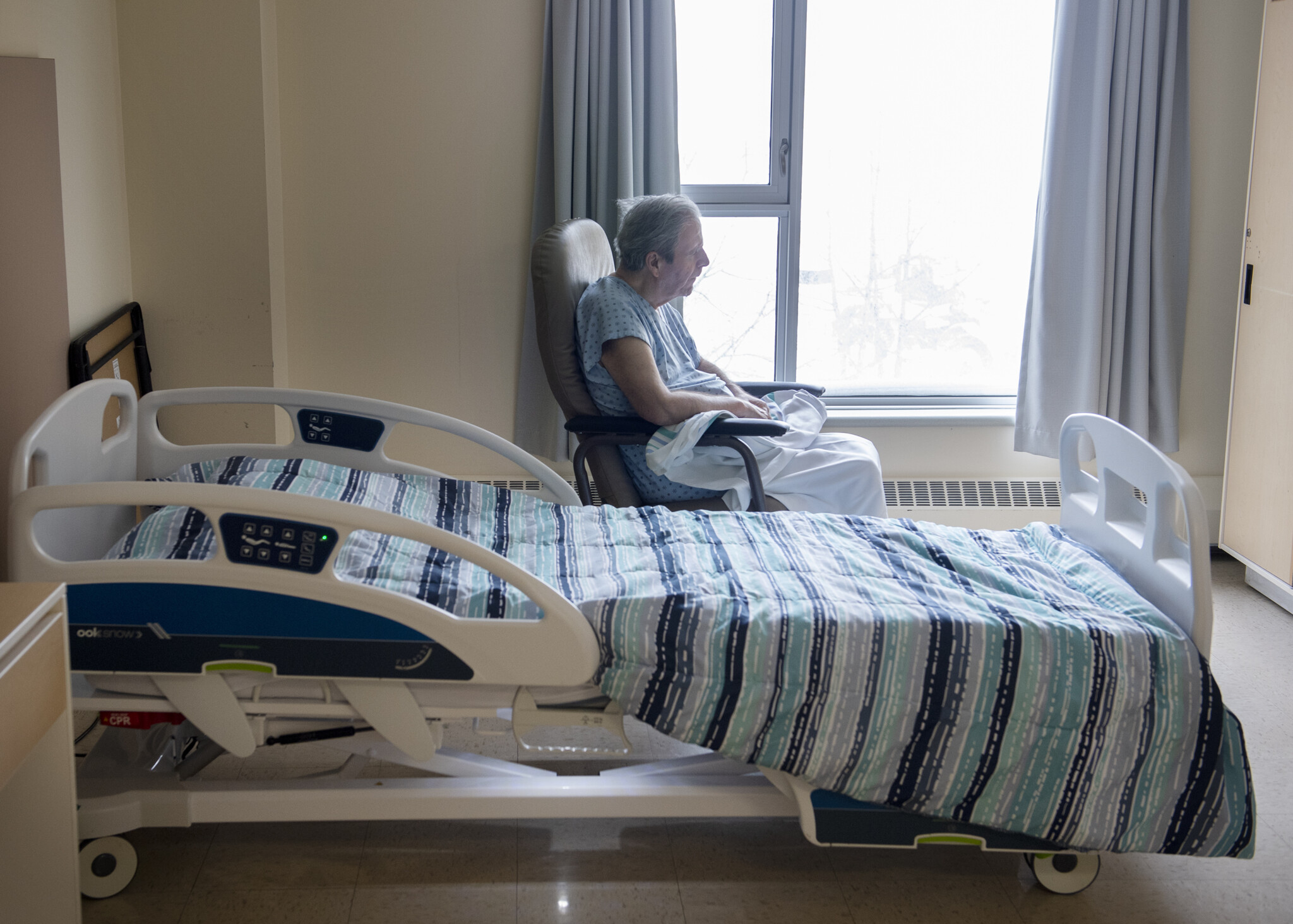
Ramona Coelho, a member of Ontario’s MAID Death Review Committee, warns: “Canada’s legal safeguards are failing. Federal guidelines are being ignored. The public deserves to know: Is Canada building a system that truly protects all Canadians—or one that expedites death for the vulnerable?”
What started as supposedly a last resort in an end-of-life context in 2016 has quickly grown into one of the most expansive euthanasia regimes in the world, accounting for the fastest-growing rate of euthanasia in the world. Yet, despite ongoing problems with Medical Assistance in Dying (or MAiD), the federal government continues to pursue further expansion.
After passing, and twice delaying, an expansion to people with mental illness as their only underlying condition, Parliament will again debate that expansion this fall with private members’ Bill C-218.
But MAiD proponents also continue to push for death by advance request, which is currently prohibited in the Criminal Code. Through an advance request, a person diagnosed with an illness that would lead to incapacity, such as dementia, could specify the conditions under which he or she may be euthanized after having lost the capacity to consent.

Prior to the 2025 election, the federal government completed a consultation on advance requests, but has not yet released the results. The Senate is considering Bill S-231, which would allow advance requests. And Quebec continues to permit advance requests despite the criminal prohibition. According to recent reporting by the Montreal Gazette, more than 1,400 Quebecers with dementia have been approved for advance requests for MAiD between October 30, 2024, and September 4, 2025. These have all met the requirements to prepare an advance request, and their requests are stored in a provincial register. Only 179 requests were rejected.
Euthanasia by advance request devalues the lives of Canadians with dementia and sends a message that they are less dignified and worthy of care. Through advance requests, people give doctors a license to kill them in the future, based on their present fear of a future condition. A person diagnosed with dementia can live well for years. That person has never lived through the future stages of the condition and cannot know what their life will be like in the future.
Once a person reaches the condition described in an advance request, as interpreted by their doctor or a loved one, they might no longer wish to die. They could be happy in their circumstances despite cognitive decline. Yet despite this, once the person has lost the capacity to consent, it is up to others to decide when it is time to end the person’s life.
The Netherlands is one of a few countries to permit advance requests, but doctors there are often unwilling to act on them because patients cannot confirm their wishes after losing capacity. MAiD is the most consequential “medical” procedure—the dead patient can’t dispute the decision to proceed with euthanasia. And there’s often no mechanism for families to do so either.

But another problem is that Canada is already euthanizing patients with dementia, before they lose capacity to consent.
In Ontario, where advance requests are not permitted, problems remain with determining capacity and eligibility for euthanasia. Ontario’s MAiD Death Review Committee recently released a report focused on dementia. This report noted that 103 patients with dementia were euthanized in 2023 and 2024 in the province. Persons with dementia reported far lower rates of inadequate pain control, but higher rates of loss of dignity, being a perceived burden on family, friends, or caregivers, and experience of isolation and loneliness than those with other conditions. Such factors indicate that people need social and mental health supports, not euthanasia.
The committee’s report also looks at multiple troubling cases, like that of Mrs. 6F, who had advanced dementia, a condition where providing informed consent is often impossible. The MAiD eligibility assessment included a limited evaluation of cognitive impairments despite her challenges with navigating daily routines. Mrs. 6F expressed a wish to die to a family member, but later chose to move to long-term care instead. A few months later, a family member renewed the request for MAiD. Final consent was determined by Mrs. 6F’s ability to repeat the consent question and squeeze the MAiD provider’s hand.

Of course, proponents of advance requests will argue that they give people with dementia more time to live—if people are diagnosed with dementia and can’t make an advance request, they will choose to die while they still have capacity to make that decision, they say. They present the dichotomy: die earlier when you can still consent. Or lose capacity and suffer. But this approach assumes too much—that a person can know what their life in the future will be like, that cognitive decline causes intense suffering, and that doctors will be able to discern the “appropriate” time to end a person’s life on the basis of their advance request.
The dangers are simply too great. And there’s a third option: Promote care for those with capacity-limiting illnesses. Tell them their lives are valuable and dignified, no matter how their physical function and capacity might decline.
Toronto Star columnist Andrew Phillips says it well: “If the public health system we all have a stake in is killing people because they’re just lonely or troubled, that’s something we should all care about. And if even a few people are being ushered out when there are real questions about whether they’ve fully agreed to what’s happening, that’s even worse. It’s not just about their ‘choice.’ It’s about what kind of system we’ve all chosen.”
Canada has chosen a system that expedites death for the vulnerable. It’s time for our governments at all levels to stop further expansion and to protect vulnerable Canadians.
Is Canada's MAID expansion prioritizing vulnerable individuals or expediting death?
Should advance requests for MAID be permitted for individuals with conditions like dementia?
What are the primary concerns regarding MAID for individuals with dementia, according to the article?







Comments (10)
This article is written as if he is the President of the Canadian Nursing Home Association. The writer advocates to keep people that are a mere shell of themselves housed in facilities that eliminate their wealth and cause untold grief for their families. I for one enthusiastically agree with advance consent for MAID for these insidious conditions.