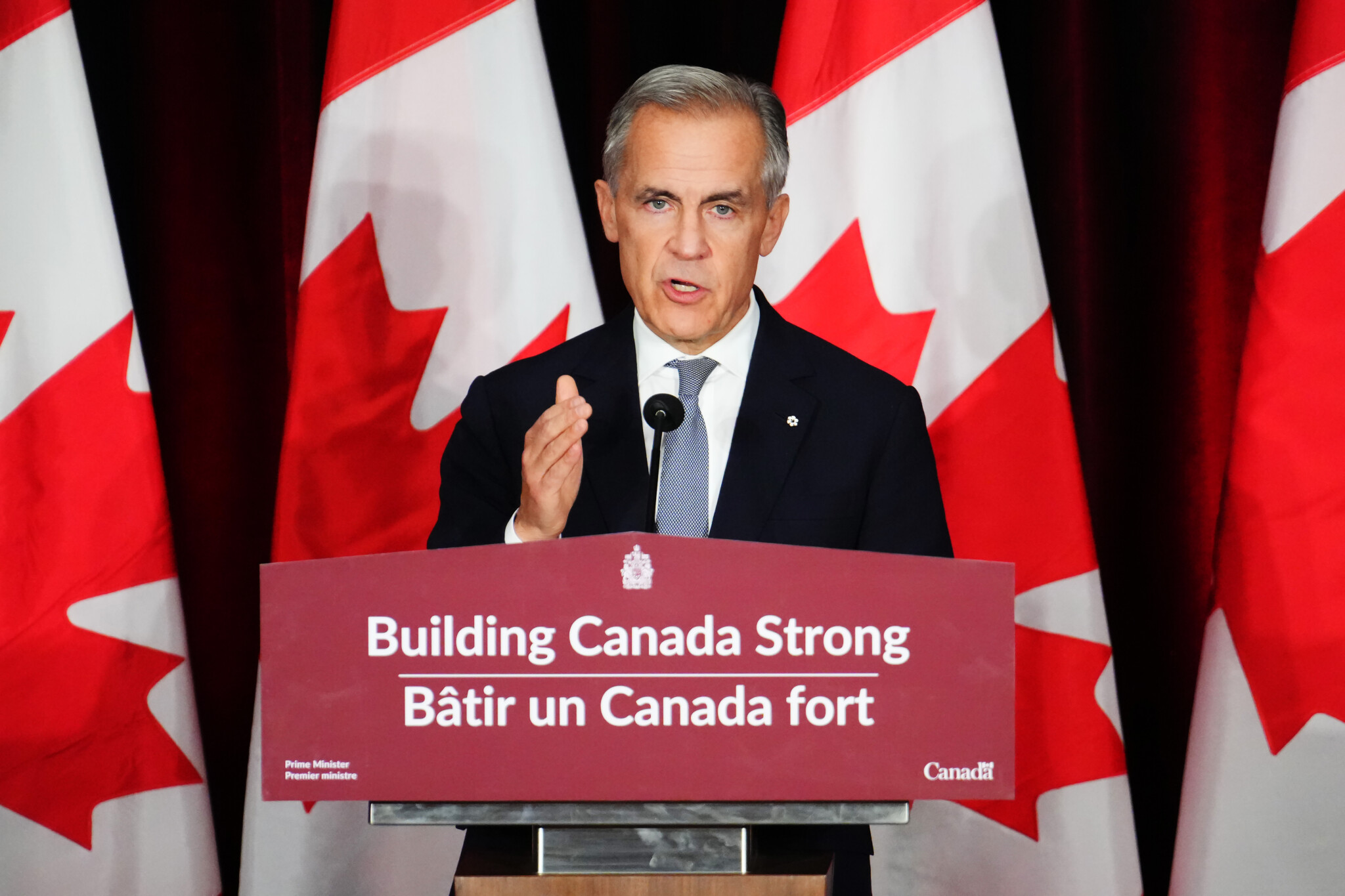
Last week, Prime Minister Mark Carney offered an early preview of the federal budget. But for all the talk of new spending and big ambitions, taxes barely came up, and the word “revenue” wasn’t even mentioned.
That’s a big miss. Carney has billed this as an austerity budget, but seems set to pile on spending, referencing new or expanded programs repeatedly. Current deficit projections are high, and the previously floated 15 percent cut to operational spending appears unlikely.
If the government wants to deliver on its promises, stay fiscally afloat, and lead the G7 in economic growth, it will need to take on tax reform, something Canada has neglected for decades.
The last time Canada took a serious look at its tax system was with the Carter Commission in 1962—a time when the Union Jack still flew on the flag, manufacturing dominated the economy, and “high tech” was a computer the size of a refrigerator. A lot has changed since then.
That includes our understanding of the relationship between taxes and economic growth. Tax reform today is about finding the right mix and rates to boost government revenues and power economic growth.
The current system hinders both, particularly when it comes to business taxes. While some may view corporations as deep pockets that governments can, and should, tap into, corporate taxes are among the most harmful to growth and, despite their name, largely end up falling on workers through lower wages. Over time, Canada has become less competitive on this front, something explored in depth in the Business Council of Alberta’s recent report The High Cost of Low Investment: Understanding Canada’s Economic Stagnation.
One problem is that taxes remain too high—so high that they’re doing more harm than good. High taxes reduce profits and discourage business investment and growth. At a certain point, higher rates actually yield less revenue for governments because they suppress economic activity. Research suggests that Canada is at that point: corporate taxes are so high that lowering corporate taxes would actually increase government revenues.
They’re also uncompetitive with our international peers. In 2012, Canada (briefly) had one of the most competitive corporate rates in the G7. Its position has steadily eroded since then, especially after the U.S. sharply cut its federal corporate tax rate from 35 percent to 21 percent through the Tax Cuts and Jobs Act in 2017. The result: Canada fell in the OECD business tax competitiveness rankings from 22nd to 27th.
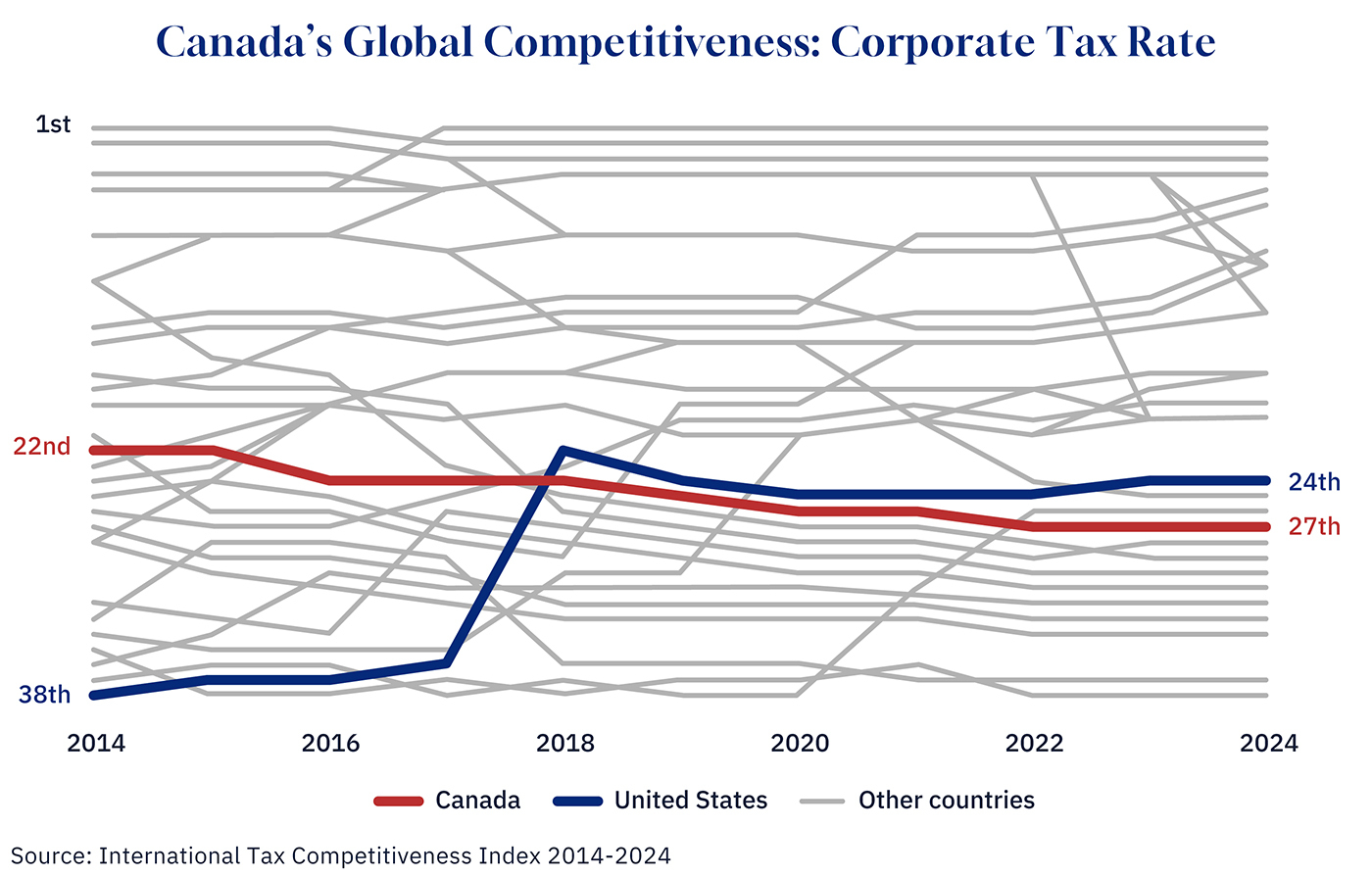
Graphic Credit: Janice Nelson.
The complexity of Canada’s tax system has grown as well. Even before the Carter Commission, it was described as “a multiplicity of forms” and a “conglomeration of taxes on corporations.” But if it was a maze of rules back then, it’s a Cretan labyrinth now. Businesses must navigate a growing web of tax credits, deductions, and incentives. Reporting rules change, eligibility shifts, and companies spend more and more time just trying to understand the system. By international standards, Canada ranks near the bottom—again, 27th in the OECD—for how complicated business taxes are.
There is some hope for the future, though. In its election plan, the Liberal Party committed to reviewing the corporate tax system based on a set of key principles, including simplicity and competitiveness.
This commitment shouldn’t be treated as an afterthought. Announcing a review might not make headlines the way promises to cut waste and find efficiencies do, but tax reform offers significant upside—not just in boosting revenues but in recharging the nation’s economy.
A version of this post was originally published by the Business Council of Alberta. To learn more, read the commentary here.

Alicia Planincic is the Director of Policy & Economics at the Business Council of Alberta. She regularly provides insight and analysis on…
Is Canada's current tax system hindering economic growth, and if so, how?
If lowering corporate taxes could boost revenue, why hasn't Canada pursued this reform?
Beyond revenue, what are the broader implications of tax reform for Canada's economy?







Comments (1)
Every tax dollar collected is a dollar robbed from the economy.