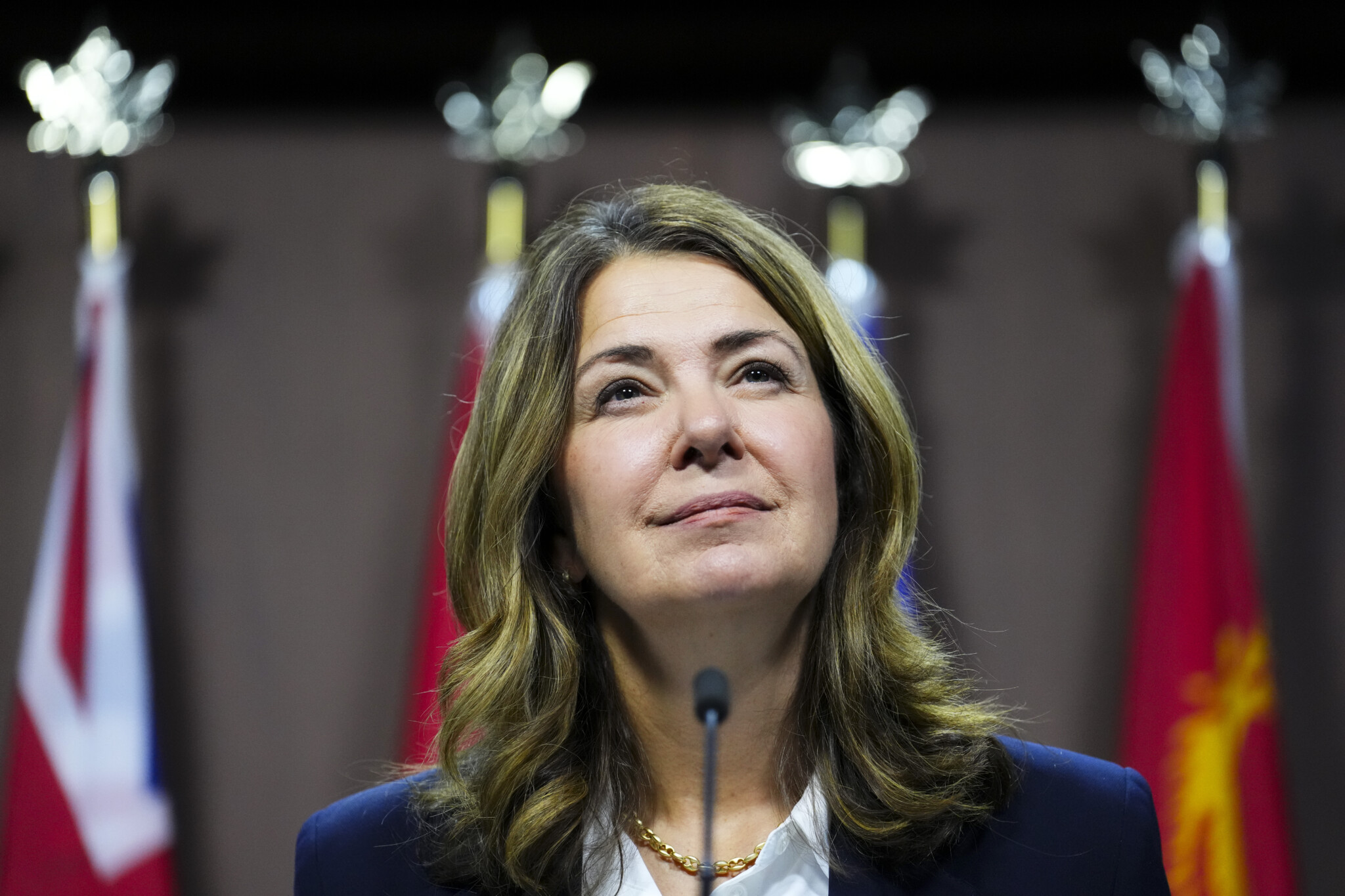

Danielle Smith knows what it’s like to bet the farm on one thing and lose it all.
When she crossed the floor from the Wildrose to Jim Prentice’s Progressive Conservatives in 2014, the punishment was swift and absolute. Her political career was widely written off as finished.
Having tasted death once, she knows better than most not to tempt it twice.
Since becoming Premier of Alberta, she has approached every fight with precision, knowing exactly how much capital she can spend, and when exactly to spend it.
The teachers’ strike is the first time she has chosen to spend big.
Support for charter schools, homeschooling, and private education models has long served as a point of overlap between factions of libertarians and social conservatives in the province. Roughly one in 10 students in Alberta is now educated outside the traditional public system—enough of a parental cohort to consistently push for greater choice and reduced union influence.
That base likely gave Smith confidence there was at least a floor of support beneath her to take on this fight.
So far, the political cost has been significant, though far from a death blow.
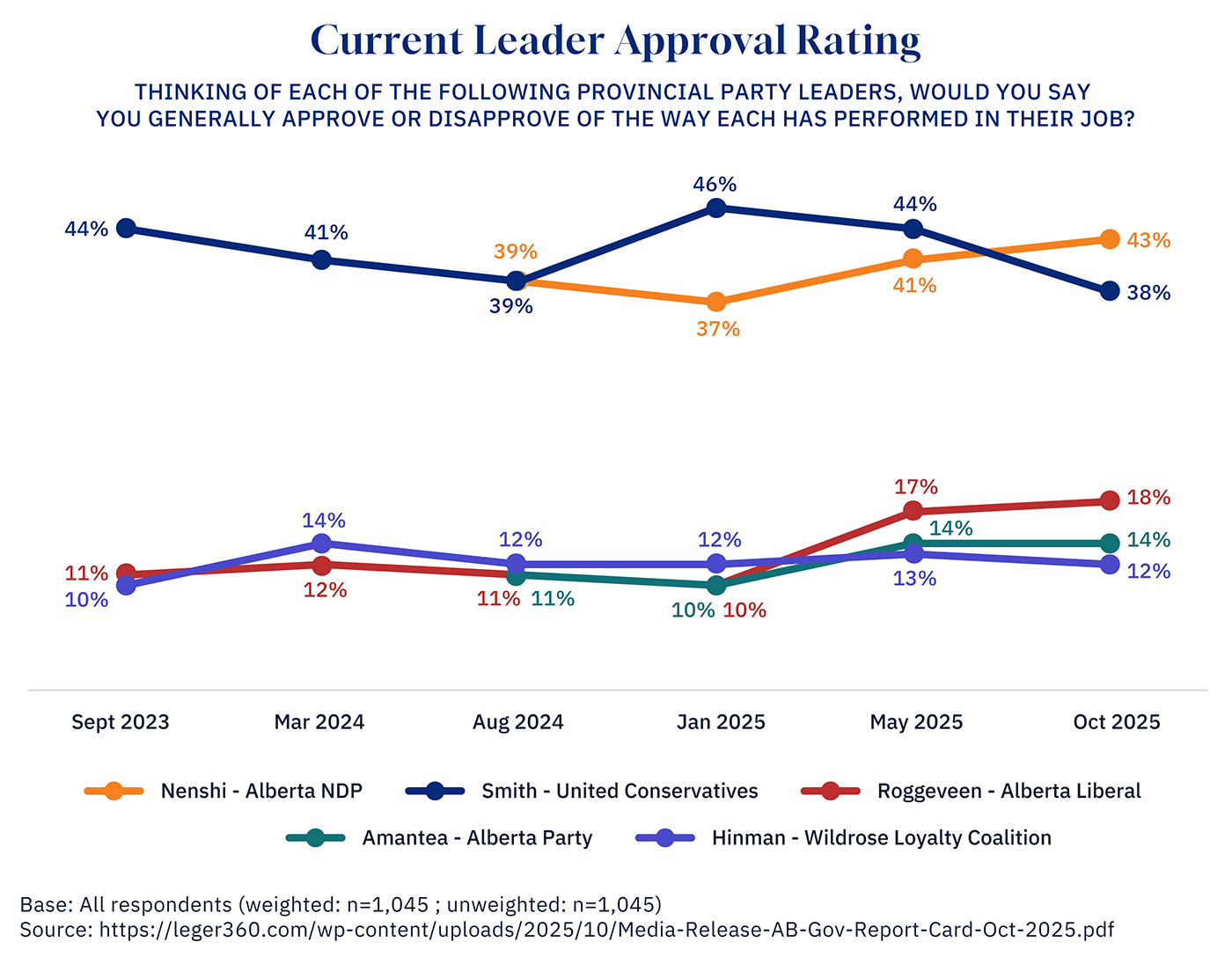
A Leger poll conducted during the first week of the strike, well before the government introduced an unprecedented back-to-work legislation invoking the notwithstanding clause, shows that Smith’s approval rating has dropped to 38 percent—the lowest since 2023.
Graphic credit: Janice Nelson.
Nearly half of the respondents (47 percent) said their opinion of the UCP leader had worsened. And on the core question of the strike itself, a majority (60 percent) said they sided with educators.
This is the sharpest reputational hit Smith has taken since assuming office. And it’s coming from everyday Albertans, not just the usual ideological critics.
But it looks like she can afford it.
The next election is still distant. The most acute frustration—weeks of disrupted schedules, scrambled childcare, and tense protests—is already fading. By 2027, people will remember the strike happened, but the emotional urgency will be gone.
That isn’t to say the issues raised in this labour dispute are trivial. The government’s refusal to meaningfully address class sizes is a structural problem that will continue to shape learning conditions long after the current contract is imposed. But it’s also a slow-moving crisis that may not drive ballot decisions two years from now.
Smith knows this, of course.
At least now we can safely dismiss any rumours of an early election for the sake of UCP gaining seats.

The one-third, one-third, one-third reality
As independent pollster Janet Brown put it in a recent Alberta Edge interview on The Hub, public opinion in Alberta doesn’t split Left versus Right.
It sorts into three main groups.
Does the teachers' strike signal a permanent shift in Albertan public opinion towards Smith?
How does the 'one-third, one-third, one-third' public opinion model explain Smith's political resilience?
What makes the teachers' strike a unique challenge for Danielle Smith compared to other policy decisions?




Comments (1)
We are held hostage by far left government unions, largely because they control the delivery of government services to taxpayers. Most work performed by government employees can and should be done by the private sector. There is no valid excuse for education or health care to be delivered by government employees.
Under no circumstances should government agencies be involved in competing with private enterprise. BC Liquor control board comes to mind. As does Purolator being owned by Canada Post.