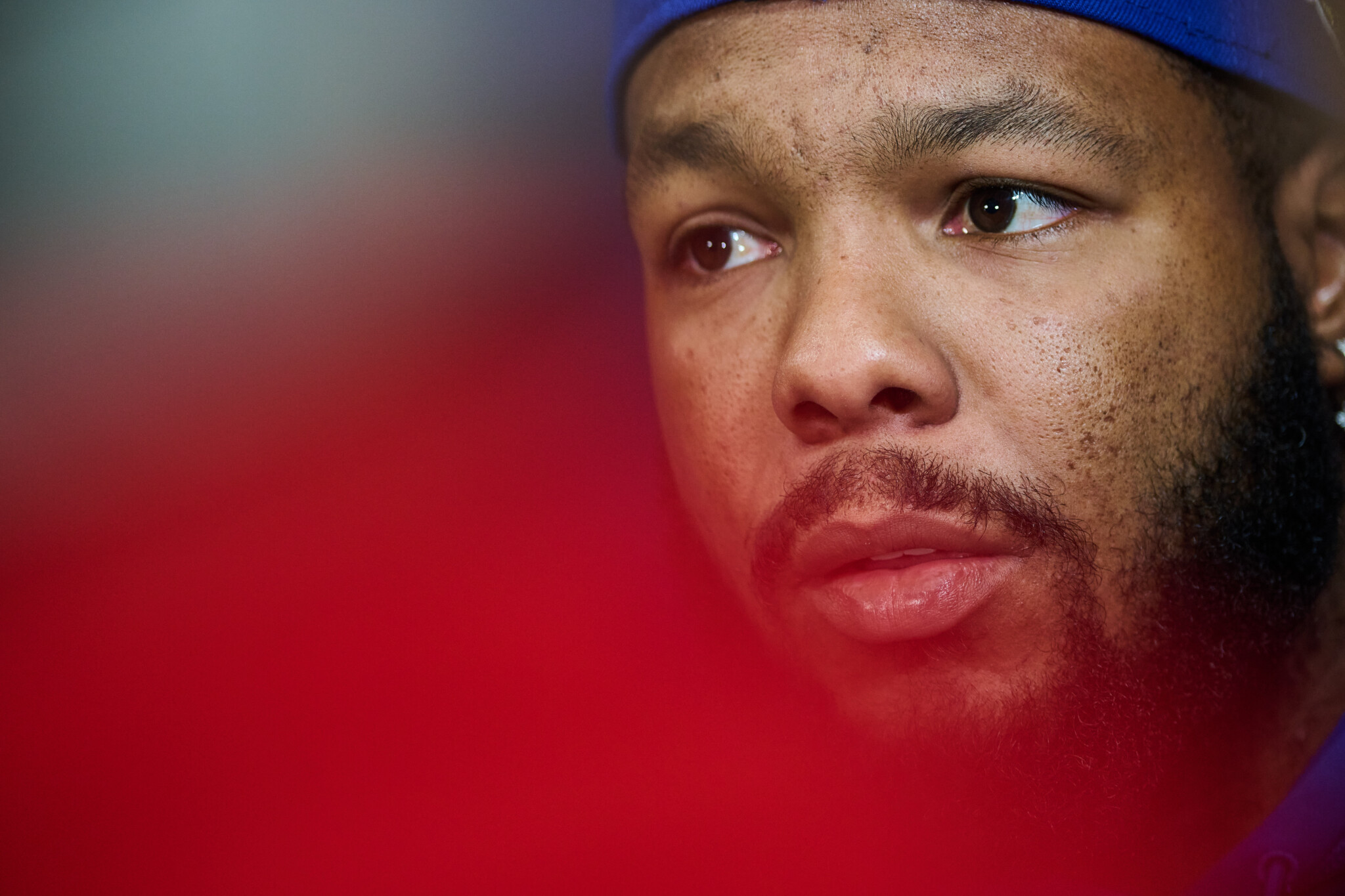
Could Toronto’s World Series loss Saturday—two outs away, Game 7 in hand, bubbly waiting in the hallway, streets waiting for celebration—have been any crueler?
There are losses that merely end a season, and then there are losses that become part of a country’s sporting vocabulary.
Saturday now joins the small set of moments in Canadian baseball that people will speak about in fragments: one out…the ninth…bottom of the order…that pitch for the home run to tie. And..two outs..the 11th.. that pitch for the home run to lose the lead. And…one out …bottom of the 11th…man on third…broken-bat double play to end it. The kind of shorthand that doesn’t need full sentences because everyone remembers, and the feeling does the rest.
This wasn’t a collapse in April or a slump in late July when the Rogers Centre crowd is half-sunburned and half-distracted. This was as October tipped into November, under the lights with the dome closed of necessity, where the margin between relief and regret narrows to a single bad bounce (stuck in the wall in game ix), three late-game pitches for taters, or, sometimes, simply the laws of baseball reasserting themselves. Toronto had the lead and the moment. And then, suddenly, nothing was enough.

The cruelty of this particular defeat lies in how close it came to rewriting the franchise’s modern history. For a generation raised on grainy highlights of Joe Carter and glowing retellings of the ’92–’93 run, this was meant to be a moment of inheritance. It was supposed to stitch the past to the present, to let young fans feel what their parents and grandparents describe with misty certainty. Sports don’t often hand out symmetry like that. On this night, they teased it. They held it up to the glass. They let the city see the parade route, hear the horns down Bremner, picture the nation draped in blue again, then took it away.
There will be endless parsing of decisions. Post-mortems are a coping mechanism as much as analysis: If it can be explained, maybe it can be controlled next time. But deep down, even the most analytical fans know this is baseball in its rawest form. The game rarely grants tidy narratives unless they’re earned at unreasonable emotional cost. Triumph and heartbreak travel together here. Only timing separates them.
For the players, this will linger. A clubhouse that spent a month believing in inevitability—that every tight game would tilt their way, that every big swing would find a win—now has to sit with the knowledge that they were right until they weren’t. A team cannot be this close to a championship without fundamentally reshaping how it views itself. Some will come back stronger, keener, hardened by the reminder that potential has an expiry date. Others will not. Off-seasons expose fault lines that winning covers. There will be roster decisions on Bo Bichette, Shane Bieber, and Chris Bassitt, quiet departures, and likely at least one trade that feels like tearing a page from a diary.
Still, it was a modest pleasure to wake up Saturday to think that the sports team you had followed for what is now nearly a half-century was at last again one game away from winning the top prize. I have spent tens of thousands of hours following the Toronto Blue Jays, before and after they won the World Series in 1992 and 1993. I could have become many other things in using that time differently. Instead, I am among the millions who adopted the Jays as the only true, multi-generational, national team (the Toronto Raptors still skew young, but will eventually be one, too).
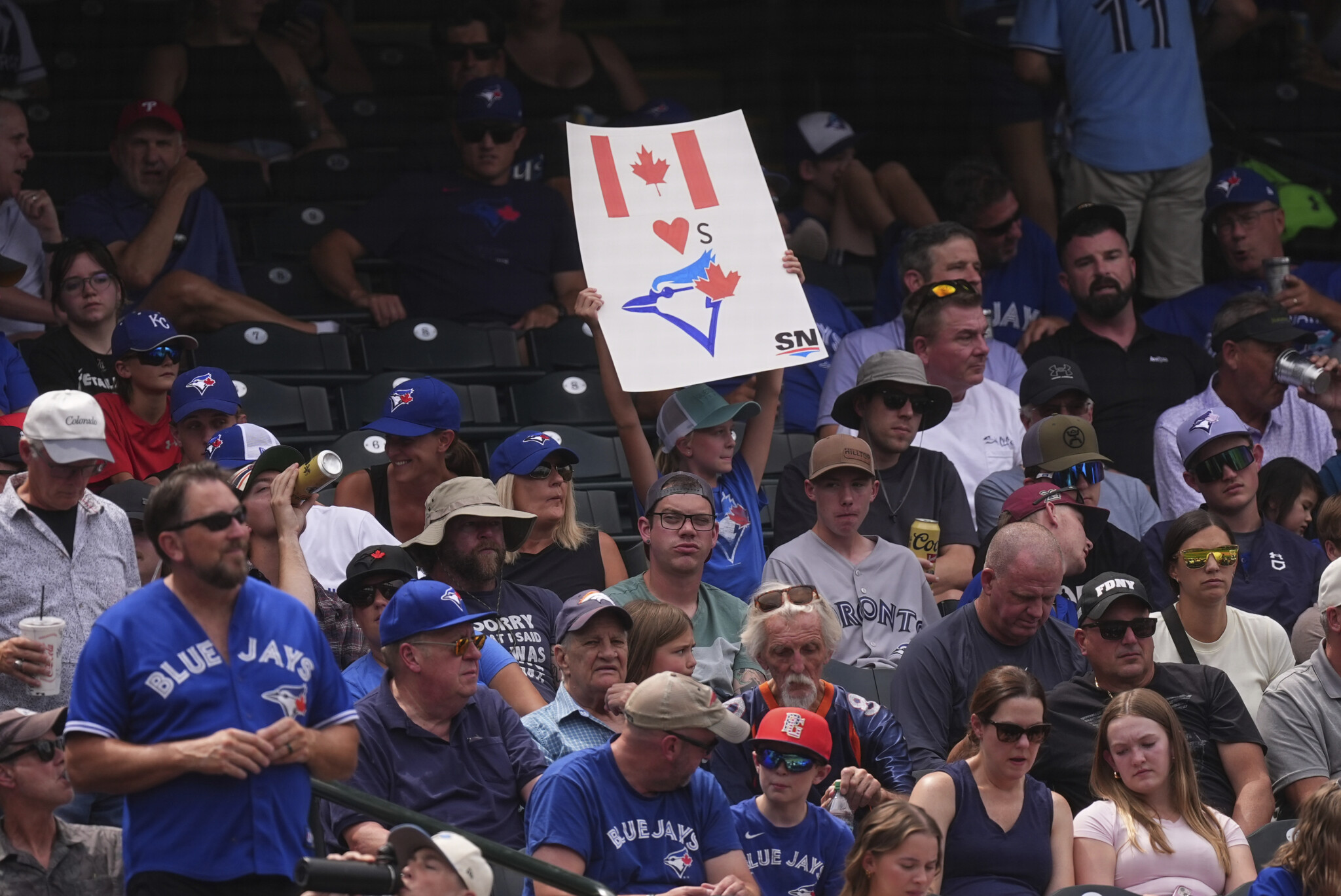
Toronto Blue Jays fan holds up a placard in the fourth inning of a baseball game Wednesday, Aug. 6, 2025, in Denver. David Zalubowski/AP Photo.
For fans, the ache is different. Players come and go, fans stay put. It’s communal, generational even. Canada adopts this club in October in a way that feels almost ceremonial. It’s the kind of collective belonging rarely found in a country that often prefers polite distance. From Halifax bars to Prairie living rooms, from school gyms streaming day games to restaurants staying open late for West Coast extra innings, there was a shared heartbeat in the appointment. It didn’t matter if someone followed pitch-by-pitch all year or joined for the postseason ride. October turns casual interest into devotion, and devotion into heartbreak.
And yet, a loss like this will also clarify why people keep coming back. It proves the stakes are real. There is no faking the silence after Alejandro Kirk shattered his bat for the double-play ending, no pretending the stunned faces were anything other than genuine. If sports were simply entertainment, there wouldn’t be this weight. This sorrow only exists because hope grew so enormous it strained the walls around it.
There is likely a gracious understanding among the fan base that the organization went to a new level. The likeliest anger came when thousands trooped to get public transit after 1 a.m. and discovered there were no trains to deliver their solemn souls.
In time, the edges of the memory will soften. The bitterness will give way to a kind of reverence: We were there, we felt that, we cared enough for it to hurt. And when next season begins, the burden won’t be solely disappointment. It will carry traces of defiance, a sense that if the team could come this close once, it can do so again, and finish the job.

Baseball, unlike other sports, has seasons that breathe: 162 regular-season games, up to four postseason series, a cat-and-mouse game of hitters learning about pitchers learning about hitters. They invite patience, demand perspective, and punish certainty. Toronto just learned the sharpest version of that lesson. One pitch short of immortality, one swing away from rewriting a country’s sporting conversation, they found out that sometimes being almost perfect is still not enough.
In the immediate aftermath, all the rational analysis feels thin. No postgame interview or press-conference explanation can answer the simple, aching question fans ask themselves, washing dishes or laying in bed staring at the ceiling: How could it slip away like that?
It’s a question without an answer. Or rather, with a hundred answers and none that satisfy.
Eventually, the frame will shift. Years from now, this game will be retold not only as a wound but as a hinge, a moment when a talented core learned what greatness truly costs. That’s how championship windows work: they begin in pain before they end in champagne. The franchise and its fans have crossed into a higher standard now. Getting close won’t feel like progress; it will feel like obligation.
For now, though, it’s simpler. It hurts because it mattered. Two outs away, the Blue Jays touched the edge of history, and baseball reminded everyone that history never comes easy.

Kirk LaPointe is The Hub's B.C. Correspondent. He is a transplanted Ontarian to British Columbia. Before he left, he ran CTV News, Southam…
How does this World Series loss redefine the Blue Jays' legacy and fan expectations?
What does the article suggest about the emotional cost of sports fandom and near-championships?
Beyond the immediate pain, how might this loss shape the Blue Jays' future roster and team identity?






Comments (2)
The Raptors crashed for years against the LeBron wall before they could get Kawhi, break it, and win it all. I think a similar process will happen with the Jays, although keeping the core team together is a far more complicated task in baseball, and getting a Kawhi even more difficult. The management has tried very hard in the last few years without success, but the demonstration of what this team can do and, especially, the clubhouse chemistry in display, hopefully will make the difference in the next try. Go Jays!