
Back in the 1970s and 1980s, three useful books pressed people to think about thinking.
In Four Arguments for the Elimination of Television, released in 1978, San Francisco advertising executive Jerry Mander argued that style increasingly trumped content. That was in part because television, with its unavoidable, image-based nature, prioritized the pretty girl or cool guy over the brainiac.
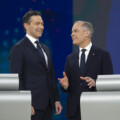
An example: The televised debate between Richard Nixon and John F. Kennedy in the 1960 presidential election campaign. For the first time, candidates squared off on television, then a new medium. When beamed into your living room, the urbane, tanned Kennedy simply looked better. The sweaty and shifty Nixon seemed untrustworthy. Forget if either man had the better arguments, platform, or policy. Politics went Madison Avenue, image-conscious. It’s been there ever since.
Another author, New York University professor and culture critic Neil Postman, offered two books with additional insight into why ever-fewer people could think their way through life, and why that was dangerous for deliberative democracy. In his 1982 book, The Disappearance of Childhood and in 1984’s Amusing Ourselves to Death, Postman also blamed television for the decline in literacy and reason. But he spotted another nasty side effect: The image box was also destroying childhood.

To understand why literacy, reason, thoughtful democracy, and childhood were all linked, Postman argued we had to grasp how literacy helped childhood as a concept come into being. His argument: Prior to widespread literacy (which peaked in the West between the mid-19th and mid-20th centuries due to an emphasis on universal education), there was no concept of childhood—there were only “big people” and “small people.” The notion that children were any different than other human beings and needed time to develop intellectually, or needed protection, had not yet developed. It’s why it was routine for children to be employed on the farm, or in coal mines, or even worse.
However, as literacy spread, so too did the concept of childhood. As a small person starting out, the “big” people who could read—your parents, teachers, others—could keep secrets from you because they could read and you could not, and that helped protect your innocence, at least for a time. Critically, you could only leave childhood slowly over time, as you learned to read and, in parallel, how you matured mentally and physically. That’s what we now call childhood.
How has the shift from TV to the internet impacted our ability to reason and engage in deliberative democracy?
What is the article's core argument about the relationship between literacy, childhood, and reason?
In what ways does the article suggest that image-based media, like television and the internet, undermine reasoned political discourse?






Comments (2)
Postman sums up TV by positing that Sesame Street was not invented to teach kids to read, it was invented to addict kids to watching television. I’d also suggest we reconsider the wisdom of Alvin Toffler who suggested schools throughout the western world were instilling the same three values without knowing they were doing them: punctuality, obedience and repetition. These three values, plus the three “r’s”, plus your three might just save us from the further decline and eventual fall of the west. That and reading Christopher Hitchens with some Lewis Lapham mixed in. Add some George Carlin and Bill Maher and we can laugh and cry along the way. Great piece.