Canada’s massive $78.3 billion budget deficit is being met with a shrug from one counterintuitive source: the managing director of the International Monetary Fund.
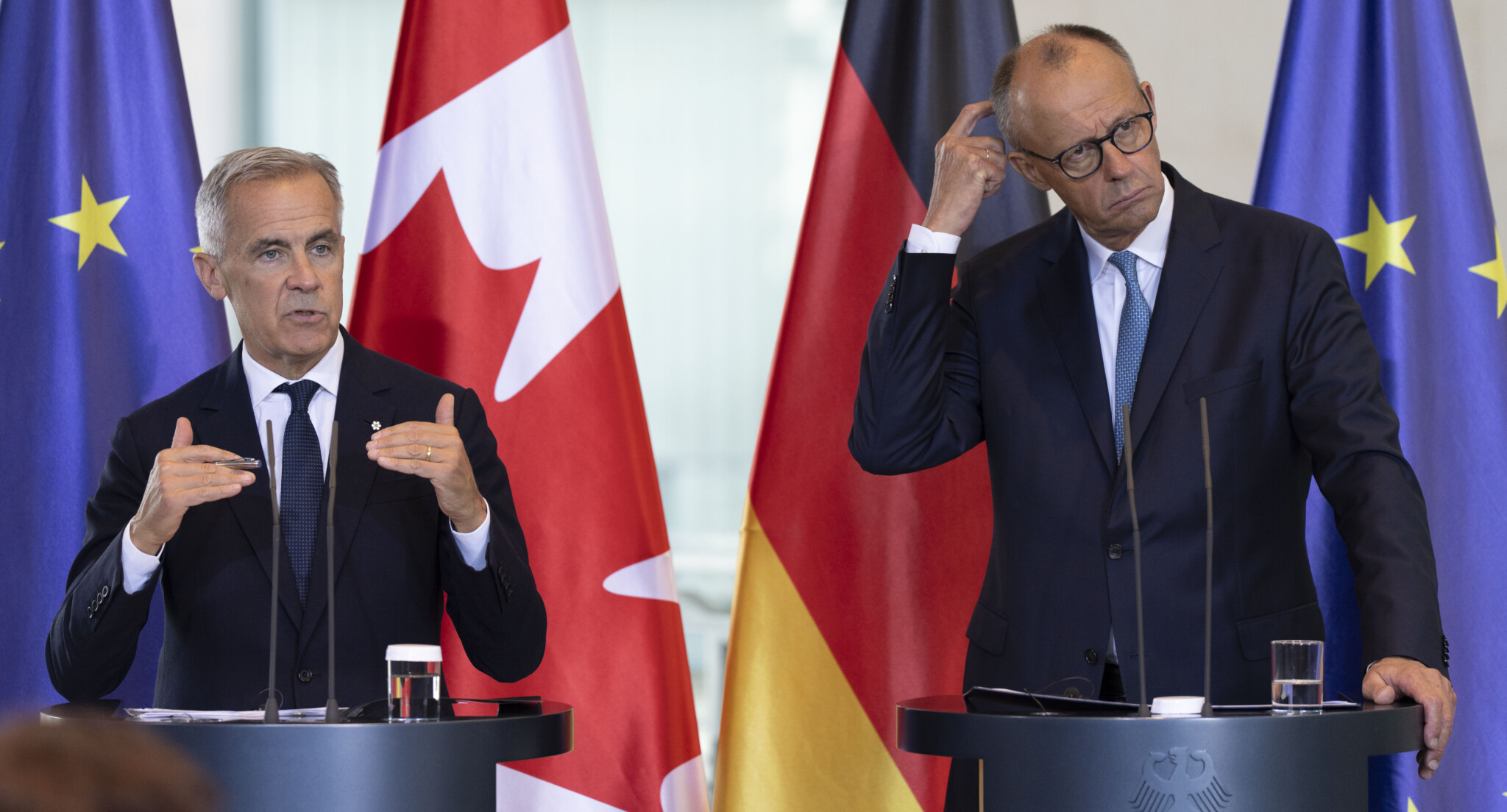
Just weeks before the budget was presented, IMF chief Kristalina Georgieva praised the Carney government’s plan to run up Canadian deficits to focus on spending on housing, infrastructure, and other strategic projects. Singling out Canada and Germany in particular, she argued both Ottawa and Berlin had the fiscal space to run up their deficits in exchange for capital investments.
The reason? Both countries have some of the lowest debt-to-GDP ratios in the G7, with Canada at around 110 percent of its GDP and Germany at around 64 percent of its GDP. Countries with much higher ratios—like the U.S. and Italy—should focus more on lowering their public debt, Georgieva argued.
But other key numbers don’t leave such a rosy impression. Canada was the only G7 country to actually see a decline in its GDP per person in 2024—a precipitous drop of 1.4 percent. That means the average person in Canada grew poorer in 2024 relative to overall national wealth, even as the economy’s aggregate size increased. Germans, by contrast, got merely 0.2 percent richer per person in 2024. Americans led the G7 on this key metric—at a 1.8 percent bump.
Given these are 2024 numbers, the “but Trump’s tariffs and trade war!” arguments don’t explain this away. In fact, Canada and Germany were two of the worst-performing rich countries over the last decade, when it comes to GDP per person—a metric far better for approximating personal living standards than overall national wealth. This also happened in Canada despite high levels of the kind of deficit spending the IMF chief just shrugged off.

Two peas in a pod
As a Western Canadian who’s lived in Germany for more than a decade, this is unfortunately not surprising. Political discussions and debates in both countries, amplified by national media, tend to focus on protection and preservation imperatives. The common narrative can be summed up like this: our economic fundamentals are solid. Government’s role is to step in to smooth crisis-related shocks and preserve the rules-based international order, ensuring our exports will always flow freely to our neighbours abroad.
Why are Canada and Germany, despite low debt-to-GDP, struggling with per capita GDP growth?
What 'national taboos' do Canada and Germany need to break for economic growth?
How does the article challenge the idea that trade wars are the sole cause of economic struggles?







Comments (4)
These are still the same Liberals who believe announcements are actions.