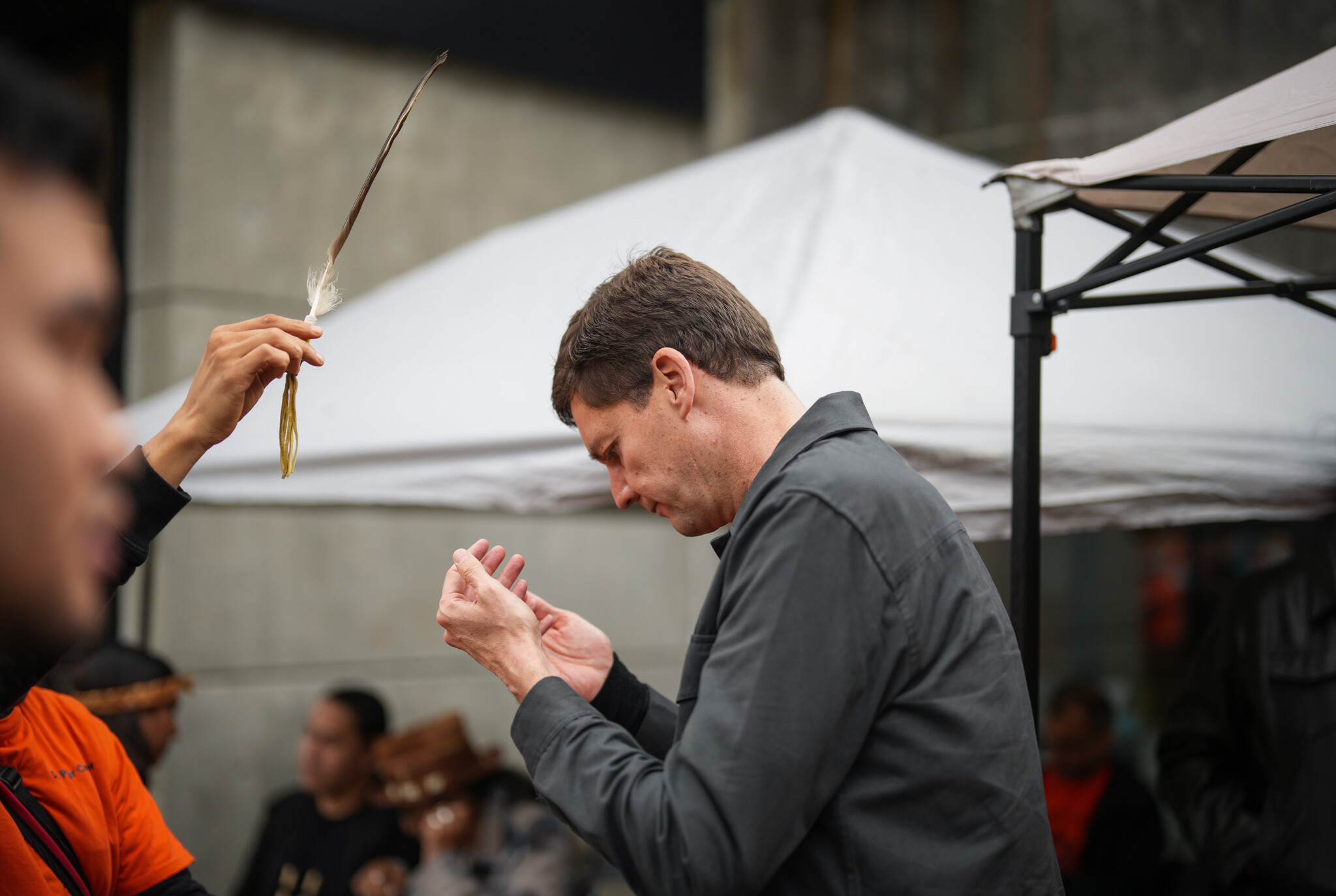

British Columbia Premier David Eby has talked big about transforming the relationship with Indigenous nations. But the province is already rewriting the law meant to deliver that transformation—evidence that the current approach has gone badly off course.
The premier’s habit patterns of lone-wolf leadership and a long-standing instinct for centralized, opaque decision-making have generated confusion and inconsistent statements among his ministers and a broader public skepticism about what’s really coming down the road.
It is easy to blame Premier Eby. But it is also possible to blame Attorney General Eby, because this studied refusal to prepare the public for the legal and political reality the courts have been signalling dates back to his time in John Horgan’s cabinet.
Eby did not stumble into this moment. He walked directly toward it, all while telling British Columbians to expect no meaningful change. Anyone watching the evolution of Indigenous rights jurisprudence—Tsilhqot’in, Haida, Delgamuukw, Nuchatlaht and now Cowichan—could see the direction of travel. The courts have been absolutely clear that Indigenous title is real, it limits provincial authority, and the Crown’s unilateral decision-making power is not what governments pretend it is.

Even when courts stop short of declaring title, as in the Cowichan and Nuchatlaht cases, they reinforce stricter obligations that make the old model of Crown decision-making unsustainable. They narrow the Crown’s discretion. They expand the principles governing consent. They constrain the province’s unilateral authority and deepen the conditions under which Indigenous consent becomes decisive. This shared-governance reality can’t be papered over with “enhanced consultation.”
The premier is a lawyer with constitutional experience. He understands this better than most. The premise of the province’s Declaration of the Rights of Indigenous Peoples Act (DRIPA) is that B.C. must align its laws with the United Nations Declaration of the Rights of Indigenous Peoples (UNDRIP) because the existing system is incompatible with the rights the courts continue to affirm. And yet the government behaved, right up until now, as though UNDRIP were merely ornamental, an extension of the land acknowledgment Eby can recite in his sleep.
Is B.C.'s approach to reconciliation hindering public understanding and acceptance?
How do court decisions on Indigenous title impact B.C.'s provincial authority?
What are the economic implications of B.C.'s reconciliation strategy?






Comments (4)
Commentator David Frum said it clearly: Canada, not just BC, is headed towards a “rentier” class and structures whereby Canadians pay a fee to newly court appointed Aboriginal overlords to operate and live in this land. The idea of private property and associated capital formation will have to be reexamined above and beyond the current constitutional ‘duty to consult.’
It happens because the ideas are gaining traction that deny Canada is a legitimate country, recent colonial overlords on this vast land made unjustified and unjust agreements with first newcomers to this land who arrived and settled following the ice age. It happens because many constituencies are changing historical names, tearing down landmarks and statues, denigrating and revising Canada’s history. It is happening because there is a cloud of shame to be associated and accepted with the name Canada and its history.
It won’t be pretty if it doesn’t get resolved.