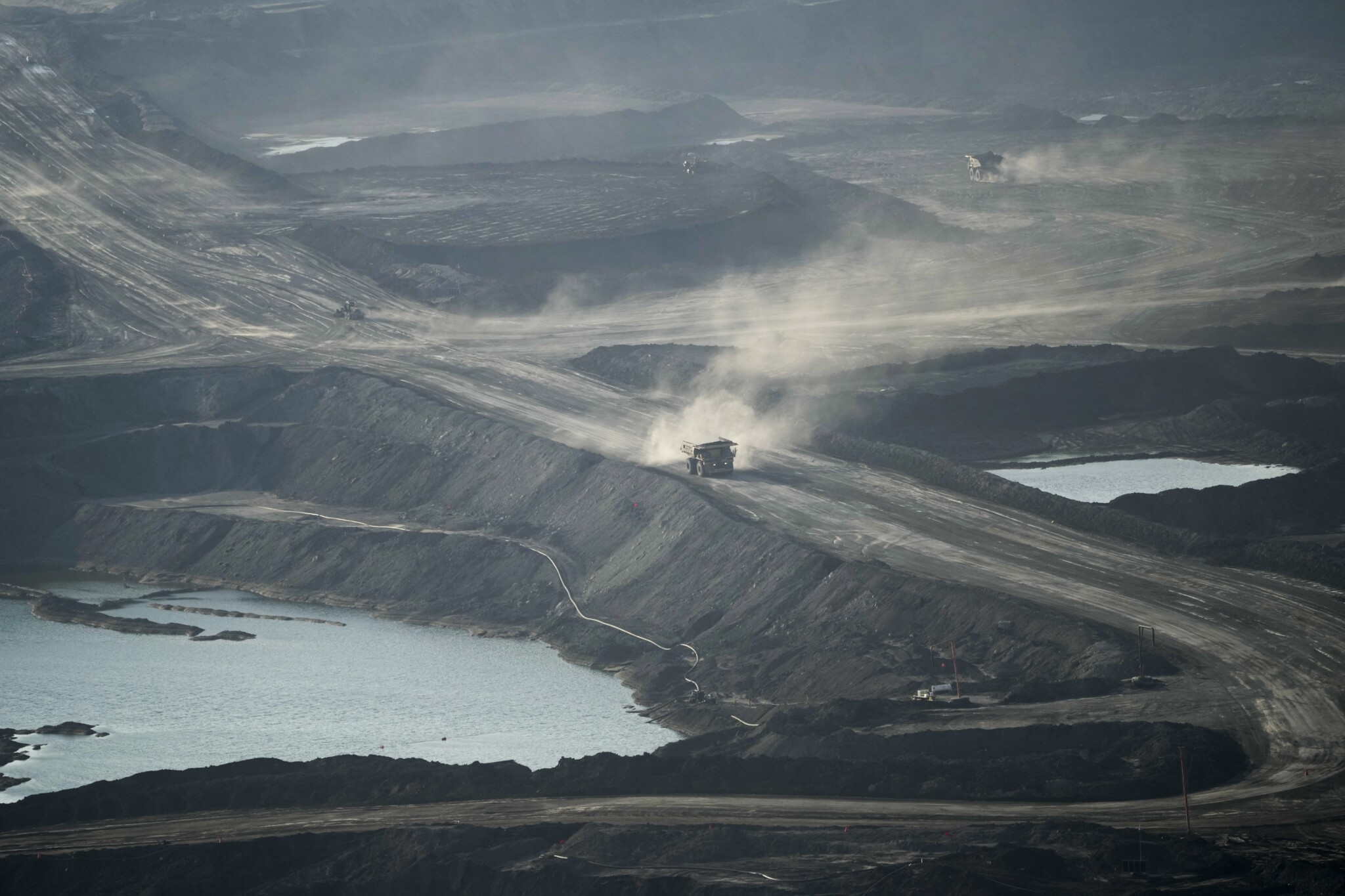
The new memorandum of understanding (MOU) between Alberta and Ottawa marks the most significant shift in Canada’s natural resource, climate, and industrial strategy in years. It lays out, in blunt terms, the framework for what one analyst describes as the “mutual assured construction” of an oil pipeline alongside the world’s largest carbon capture and storage network.
The two are now politically inseparable.
“We have Pathways as a requirement for this bitumen pipeline to the West Coast and the bitumen pipeline to the West Coast as a requirement for Pathways,” said Rory Johnston, founder of the Commodity Context newsletter.
“So there’s always going to be the question of which one actually gets put in the ground first?” he said. “Presumably, Ottawa wants it to be Pathways. And presumably, Edmonton is going to want it to be the bitumen pipeline.”
Despite their pairing, the two megaprojects are nowhere near equally defined.
The prospective West Coast pipeline remains largely hypothetical at this point, with no route, no firm shipping commitments, and critically—no private component. Until that changes, Prime Minister Mark Carney says there will be no project.
Pathways, by contrast—aspirational and costly as it is—offers a clearer anchor for evaluating what is actually feasible at this early stage.
Pathways Alliance, a consortium of the five largest oilsands producers, is proposing a $16.5-billion carbon capture, utilization, and storage (CCUS) system that would connect individual capture units at major facilities to a 400-kilometre trunk line ending in an underground sequestration hub near Cold Lake in northern Alberta.
It would be the largest CCUS network ever attempted.
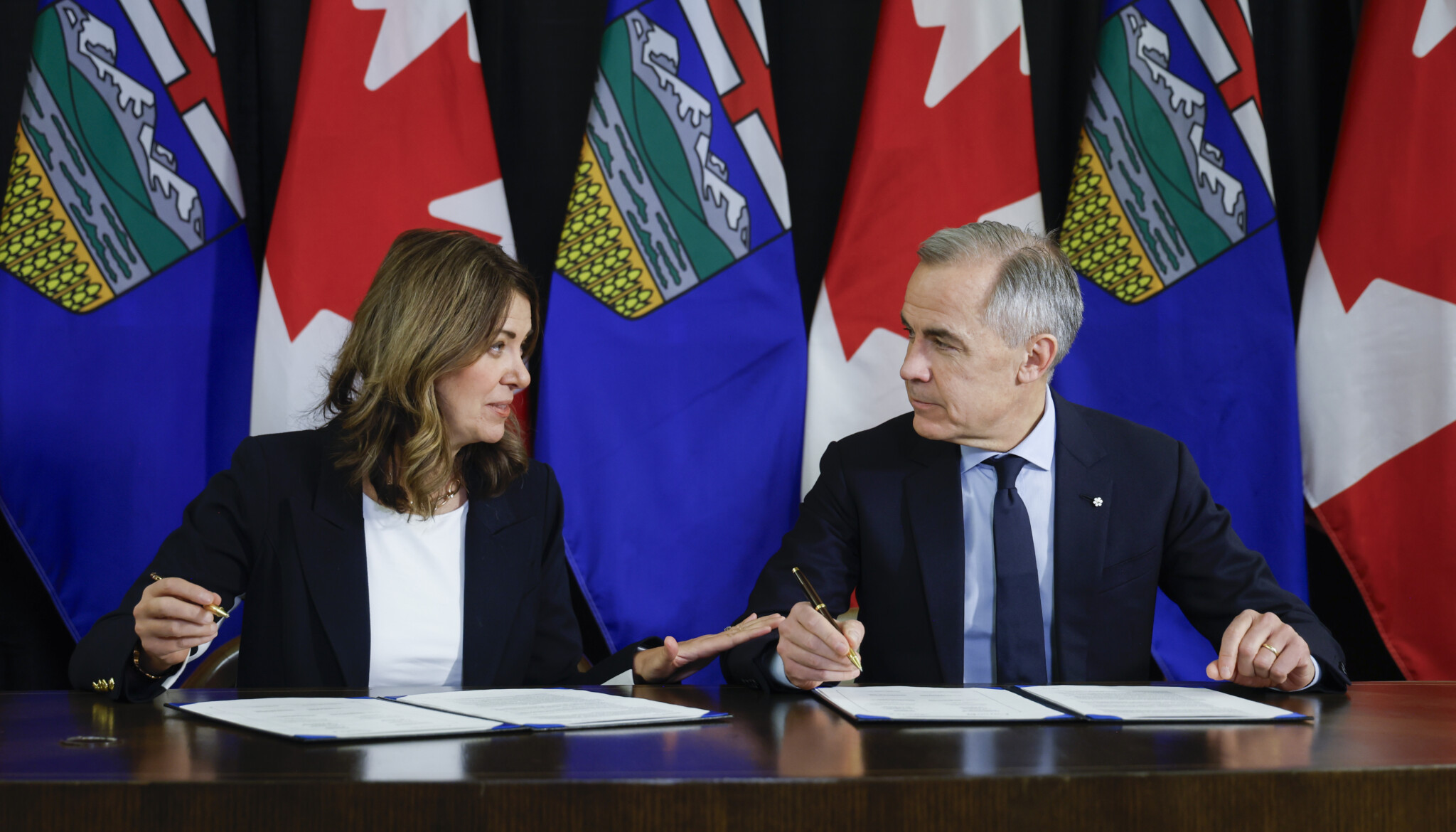
Prime Minister Mark Carney, right, signs a pipeline memorandum of understanding with Alberta Premier Danielle Smith in Calgary on Thursday, Nov. 27, 2025. Jeff McIntosh/The Canadian Press.
“Carbon capture and storage means you take these greenhouse gas emissions that would otherwise be emitted into the atmosphere—you capture them, and you put them underground for permanent geologic storage,” the organization’s president, Kendall Dilling, said on a sponsored episode of Hub Dialogues.
“That sounds really simple, and conceptually it is. But there’s some big pots and pans in doing that.”
Still, unlike the pipeline, the plan for Pathways at least answers some foundational questions about what we know, what we don’t, and how a project of this scale could be built in practice.
What we know about CCUS and the Pathways plan
Contrary to popular belief, capture technology varies widely across facilities and industries, and is used beyond oil and gas. Around the world, CO₂ is captured at cement plants, steel mills, coal power stations, fertilizer manufacturers, and even bioenergy and ethanol facilities.
Canada is widely regarded as a leader when it comes to both providing the space for storage and deploying the capture technology.
To date, about 60 million tonnes of CO₂ have been stored underground through six main commercial-scale projects across Alberta and Saskatchewan, according to Mac Walton of the International CCS Knowledge Centre, an industry non-profit organization.
“It’s a comparative advantage,” he said about the Prairies.
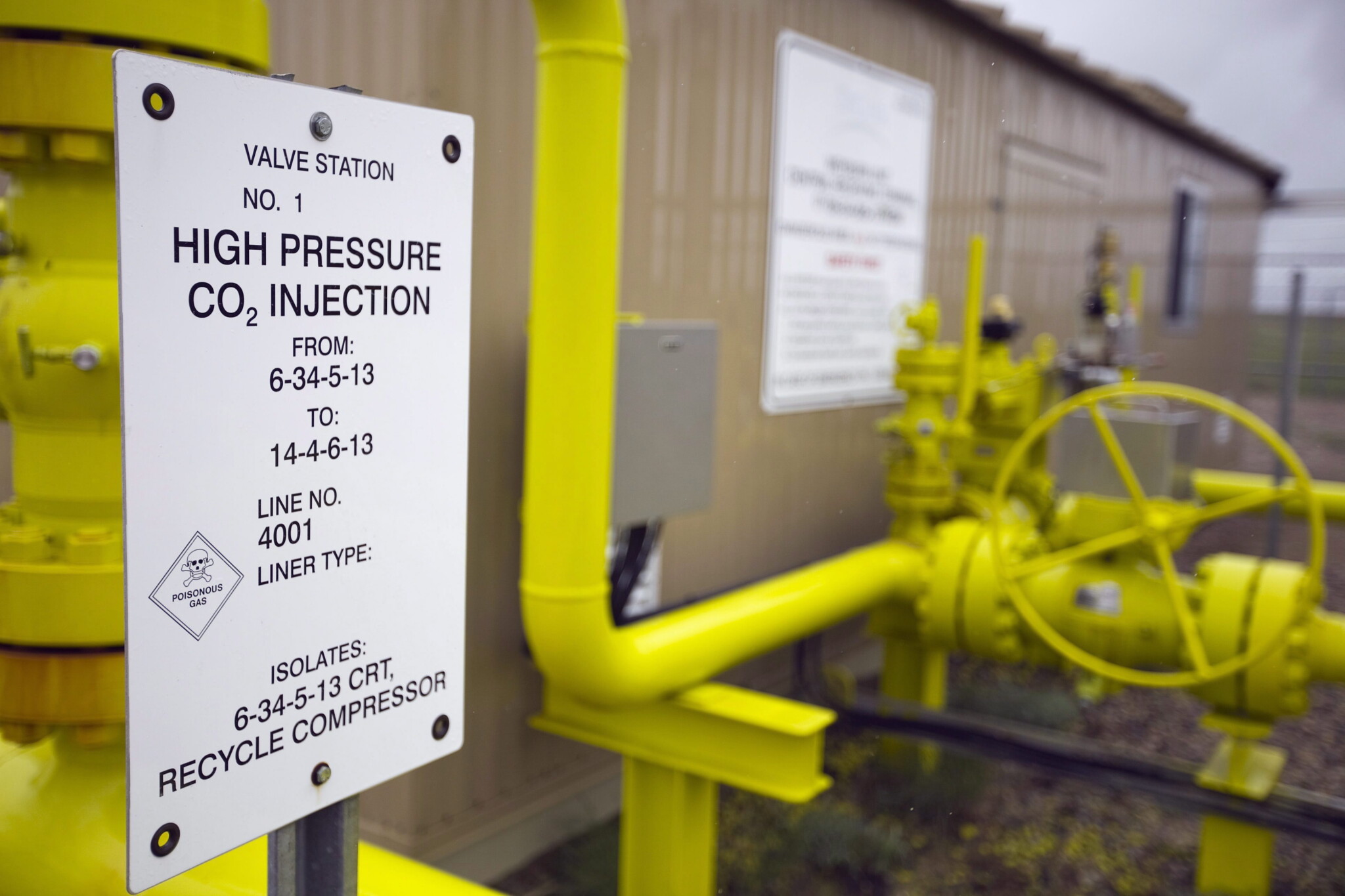
A coal gasification plant in Beulah, N.D., ships 2 million tonnes of CO2 a year via pipeline to enhance oil recovery in the oilfields near Weyburn, southeast of Regina. Troy Fleece/The Canadian Press.
A large share of CO₂ stored in Canada actually comes from the Dakota Gasification Company in North Dakota, delivered by pipeline and injected into Saskatchewan’s Weyburn field since 2000. Only about a third has been captured domestically through projects like Quest and the Alberta Carbon Trunk Line.
“The largest [dedicated carbon storage facility] in Canada by far is the Quest facility operated by Shell,” Walton noted.
Since 2015, the facility northeast of Edmonton has captured and stored more than 9 million tonnes of CO₂ from the hydrogen manufacturing units at the Scotford bitumen upgrader. The CO₂ is compressed and transported by pipeline into a deep saline reservoir underground.
The folks at Pathways want to blow past all of that on an unprecedented scale.
The first phase alone would capture more than 10 times what Quest manages each year, and the full build-out aims to store 40 million tonnes annually by 2050—the equivalent of creating 40 Quests and running them all at once.
“Unlike many sources of emissions in different industries, it’s highly concentrated,” Dilling explained. “The nature of oilsands development is you’ve got virtually all of the production coming from a handful of mega facilities.”

How the Pathways project would scale up
On paper, Pathways sounds like a single, province-spanning colossal project. In reality, it is a chain of smaller capture facilities stitched together by a shared pipeline network at its core.
The plan is to install individual units at more than a dozen mines and in-situ operations, each tailored to the unique heat sources, CO₂ concentrations, and operating conditions of that site.
All of that captured CO₂ would ultimately move through a single pipeline corridor, channeling emissions from the oilsands down to the major storage hub outside Cold Lake. What’s unique about Alberta’s geology is its deep saline formations with vast, well-sealed pore space that act as subsurface storage tanks.
“Companies have assessed more than a dozen different places where you could do carbon sequestration at scale,” said Richard Masson, executive fellow at the University of Calgary’s School of Public Policy. “I would guess that we are better mapped on this than any other place in the world.”
Over the years, researchers and environmental groups have raised questions about the long-term safety of carbon storage. The Pembina Institute was among the voices warning that CO₂ can migrate through old wellbores if they are improperly sealed, or move along faults if reservoir pressures aren’t carefully managed.
Those concerns helped shape Alberta’s monitoring and verification rules. Quest’s own program has now logged years of data with no evidence of leakage.
“So this is technology that we understand really, really well,” Dilling concluded.
What happens ultimately to all that CO₂?
The process is slow but straightforward. First, it sits in the reservoir in a “supercritical” state that is dense like liquid but flows like gas. Then it dissolves into the surrounding brine and begins to bind to the rock itself.
“You’re putting it into a porous rock formation where it will eventually mineralize,” Walton explained. “Over the course of a long time, it’ll turn into rock.”
Far from geological eons, the MOU stipulates that phase one of Pathways will be built in stages between 2027 and 2040.
What we don’t know
For all the engineering clarity around capture and storage, some of the most important pieces of Pathways remain unresolved.
The Alliance pegged phase one at $16.5 billion, but that figure predates both recent inflation and global supply-chain tightness in specialized equipment.
“The efficiency of the capture is the part that needs to be demonstrated,” Masson said.
And in this context, efficiency is essentially another word for cost. How much heat is required, how much solvent is lost, and how much extra energy a facility must consume just to operate the capture units will determine the real operating budget.
On the funding end, a lot hinges on a follow-up tri-lateral MOU between Ottawa, Alberta, and Pathways targeted for April 1.
Although the federal government has established a CCUS investment tax credit, which can cover up to 50 percent of eligible costs for capture equipment, and Alberta has introduced its own carbon capture incentive program, neither government has set specific dollar amounts or a ceiling for Pathways.
The three parties will need to spell out the risk-sharing details and guarantees before making a final investment decision.
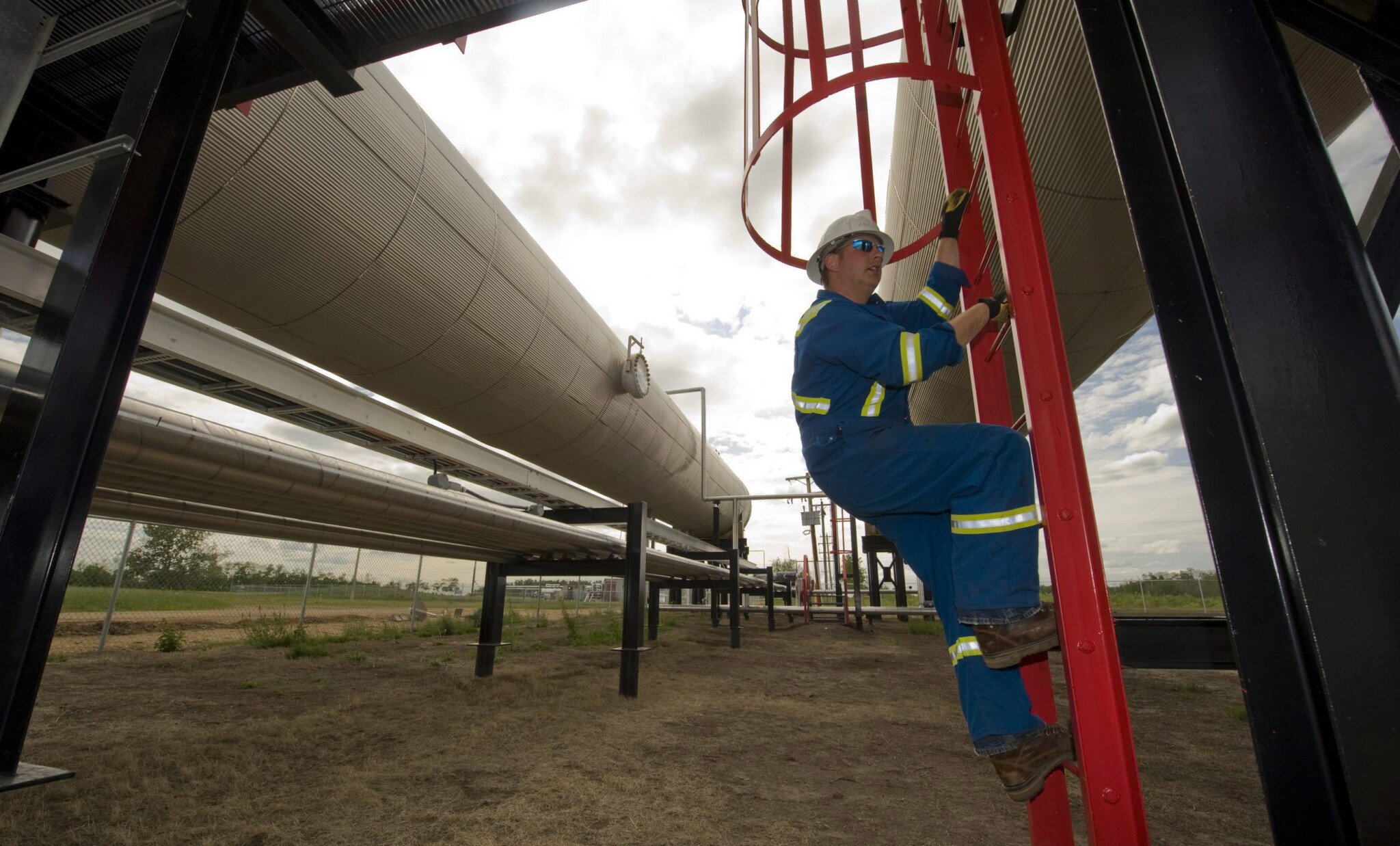
Production foreman Ron Toly visually inspects the carbon capturing research facility near Redwater, Alberta on Friday, June 26, 2009. John Ulan/The Canadian Press.
The picture gets even murkier once we get to the “how.”
Pathways has not yet announced which capture technologies will be deployed at each facility. Every unit could potentially require its own stack of provincial and federal permits, from air and water approvals to impact assessment reviews.
The trunk line and storage hub will also require extensive consultation and formal agreements with Indigenous communities along the route, a process that varies widely between communities and can move at very different speeds.
Presumably, the newly created Major Projects Office would streamline some of those steps.
But add to that Alberta’s already tight labour market for pipefitters and technicians, and it becomes clear that building a dozen capture units plus a regional carbon pipeline network is a massive undertaking.
And if we are to take the prime minister’s commitment to “build, baby, build” seriously, Canada is only starting to enter a period of intense “nation-building” where major transmission lines, clean-power projects, housing, rail links, and other yet-to-be-announced constructions will all compete for labour and materials.
Where’s the market for “decarbonized” oil?
Back to the premise, then.
If Pathways is meant to be the tweedledee in a duo whose tweedledum is a West Coast bitumen pipeline, then a larger strategic question hangs over the entire partnership: Who is the buyer for “decarbonized” oil?
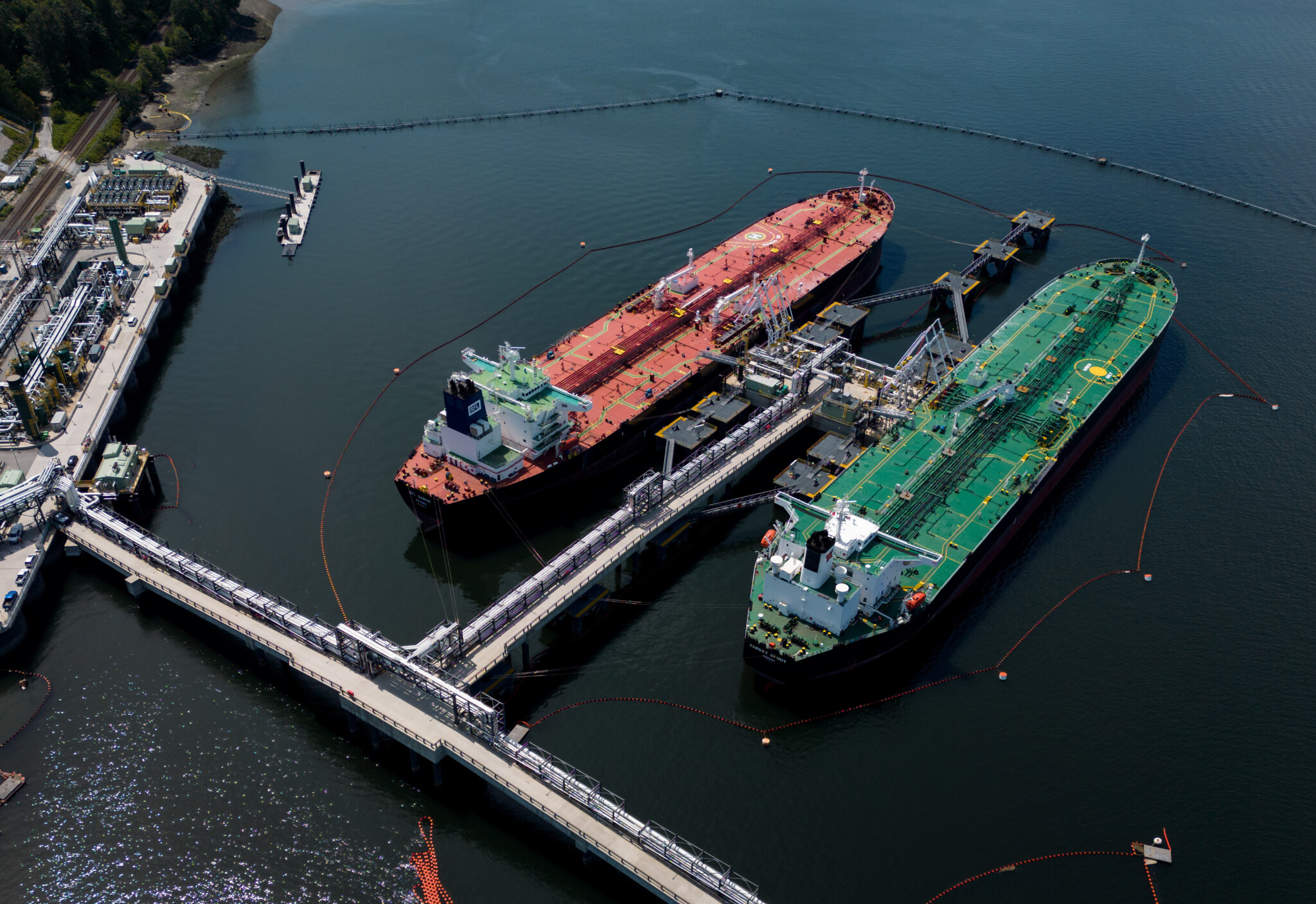
Crude oil tankers are seen docked at the Trans Mountain Westridge Marine Terminal, where crude oil from the expanded Trans Mountain Pipeline is loaded onto tankers, in Burnaby, B.C., Monday, June 10, 2024. Darryl Dyck/The Canadian Press.
Supporters argue that future markets—particularly in Asia—will reward producers that can show credible emissions reductions.
“Japan and South Korea…They’re starting to increase their emissions requirements,” Walton said. “And they’re looking for solid trade partners that care about this.”
Others are more skeptical.
“Nobody goes out and asks for decarbonized oil,” Masson said. “You’re not going to get an extra dime for the oil.”
Masson, who spent 30 years in the energy industry, including as former head of the Alberta Petroleum Marketing Commission, says “oil is oil,” and once it gets on a tanker, it can go anywhere.
That’s the real advantage of a West Coast pipeline.
“You can ship it to any port,” he said about the nature of tankers. “Sometimes oil will be destined for a country like China, but you might get a better offer from somebody else and you’ll [be able to] swap it and sell it to the other player.”
The lack of choice on the shipping front is what boxed in Alberta crude to begin with, forcing producers to sell at a steep discount. Since the completion of the Trans Mountain Expansion, the price gap for Western Canadian Select has narrowed significantly. The core lesson here is that every additional export option strengthens pricing power, boosts royalties, and improves long-term competitiveness.
So, despite the grand vision for oilsands decarbonization, the Pathways-and-pipeline deal is only “mutually assured” if it increases the market reach for Alberta’s barrels. Otherwise, the whole bargain collapses.

Falice Chin is The Hub’s Alberta Bureau Chief. She has worked as a reporter, editor, podcast producer, and newsroom leader across Canada…
What do we know and what don't we know about the Pathways CCUS project?
How is CCUS currently deployed in Canada?
Why is a new West Coast pipeline considered essential to the overall deal?





Comments (2)
While oil spitters in Canada demands we needlessly remove CO2 from our oil production, at great expense to our economy, other countries are building coal fired generators at a rate that is far higher than Canada’s total CO2 production. Does no one see the problem with this picture?