Four in five Canadians are concerned about the growing cost of groceries, at a time when food prices spiked as the annual inflation rate hit a two-year high in November.
Food price tags rose by an annualized rate of 4.7 percent in November, compared to the same time last year. In response, 81 percent of Canadians surveyed by Abacus Data are now concerned with ever-growing food prices, rising well above the average rate of inflation in the last couple of decades. The cost of meat, especially poultry and beef—main staples in the average Canadian’s protein diet— is leading the way.
“Food prices are the most universal and emotionally resonant cost because they are unavoidable and visible every week,” CEO of Abacus Data and Hub Politics co-host David Coletto wrote in his findings of the new poll on the concerns of 1,500 Canadians surveyed from Dec. 5 to 9, with grocery prices being the most mentioned concern.
Sylvain Charlebois, Agri-Food Analytics Lab senior director at Dalhousie University, believes this is just the beginning of continued elevated inflation on Canadian groceries, saying that Canada has “been in trouble” since the 2008 financial crisis.
“[Current grocery prices] are a prelude to what’s coming,” Charlebois told The Hub. “We’ve always argued that the food inflation situation in Canada is a structural issue, not a cyclical issue.”
Average food prices have jumped 27 percent higher than they were five years ago.
In his research, Charlebois found the main culprits were the challenging logistics of getting food to a widely dispersed population on long supply chains, interprovincial trade barriers, the industrial carbon tax (affecting the agricultural sector), inconsistent labour laws, and the consolidation of the major grocery chains.
“Grocers are indeed gouging, but they’re not gouging consumers,” Charlebois explained. “They’re gouging suppliers, which leads to the issue of inflation. So when you squeeze your suppliers by implementing more fees, you’re forcing your suppliers to raise prices.”
The federal government has created an office of enforcement for a grocery code of conduct that will take effect in January 2026. It’s supposed to adjudicate a new set of rules for Canada’s grocery industry. Charlebois believes this is a good first step for more discipline and fairness within the supply chain, which will hopefully help curb some of the inflation on food.
A report this month from Canada’s Food Price Report (CFPR) projects that next year the average family of four will likely spend an average of $17,571.79 on food, an additional $994.63 more than this year. The CFPR report, co-authored by Charlebois, also predicts food prices will go up an average of 4 to 6 percent in 2026, with meat prices set to rise the most at 5 to 7 percent compared to 2025.
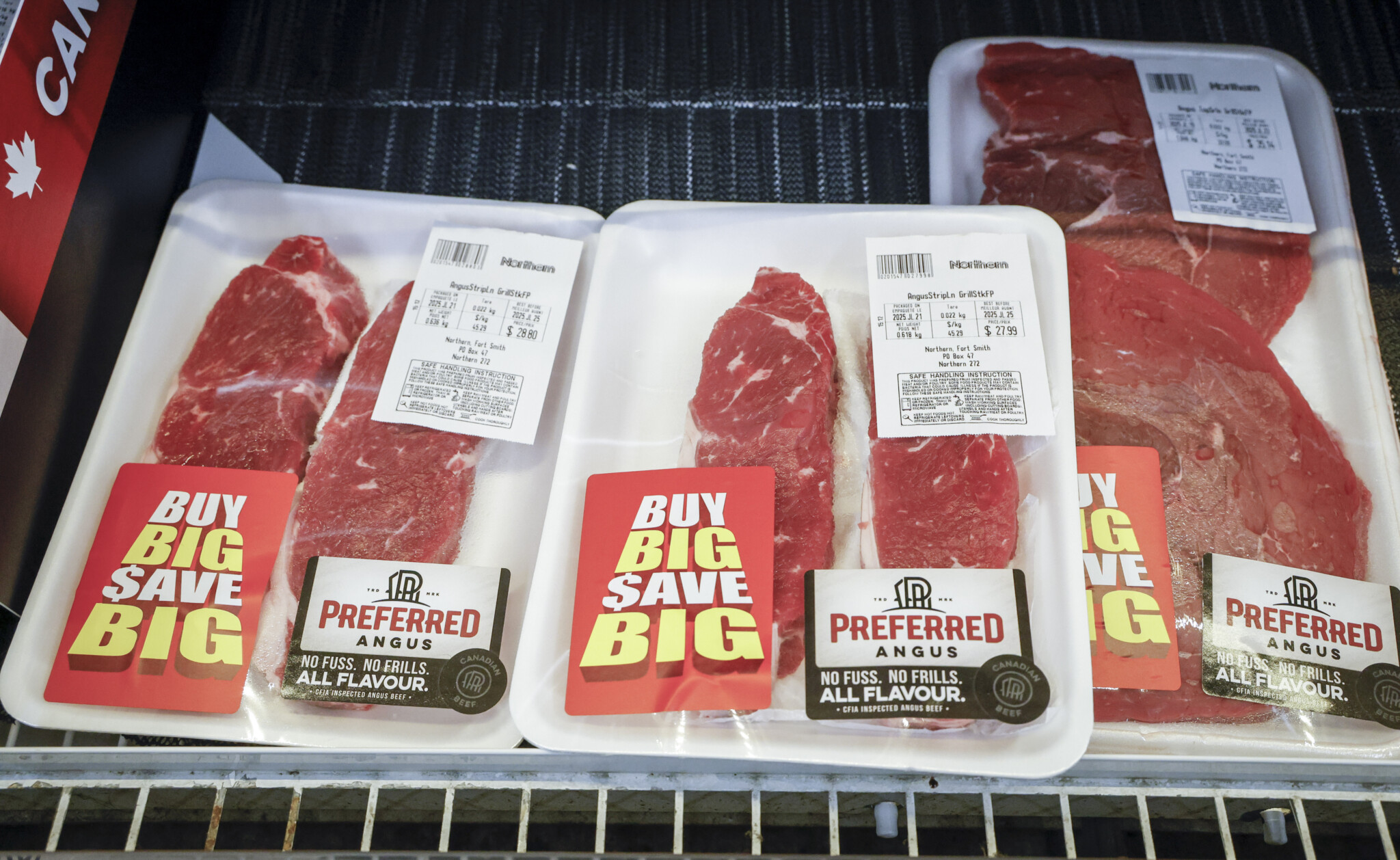
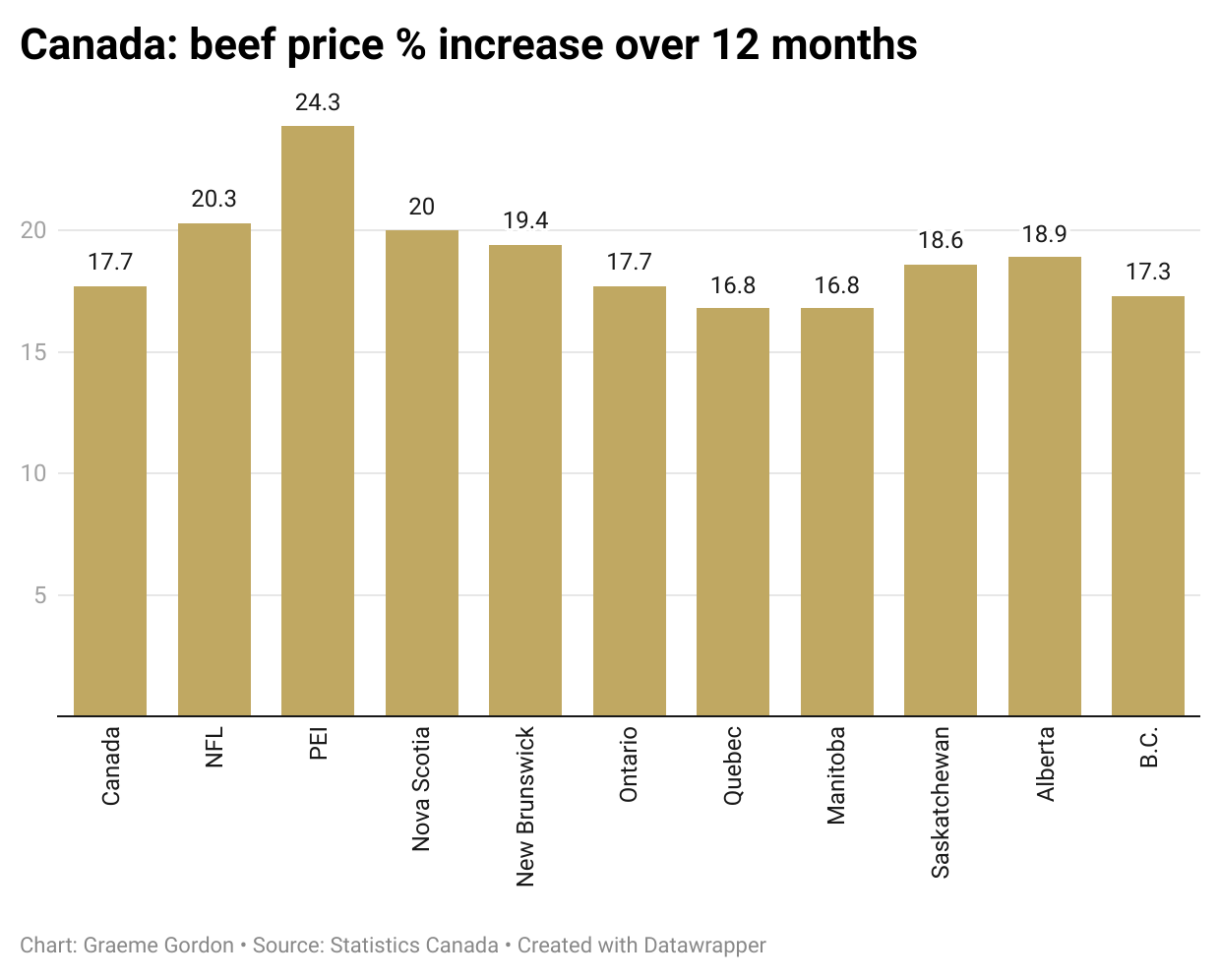
Beef prices have left the barn
In 2025, beef prices jumped 19 percent in the first quarter alone, up 23 percent for the five-year average by end of year after somewhat stabilizing.
Due to severe droughts in Western Canada in recent years, the cattle herd sizes in Canada are at the lowest levels since the 1980s, while the U.S. has been hit even harder by droughts, resulting in the smallest supply of cattle since the 1960s. The growing costs of labour and fertilizers added to the cost of beef.
However, food industry experts do not believe these factors alone have accounted for beef prices soaring. In Canada, two beef packing companies have a dominant position. Cargill Foods and JBS Canada make up 80 to 90 percent of the slaughtering and processing of the beef industry.
Charlebois believes the Competition Bureau should be investigating the essential near-duopoly.
“Why aren’t we seeing Ottawa go after them?” Charlebois wonders. “There hasn’t been one word. And of course there’s the TRQ [Tariff Rate Quota] committee that advises global affairs, my understanding is they haven’t met in 10 years to actually look at beef imports coming into Canada…which is really strange.”
The U.S. has similarly experienced skyrocketing beef prices, spurring the White House to launch an investigation into the meatpacking industry in that country.
Meanwhile, the rise in beef prices has added a marked increase in poultry demand, which Canada’s supply management system has failed to keep up with.
“We’ve actually imported well over 45 million kilos of American chicken [in 2025], despite supply management, which is supposed to allow us to produce what we need. And nobody’s talking about this, because it would make supply management look bad,” Charlebois said.
Food insecurity in Canada set to hit record in 2026
Daily Bread CEO Neil Hetherington told The Hub that food banks expect even more increased demand in 2026, as his organization saw record numbers in 2025, with one in 10 Torontonians now facing food insecurity.
“I would anticipate another 15 percent growth in client visits year over year [in 2026]. And we were at 4.1 million client visits for Toronto this past year,” Hetherington said.
As meat prices have risen above the average rate of inflation, Hetherington’s organization has increasingly sought out protein substitutes like peanut butter and lentils.
Despite the number of post-secondary and international students in general using food banks, dropping from 27 percent and 15 percent of foodbank demand in Toronto in 2024, respectively to 14 percent and 6 percent of demand in 2025, overall demand continues to ramp up.
“It took us 38 years to get to 1 million visits. Two years to get to two million, one year to get to three million, one year to get to four million,” Hetherington explained.
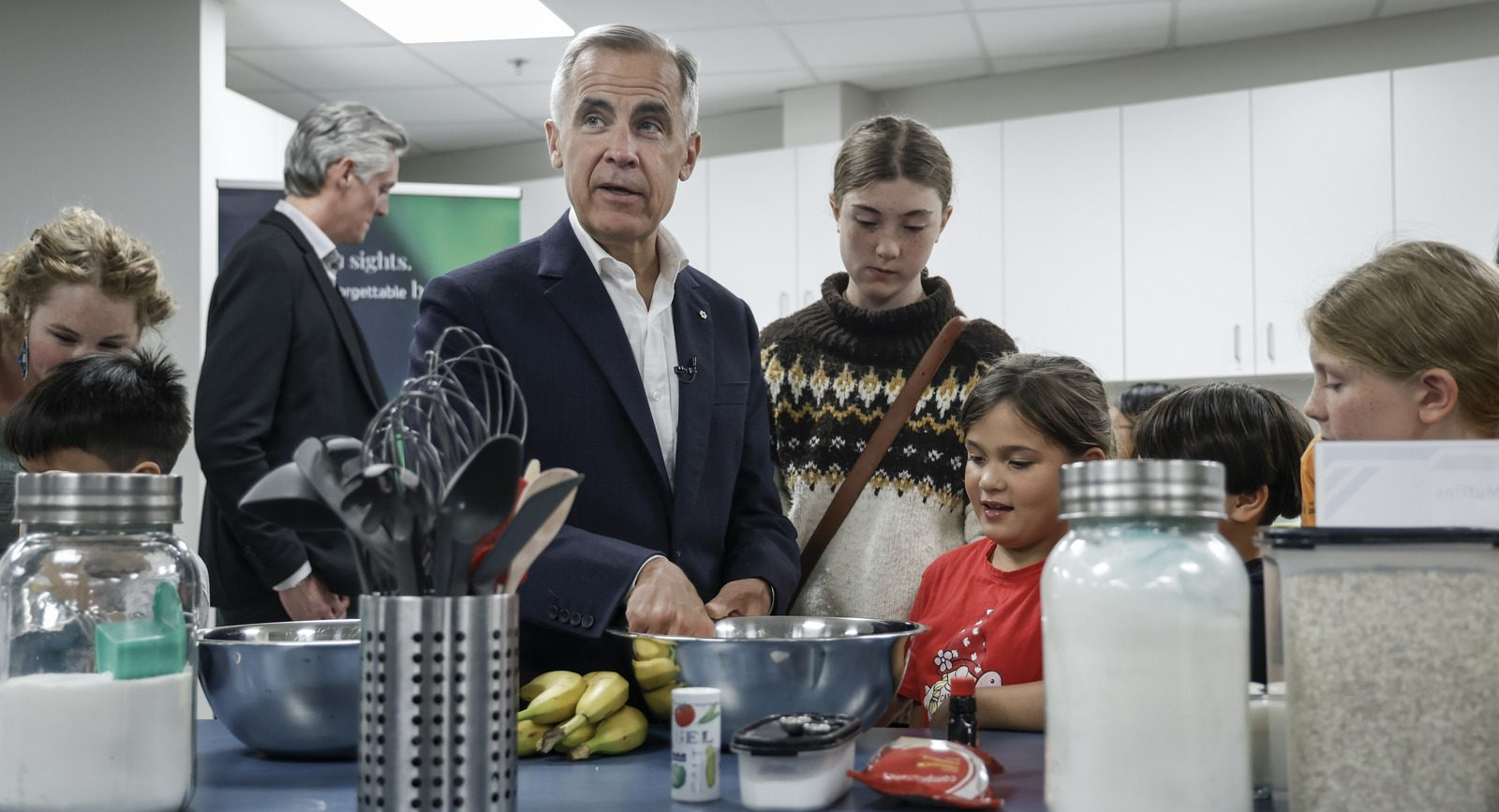
Prime Minister Mark Carney makes banana muffins with summer camp kids in Fort Smith, N.W.T., on July 23, 2025. Jeff McIntosh/The Canadian Press.
Cash-strapped and hangry Canadians pose threat to Carney government’s popularity
Abacus’ Colletto found in his recent polling of Canadians that they have largely given the Carney government a pass on responsibility for the ongoing cost-of-living crisis so far.
“Many Canadians see affordability as structural and global rather than the result of a single government’s decisions. That tempers blame, even as frustration remains high,” Colletto explained.
The federal government, thus far, has tried to alleviate the inflationary strain on lower-income Canadians by nixing the consumer carbon tax, making the national school food program permanent, and implementing automatic tax filing for lower-income individuals to ensure they receive government benefits.
However, Coletto and other political observers believe many Canadians’ goodwill towards the Carney government may fade in the new year.
The Conservatives (currently in a dead heat with the Liberals in recent polling) are certainly anticipating Canadians will continue to have food prices at top of mind, releasing a press release Monday entitled “Just The Facts: Food Inflation.”
“It’s past time to end inflationary Liberal spending, axe the industrial carbon tax and food packaging tax that drive up the cost of food, and make sure that every Canadian family can afford good, nutritious meals this holiday season,” wrote the Office of the Leader of the Official Opposition.
Coletto’s polling report concluded there is strong potential that affordability concerns will intensify in the new year.
“That will be followed by January, when credit card bills arrive, savings feel thinner, and the post-holiday financial squeeze sets in.”

Graeme Gordon is The Hub's Senior Editor and Podcast Producer. He has worked as a journalist contributing to a variety of publications, including CBC,…
What are the primary structural issues contributing to Canada's rising food prices?
How might the upcoming grocery code of conduct impact food prices and fairness in the supply chain?
Given the widespread concern over food costs, how might this issue influence the popularity of the current government?







Comments (0)