Should courts rely on hypothetical scenarios or actual evidence when striking down laws?
Are mandatory minimum sentences an effective 'tough on crime' policy?
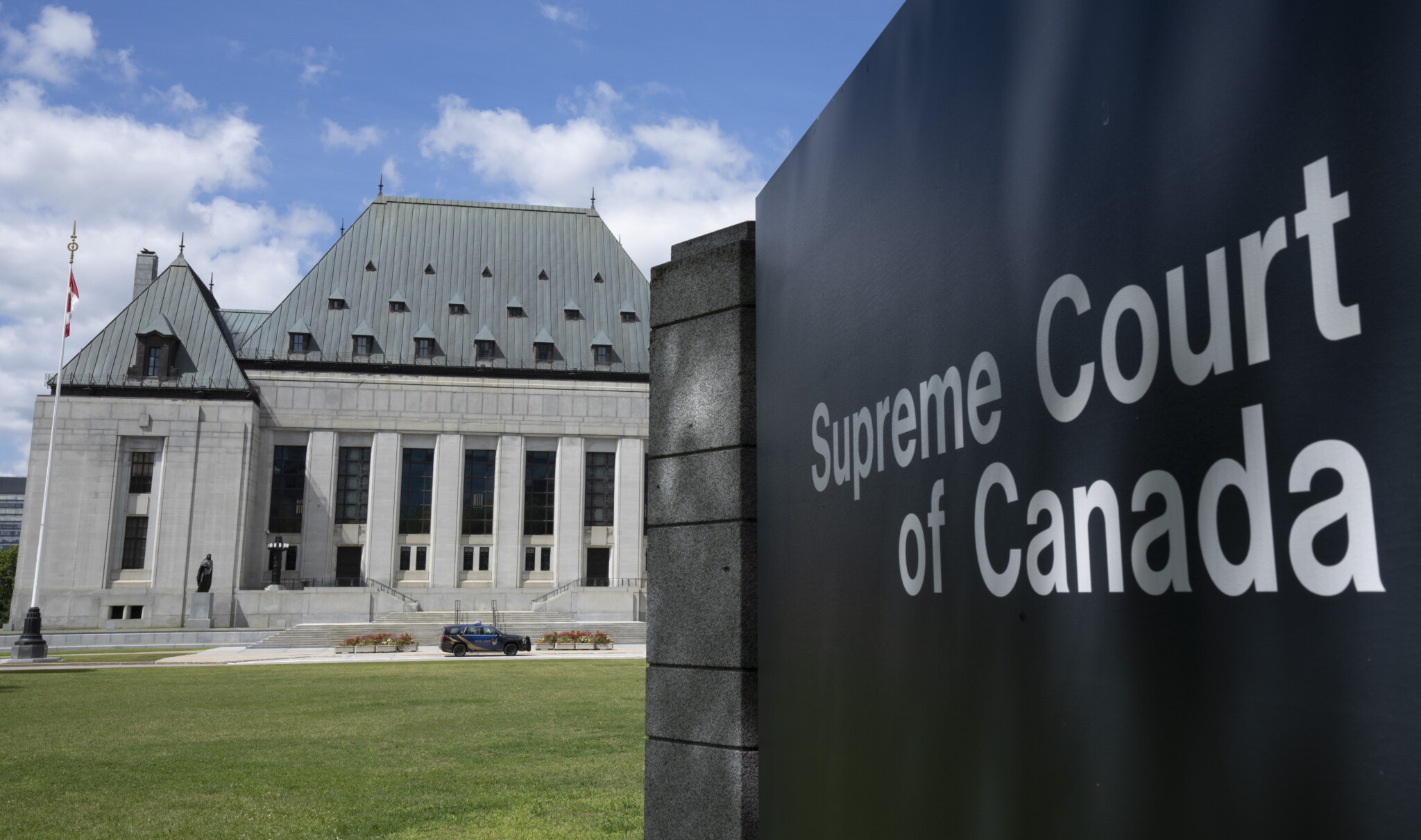
Now that time has passed since the Supreme Court of Canada’s highly controversial Senneville decision striking down the mandatory minimum sentence in child pornography cases, there’s room to comment more dispassionately on the decision and where the country goes from here.
Several commentators were shocked by the court’s decision, but their emotional criticisms risk losing sight of the bigger issue: the court’s unnecessary use of hypothetical scenarios instead of the actual evidence. The key hypothetical was an 18-year-old who receives a sexual image from his 18-year-old friend depicting the friend’s 17-year-old girlfriend having sex, and, knowing it is child pornography, briefly keeps it on his phone.
The majority held that an appropriate minimum sentence would be a conditional discharge with strict probationary terms. Because the mandatory one-year prison term for this conduct would be grossly disproportionate, the mandatory minimum is unconstitutional for that offence as a whole. But a judge’s job is to decide the case actually before the court, on the evidence. Adding the Charter to the Constitution did not change that job description.
Pornography showing young children forced into sexual activities is absolutely disgusting. Anyone convicted of creating or possessing child pornography should receive appropriately severe penalties. Two offenders, Senneville and Naud, were sentenced under this provision. The sentencing judge declared the mandatory minimum “inoperative with respect to the accused” and unconstitutional, but only for these accused. The Quebec Court of Appeal held that the mandatory minimum was unconstitutional, not just for these accused but for the entire offence.
Comments (3)
felicia klingenberg
20 Dec 2025 @ 1:24 pm
Hypotheticals like the one described in this article are routinely used by wrong-doers to ridicule accusations made against them. It’s becoming increasingly clear that anyone employed within the justice system needs to be screened for illicit sexual behaviour. Rapists and pedophiles are everywhere, and when they are within the justice and government institutions they will try to shape the public world to suit their perversions.
Should courts rely on hypothetical scenarios or actual evidence when striking down laws?
Are mandatory minimum sentences an effective 'tough on crime' policy?
What are the implications of using the notwithstanding clause in response to court decisions?
At the Supreme Court, the five-judge majority also struck down the mandatory minimum as unconstitutional. However, the court did not review the actual sentences of the two accused; it decided only by using the constitutional question, using six hypothetical scenarios, including the one cited above. Alberta Premier Smith reacted by invoking the notwithstanding clause in Charter section 33 to shield a controversial new law from Charter challenges. Ontario Premier Ford, insisting the offenders should have been imprisoned for life, urged Ottawa to overrule the court using section 33.The Court’s decision provoked an avalanche of criticism, including a Globe and Mail editorial, amongst other commentary, that the court had no right to soften child-porn laws, that its ruling should be overridden with the notwithstanding clause, and that it reflected an “imaginary” idea of justice. I agree that the decision is wrong, but not merely because of the decision per se, but also because of how it was decided. “Reasonable hypotheticals” are not so reasonable Two principles normally govern courts in common-law systems like ours. First: decide no more than is necessary to resolve the case before the court. Second: decide it on the evidence. In Senneville, the Supreme Court decided an unnecessary constitutional question, using hypotheticals rather than the evidence. Inventing hypothetical scenarios to strike down laws is not adjudication; it is judicial legislation by speculation. Talk of “reasonable hypotheticals” is a self-contradiction because using hypotheticals while ignoring the evidence is unreasonable. This has produced “no-fault unconstitutionality”: laws are invalidated because of imagined offenders who never appear in court. Over time, it has become progressively easier for the Supreme Court to strike down laws “in theory,” rather than to assess how well they function in practice. Mandatory minimums signal that politicians are “tough on crime.” Yet they invite Charter challenges, because a single, highly unusual scenario can knock out the entire law. Defenders of hypotheticals argue that they help courts root out unconstitutional laws earlier. But in Senneville, the court struck down a mandatory sentence that Parliament had already revisited and twice increased. The courts should exercise more self-restraint before declaring legislation unconstitutional on a hypothetical basis. A better judicial approach is to decide each case on its facts. Then the question becomes whether this minimum sentence, for this offender, is unjustifiably cruel and unusual. If it is, a court can apply the Charter in that case, without striking down the entire law using imaginative hypotheticals. A better parliamentary approach would favour sentencing guidelines or handbooks instead of mandatory minimums. In the United States, the Federal Sentencing Guidelines are advisory: judges consult detailed tables of recommended ranges but may depart from them, with reasons given. In the United Kingdom, the Sentencing Council issues guidelines that are formally binding but still permit departures “in the interests of justice.” Parliament could codify advisory guidelines in cooperation with the judiciary. Hypothetical scenarios are not facts, they are merely products of human imagination. Courts should return to real adjudication based on actual cases and evidence. Parliament should favour sentencing guidelines over rigid minimums, trusting judges to apply them responsibly. These alternatives would promote greater judicial restraint and constitutional stability, making cases like Senneville both less dramatic and less frequent. Then, Premiers Smith and Ford could relax about judicial overreach. Postscript On December 9, the federal government introduced Bill C-16, amending the Criminal Code. The relevant section, as amended, would read, in part, “.. a court shall impose a shorter term of imprisonment than the specified term if, in the circumstances, the minimum punishment would amount to cruel and unusual punishment..” This doesn’t fix the problem. It still requires imprisonment, when the Supreme Court decided that an adequate sentence for the hypothetical 18-year-old would be a conditional discharge—no prison time. The right way to have worded this is: “a court shall impose a lesser punishment.” As this is only the first reading, there is still time to fix it.








Comments (3)
Hypotheticals like the one described in this article are routinely used by wrong-doers to ridicule accusations made against them. It’s becoming increasingly clear that anyone employed within the justice system needs to be screened for illicit sexual behaviour. Rapists and pedophiles are everywhere, and when they are within the justice and government institutions they will try to shape the public world to suit their perversions.