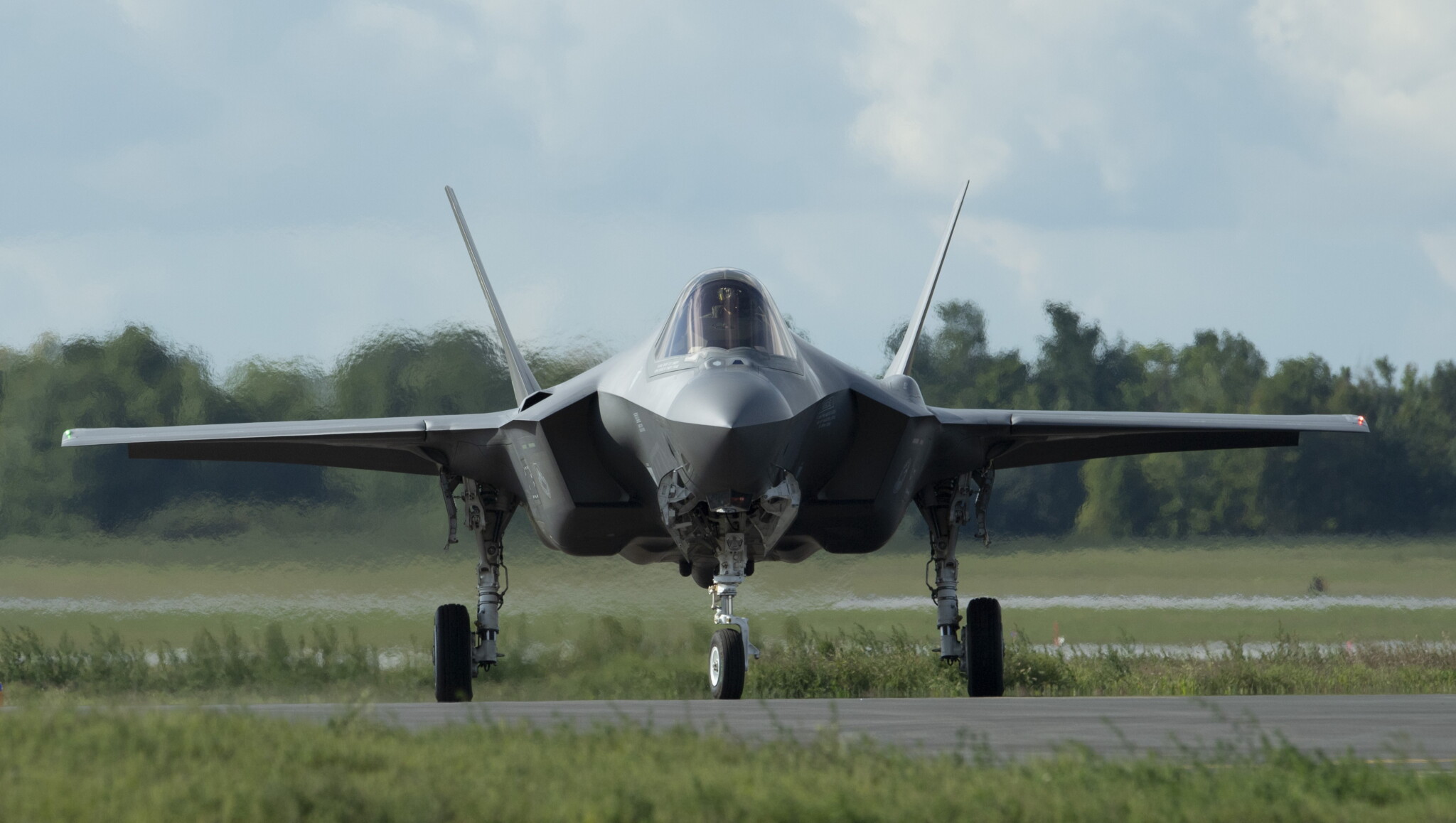
There’s been a growing push in Canada to cancel our orders of the American-made F-35 II Lightning, a multirole stealth strike fighter jet, and replace our aging CF-18 fleet with Sweden’s JAS 39 Gripen. The thrust of this push is that we shouldn’t be buying equipment from a country that has threatened to annex us.
Certainly, this is true of some countries. Even though China hasn’t made any overt annexation threats, its history of exploiting software loopholes would leave the Royal Canadian Air Force open to electronic warfare attacks if we purchased PLA-manufactured equipment.
But pulling out of our F-35 orders and disentangling our military from the U.S. Armed Forces would make us more vulnerable to American annexation, not less. This isn’t because American equipment like the F-35 is superior to competitors, which it is—the Gripen lacks stealth capabilities and is far inferior as a beyond visual range fighter. It’s the fact that the more closely integrated we are with the U.S. military, the greater a logistical headache it will be should U.S. forces be given the go-ahead to invade.

Canada already has deep integration with the American armed forces. The most obvious is the North American Aerospace Defense Command (NORAD), which by law must have an American commander and a Canadian deputy commander. NORAD makes up the bulk of USNORTHCOM, the unified combatant command for the North American region. This effectively means that a high-ranking decision-maker in an American unified combatant command is a Canadian, and U.S. military assets are resourced and deployed with that in mind.
Even more granularly, many divisions throughout the U.S. armed forces have foreign flag officers in strategically important positions. For instance, General Wayne Eyre, chief of the defence staff from 2021 to 2024, was at one point deputy commanding general for operations of the XVIII Airborne Corps, the elite airborne and rapid-reaction force of the U.S. Army.
The article argues that canceling Canada’s F-35 fighter jet orders and disentangling its military from the U.S. would paradoxically increase Canada’s vulnerability to American annexation, not decrease it. While some advocate for this separation due to perceived threats from the U.S., the author contends that deep integration with the U.S. military, exemplified by NORAD and the presence of foreign flag officers in key U.S. positions, creates a significant logistical and strategic deterrent. This integration means that any conflict with Canada would disrupt U.S. military planning and force projection, making an invasion prohibitively costly.
The F-35, with its advanced C4ISR capabilities, further deepens this integration, acting as a microcosm of the broader U.S.-Canada military entanglement. The author emphasizes that this interconnectedness, rather than a superior aircraft, is the primary mechanism for deterring U.S. aggression.
While acknowledging the U.S. military’s overwhelming power, the article posits that making an invasion too disruptive to American strategy and readiness is Canada’s strongest defense, reinforcing existing defense policy rather than requiring a complete overhaul.
But pulling out of our F-35 orders and disentangling our military from the U.S. Armed Forces would make us more vulnerable to American annexation, not less.
The more integrated we are with the U.S. military, the greater a logistical headache it will be should U.S. forces be given the go-ahead to invade.
The F-35 is designed from the ground up to integrate into the whole of America’s command, control, communications, computers, intelligence, surveillance, and reconnaissance (C4ISR) infrastructure.
Does buying F-35s truly deter a U.S. invasion, or is it a complex geopolitical strategy?
Beyond military hardware, how does Canada's integration with U.S. defense impact its sovereignty?
If the F-35 is so vital for integration, what are the broader implications of Canada choosing a different aircraft?







Comments (10)
I would suggest that if we are seriously upgrading our defence stance, we could have a fleet of 88 F-35’s, for the reasons you state, as well as for combat with peer nations, AND a fleet of Saabs for tactical and expeditionary use. It does not have to be either/or, if we are serious about capability, not politics.