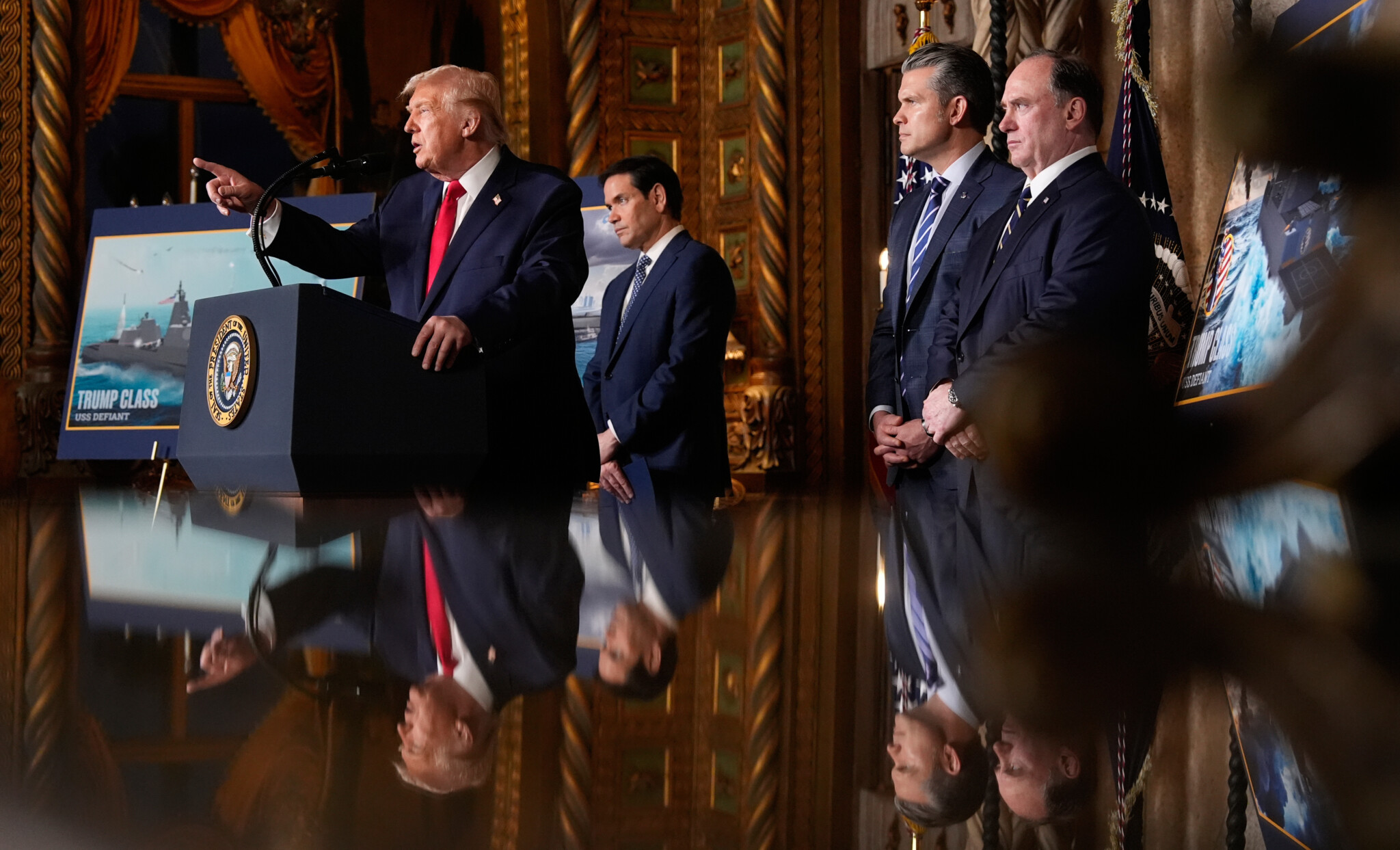
President Donald Trump’s National Security Strategy (NSS), released last month, contains troubling implications for Canada—not through what it directly says about our nation, but through what it assumes and demands. Now, with Trump’s actions in Venezuela to remove dictator Nicolás Maduro demonstrating the American president is serious about the strategy’s core focus on Western Hemispheric dominance, it’s even more vital that Canadian leaders consider the NSS’s implications on our own foreign policy.
Presently, Prime Minister Mark Carney is attempting to navigate a nasty tariff war and a looming CUSMA renegotiation while simultaneously pursuing a strategic reset with China, including visiting the country next week to talk trade and security with President Xi Jinping. This leaves Canada caught between competing imperatives that may prove impossible to reconcile.
The NSS presents a “Trump Corollary to the Monroe Doctrine,” which the president has since come to call the “Donroe Doctrine,” envisioning the Western Hemisphere as an American sphere of influence where Washington will “deny non-Hemispheric competitors the ability to position forces or … own or control strategically vital assets.” The document focuses heavily on Latin America’s instability and migration challenges, while Canada appears implicitly categorized as part of the solution rather than the problem—an “established friend” expected to help “control migration, stop drug flows, and strengthen stability and security on land and sea.”

This could work to Canada’s advantage. Unlike America’s southern neighbours, we are not viewed primarily through a security threat lens, although Trump’s Section 232 national security tariffs against Canadian steel, aluminum, copper, and wood seem to run counter to this. The strategy’s emphasis on “near-shoring manufacturing” and developing hemispheric supply chains aligns well with Canadian economic interests, particularly in critical minerals, energy, and advanced manufacturing.
However, the document’s language reveals an administration that sees hemispheric partnerships as transactional, where compliance is expected, not negotiated. The strategy explicitly states that alliances and aid “must be contingent on winding down adversarial outside influence.” This presents Canada with an uncomfortable ultimatum.
President Donald Trump’s new National Security Strategy (NSS), dubbed the “Donroe Doctrine,” redefines the Western Hemisphere as an American sphere of influence, demanding compliance from allies and leaving little room for independent foreign policy.
The strategy views alliances as transactional and contingent on winding down adversarial outside influence, particularly from China. This presents a significant challenge for Canada, which is attempting to reset relations with China to diversify its trade away from the U.S. while simultaneously navigating tariff wars and potential CUSMA renegotiations. The NSS explicitly criticizes past engagement with China and warns against Chinese control of strategic assets, which could impact Chinese investments in Canada.
The article argues that Canada faces an impossible strategic triangle: it cannot simultaneously pursue a China reset, maintain U.S. market access, and resist U.S. pressure for increased defense spending and alignment on China policy.
The author suggests Canada must make difficult choices, recognizing that a China reset will have consequences for the U.S. relationship, and that increased defence spending and alignment with U.S. strategic priorities are now expected. The window for Canada to proactively shape its relationship with the U.S. under these new terms is rapidly closing.
Can Canada truly pursue an independent China reset under Trump's 'Donroe Doctrine'?
What are the economic trade-offs for Canada in aligning with the 'Donroe Doctrine'?
How does Canada's defense spending fit into the 'Donroe Doctrine's' demands?





Comments (11)
An excellent article that outlines clear choices. American generosity has clearly been abused for several decades and it’s hard to blame them for wanting the peace dividend they earned while defending the entire free world for decades while being despised by many for doing it.
If their allies had contributed fairly (even what they agreed to) it is likely that DJT is never president, probably would never have run.
While the delivery of the message is not as cordial as would be desired, or even expected, a sober send look will show that it is not completely inaccurate. None of the things that it would take to mend the fence are unreasonable, they would not create undue hardship and would, in some respects, massively improve our international position.
Joining the EU, as has been floated by the Liberals, through the media, is ridiculous on it’s face. If it came to that, I would sooner be the 51st. At least in that instance we would not have an unelected body dictating massive public expenditures without accountability.