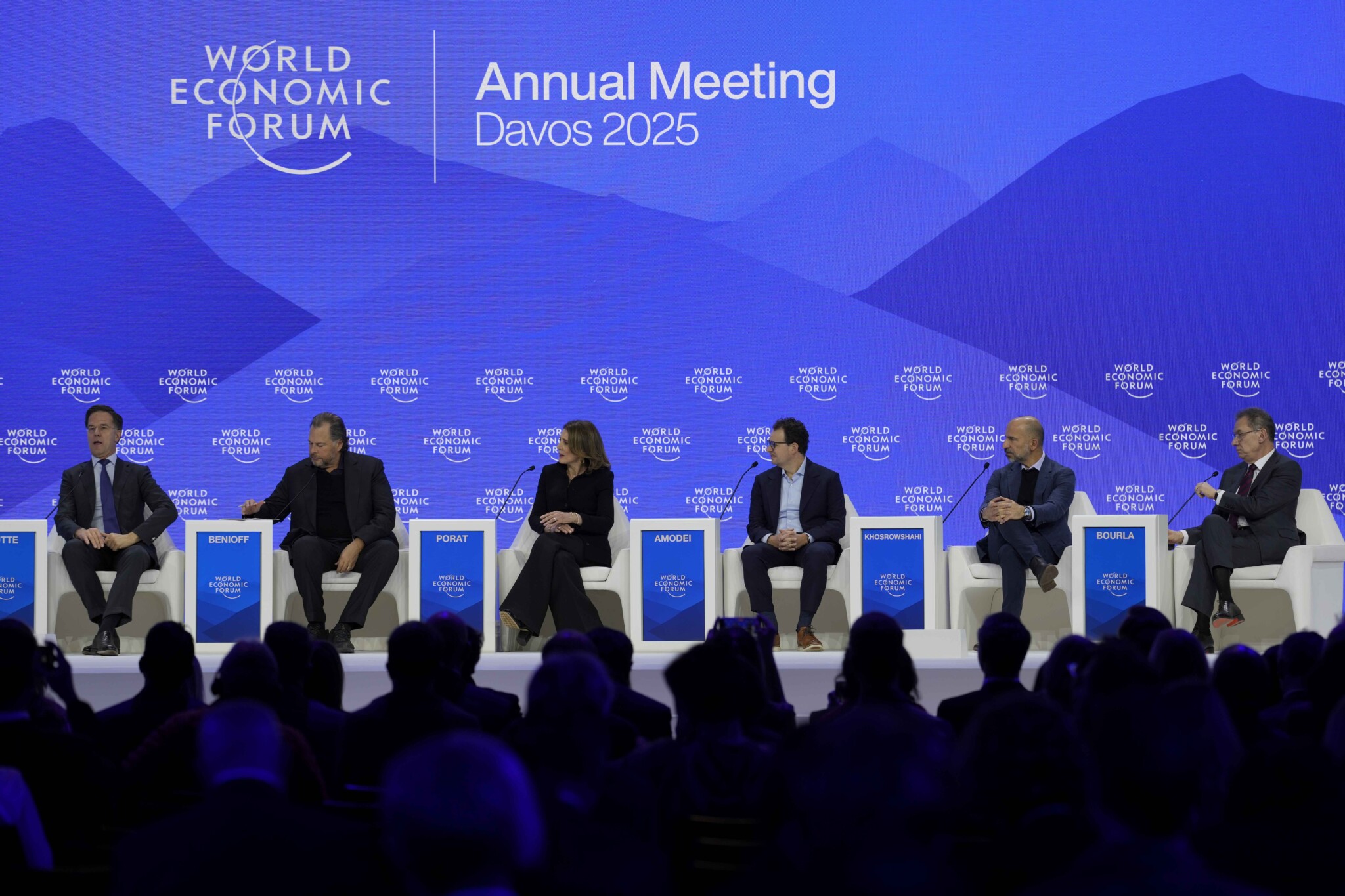
This week’s gathering of the World Economic Forum in Davos will no doubt position itself as a vital summit for solving the world’s most pressing problems. But, in reality, it’s bound to once again be a spectacle of elite self-congratulation that exacerbates the political maladies that it claims to cure.
As populist nationalism surges across the West, the luminaries assembled in the Swiss Alps persist in peddling bromides about “open economies” and “inclusive growth,” while refusing to acknowledge their own role in creating the conditions for this backlash.
For decades, the Davos set has championed a mix of hyper-globalization abroad and technocratic governance at home. The result is a pro-business (rather than pro-market) politics coupled with rising economic inequality across the Western world.
There’s a crass logic to such rent-seeking. What’s insufferable is the sanctimony with which it is dressed up—in the language of humanitarianism, meritocracy, and heroism, all purportedly in service of liberal democracy and prosperity.
This high-minded rhetoric cannot disguise the essential transaction: a festival of hot air, sponsored lavishly by global firms, where billionaires and political leaders network at taxpayers’ expense.
The damage wrought by this consensus is not abstract. Consider immigration. In 2023, Canada added 1.3 million immigrants, five times more than in 2015, and more than two-and-a-half times the Trudeau government’s own official immigration target. In pursuit of a policy of low-skilled immigration, advanced by figures such as (now our ambassador to the U.S.) Mark Wiseman and the Century Initiative were sold as enlightened globalism. In practice, it served the interests of industry by suppressing wages and eroding opportunities for those lower down the skills distribution, fracturing a once-stable national consensus.
Yet at Davos, these architects are heralded as champions of progressivism rather than as agents of social dislocation. This pattern repeats globally: elites applaud each other for their virtue while insulating themselves from the consequences of their decisions.
The current populist moment, epitomized—but not exclusively—by Donald Trump, is a direct reaction to this failing consensus. The Davos class laments the rise of figures like Trump, yet will not look in the mirror to ask how their own policies, and their utter detachment from the common concerns of ordinary citizens, have fed this revolt.
Their response is more photo-ops and red-carpet interviews with pliable media rather than meaningful introspection. The arrival of former prime minister Justin Trudeau with pop star Katy Perry in tow is not merely an embarrassment; it is a symbol of a Marie Antoinette moment, a “Let them eat cake” spectacle staged, while millions grapple with an affordability crisis and profound geopolitical anxiety.
This annual theatrical performance of elite culture does more than annoy; it actively undermines trust. Businesses have lost confidence in arguing for themselves simply as creators of employment and producers of desired goods. Instead, they muffle their core purpose in unconvincing sermons on social value and corporate responsibility, further alienating the public. The resulting erosion of faith has been profound.
View reader comments (4)
When elites gather to pat themselves on the back for standing up to “populism,” they do nothing to address the actual material needs driving it. By refusing accountability, they risk perpetuating a vicious cycle, ensuring the next populist leader is even more extreme.
Davos is not, as fringe conspiracy theorists allege, a cabal. It is something perhaps more dangerous: a public display of elite myopia. If these leaders and magnates wish to confer in private, let them. But the relentless glamorization of their gathering—the breathless media coverage, the celebrity cameos, the moral preening—is an insult to the intelligence of the public. It widens the already massive gulf between a transnational elite, with its rootless identities and interests, and the “somewheres,” who remain grounded in nation, community, and tangible reality.
Nothing heroic is happening in the Swiss Alps this week. The forum’s true legacy is not solutions, but potent fuel for anger, alienation, and division. It is time to say the quiet part aloud: Davos is a broken institution. Its greatest export is not insight, but the very populism its attendees love to deplore.
This commentary draws on a Hub podcast. It was edited with the use of AI. Full program here.
The World Economic Forum (WEF) in Davos is a “failed institution” that exacerbates the problems it claims to solve. The WEF’s elite attendees promote “hyper-globalization” and “technocratic governance,” leading to rising economic inequality and a backlash of populist nationalism. The WEF ought to be criticized for its “sanctimony,” “rent-seeking,” and detachment from ordinary citizens’ concerns. The WEF’s “myopia” and “glamorization” fuel public anger and division, making it a dangerous institution whose greatest export is populism.
Does the WEF's focus on 'open economies' and 'inclusive growth' inadvertently fuel populist backlash?
How does the article suggest the WEF's 'spectacle' undermines public trust?
What is the article's core critique of the WEF's approach to global problems?



Comments (4)
well said