
In the Weekly Wrap, editor-at-large Sean Speer analyses, exclusively for Hub subscribers, the big stories shaping politics, policy, and the economy in the week that was.
The admirable consistency of Pierre Poilievre’s conservatism
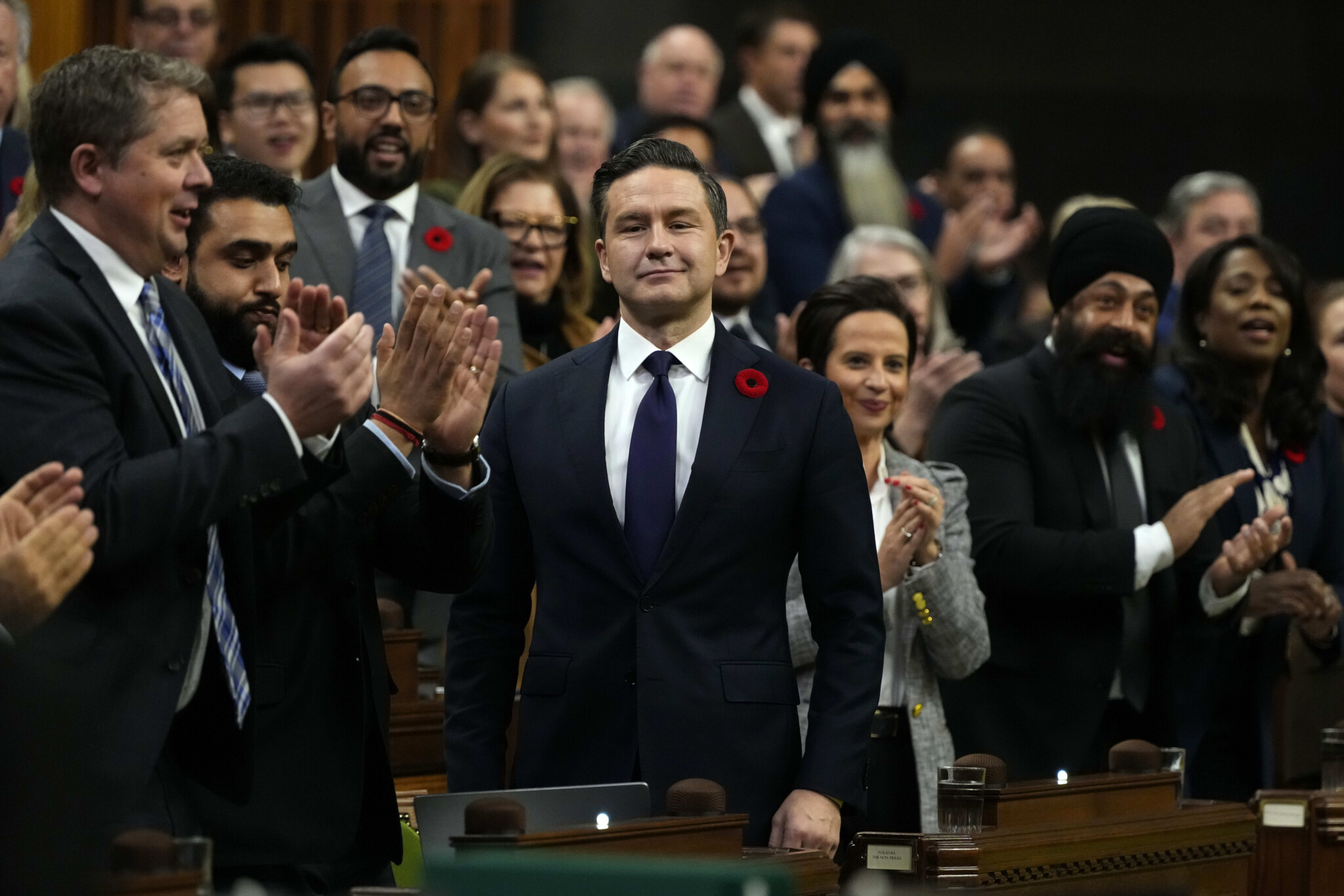
Pierre Poilievre’s leadership review results were ultimately anticlimactic. Nearly 90 percent of convention delegates endorsed his leadership and his vision of conservatism.
What is that vision of conservatism? We got a window into it during his convention speech last night.
At a time when centre-Right parties around the world are abandoning traditional conservatism in favour of cultural wars and dirigiste economics, and some are calling on the Canadian Conservatives to follow in the same direction, Poilievre’s own conservatism, which hasn’t changed since he was a young man, remains notably orthodox—in a good way.
He talked about the hidden costs of big government—not just what it spends, but what it invisibly prevents: investment that never happens, businesses that never form, ambition that slowly gets regulated out of existence. It echoed the old Bastiat insight that public policy must account for what we can easily see as well as the consequences that never make it into the political spotlight.
Poilievre’s cultural message was similarly restrained. It wasn’t framed as a campaign to purify institutions or to wage war on enemies within. It was closer to a small-l liberal ethic: let people live their lives and let government “mind its own business.” That idea has a lineage of its own—one that runs through classical liberalism and into postwar conservative thought, including the Hayekian suspicion that states which claim to reorder society seldom stop at the margins.
And then there was his aspirational thread about recovery, addiction, and rebuilding lives. This was more than a simple law-and-order message. It was a moral claim about agency and redemption and the equal dignity of individuals, including those who’ve fallen. Call it Burkean, call it Christian realist, call it a form of civic faith. It was a powerful expression of Polievre’s case about what kind of citizens remain once government steps back.
There was even a flash of Ronald Reagan’s old axiom about the tendency of governments to regulate, tax, and subsidize things.
This was a speech that will disappoint those calling for a major pivot to the threats and provocation of Donald Trump and who wanted Poilievre to directly address the president’s threat to Canada and Trumpism’s threat to Canadian conservatism. Instead, he mostly focused on the growing gap between the Carney government’s rhetorical ambitions and its actual results and the socio-economic consequences for Canada.
But just because Poilievre didn’t explicitly call out Trump and Trumpism doesn’t mean that he didn’t address it. His articulation of a conservatism rooted in limited government, personal freedom, and the dignity of the individual—what he characterized as “smaller government for bigger citizens”—was an implicit expression of traditional conservative ideas and a rejection of Trumpian illiberalism and those who believe that the Conservative Party ought to remake itself broadly in that image. In a moment of conservative heterodoxy, Polievre deserves tremendous credit for his orthodoxy.
Notwithstanding the strong endorsement of Conservative supporters, it’s hard to know if Poilievre will ultimately become Canada’s next prime minister. As we were reminded last year, politics has a way of humbling confident predictions. But his speech was a sign that, either way, he isn’t going to change who he is or what he thinks Canadian conservatism should be.
There’s something admirable about that.

Does Mark Carney believe his own rhetoric?
It’s nearly two weeks since Prime Minister Mark Carney’s Davos speech, and the intervening time has raised questions about how, if at all, his audacious thesis will inform Canadian policy and politics.
The prime minister has been praised for his clear-eyed assessment of American withdrawal from global leadership and its consequences for the liberal rules-based order. The idea that the global system as we’ve come to know it is experiencing a “rupture”—a permanent and durable break from the recent past—is a high-stakes claim that I broadly agreed with, even if others dispute it.
Yet that’s precisely why the gap between his diagnosis and the government’s actions since Davos is so striking.
The Weekly Wrap breaks down Pierre Poilievre’s big leadership review win at the Conservative convention in Calgary, including why his consistent conservative vision continues to resonate with the base. It also analyzes Prime Minister Mark Carney’s recent Davos speech, questioning the disconnect between his “rupture” thesis on the global order and the government’s subsequent actions, and discusses a new Public Policy Forum that proposes a framework for identifying “strategic sectors.” The paper suggests oil and gas and mining are key sectors based on economic spillovers and strategic importance, advocating for evidence-based policy over political influence.
Does PM Carney's 'rupture' thesis align with government actions?
How should governments identify 'strategic sectors' for policy?
Which sectors emerge as 'strategic' based on the article's framework?






Comments (17)
One interesting mention by Poilievre in his address last night that I have not heard before is the claim that more Canadians are starting new businesses in the USA than are starting new businesses in Canada. Quoting the transcript of his speech: “Amazingly, Canadian citizens — this is an incredible fact — Canadian citizens now open more businesses in the United States of America than they do in their home country.” If correct, that seems rather astonishing and a powerful rallying cry for an economic agenda to make Canada more competitive that CPC should seize on.