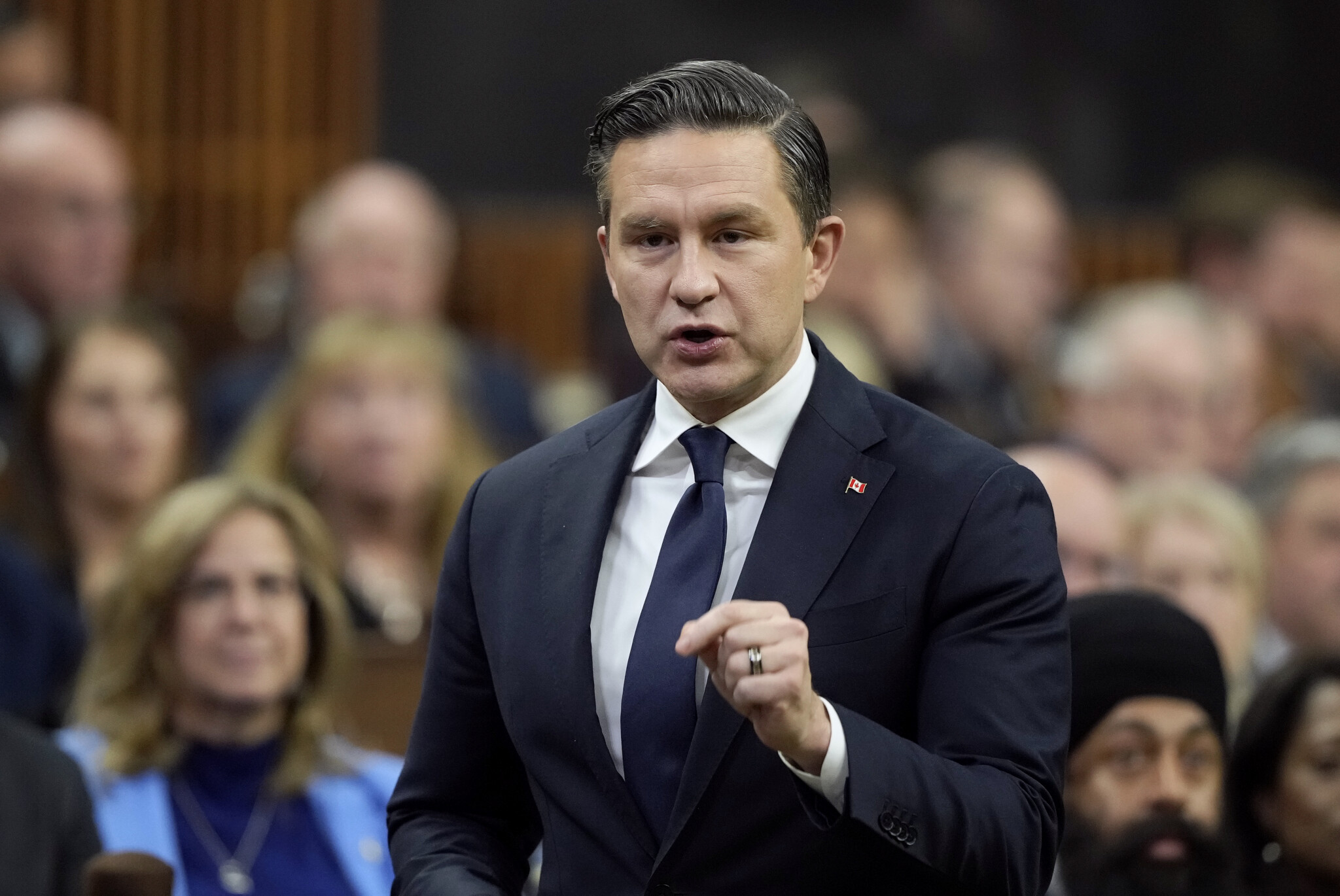
Pierre Poilievre easily met the threshold that many set in his leadership review at this weekend’s Conservative Party convention with 87.4 percent of the vote—a clear signal that his party is not in the mood for an internal reset.
The question now is not whether he leads the Conservatives into the next election. He almost certainly will. The question is whether the coalition he has built can grow enough, in the right places, to win an election.
This analysis draws on Abacus Data’s national survey of 2,008 Canadian adults conducted January 12 to 16, 2026, and on two decades of experience studying Canadian public opinion: Canadian elections are rarely decided by a single ballot question. They tend to be decided by coalition math, turnout energy, and a small slice of persuadable voters in ridings that matter.
Poilievre does not need to be loved by most Canadians to win. He needs a coalition that is large enough, motivated enough, and geographically efficient enough to win the seats that count. That has not been easy for Conservatives over Canadian history, but the coalition today is younger and more diverse than it has been in the past, presenting both opportunities and risks.

What was striking about Poilievre’s convention speech is that it offered clues about how he thinks this coalition can grow.
First, the speech was overwhelmingly focused on domestic issues. He spoke about the parts of life Canadians feel most urgently. It was not built around foreign threats or external actors, and while Donald Trump looms large for many Canadians, Poilievre’s narrative stayed grounded in kitchen-table pressures people face day to day.
“Young people are wondering if they’ll ever have a job or a home,” he told delegates. “Families are struggling to do the math.” That is not a policy frame. It is a judgment about the felt experience of people who do not feel like life is working as it should.
Canada’s mood: Precarity without panic
Canadians begin 2026 in a precarity mindset. Not panic, but exposure. Costs still feel high, confidence is thin, and many Canadians sense things could turn quickly beyond their control.
The public agenda remains largely domestic: affordability, housing, jobs, and the everyday pressures that shape votes. In our latest tracking, cost of living remains far ahead of other issues on Canadians’ priority list. Other concerns trail well behind even prominent stories about cross-border trade frictions and policy wars. But within the top issue list exists a fundamental divide: will those issues be made worse by Trump and uncertainty, or are they caused by decisions here at home?
This divide in the public demonstrates why Poilievre focused his speech on the feeling that “the government has not kept its part of the bargain,” saying Canadians “have kept their part… working hard, spending less, following the rules.” That is not a policy prescription; it is a concise way to tap into a pervasive feeling that something has gone wrong at home.
The Conservatives start from a strong floor
One of the most important facts about modern Canadian politics is how consistent the Conservative Party’s national vote share has been since 2004. Across elections, the Conservative vote share has hovered in the mid-30s, occasionally rising into the low 40s but rarely collapsing or surging on the strength of individual campaigns. That baseline has kept the Conservatives competitive election after election.
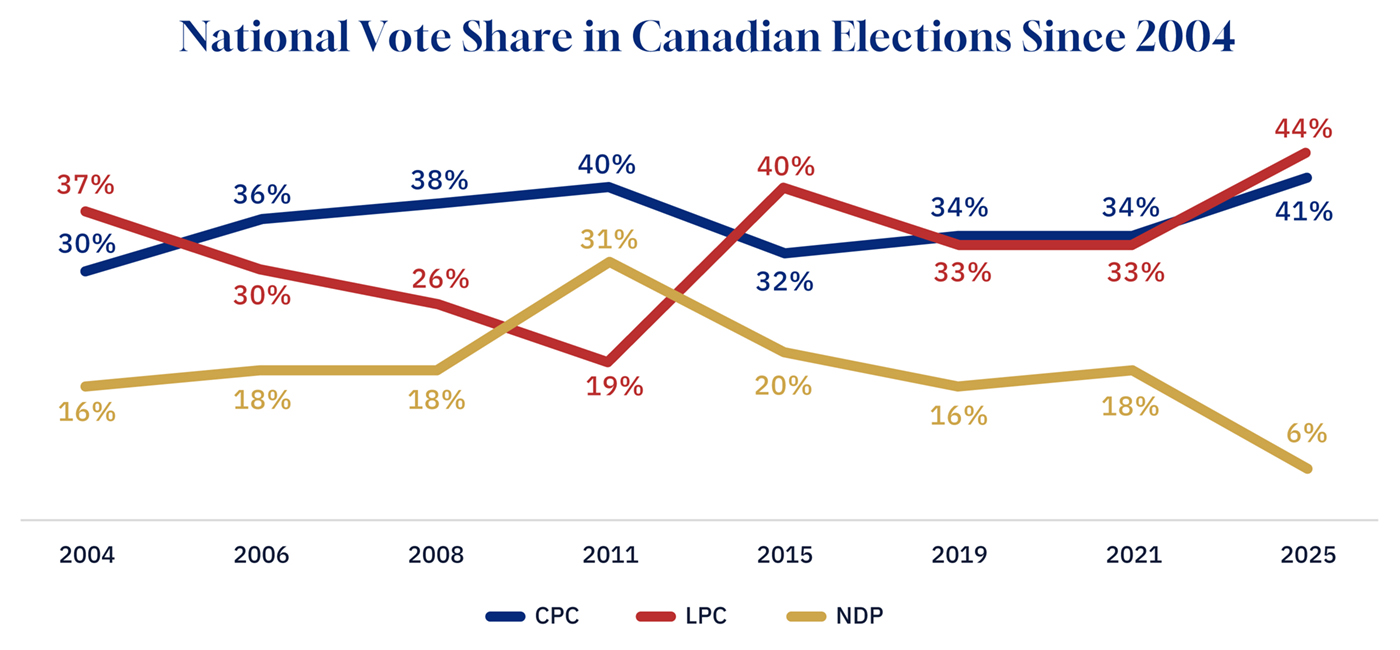
Source: Abacus Data. Graphic Credit: Janice Nelson.
A large base creates resilience. It creates turnout energy. It creates a minimum threshold of support that does not collapse easily, even through setbacks. But it also highlights the central challenge: the obstacle is the ceiling, not the floor. Growing beyond that baseline requires convincing enough voters outside the core to see Poilievre as acceptable, not just agreeable.
In our segmentation, 23 percent of Canadians fall into the Conservative base—people who say they would only consider voting Conservative. Overall Conservative support sits in the mid-30s. Then there is the group that will decide whether a majority is possible: accessible Conservatives, about 14 percent of the electorate, open to voting Conservative but not currently doing so.
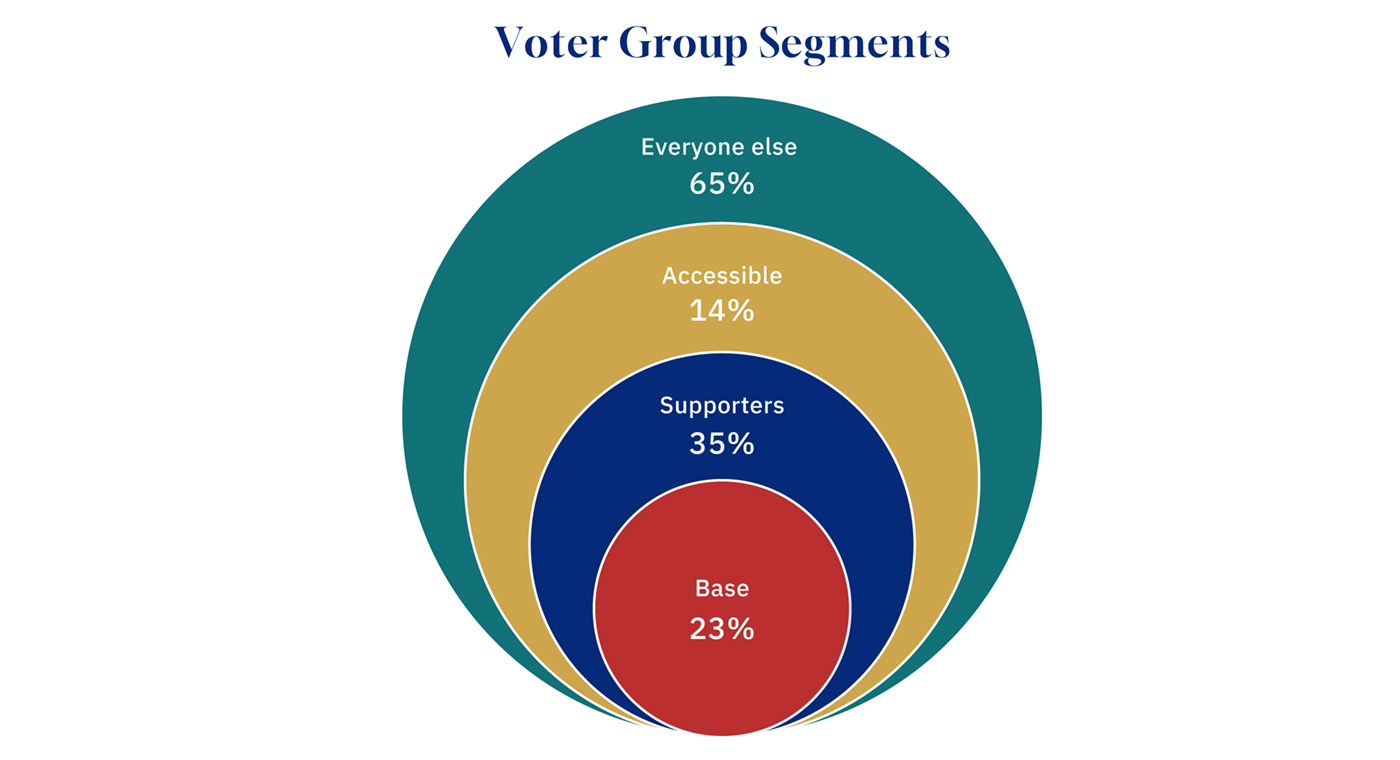
Source: Abacus Data. Graphic Credit: Janice Nelson.
That is the growth pool. It is also the hard part.
Why unemployment could be a turning point
Cost of living is a constant pressure. Unemployment is an event. When job losses rise, politics can shift quickly, changing how people judge government performance and how much risk they tolerate. Poilievre’s speech was built around that domestic pressure point, with lines like “Canadians cannot afford life under the Liberal government,” attempting to tie economic hardship to political responsibility.
A recent concrete example of that domestic pressure is the cutback of the third shift at the General Motors plant in Oshawa. Just last week, GM confirmed it will remove the third shift at its Oshawa assembly plant, cutting hundreds of jobs directly and potentially thousands more across suppliers due to reduced production. Local union leaders and workers have described how this shift cut feeds into a rising unemployment situation in a city already facing one of the highest jobless rates in the country.
If more of that happens, whether in Oshawa’s auto sector or in other manufacturing regions, political economics could become even more salient. Rising unemployment would weaken the Liberals’ reassurance narrative and strengthen Poilievre’s argument that domestic policy failure, not global malaise, is the root cause of people’s anxieties.
It is also why I still believe a spring election is increasingly likely: political timing matters when the risk of darker economic news loom on the horizon.

The Trump factor in the Poilievre brand
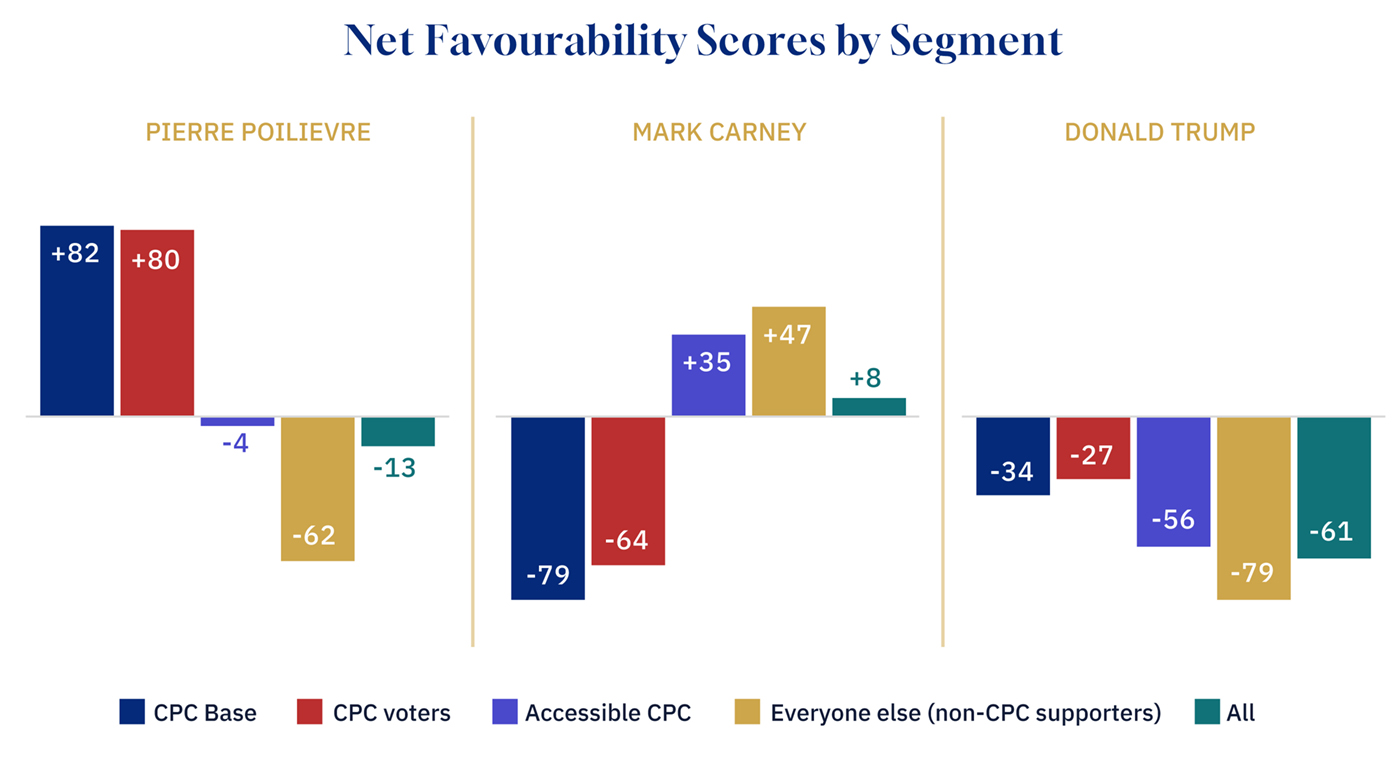
One of the biggest constraints on Conservative growth, though, is Poilievre’s perceived risk. In our polling, four in 10 Canadians say Poilievre is “a lot like Donald Trump.” That is not a small niche perception; it is a meaningful part of his brand.
Inside the Conservative coalition, the comparison largely does not stick and is not always seen negatively. Outside it, the comparison sticks far more. Among accessible Conservatives, a notable share see him as Trump-like. That complicates the outreach task.
Poilievre’s polarization challenge is even sharper on the Left. Among NDP supporters, 73 percent have a negative impression of him, and 53 percent have a strongly negative view. Among NDP-accessible voters, 56 percent are unfavourable, and 36 percent are very negative. As long as he remains highly polarizing, centre-Left voters have a strong incentive to consolidate behind alternatives instead of splitting their ballot. Strategic voting dynamics could thus blunt some of the fragmentation benefits Conservatives might hope for.
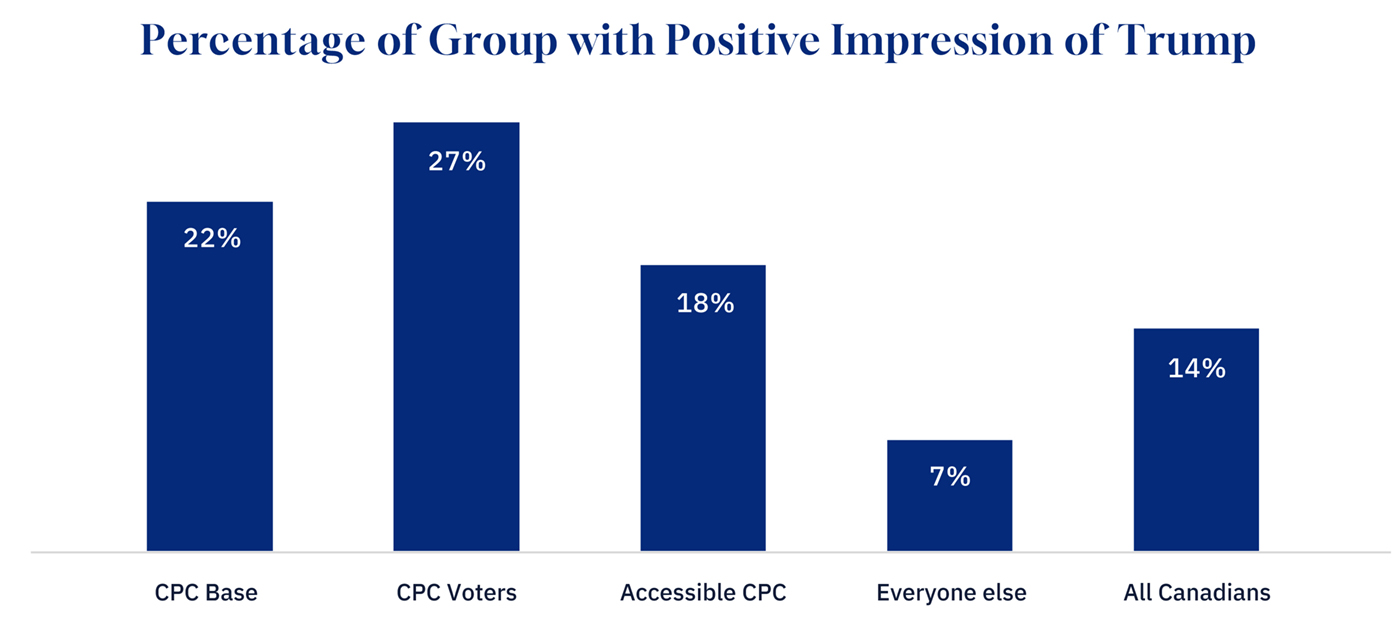
Source: Abacus Data. Graphic Credit: Janice Nelson.
The turnout challenge has flipped
For much of the past decade and a half, Conservatives benefited from an older, more reliable electorate. That advantage has narrowed or reversed. Liberal voters today are more likely to say they will vote than Conservative voters. That change matters because mobilization can complicate persuasion: the sharper the tone needed to energize the base, the harder it can be to reassure the accessible voters in the middle.
This dynamic makes turnout strategy central to Poilievre’s path. He needs his base fired up, but he also needs a high turnout of accessible Conservatives who may be less excited about his style.
Source: Abacus Data. Graphic Credit: Janice Nelson.
Two paths to victory
1. Growth in a two-party race: If the next election resembles 2025, with a weak NDP and limited vote splitting on the centre-Left, Conservatives need real growth, not just turnout. That means converting a meaningful share of accessible Conservatives into actual Conservative voters. For that to happen, Poilievre does not need to become inspirational to them. He needs to become acceptable. These voters may agree with him on affordability, but some worry about volatility and conflict.
Accessible Conservatives say they would be more confident with more focus on everyday issues, a more respectful tone, and more willingness to work with others. Poilievre’s convention speech suggests he believes the path runs through domestic impatience, not global distraction. He framed the election as a choice not of style, but of outcomes: “Sure, the words have changed. The style has changed. But what’s changed in your life?”
2. Seat efficiency through fragmentation: If the NDP rebounds enough to pull votes from the Liberals in key places, especially in British Columbia, Conservatives can win more seats without dramatic national growth. But this is conditional. A widely disliked Conservative leader can push soft progressives back to the Liberals even if they are not thrilled about it, especially in more tactical contests.
Where this leaves us after the convention
The leadership review result confirms Poilievre’s mandate inside his party. It does not resolve the central question in front of him. Can he grow beyond a cohesive base without triggering enough fear to consolidate the opposition?
The Conservatives start with a strong floor. They benefit from an agenda largely dominated by affordability but are threatened by Donald Trump’s constant interventions and even the risk now of Alberta separatism.
The obstacle is the ceiling, not the floor. Poilievre’s path to victory exists, but it depends on conditions: the economy, unemployment trends, the global environment, and whether the election becomes about domestic repair or external protection.
View reader comments (7)
Poilievre’s convention speech revealed his strategic bet about what the next election will be about. He is betting that enough Canadians will come to believe that the main source of their anxiety is not Trump or external shocks, but Liberal policy failure at home. His mission is to convince more people that the problem is domestic drift, rising costs, housing scarcity, fraying social order, and a government that has stopped delivering on the Canadian promise.
“Canadians cannot afford life under the Liberal government,” he said, framing the ballot question not as a choice between competing visions of stability, but as a referendum on whether life is still working. He dismissed changes in tone or presentation as superficial: “Sure, the words have changed. The style has changed. But what’s changed in your life?”
That is impatience as strategy. It is an attempt to define the election as a moment of repair rather than protection, a demand for urgency rather than reassurance.
It is also a risky bet. If Canadians continue to see uncertainty as primarily external, or if Mark Carney’s steadiness feels like the safer response to an unsettled world, Poilievre’s ceiling will remain stubbornly in place.
But it may also be his only clear way to differentiate. Poilievre is not running to be the calm manager of a fragile era. He is running to be the instrument of change in a country that, for many, feels stuck. His path is narrow, coherent, and very much a function of how many voters believe that their anxieties are homegrown and policy-driven, not the product of forces beyond Ottawa’s control.
The convention settled the internal politics. The external politics, and whether Canadians buy the premise of his bet, remain wide open.
Pierre Poilievre’s strong leadership review signals his continued leadership of the Conservative Party, as well as a path to victory in the next election. To win, he must focus on growing his coalition beyond the party’s consistent mid-30s vote share. Poilievre’s strategy centres on domestic issues like affordability and housing, aiming to convince voters that current anxieties stem from Liberal policy failures rather than external factors. Challenges include his polarizing “Trump-like” image and a shift in voter turnout dynamics. Victory hinges on convincing “accessible Conservatives” to become actual voters and potentially on electoral fragmentation, with the economy and unemployment trends playing a crucial role.
Is Poilievre's focus on domestic issues enough to win, or is the 'Trump factor' a bigger hurdle?
How might rising unemployment impact the next election, according to the article?
What is the main challenge for the Conservatives in growing beyond their current support base?






Comments (7)
In terms of how to win an election in Canada, you forgot to mention the frequency of visits of CCP officials and Chinese Secret Police to a key riding.
One message that the Conservatives have failed to advance is the fact that our vulnerability to a Trump-led US is due to years of terrible Liberal policy, and while Carney might be slightly better at giving answers, he is still philosophically aligned with those policy priorities and in fact led and authored many of them. They need to convince people that Carney is not, in any material way, any different than Justin Trudeau, and even the small nods he’s made to the center are performative and hollow. No matter how much you think Carney is a better “negotiator” he is killing our starting position and hence, lowering the limit of potential outcomes. Antagonizing Trump and trying to match $ for $ trade measures is ridiculous on its face, their economy is many times larger than ours (someone needs to tell Doug Ford too). We need to fix the roof before we can deal with the damage the leak has caused.