
Fault Lines examines the pressures pulling Canadian society apart and the principles that can hold it together. We look beyond headlines to understand how institutions, communities, and democratic norms are fraying. Our mission is to show how better choices can repair what is broken.
Part two in a two-part series looking at the rise of antisemitism on Canadian campuses.
Seven Jewish students across Canada The Hub interviewed all said they have witnessed a sharp rise in antisemitism on their campuses since October 7 and the resulting war, and that they often feel unsafe attending their universities. Several said they even felt ostracized by fellow classmates and professors.
In 2024, Hillel International, a global Jewish campus organization, recorded the most antisemitic incidents (2,334) ever during a school year at North American campuses. In Ontario, Hillel Ontario found antisemitic incidents across nine campuses shot up to 11 times from the previous year. The latest school year (2025-26) is on track for nearly the same number of incidents.
While some Canadian Jews on campuses said there have been adequate responses to the rise in antisemitism, others insist university administrations’ responses have been weak or downright non-existent at times. All agreed more could be done, as Jewish students still feel uneasy or unsafe at times with the anti-Zionist demonstrations, posters and literature, and rhetoric routinely seen and heard on campuses in the last three years.
“I don’t know if there’s something behind closed doors happening to the professors being reprimanded…but normally administrators basically separate the Jewish student from everyone else. That’s usually been the solution that I’ve seen,” said Menachem Guttmann, a 22‑year-old fourth-year York University electrical engineering student.
“A lot of students who have had issues with specific professors, those then get elevated [to school administration], and then usually some alternative is provided for the student to take the course online, but you’re paying to be here.”
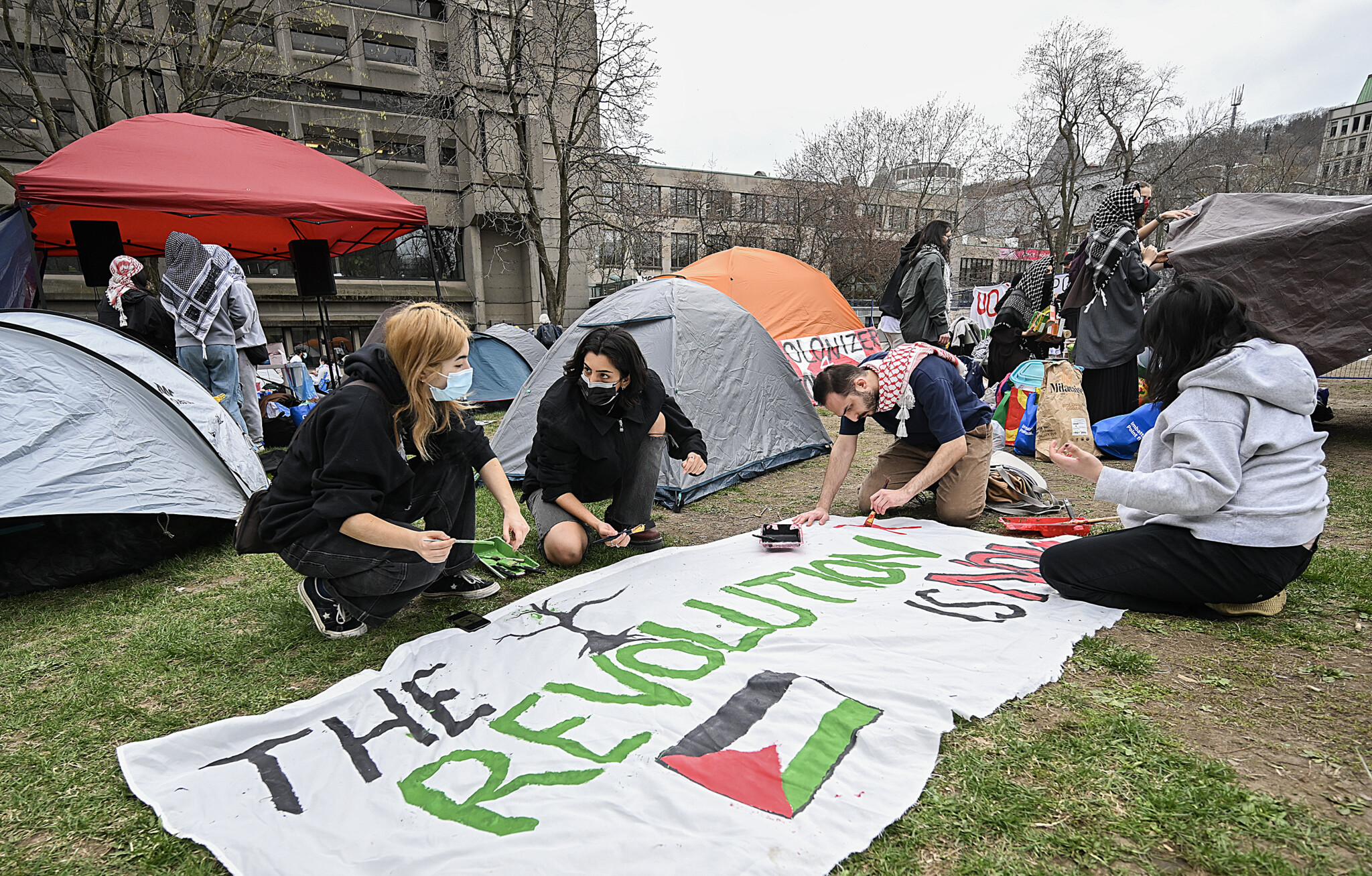
People work on a sign during a pro-Palestinian demonstration at an encampment at McGill University in Montreal on April 27, 2024. Graham Hughes/The Canadian Press.
Verbal and physical attacks on Jewish students on university campuses
Jewish students aren’t just feeling singled out in lecture halls, but on campuses, too.
“I had someone grab my [military] dog tag that said, ‘Bring them home now,’ and I was asked if I was a baby killer. And then I had someone rip it off later that day,” said Toronto Metropolitan University (TMU) second-year performance acting student Sam Sharrett, recounting his first week as a freshman on campus.
Third-year student Neta Goldman believes things have similarly deteriorated for Jewish students at the University of British Columbia (UBC) as well.
“On campus, some of my peers have felt an immense amount of fear to openly express their Jewish identity,” Goldman told The Hub. “I have witnessed and experienced multiple events where Jewish students were personally insulted or verbally attacked with no prior provocation.”
Jewish students on other campuses across Canada repeated a similar refrain of a sense of fear and intimidation coming from parts of the student body.
“I was trying to prepare myself for a day where someone would take things further and physically attack us because that’s what we were seeing online…kind of like, ‘Count your days,’” University of Calgary fifth-year business student Arielle Cheuk said.
She added that Jewish student groups can no longer reveal meeting locations and times for events because of the risk of them being disrupted by anti-Israel demonstrators. They’ve also had to increase security measures.
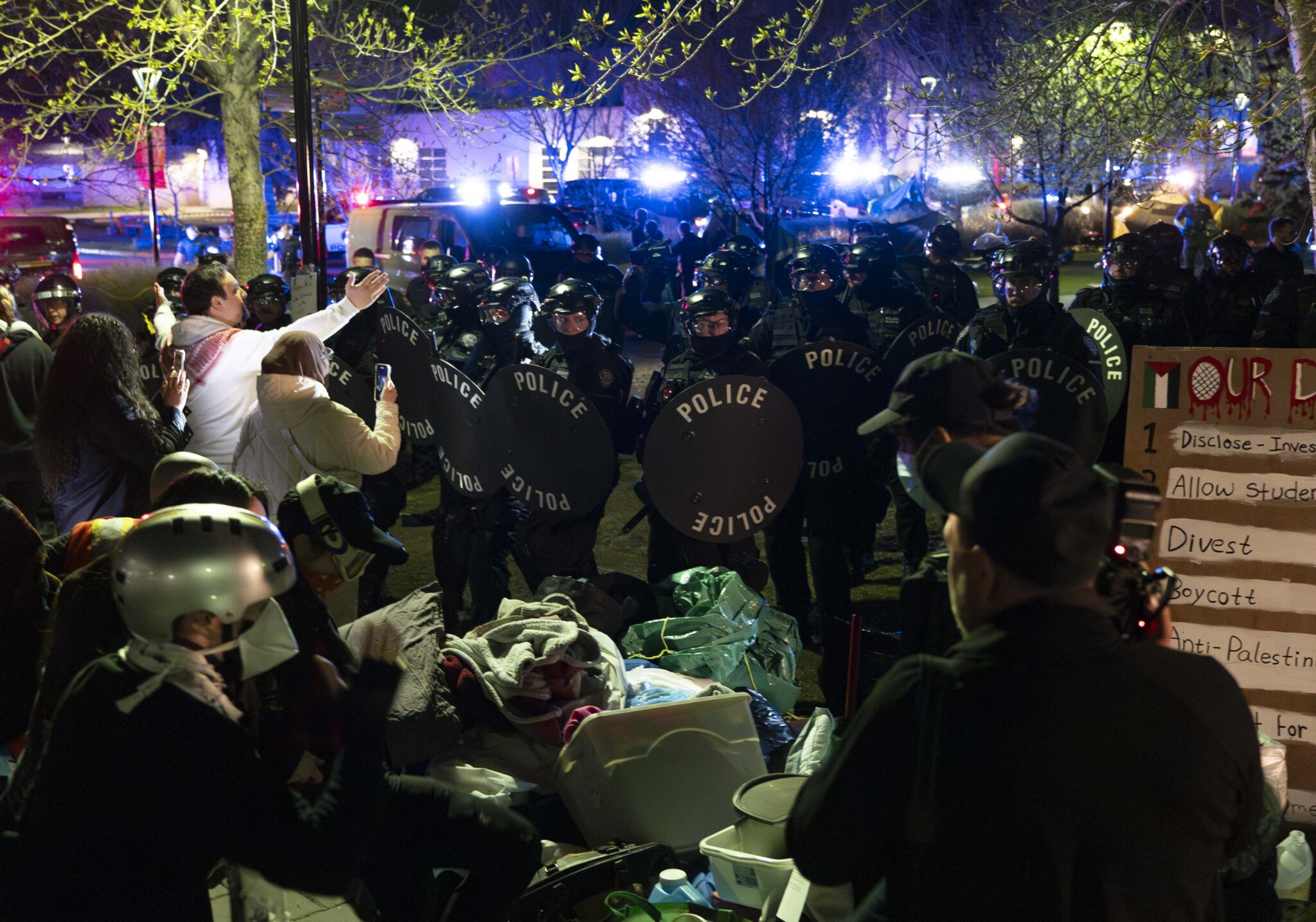
Pro-Palestine protesters confront police as they move to clear a protest encampment at the University of Calgary campus on Thursday, May 9, 2024. Noah Korver/The Canadian Press.
Administrations say they stand with Jews on campuses
The Hub contacted university administrators from UBC, TMU, University of Calgary, University of Toronto, Western University, and York University about the rise of antisemitism on Canadian campuses and what they’re doing to protect Jewish students like the ones we spoke to.
“The University of Calgary is a place of free expression and contest of ideas, and not one of hate or intimidation. Through our Statement on Free Expression, we have clear guidelines: free speech is encouraged, hate speech is prohibited, and strong consequences enforce this,” said a University of Calgary spokesperson.
“As an institution, we learned a lot when protesters disrupted a private Jewish student event on campus,” the University of Calgary administration representative told The Hub. An incident on the University of Calgary’s campus, discussed in part one of this series, involved Jewish students barricading themselves inside a room during a Jewish event hosted by Students Supporting Israel Calgary, where protesters tried to storm into the private meeting and harassed attendees leaving the event. “We have increased engagement with and protections for Jewish student groups holding events and speakers on campus.”
The University of Calgary also said it has since updated its guidelines to prohibit protests inside university buildings and maintains a close relationship with the Calgary Police Service to ensure any possible criminal hate speech is investigated.
Despite Jewish students at York University telling The Hub they’ve felt a rise in antisemitism, as well as the current student president having a history of praising Hamas, the university’s administration claims they haven’t seen an uptick in reported incidents.
View reader comments (1)
“York University does not have any indication that there has been an increase in antisemitic incidents on our campuses,” York’s deputy spokesperson, Yanni Dagonas, told The Hub. “Nevertheless, we acknowledge that universities are not immune from antisemitism and societal trends surrounding these matters. If any community member feels unsafe or subject to hate or discrimination, we encourage them to report it to the university for appropriate action.”
The York spokesperson explained that there has only been one formal antisemitism complaint filed from May 1, 2024, to April 30, 2025. They also claimed that rallies and protests on campus have been on the decline in the last several months.
The York representative also highlighted that the university has various programs to educate its students against antisemitism, including its Israel and Golda Koschitzky Centre for Jewish Studies, Bridging the Gap, Decolonizing, Equity, Diversity and Inclusion Strategy, and Centre for Human Rights, Equity and Inclusion.
In response to concerns around York student president Somar Abuaziza, who has made pro-Hamas social media posts in the past, Dagonas wrote in part: “The University affirms its unequivocal condemnation of all forms of discrimination and hate, including antisemitism. Students with concerns can reach out to the leadership teams within their departments or schools, or the respective Associate Dean Students of their Faculties; the Centre for Human Rights, Equity and Inclusion; or the Office of Student Community Relations…To ensure procedural fairness and the participation of both complainants/respondents, the process and outcomes are confidential.”
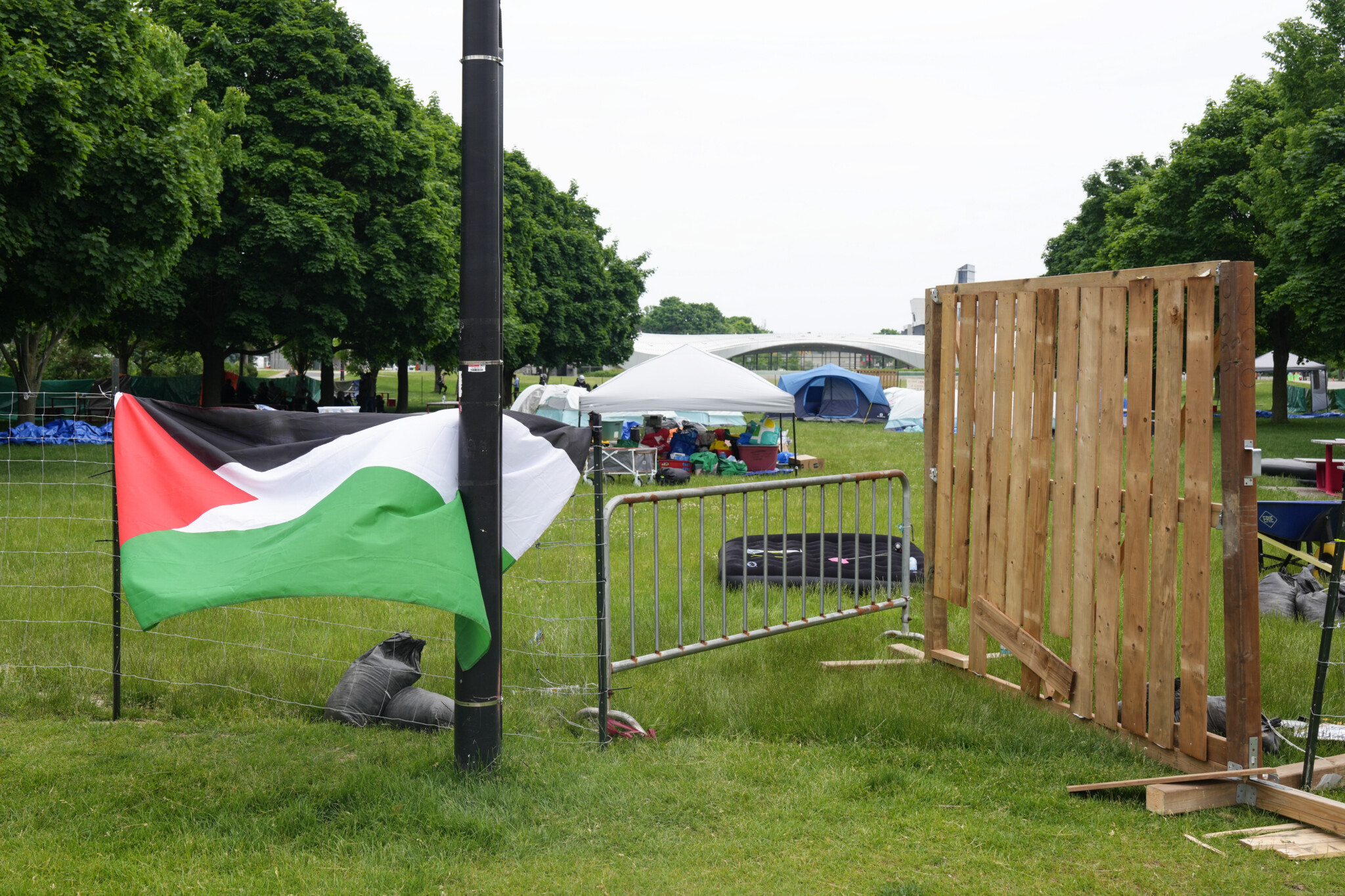
York University students establish a pro-Palestinian encampment on the campus in Toronto, on June 5, 2024. Chris Young/The Canadian Press.
York is the only Canadian university taking part in the Hillel Campus Climate Initiative, which aims to help university presidents and campus administrators counter antisemitism on campuses.
In the case of Western University, an administration spokesperson told The Hub it works closely with student and community groups, its human rights office, and campus special constables to identify concerns, respond to hate or discrimination, and keep the campus safe and welcoming. The university also provides reporting channels and equity-focused training, including programs on antisemitism and Islamophobia, to help prevent harm and build a more respectful campus culture.
Western University did not disclose—citing privacy protections—what happened to the students taking part in local online chat groups that were virulently antisemitic, where they wrote words like “The government are slaves to these Jews.”
A University of Toronto spokesperson told The Hub it works closely with Jewish student groups, provides targeted supports, and enforces policies designed to ensure its student body is free from discrimination and harassment. U of T also highlighted training, reporting tools, updated anti-discrimination policies, and clear rules on protests and campus space as part of its efforts to combat antisemitism and other forms of hate. The U of T user guide for protests now prohibits unauthorized presence, protests between 11 pm and 7 am, blocking access to doorways to buildings or roadways, discrimination, intimidation and harassment.
U of T’s most recent 2024-25 discrimination report, provided by the university’s spokesperson, shows 37 complaints of antisemitism filed to administration in that year alone.
Finally, TMU released a statement to The Hub that read in part: “There is no place for antisemitism at TMU. Harassment and intimidation are unacceptable and will be reviewed under applicable TMU policies, and referred to Toronto Police Service as appropriate. The student community is expected to uphold TMU’s Student Code of Non-Academic Conduct.”

Jewish students say more could be done
Most Jewish students interviewed by The Hub gave their university administrations mixed reviews when it came to responding to rising antisemitism on campus.
“When October 7 first happened, we got an email from the school, I think it was a week later from the president, who was Meric Gertler, playing it safe and mentioning antisemitism, Islamophobia, and other minority groups. There was no focus on October 7 alone as an event, and there was no mention of the fear of Jewish students alone,” said Tal Rozenblit, fourth-year University of Toronto international relations, public policy student and a U of T Hillel board member and VP of communications for U of T Canadian Union of Jewish Students.
Rozenblit also found the administration had a weak response to the large encampment that formed, occupying U of T’s King’s College Circle in the summer of 2024 to demand the university sever ties with Israeli universities, divest from weapon manufacturers doing business with Israeli military, and disclose where U of T’s money is invested. It lasted for 63 days. Jewish students who walked by could hear chants of “From Turtle Island to Palestine, occupation is a crime” and “Viva viva, intifada, intifada revolution.” “I do think the administration dealt with that terribly. They were not forceful in enforcing the university’s policy, and they basically just appeared to be weak,” Rozenblit said.
“Our biggest frustration was when the administration would say that there’s a certain threshold to identify things as hate speech or a hateful attack, and a lot of the things that would happen never met the threshold,” University of Calgary student Cheuk added. So it was just very frustrating, we were fearing for our safety on campus, there was nothing that they could do legally.”

A woman holds a photo of a hostage during a pro-Israel vigil on the anniversary of a Hamas attack on Israel that triggered the ongoing war in Gaza in front of McGill University on Oct. 7, 2024. Ryan Remiorz/The Canadian Press.
When antisemitism is normalized on campus
Although university administrations have renewed efforts to combat antisemitism through increased security, disciplinary action, additional programs, and public statements, they appear to be unable to wrap their arms around the growing problem.
Social media platforms, primarily X and TikTok, have become inundated with accounts promoting antisemitic content. Canadian Jewish students say they have noticed the growing influence of these accounts along with the resulting ideological shift it’s produced amongst their fellow classmates.
“As for this year, especially online, I’ve noticed that the amount and volume of antisemitic jokes and also the severity of it has increased where previously…it would be about Jewish stereotypes or the Holocaust,” Cheuk. “But now there’s just such a large volume of jokes that are being normalised.”
TMU student Sharrett recalls being attacked online last fall after hosting a table on campus, where he encouraged students to ask him questions about his trip to Israel.
“I was trending on Reddit as ‘little Zionist boy.’ And there’s people calling me a Nazi and saying it’s a disgrace to have me on our campus,” he described. ‘He shouldn’t be there’, [read the posts]. I was just trying to have a peaceful dialogue,” Sharrett said.

York University student Guttmann said antisemitism from students and faculty is still occurring in 2026.
“I got a message literally yesterday, [where] somebody was telling me that one of their professors was going on about the evils of Zionism for a good like 15 minutes during a lecture,” Menachem said. “This person wanted to report it, but obviously they didn’t feel very comfortable reporting it themselves, [so I assisted them].”
Rozenblit says that at U of T, the protests have subsided a bit, but that Jewish students’ heightened vigilance has not.
“Jewish students since October 7 have had a higher sense of being alarmed, being alert on campus, being very aware and careful of what information they share with what people, what circles they surround themselves with,” he said. “That hasn’t changed. So, yeah, definitely much, much more vigilant than we were before October 7, and it hasn’t gone away all that much in terms of the vigilance.”
Most of the Jewish students who spoke to The Hub have said they’re disillusioned with the amount of hatred they’re seeing on their campuses. A couple of them even wondered if they wanted to stay in the country because of how bad it has become.
“Canada is kind of getting scary, like even thinking about it, the fact that I’ve felt more and more like an imposter on campus recently makes me not want to live here,” said Western University fifth-year student Julia Mezhiborsky. “I just don’t feel like I fit in anymore.”
This concludes the second of a two-part Hub Fault Lines series looking at the rise of antisemitism on Canadian university campuses. The first part, released last Saturday, looked at the heightened threats against Canadian Jews, how Canadian university campuses became hostile places for Jews, and the rise of anti-Zionist and anti-Israel ideology in campus culture since October 7.

Graeme Gordon is The Hub's Senior Editor and Podcast Producer. He has worked as a journalist contributing to a variety of publications, including CBC,…
The Hub looks at the rising fear among Jewish students on Canadian university campuses following October 7th, detailing instances of antisemitism, ostracization, and verbal/physical attacks. While some universities claim adequate responses, many Jewish students feel administrations are weak or absent. Hillel International recorded a significant surge in antisemitic incidents across North America. Universities like Calgary and Toronto have implemented new policies and increased engagement, while York University disputes an uptick in reported incidents on its campuses. Despite these efforts, Jewish students report persistent unease, normalized antisemitic rhetoric online and in lectures, and a growing disillusionment with the campus climate.
How are Canadian universities balancing free speech with protecting Jewish students from antisemitism?
What impact is the rise in campus antisemitism having on Jewish students' sense of belonging and future in Canada?
Beyond official statements, what concrete actions are universities taking to address antisemitism on campus?







Comments (1)
Jews are the only group that the Toronto Police allow to be directly targeted in their neighbourhoods. That says a lot about the general attitude of our civic leaders to Jews in Toronto.