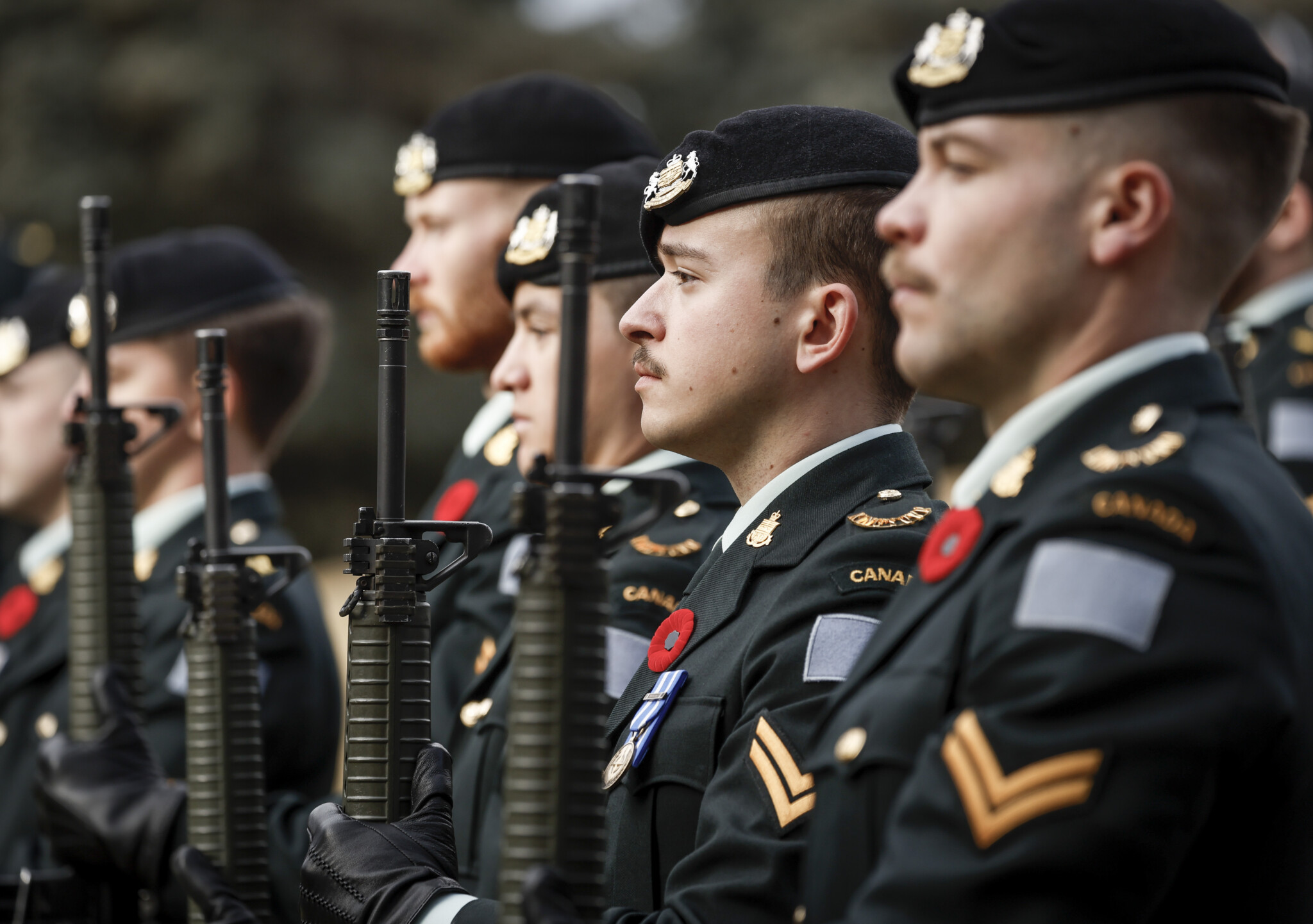
The Canadian Armed Forces are facing a recruitment crisis. But the problem isn’t attracting talent, it’s processing it.
Talk to anyone who has tried to join the CAF in the last decade, and you’ll hear the same story: extremely long delays, lost documents, conflicting instructions, and months of silence from recruiters. Many also describe what feels like being ghosted—no calls, no emails, no follow-up from the recruiter assigned to their case. Just silence, for weeks or even months.
The CAF’s own target is three to five months from application to enrollment, which is already unreasonable, but the recent auditor general report shows it often takes twice as long. Only one in 13 applicants actually gets recruited, and the system can’t even explain why so many candidates give up.
Indeed, the OAG report points out that over a three-year period from 2022 to 2025, out of 192,000 applicants, only 15,000 were actually recruited. Over half, 54 percent, voluntarily dropped out along the way—no wonder, given the roughly 250 days the average applicant had to endure to get through the process, with many taking much longer. Astoundingly, the targets set by the CAF for application processing are between 100 and 150 days—or three to five months.
Young Canadians today expect job applications to take days or weeks, not months. They expect clear communication, reasonable timelines, and digital systems that actually work. They expect that once they submit a document, it won’t disappear into an administrative void. But the CAF can’t meet those expectations, not because of a lack of will, but because it’s trying to run a 2026 recruitment process on 1990s infrastructure and a 1970s staffing model.
Many candidates describe having to rely on “someone on the inside”—a serving member or veteran—just to navigate the maze. In 2026, this is unfathomable and certainly unacceptable. Indeed, nearly 60,000 active applicant files are still languishing in the CAF recruiting system.
The recruitment process, even when streamlined, takes time to complete because it involves a series of multiple sequential steps—interviews, medical screening, security clearances, and so on—that must occur in order, meaning any delay ripples through the entire system. The process is built to avoid mistakes at almost all costs. Meanwhile, there is no mechanism to fast-track applicants who clearly show strong potential.
Canada’s military faces a severe recruitment crisis, not due to a lack of applicants, but a broken processing system. Long delays, lost documents, and poor communication lead to high dropout rates, with only one in thirteen applicants successfully recruited. The CAF’s outdated infrastructure and staffing models are to blame. The proposed solution is to contract out the administrative aspects of recruitment to the private sector, mirroring a model used by the British Army. This would streamline the process, improve candidate experience, and free up military personnel for essential training roles, crucial for Canada’s planned military expansion.
Should Canada outsource military recruitment to private firms? What are the pros and cons?
How does the CAF's outdated recruitment system impact Canada's defense readiness?
What are the biggest hurdles for Canadians trying to join the military?




Comments (9)
A typical early 20’s person applying to the CAF is basically applying for a job, no different than any other trade. That person is possibly currently unemployed or working at a job that is filling a gap that provides basic necessities. If the job is in the plumbing trade for example, there are multiple employers available and the likelihood that in the course of a year you will be hired in that trade will be high. Now imagine wanting to joint the Forces and having to wait a year to hear from the only game in town, while you are possibly unemployed and barely surviving. Eventually you are just going to give up and find another line of work. As with most everything else Govt related, it is a shameful waste.