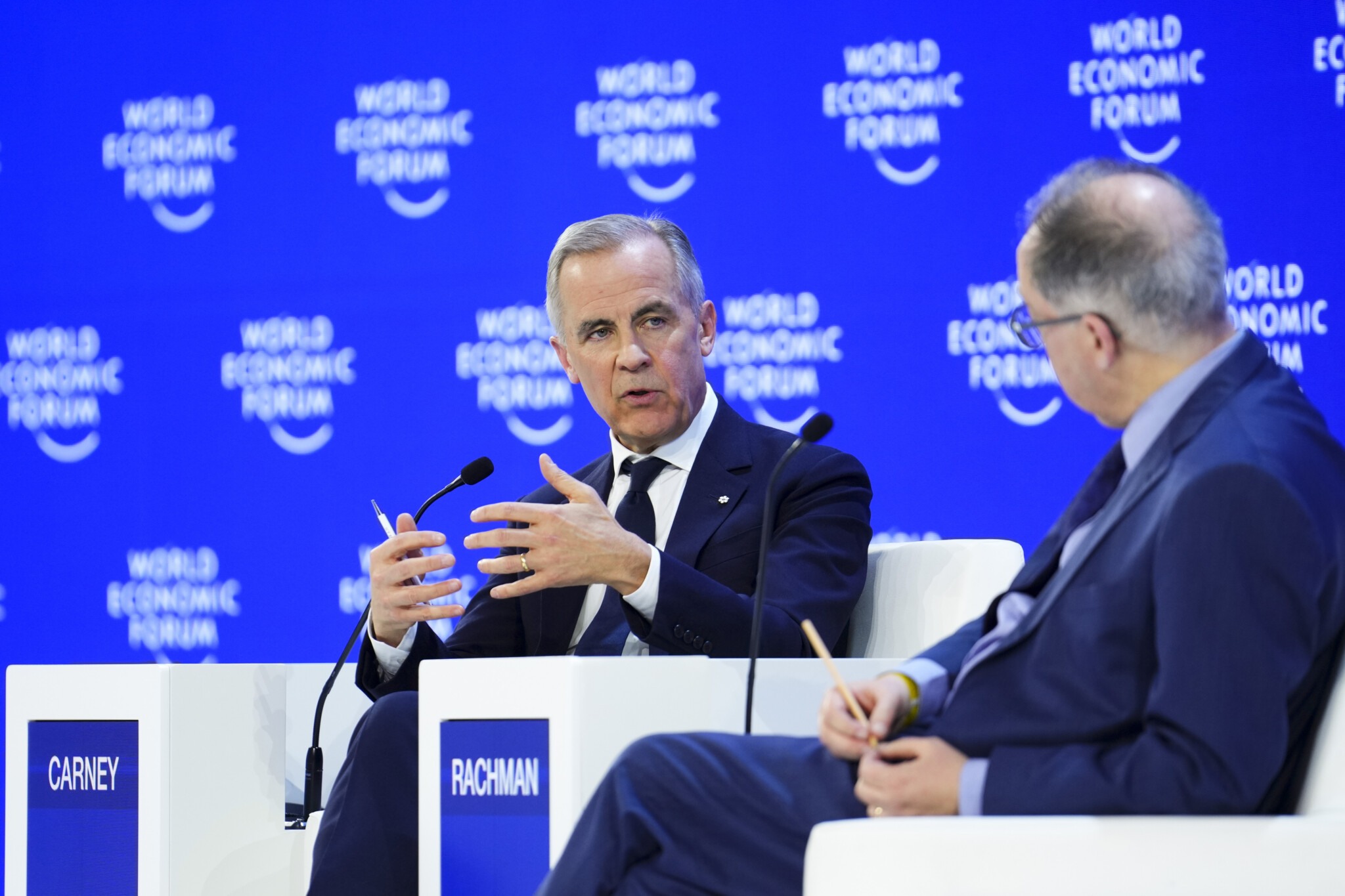

Last year, Prime Minister Mark Carney collected a lot of air miles traveling to different countries to strengthen Canada’s trade and security linkages. If reports are true, he’s poised to collect even more in 2026 with ambitious plans to diversify the country’s trade flows.
These efforts are consistent with the prime minister’s speech last month at the World Economic Forum, in which he starkly outlined the implications of the end of a rules-based international order in a new era of great power rivalry. In its place, he spoke about the potential of a new middle power alliance involving countries like Canada to fill the void and preserve some aspects of liberal global cooperation. What some have called the Carney Doctrine is clearly a hedge against the increasingly erratic and imperial United States.
One might think of it as a modern version of the National Policy from the 19th century, which was similarly conceived in an era of uncertainty about access to the U.S. market and concerns about Canada’s overdependence on the American market. Yet if Macdonald’s National Policy consisted of high tariffs, railway construction, and western settlements, Carney’s New National Policy has some key differences.
A steel-manned version of the prime minister’s plan is to put Canada squarely in the middle of the world as a resource powerhouse and Zone of Transit, thereby creating a set of economic flows that circumvent the United States. Although such a national policy with its strong dirigiste streak conflicts with the view of Canada as a passive price taker in world markets, as the prime minister himself might say, we’re faced with a world as it is rather than what we’d like it to be.
How might this new world look? Let’s speculate for a moment.
As a matter of economic policy, Canada will build export opportunities for its wares and resources with Asia and Europe, sparking an east-west flow directly counter to and weakening the dominant north-south flow erected since the launch of continental free trade in the 1980s and 1990s. Part of the strategy will be to attract foreign investment into the Canadian economy from countries in Asia and the Middle East, with their abundant investment dollars into Canadian transportation and resource infrastructure.
Canada will similarly invest more heavily in its defence capabilities and production links with its Middle Power allies in Europe and Asia, not only to boost its own security but also to secure its Arctic, particularly the Northwest Passage, as climate change thaws its North. This is key because Canada is positioned as a Zone of Transit between the economies of Asia and Europe, as well as the Middle East, not only through the east-west transport corridors of its own land mass but also through the coming year-round Arctic passages. As world trade seeks to use the Arctic and commerce through it grows, Canada will enhance its Arctic presence and establish itself as the guardian and defender of world trade and commerce through its Arctic waterways as part of an alliance of like-minded middle powers.
Prime Minister Carney’s Davos speech set out his aims to diversify Canada’s trade and security by forging alliances with middle powers and positioning Canada as a resource powerhouse. This strategy, a hedge against an unpredictable U.S. and great power rivalry, envisions east-west trade flows and increased Arctic presence. However, Canada is ill-prepared, citing challenges in alliance building, the short-term economic impact of infrastructure projects, persistent provincial trade barriers, and the overwhelming current dependence on the U.S. market. Potential U.S. pushback is also a significant concern.
Is Canada's 'New National Policy' a realistic hedge against U.S. influence?
Could Canada's Arctic ambitions as a 'Zone of Transit' be a double-edged sword?
Will Carney's strategy lead to a less diversified Canadian economy?



Comments (3)
A fool could see that Carney’s “resource superpower” talk is just rhetoric. He is so ideologically opposed to resource extraction and his predecessor (under his guidance) put us so far behind the curve that it will take a generation to catch up.
All hat and no cattle.