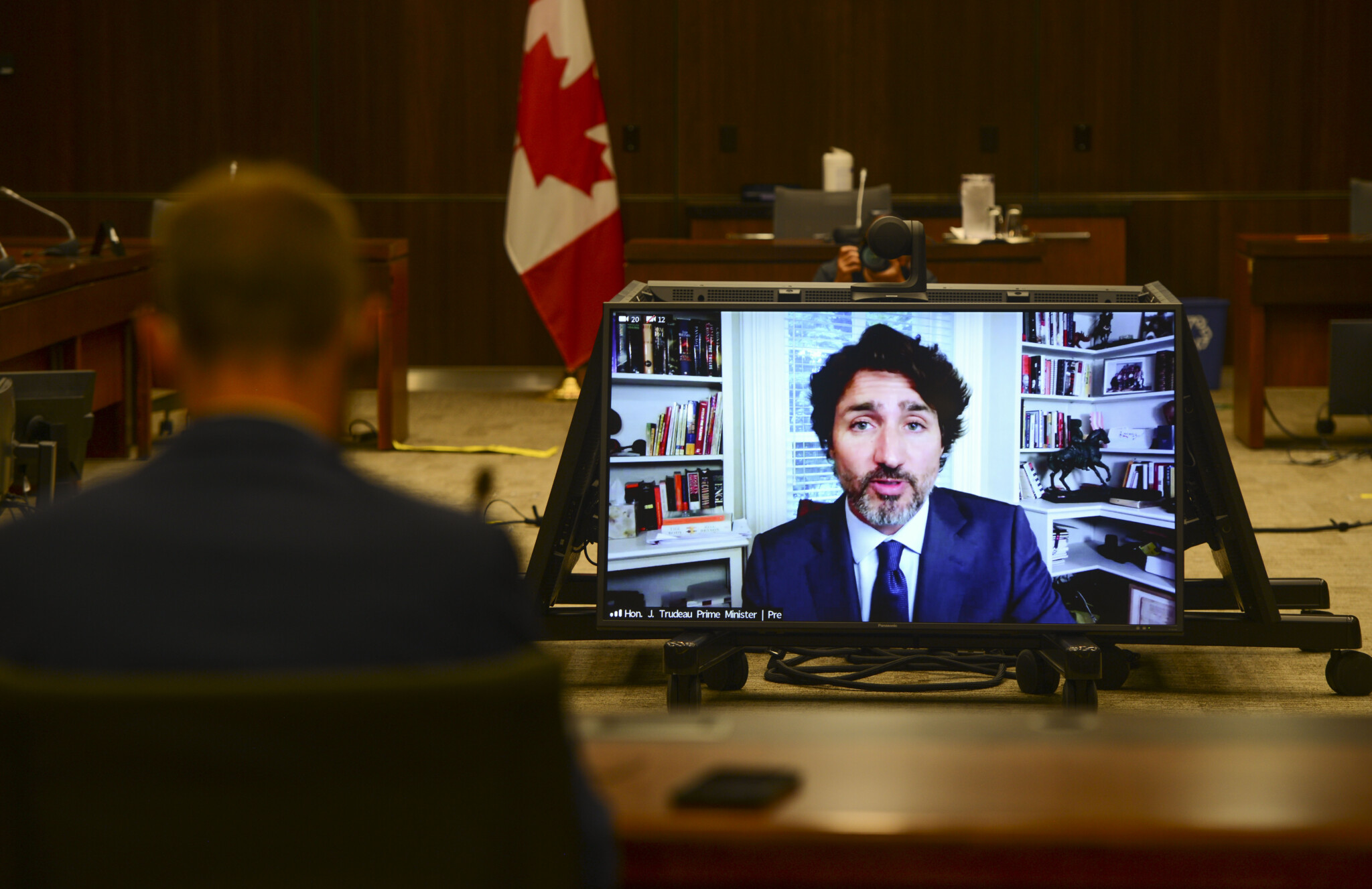
A Supreme Court of Canada case challenging the federal ethics commissioner’s ruling in the WE Charity scandal could have far-reaching implications for government accountability across the country, according to a leading democracy watchdog.
The case, which centres on whether the final decisions administrative tribunals can be challenged in court, when legislatures have explicitly prohibited such challenges. The outcome could affect approximately 150 federal agencies and roughly 100 similar bodies in each province that enforce laws ranging from ethics rules to landlord-tenant disputes.
The Hub spoke with Duff Conacher, co-founder of Democracy Watch, to better understand the systemic issues at stake and what the ruling could mean for government accountability in Canada.
Here are five key takeaways from the conversation:
The case challenges a fundamental barrier to accountability
The Supreme Court case represents what Conacher calls a systemic issue across Canada involving the ability to challenge administrative tribunals, like ethics commissioners, in court.
Attorneys general and citizen groups from across the country intervened in the appeal because the outcome affects hundreds of agencies, boards, commissions, and tribunals (ABCTs) that enforce laws at every level of government.
“In a lot of the statutes that parliaments and legislatures across the country have passed, they have put in these prohibitions on challenging those ABCTs on certain grounds, errors of fact, errors of law,” Conacher explained.
The federal government argued at the Supreme Court that Parliament should be able to prohibit such court challenges, a position Conacher finds untenable for a healthy democracy.
“If you have that kind of system, it’s just a closed loop that shuts out all accountability, especially accountability to the public, but also accountability to the rule of law,” Conacher said.
The WE Charity ruling exposed inconsistent ethics enforcement
The case originated out of the 2020 WE Charity scandal, in which the federal government awarded a $43 million dollar contract to an organization with close ties to the Trudeau family. Sophie Grégoire Trudeau served as an ambassador for the charity, while the then prime minister’s mother and brother had spoken at WE events, and been paid for their appearances. Craig Kielberger, who ran WE Charity, once called Trudeau a friend.
“[Then Finance Minister] Bill Morneau, friends with the Kielbergers, had gone on a trip with them, is found guilty of being at the cabinet table, participating in the decision to hand out this contract to the charity. And Trudeau was let off,” Conacher said. “They were both at the table, they were both friends, both had connections.”
In 2021, Canada’s federal ethics commissioner ruled that then Prime Minister Justin Trudeau did not violate the federal government’s ethics law. Morneau, however, was found to have breached the Conflict of Interest Act, when he failed to recuse himself from cabinet discussions around the contract.
The inconsistency reflects a pattern Conacher has observed throughout Canadian history: “One person takes the fall, almost never the Prime Minister.”
Prime Minister Trudeau was the first prime minister ever to be formally found to have violated ethics laws while in office. Those other cases involved the 2019 SNC-Lavalin scandal and a 2017 vacation with the Aga Khan.
Canada’s ethics enforcement system lack meaningful penalties
A fundamental weakness in Canada’s ethics system is the absence of penalties for violations. While politicians have imposed substantial fines on other professions for their ethics breaches, they have exempted themselves from similar consequences.
“With our key democratic, good government laws, there’s seven of them for ethics, honesty, lobbying, whistleblower protection, spending protections, access to information—the watchdogs are there to enforce laws,” explained Conacher.
“But there are no penalties in any of these laws for violating the rules. So they have the power to shame, but not to actually effectively penalize,” Conacher added.
This creates a system where Canadians parking illegally face worse fines than politicians being corrupt.
“You have a higher chance of getting caught parking illegally anywhere in Canada. And you will definitely pay a higher penalty because there’s zero fines, there’s no penalties for violating one of the most important democracy laws in our country.”
Politicians choose their own watchdogs, creating unaccountability
The structural problem extends beyond the absence of penalties. Politicians, at every level of government, select the ethics commissioners who oversee them, creating what Conacher describes as an inherently conflicted system.
“They write their own rules,” he said. “They then get to choose their own watchdogs, and they choose lap dogs as a result.”
This appointment process affects law enforcement broadly.
“The head of the RCMP and all the deputy commissioners and division commanders of the RCMP are all chosen by and serve at the pleasure of the prime minister,” Conacher noted, arguing that Canada needs a more independent appointment process for all law enforcement positions.
A Supreme Court victory could strengthen oversight across multiple sectors
A ruling in Democracy Watch’s favour would have implications extending far beyond federal ethics enforcement. The decision would affect administrative tribunals handling landlord-tenant disputes, social welfare cases, and human rights complaints—bodies that significantly impact Canadians’ daily lives.
“It will mean hopefully that all of those watchdogs will do a better job ruling because they will know that they could be challenged in court,” Conacher said.
While that result would mean a surge in court cases, many of which would likely be frivolous in nature, , the possibility of judicial review could encourage more rigorous decision-making from watchdogs.
The Supreme Court is expected to rule within the coming months around whether watchdogs have the final word. If Democracy Watch wins, a second stage would examine whether Trudeau should have been found guilty of ethics violations during the WE scandal. The result could mean a court overturning the ethics commissioner’s decision that cleared the prime minister of wrongdoing.
“If we win there, that will exponentially increase the ethics standards at the federal level,” Conacher concluded.
This story draws on a Hub video. It was edited using NewsBox AI. Full program here.
A Supreme Court of Canada case challenging the ethics commissioner’s ruling in the WE Charity scandal could significantly impact government accountability. The case questions whether final decisions of administrative tribunals can be challenged in court, even when legislatures have prohibited such challenges. Duff Conacher of Democracy Watch highlights the systemic issues, arguing that barring court challenges creates a closed loop, hindering accountability. The WE Charity scandal exposed inconsistencies in ethics enforcement, with Trudeau cleared while Morneau was found in violation. Conacher points out the lack of meaningful penalties for ethics violations and the conflicted system where politicians choose their watchdogs. A victory for Democracy Watch could strengthen oversight across various sectors.
How could this Supreme Court case impact accountability beyond just politicians' ethics, according to the article?
What are the key weaknesses in Canada's ethics enforcement system highlighted in the article, and why are they problematic?
If Democracy Watch wins the case, what specific outcome related to the WE Charity scandal could potentially occur?




Comments (6)
Accountability of government? Sounds like a classical oxymoron. Government may have to change its slogan from the old Air Canada joke (when it was government owned) of “it’s a great job if it wasn’t for the passengers”. Go Democracy Watch