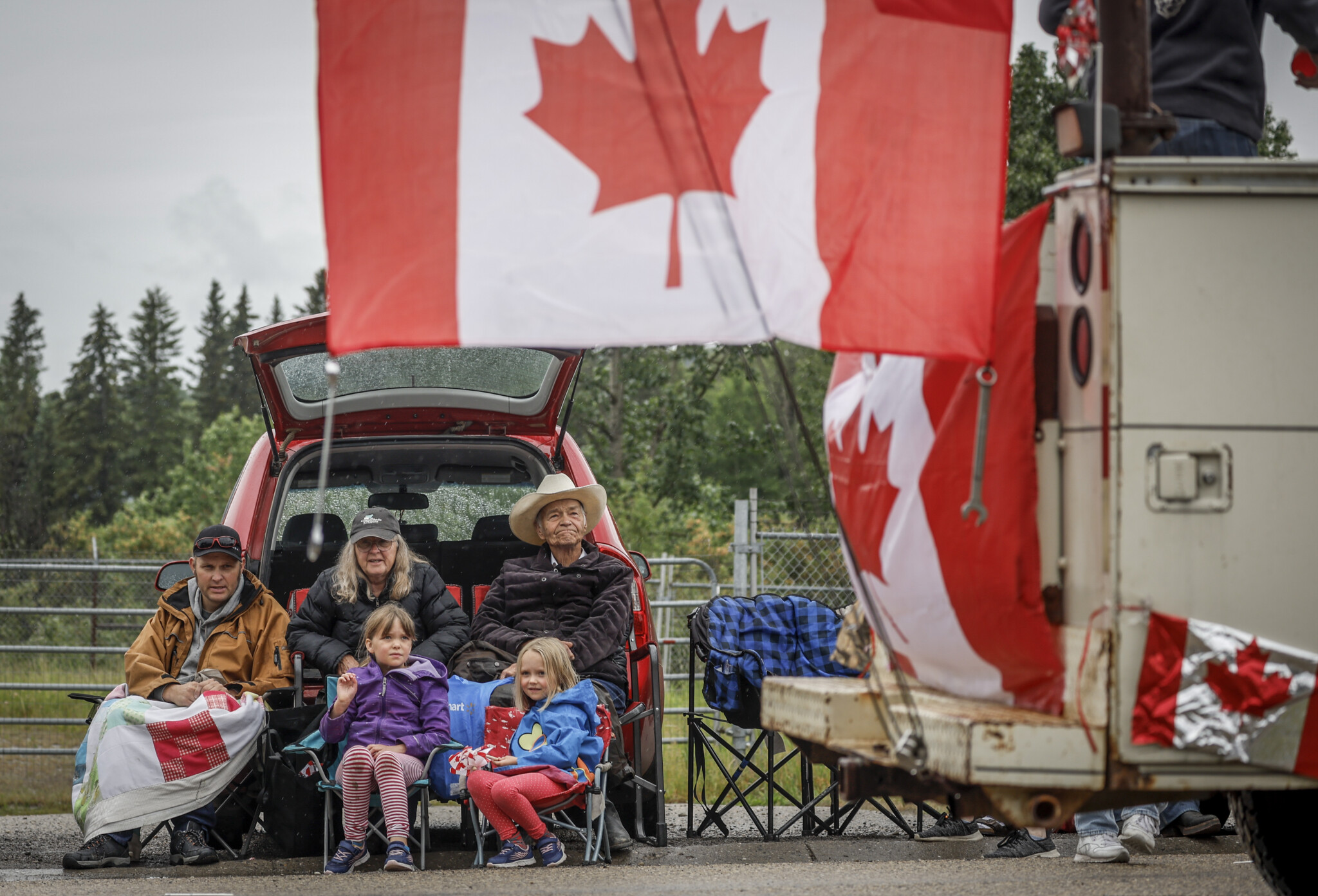
Monday is Family Day in much of the country which seems like an opportune time to step back and ask ourselves about the state of the family in Canada. The answer, empirically, is more diverse and more fragile than it once was.
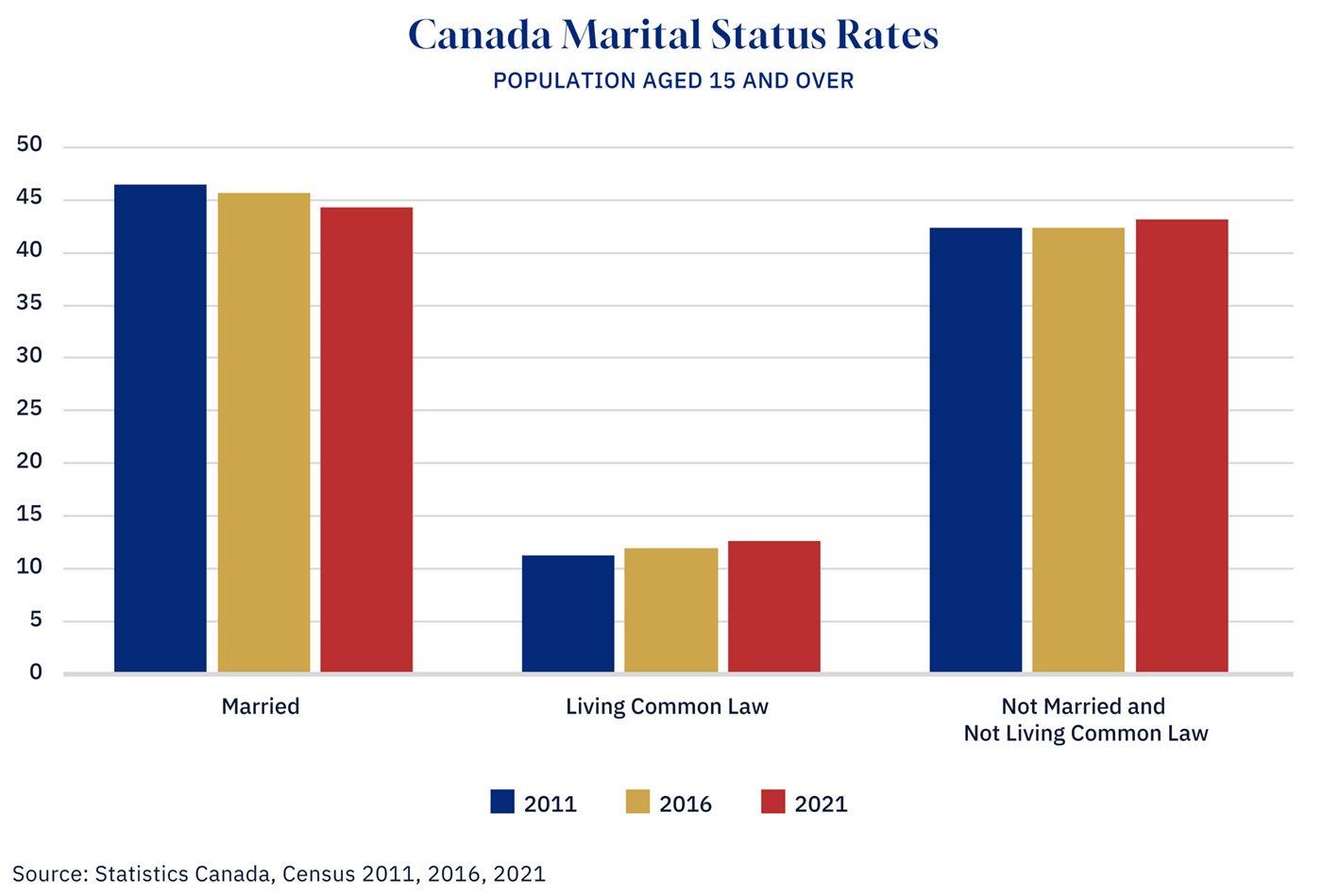
Start with marriage trends. According to the 2021 Census, a little over two-in-five Canadians are married, while about one-in-10 are living in common-law relationships. Even over the last 10 years of data, marriage rates declined by two percentage points.
Graphic Credit: Janice Nelson.
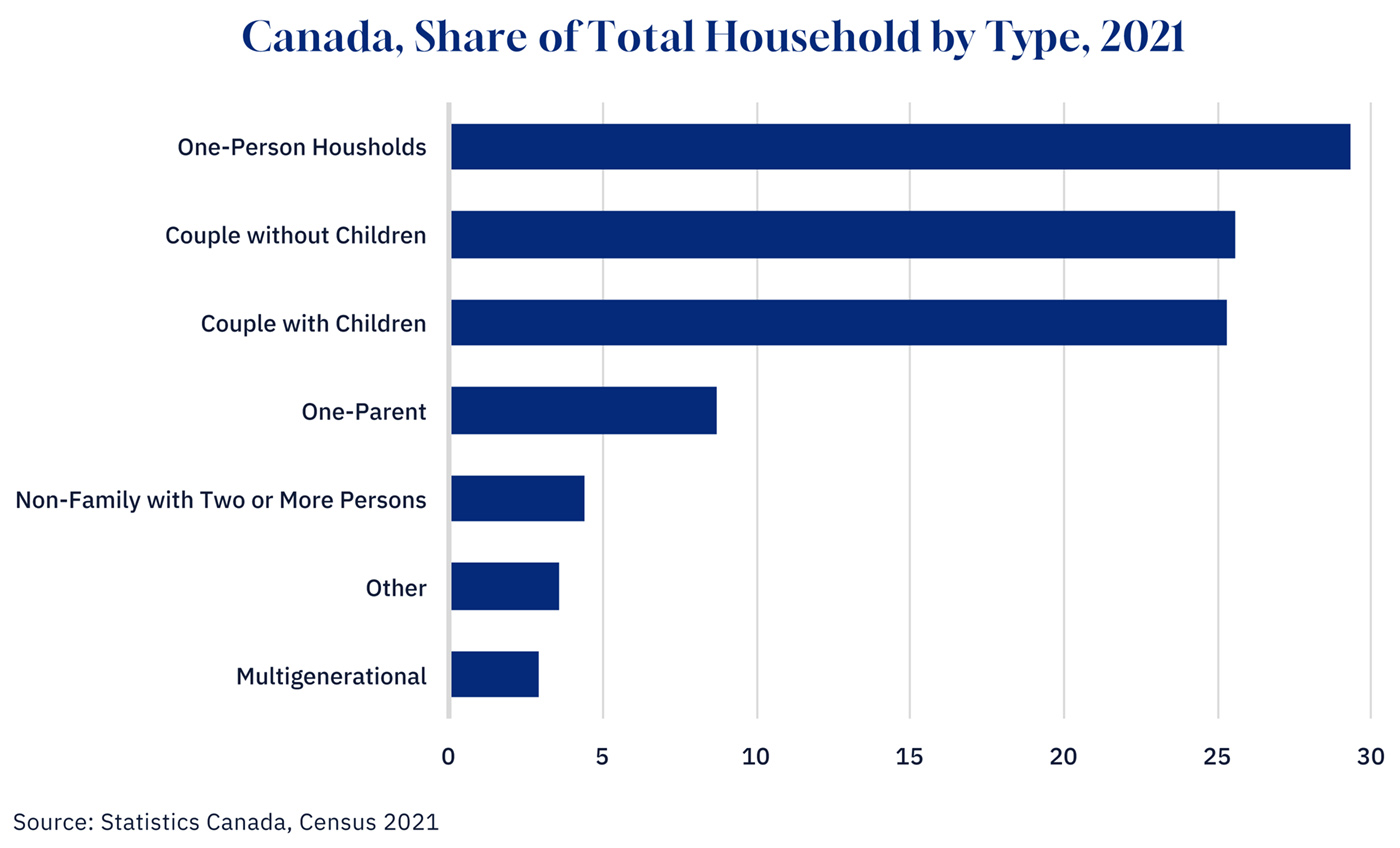
Turning to structure, households made up of couples and children account for only 25 percent of households in the country, while one-parent households account for almost 10 percent. The traditional married-with-children model is still important, but it isn’t the norm.
Graphic Credit: Janice Nelson.
In fact, couples with children are no longer the dominant household type. Households consisting of a couple without children now slightly outnumber those with children. And the single most common household in Canada is the one-person household—nearly 30 percent of all households. About 4.4 million Canadians live alone.
That shift matters. A country where nearly one in three households consists of a single individual is economically and socially different from one organized primarily around families with children.
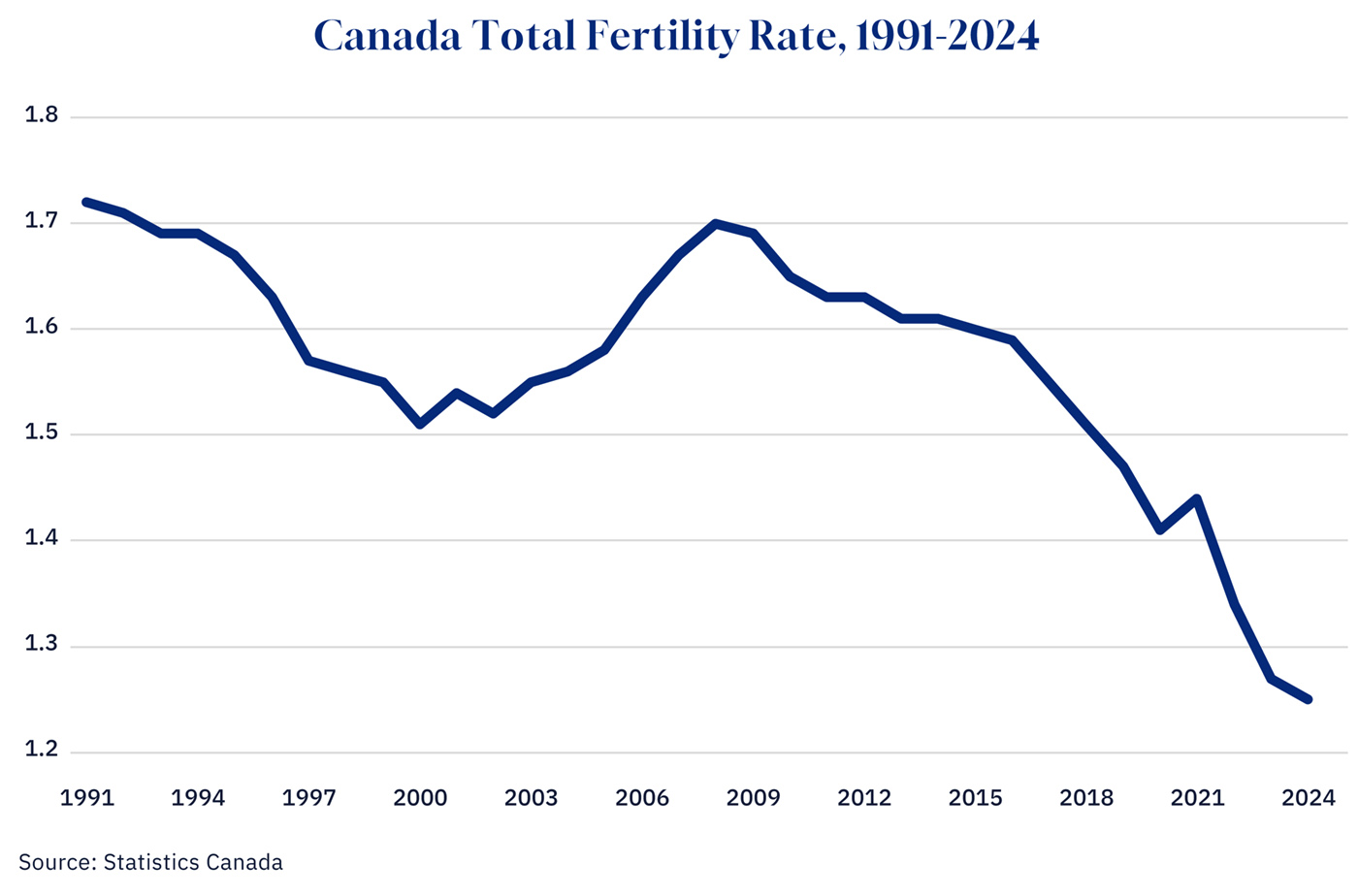
Moreover, childbearing itself has changed dramatically. Canada’s total fertility rate recently fell to 1.25 children per woman—the lowest in the last 30 years and well below the replacement level of 2.1.
Graphic Credit: Janice Nelson.
At the same time, Canadians are having children later in life. The average age of mothers at childbirth is now almost 32, up from 28 in 1991.
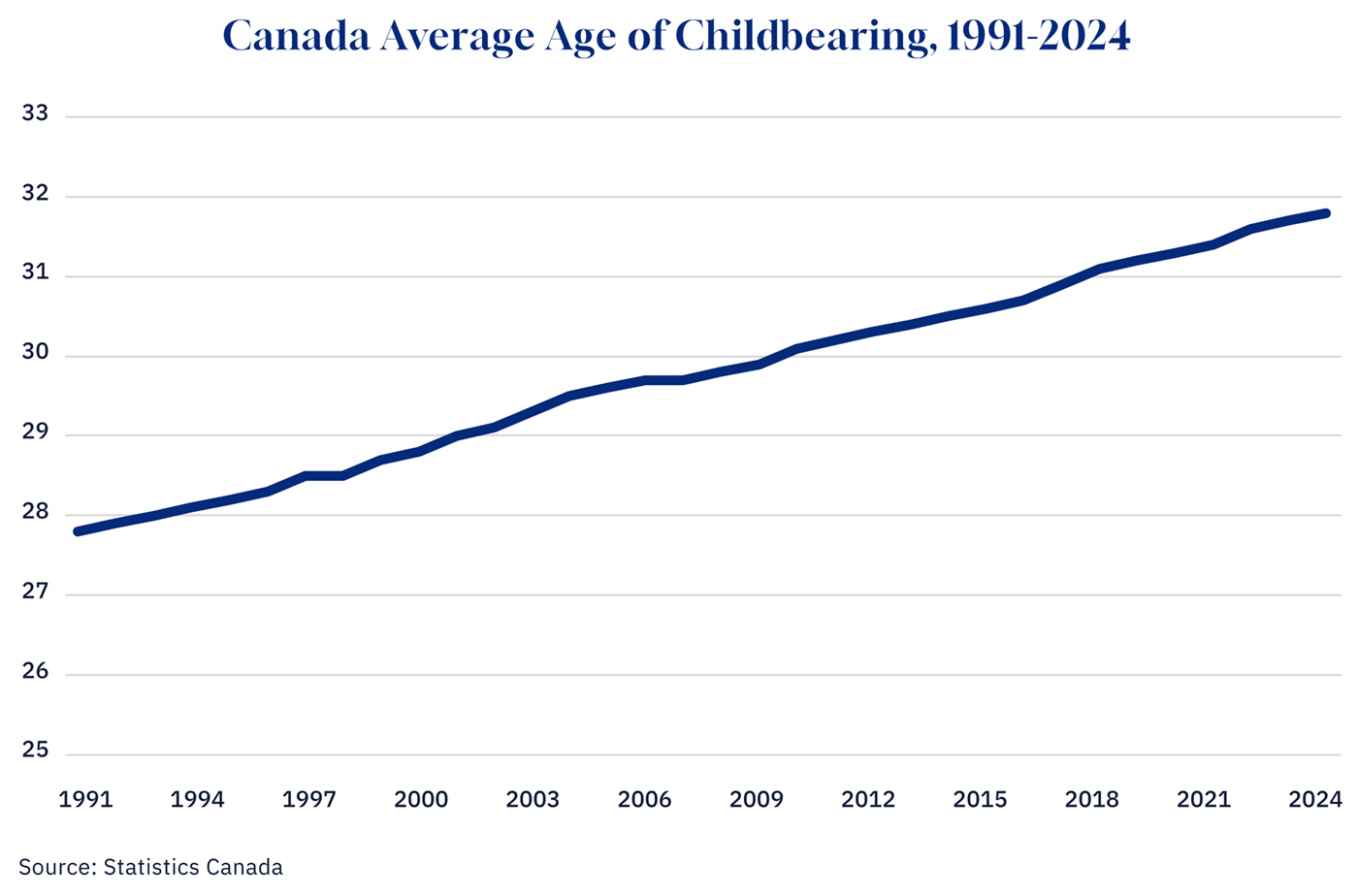
Graphic Credit: Janice Nelson.
Later childbearing often reflects expanded educational and professional opportunities for women, which is a genuine social achievement. But combined with persistently high housing costs, rising childcare expenses, and economic uncertainty, it has also contributed to fewer children per family and a growing number of couples who remain childless.
Living arrangements tell a related story. Roughly 35 percent of Canadians aged 20 to 34 lived with at least one parent in 2021. Meanwhile, the share of 20 to 34 year olds living with a spouse, partner and/or child without their parents has declined from almost 50 percent in 2001 to under 40 percent in 2021.
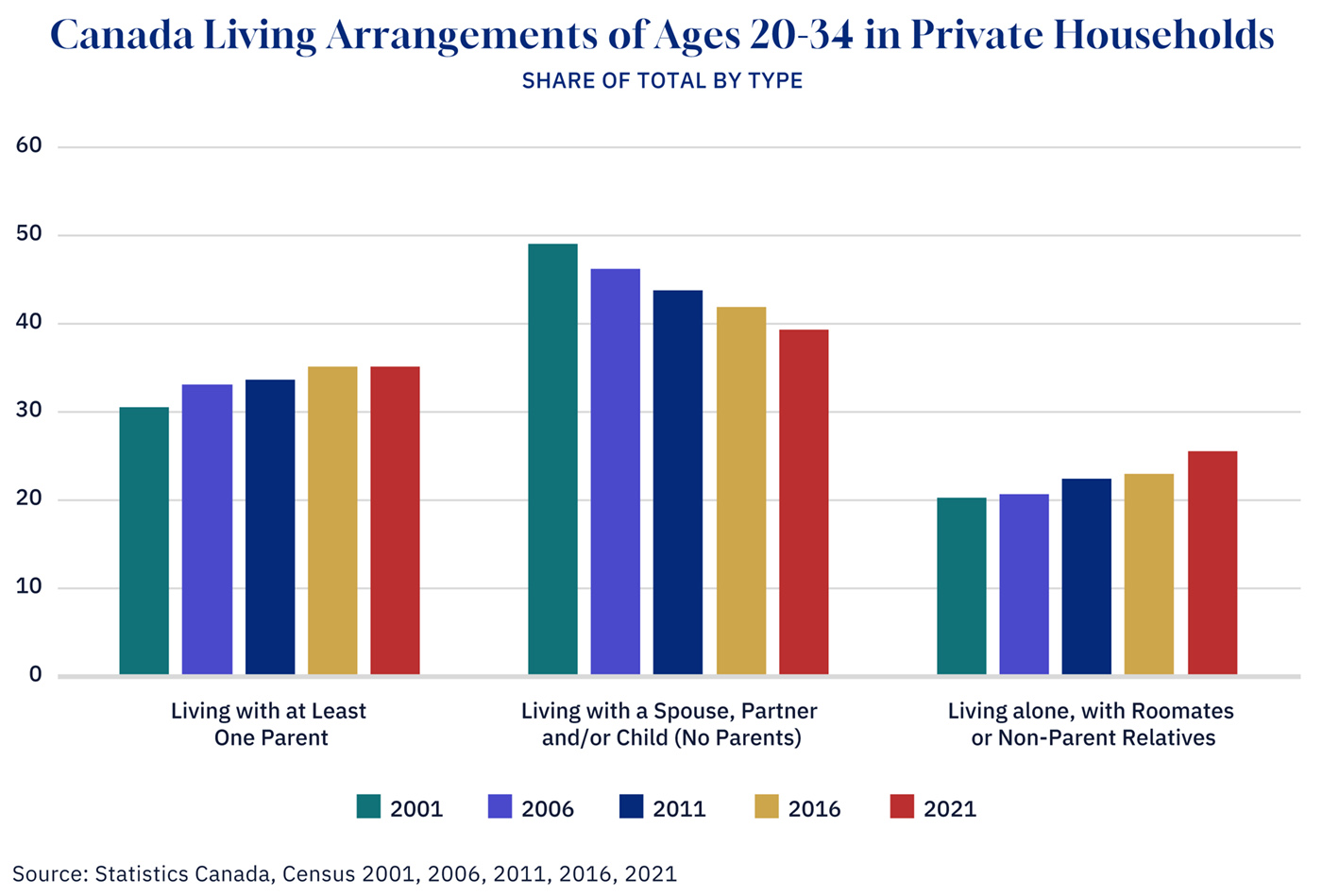
Graphic Credit: Janice Nelson.
These figures likely reflect some cultural changes, but also material realities embodied in affordability constraints and the fact that youth are spending longer in school. At the same time, multigenerational households (three or more generations under one roof) are rising modestly, now representing nearly 3 percent of households. For some families, this is a choice; for others, it is an economic necessity.
Family diversity has also expanded in positive ways. Same-gender couples account for over 1 percent of all couples, and stepfamilies represent more than one in 10 couple families with children. Canada’s legal and social recognition of diverse family forms is now firmly embedded.
Yet beneath the diversity is a quieter structural challenge.
Statistics Canada has documented that family formation has slowed. Fewer young adults are marrying, and when they do, they marry later. The mean age at marriage for Canadians who were never previously married rose by four years between 1991 and 2020. At the same time, labour-force pressures and long working hours continue to shape how families experience daily life.
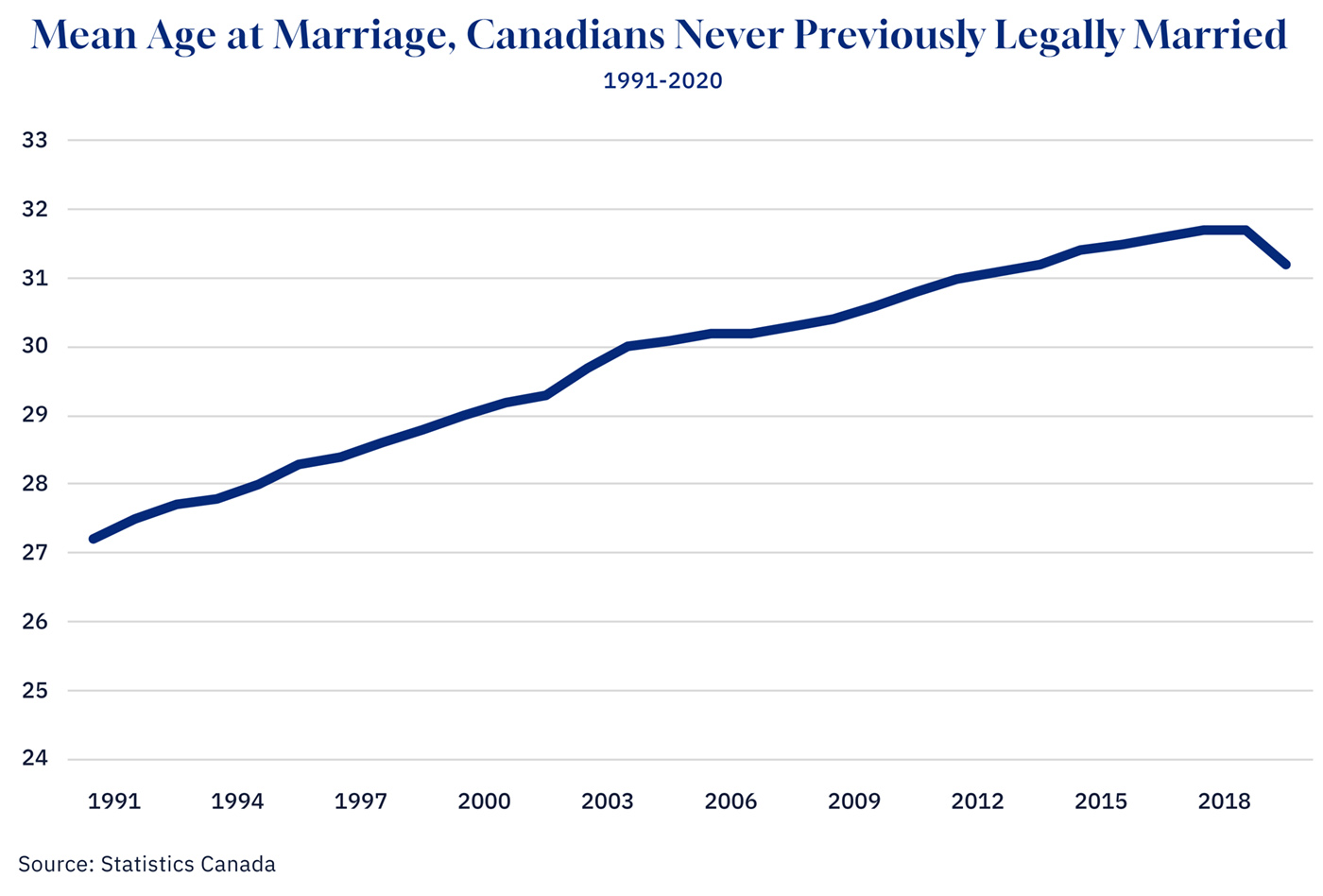
Graphic Credit: Janice Nelson.
The result is not a collapse of the family, but a transformation of it.
Canada remains a country of families. But families are smaller. More Canadians are living alone. More young adults are delaying independence. More couples are navigating work-family tradeoffs under significant financial pressure. And fewer households include children.
Family Day should be a reminder that family structure shapes broader economic and social outcomes. Research consistently finds that children raised in stable households tend, on average, to experience better educational and income outcomes. Married couples accumulate wealth more quickly than singles. Regions with higher rates of family stability often display stronger civic participation and lower poverty rates.
At the same time, the changing nature of family formation interacts with other national debates like housing supply, tax policy, immigration, childcare, work-life balance, and long-term demographic sustainability.

A fertility rate of 1.25 doesn’t immediately trigger a crisis. But over time, it implies slower population growth without immigration, an aging population, and rising fiscal pressure as the ratio of workers to retirees declines. A rise in one-person households affects housing demand and urban design. Delayed independence among young adults shapes labour mobility and consumption patterns.
In short, family structure is an economic variable as well as a cultural one.
This Family Day, Canadians will gather in many different ways through large multigenerational dinners, young couples in small condos, single parents balancing shifts, and adult children still living at home. The data show that families in Canada are neither disappearing nor static. They are evolving under economic, social, and demographic pressures.
Whether that evolution strengthens or weakens the country over time depends in large part on public policy. Housing affordability, childcare accessibility, labour-market flexibility, and tax structures all influence the practical feasibility of forming and sustaining families.
Family Day offers a moment of reflection. The empirical snapshot suggests that while families remain central to Canadian life, they are smaller, more varied, and operating under tighter constraints than in previous generations.
The holiday invites celebration. The data invite seriousness.
Trends revealed by recent census data highlight that the state of the family is changing in Canada. While families remain central to Canadian life, they are becoming smaller, more diverse, and facing increased economic pressures. Marriage rates are declining, and fewer households consist of couples with children. The rise of single-person households and delayed independence among young adults are also significant shifts. Policy decisions related to affordability, flexibility, and support are crucial for strengthening families in the future.
How does Canada's declining fertility rate (1.25 children per woman) impact the country's long-term economic sustainability?
What are some policy areas the article suggests could influence the feasibility of forming and sustaining families in Canada?
Beyond cultural shifts, what material realities contribute to more young adults living with their parents for longer?







Comments (6)
This is an interesting article and I reflect how my niece is living in Tennessee just outside Nashville compared to a Canadian family, it brings me back to when my parents going back 55 years when my dad worked in a factory mom stayed at home with 4 children, we lived in a nice town in a nice bungalow, my niece is about to have her fourth child after they were married they bought a nice 2000 sq bungalow on 3/4 of an acre in very nice town with a 25% downpayment, she’s a stay at home mom and her husband works in a factory similar to what my dad did, they have 2 fairly new vehicles and they live pretty good, my niece does not collect child benefits like they do in Canada what they get is a child tax credit so they can reduce their income tax at the end of the year, now Tennessee does not have state income tax they only get taxed federal income tax and they receive Medicare from her husband employer. Now this got me reflecting how is this possible in America and in Canada I’m not sure this is economically possible, what has change in Canada in the last 55 years since my parents had the same scenario as my niece but it doesn’t work in Canada anymore. Maybe the Federal government can enlighten us on this subject.