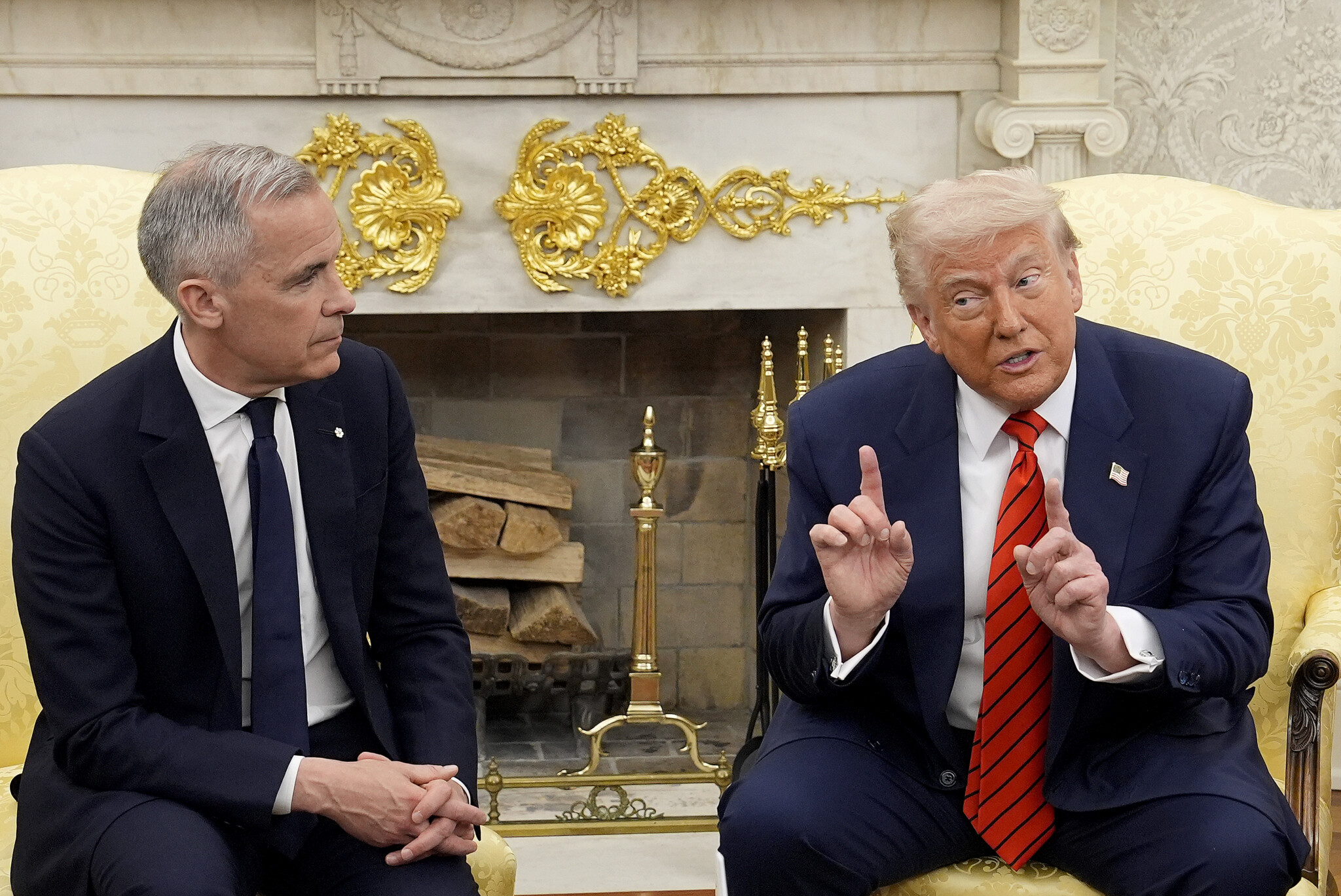

In the Weekly Wrap, editor-at-large Sean Speer analyses the big stories shaping politics, policy, and the economy in the week that was, exclusively for Hub subscribers.
CUSMA is now in the crosshairs
The U.S. Supreme Court’s decision that the president cannot rely on the International Emergency Economic Powers Act (IEEPA) to impose sweeping tariffs is, at one level, a straightforward institutional victory. If tariffs are to be used as instruments of economic statecraft, they must be authorized through legislation rather than an elastic interpretation of executive power or national emergency.
In that sense, the system worked. The judiciary asserted its role, executive overreach was restrained, and the institutional checks and balances held up. For those concerned about President Trump’s aggrandizement, the ruling reinforces the constitutional guardrails.
Yet the broader economic and political implications are less straightforward. Removing Trump’s emergency authority won’t necessarily have a moderating effect. It’s already directing his administration’s protectionist impulses toward different and potentially more disruptive channels.
At the time of writing, the president has vowed to restore the tariffs using other authorities and impose a new across-the-board 10 percent tariff. There will no doubt be other fallout to come between now and next week’s State of the Union address, which will now take on greater significance.
Sean Speer’s “Weekly Wrap” analyzes the U.S. Supreme Court’s ruling against Trump’s tariff authority, explaining why it is a victory for institutional checks but may lead to more disruptive protectionist measures, potentially targeting CUSMA. He also highlights the substantial growth of the Canadian federal bureaucracy under the Trudeau and Carney governments, with personnel spending increasing by 80 percent since 2015, outpacing GDP and inflation, without a corresponding improvement in governmental outcomes. Finally, he examines Ontario Premier Doug Ford’s political acumen, particularly his ability to connect with voters through culturally resonant gestures.
How might the Supreme Court's tariff ruling impact the future of CUSMA and trade relations with Canada?
The article notes a significant increase in federal personnel spending. What are the implications of this growth for taxpayers and government effectiveness?
Why does the author highlight Doug Ford's political instincts, and what does it suggest about the role of cultural understanding in politics?






Comments (4)
I’m not a Trump fan either but a smart negotiator must understand all the factors and their opponents positions and alternatives. Now that the supreme court’s ruling removes one barrier in trumps view. Walking away from CUSMA is clearly an option for him now even if vindictive. BUT what Canadians with elbows up are missing is that such a tactic against a Trump would completely damage Canadas economy in months if not weeks. Even though current aluminum and steel and auto tariffs are painful they will be dwarfed nationally if CUSMA dissolves and there is NO WAY we can redistribute that trade elsewhere in any reasonable timeframe. So be prepared for severe recession if we chose to go all elbows up. It would be 2030 or later to recover even 50% of what we trade with our good neighbours from the south. To me the supreme court’s ruling validates that the structural democratic governance in the US is still intact regardless of what Canadian MSM would lead you to believe. We had to endure a ten year destruction of Canada under Trudeau. But our democracy still stands.