
In hockey, as in life, you cannot succeed if you squander many chances.
The cliché in our game, now and forever, is that missed opportunities come back to haunt you. Those spirits will inhabit Canada for at least four long years: losing 2-1, not once but twice, in farcical three-on-three sudden-death overtime to the Americans in the men’s and women’s Olympic gold-medal games.
It sure stings that the gold usually ours is now theirs. Beaten twice by outsized adversaries, neither loss deserved, disproportionately punished for the slim margin—as if they were tariffs on a natural resource long considered our principal cultural and sporting export. These were contests that could be replayed over and over and still refuse to produce any clear superiority. Across three periods in both finals, if not for those zany overtimes, the Canadian women and men were simply better.
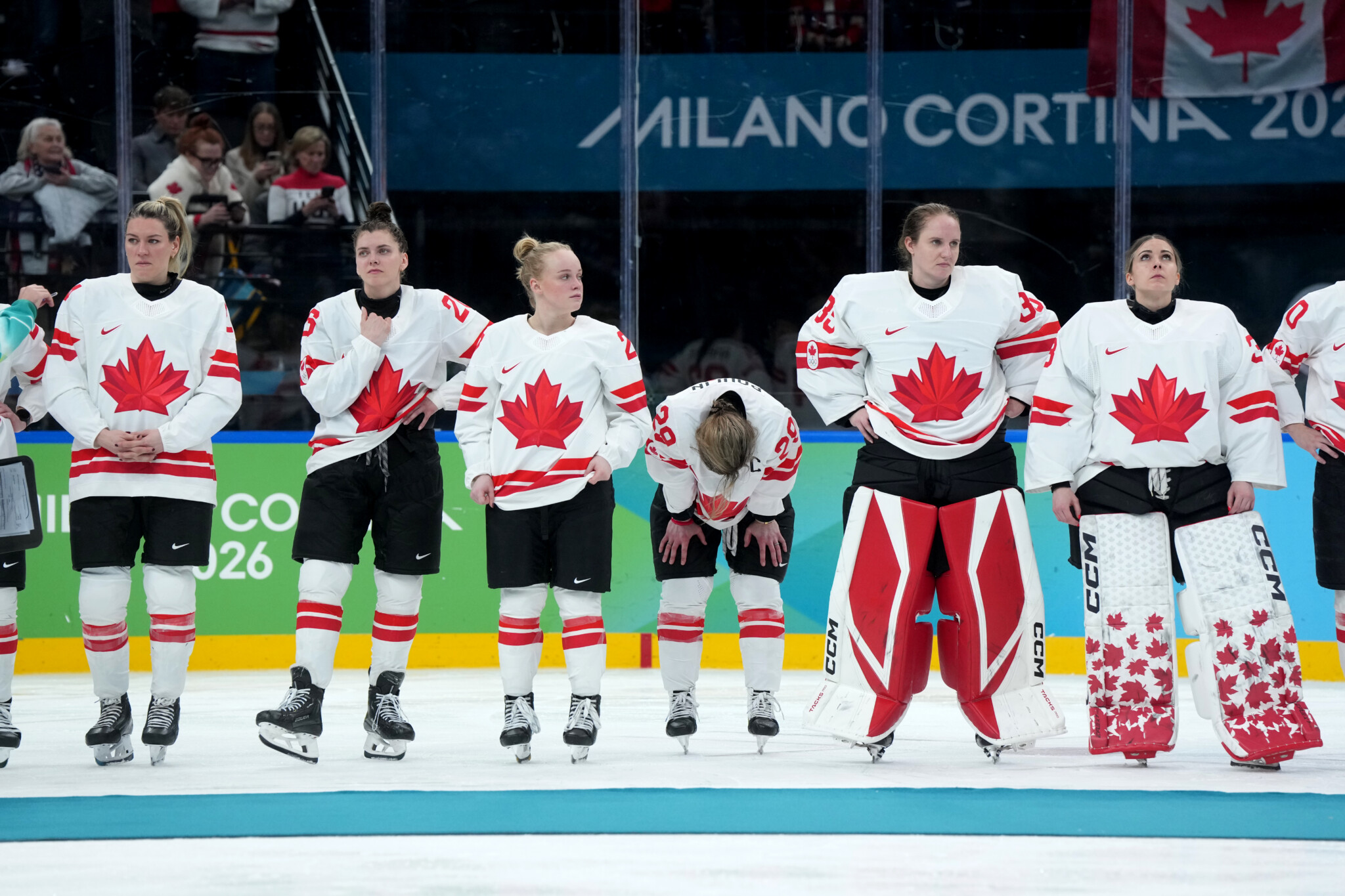
For the women, it is fair to say that even a narrow loss would have exceeded expectations for a veteran-laden lineup facing a younger, faster American team. We were warned well in advance of an ordained silver medal. What was once clearly Canada’s game appears, for the moment, to belong to the United States. After a 5-0 drubbing days earlier, this looked destined to be another American romp. Only, it was not. Canada took and held the lead into the final minutes before surrendering the tying goal and, eventually, the overtime winner. The performance felt closer to a statement than a setback, though it sounds almost too Canadian to describe a loss that way.

For the men, there was no such accommodation. The Americans had not won Olympic gold in 46 years, since the Miracle on Ice. Canada entered on a 15-game tournament winning streak and eight straight best-on-best final victories over the U.S. This game, to borrow the phrase, was played on tilted ice in Canada’s favour. Even when down a goal, victory felt inevitable.
Problem was: Connor Hellebuyck.
Canada’s Olympic hockey hopefuls are coming home to a disappointed nation as they return bearing silver instead of gold. Both the men’s and women’s teams finished as runners-up at the 2026 Milano-Cortina Olympic Games, each being bested by the Americans by 2-1 in games that went to overtime. While the losses sting, Canada should not overreact; overall, each team played well enough to win, only being beaten by the slimmest of margins. If there is real reason to be upset, it should be that the games were decided in the gimmicky three-on-three overtime format—a format that should be abolished moving forward for such high-stakes affairs.







Comments (5)
Whenever I read the debates of the state of Canadian hockey, I wish the country would have the same desire for excellence in other parts of the economy. I wish we would also apply successful lessons from our success in hockey to other aspects of the country. Meritocracy, relentless competition, never ending adaptation and innovation, training, etc. I am less concerned with us winning a silver medal than I am with our acceptance of mediocrity in non-hockey parts of Canada – economic, political, and otherwise.