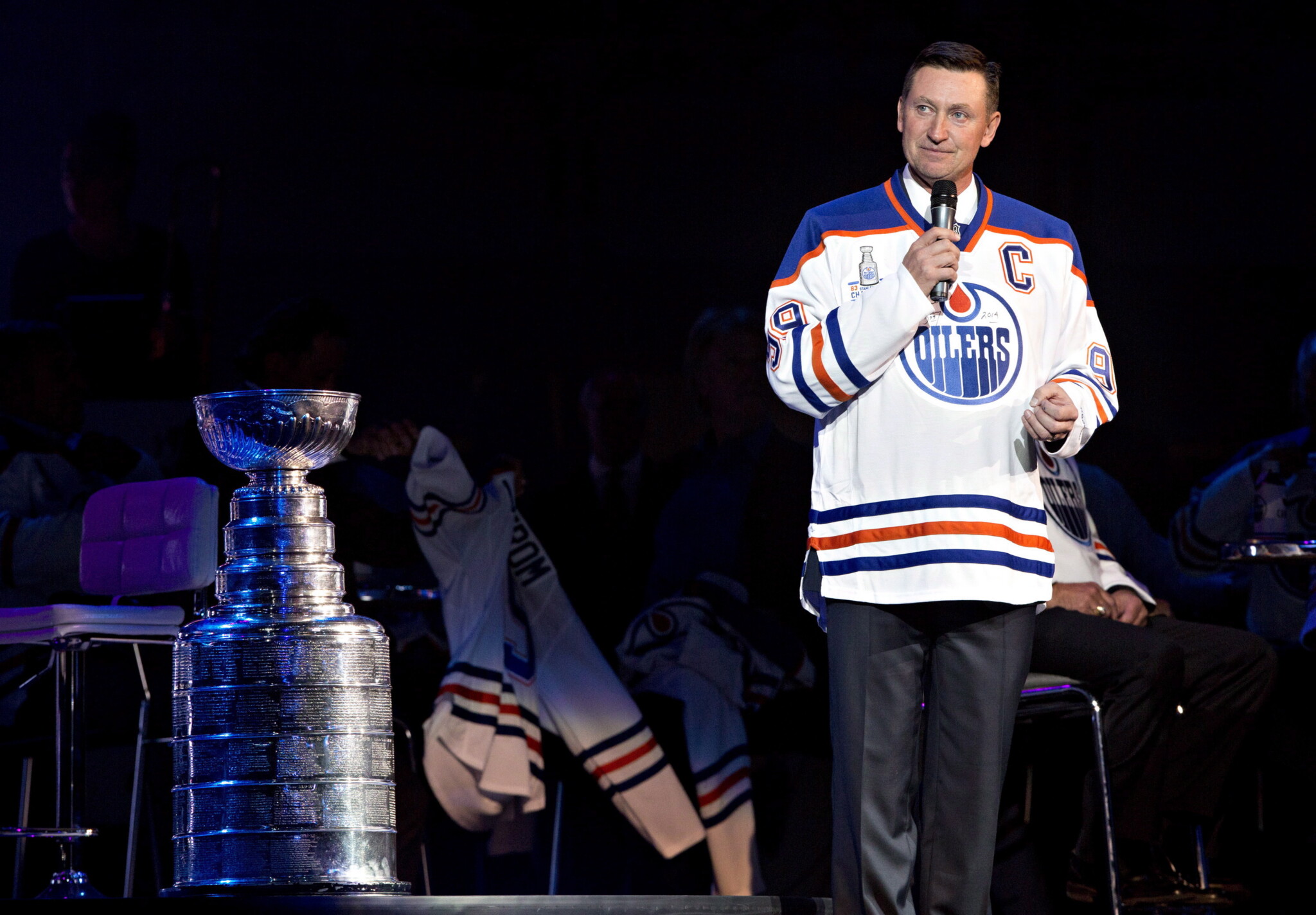
This past weekend’s gold medal hockey game seemingly took on greater significance because of the political backdrop.
Just over a year into President Donald Trump’s second term, we’re worlds apart from the relationship Tom Brokaw described in the lead-up to the 2010 Vancouver Olympics Canada-USA final: “In the long history of sovereign neighbours, there has never been a relationship as close, productive, and peaceful as the U.S. and Canada.”
A departure from the relationship that Brokaw described 16 years ago had many attributing political connotations to the game and the figures around it. This would be a mistake.
There’s enough emotion and pride on the line, just like any sibling rivalry in the driveways of ball hockey households across the continent, that we don’t need to invest it with geopolitics too. Making it about something more risks rupturing bonds that shouldn’t be at stake.
I fear one of those bonds being thrust into the tension is the bond between a man who has dedicated his life’s work to Canada and the nation he’s served.

Wayne Gretzky’s dedication to Canada is unimpeachable, far-reaching beyond his accolades on the ice. Of course, he inspired a generation of players and fans; his sportsmanship and skill alone are a national treasure.
But beyond the game, the Great One has spent his post-playing career supporting disadvantaged Canadian children through the Wayne Gretzky Foundation, running programs for children with autism, and assisting minor hockey teams across the country by providing equipment and financial aid.
He’s partnered with the Canadian Paralympic Committee to promote athletic access for people with disabilities. He’s given his time and financial support to the Canadian National Institute for the Blind, juvenile diabetes charities, and various community service organizations. The list could go on and on.
Yet, despite this service to Canada, he’s become collateral damage in the state of Canada-U.S. relations, summed up by TSN’s James Duthie as he hosted Gretzky on the pre-game panel ahead of last Friday’s semifinal against Finland.
“This has been a very unsettling year for Canadians,” Duthie said. “The tension between Canada and the U.S. is at a point that we’ve never seen in our lifetimes. And the tentacles of that have breached into hockey, we saw at the 4 Nations, where it boiled over. It will be a massive subplot if they meet again here. You have been drawn into all this. What would be your message to Canadians today?”

By “drawn into this,” Duthie is referencing Gretzky’s long-standing and now well-documented acquaintance with Donald Trump.
I have much respect for James Duthie; he’s a mainstay in the Canadian sports landscape, and while the question struck me as unnecessary, I respect Duthie’s role in asking the questions Canadians want answered.
In typical Great One fashion, Gretzky provided a thoughtful response.
First of all, let’s worry about the game; that’s most important. Let’s hope that Canada can get to that final game. Listen, I’m a hockey player, I’m a Canadian, I’m a true Canadian.
I want Canada to win a gold medal, and I’ve never wavered from that. I’ve been friends with presidents, prime ministers, and, somehow, as you said, there is a little bit more tension than normal.
At the end of the day, Canada and the U.S. are like brothers and sisters; they’re going to fight and argue, and eventually they’ll come together. That’s the way I see it.
I really hope Canadians heed Gretzky’s perspective. I fear there are too many cases across Canada of family and friends quarrelling over President Trump’s rhetoric.

I don’t diminish the impacts of the new American trade policy on Canadian jobs, nor do I understate Canada’s sovereignty. But addressing these challenges shouldn’t include ostracising our own.
In retrospect, there were preconditions to intergenerational and regional rifts in Canada. A younger generation failing to get ahead, an older generation clinging to the status quo. Throw President Trump’s rhetoric into the mix, and you have a pressure cooker of emotion.
It’s hard not to be emotional when sovereignty is being threatened, but we should be dispassionate in our defence.
I disagree with friends or family who are debating the merits of Canada welcoming 51st state status, or arming Rocky Mountain militias to fend off becoming a part of America.
But I’m not going to break up with anyone over these “hot takes.” Drawing politics into hockey, particularly the U.S.-Canada relationship, is equally foolish.
View reader comments (10)
Many of the Canadian players play and live in the U.S., and they’ll retire there with their American wives they met during their careers. Many of the U.S. players (Auston Matthews, Brady Tkachuk, Connor Hellebuyck) play leadership roles for their NHL teams in Canadian markets. They went to the Olympics to represent their country in sport, not politics. It would be unfair of us to foist our politics on their backs.
Maybe Canada’s older generations are nostalgic for an era when hockey and geopolitics were intertwined. Even as someone born in the late 1980s, my dad had me watching DVDs of the 1972 Summit Series well into the 2000s.
We’d be making an emotionally driven mistake if we treat this rivalry like we did the USSR at the peak of the Cold War. And we’re only doubling down on that mistake if we let this rivalry permeate through to our relationships.
Canada’s relationship with the Great One shouldn’t be challenged.
Gretzky isn’t a traitor. For a man who has spent much of his life in service of Canada, we’re doing him a great disservice by questioning his loyalty. He’s the best of Canada, and perhaps there is something we can all learn from him in maintaining friendship throughout disagreement.
The Canada-U.S. hockey rivalry should not be politicized. Injecting geopolitics into the game of hockey risks damaging important bonds, including the relationship between Canada and Gretzky, who has dedicated his life to serving the country through hockey and charitable work. Gretzky’s loyalty to Canada should not be questioned due to his personal relationships.
How does the author suggest Canadians should approach disagreements with Americans given the current political climate?
According to the article, why is Wayne Gretzky being 'drawn into' the tension between Canada and the U.S.?
What potential negative consequences does the author foresee if politics continue to be intertwined with hockey, especially in the Canada-U.S. rivalry?







Comments (10)
I certainly agree with the author’s take on things.
Wayne Gretzky has lived the vast majority of his adult life outside of Canada as have many elite Canadian hockey players. Unlike their US or European counterparts, many professional Canadian hockey players enjoy living away from their country once their playing career is over. That’s fine, and when people emigrate to a new country we should expect them to embrace their new home. Why should Canadians care if Wayne Gretzky has an acquaintance with Donald Trump or any other US politician? Mr. Gretzky doesn’t live in Canada and how he comports himself in his country-of-residence shouldn’t be a big deal to Canadians.