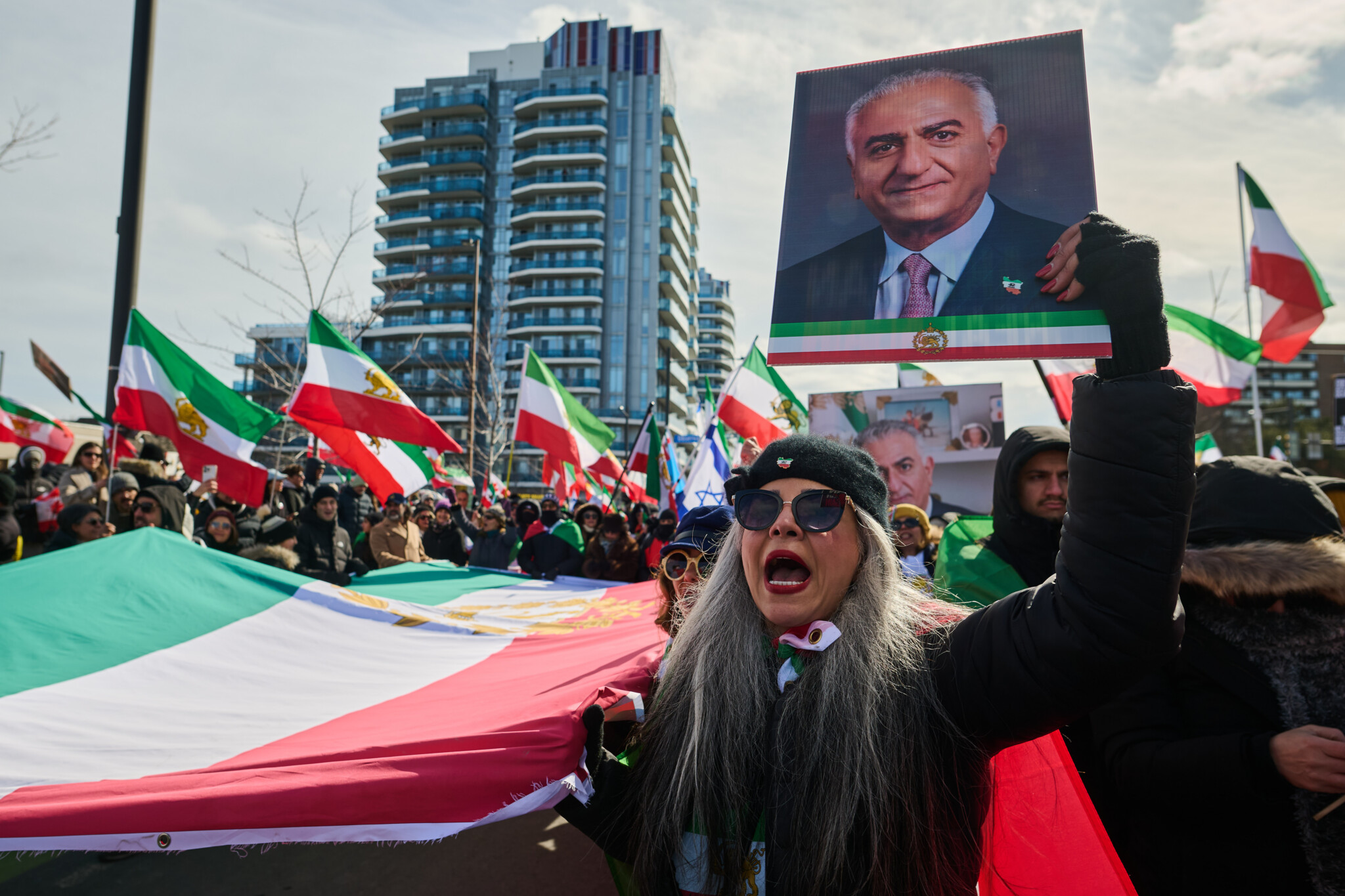
As the United States and Israel continue their coordinated military campaign against Iran, the Islamic Republic has responded with a wave of missile strikes across the Gulf region, including attacks on longtime mediators and allies. But according to international relations expert Janice Gross Stein, this strategy represents a catastrophic error that will fundamentally reshape the Middle East for years to come.
The attacks, which have targeted countries including Saudi Arabia, Oman, and Qatar, among others, appear to reflect either a breakdown in Iran’s command and control systems following the killing of 48 Iranian leaders or a deliberate but misguided attempt to pressure U.S. President Donald Trump through the intimidation of America’s regional allies. Either way, Stein argues, the consequences will be severe for Tehran.
Hub publisher Rudyard Griffiths spoke with Stein, founding director of the Munk School of Global Affairs, to better understand Iran’s strategic calculations and what comes next in this rapidly evolving conflict.
Here are five key takeaways from the conversation.

Iran’s fatal error in targeting regional mediators
The scope of Iran’s miscalculation became clear as missiles struck not just U.S. military installations but civilian infrastructure across the Gulf.
“I really believe that this was a misguided strategy,” Stein said. “It’s going to be very difficult to rebuild trust.”
She noted that attacks on locations like Dubai International Airport serve no strategic purpose while permanently damaging relationships with countries that have long memories.
Stein emphasized that Iran had other options for economic disruption.
“If you close the Strait of Hormuz, you might get exactly or almost as much bang in the bond market and the stock market. But you don’t permanently alienate Oman, Qatar, Saudi Arabia, the UAE,” she explained. The door to Iran that opened over the past four years “is closed now for the foreseeable future.”
A regime fighting for survival
Iran’s strategy, according to Stein, reflects the desperation of a regime that knows it is outmatched.
“If the regime survives this, if they can outlast the attack, that’s a victory for the regime,” she said. The goal is to increase the cost of the war to the United States by jeopardizing energy supplies and getting Gulf leaders to pressure Trump.
“The force that the United States has in the region is overwhelming now,” Stein noted. “That is Iran’s only strategy of survival.”
She pointed out that U.S. forces are systematically destroying Iran’s missile launchers, leaving the regime increasingly reliant on drones, which Stein said “can certainly inflict damage, but nothing like the ballistic missiles.”
The regime’s weakness is evident both regionally and domestically, with checkpoints now established throughout Tehran to prevent protests following celebrations in the streets after Iranian Supreme Leader Ayatollah Ali Khamenei’s death.
Regional containment and great power interests
Despite escalating violence, Stein was emphatic that this remains a regional conflict.
“People have written to me and said, are we on the verge of a major war that will engulf the world? No, we are not,” she said.
Russia and China occupy “diametrically opposed positions” on the conflict’s biggest issue: energy exports. Russia benefits from higher oil prices for its shadow fleet, while China, as an importer of Iranian oil, loses.
Turkey faces its own concerns about Kurdish minorities along Iran’s borders potentially seizing the opportunity to establish autonomous zones, something Ankara has fought against for 25 years.
The Sunni-Shia divide returns
The regional realignment is already underway. Stein noted that Saudi Crown Prince Mohammed bin Salman, despite public statements about avoiding regional war, repeatedly lobbied Trump to attack Iran.
“The Sunni-Shia rift is back in full force,” she said.
In Lebanon, President Joseph Aoun took the “astonishing” step of banning Hezbollah military activities, something Sunni and Maronite governments had refused to do until now.
“They are adamant they are not going to be dragged into another war,” Stein explained.
Canada’s complex position
Regarding Canada’s support for the operation, Stein acknowledged the legal problems.
“This war is illegal under international law,” she said plainly. However, she identified the January massacre—with estimates ranging from 7,500 to 30,000 Iranians killed in 48 hours—as the defining issue for Prime Minister Mark Carney.
“Some experts are saying that this is the most intense killing spree since Rwanda in 1994.”
“There’s a conflict often between what you might argue is morality and legality,” Stein observed. “Those two do not always run together.”
Stein noted that it also serves Canada to back the president when the Europeans did not in the lead-up to renegotiations of CUSMA.
She added, “Morality, political interests, and economic interests all lined up here.”
This story draws on a Hub video. It was edited using NewsBox AI. Full program here.
According to international relations expert Janice Gross Stein, Iran’s recent missile strikes across the Gulf region, targeting both military installations and civilian infrastructure, represent a significant strategic miscalculation. These attacks, impacting countries like Saudi Arabia, Oman, and Qatar, suggest either a breakdown in Iranian command or a misguided attempt to pressure the U.S. Stein argues this action will severely damage Iran’s relationships with regional mediators and allies, closing doors that had opened in recent years. She believes Iran’s actions reflect a desperate regime fighting for survival, aiming to increase the cost of the war for the U.S. by disrupting energy supplies and influencing Gulf leaders. Despite escalating violence, Stein maintains this is a regional conflict, not a global one.
Why does the article suggest Iran's attacks on Gulf allies were a 'fatal miscalculation'?
How does the conflict affect the Sunni-Shia divide and regional power dynamics?
According to the article, what factors influenced Canada's decision to support the military campaign?



Comments (0)