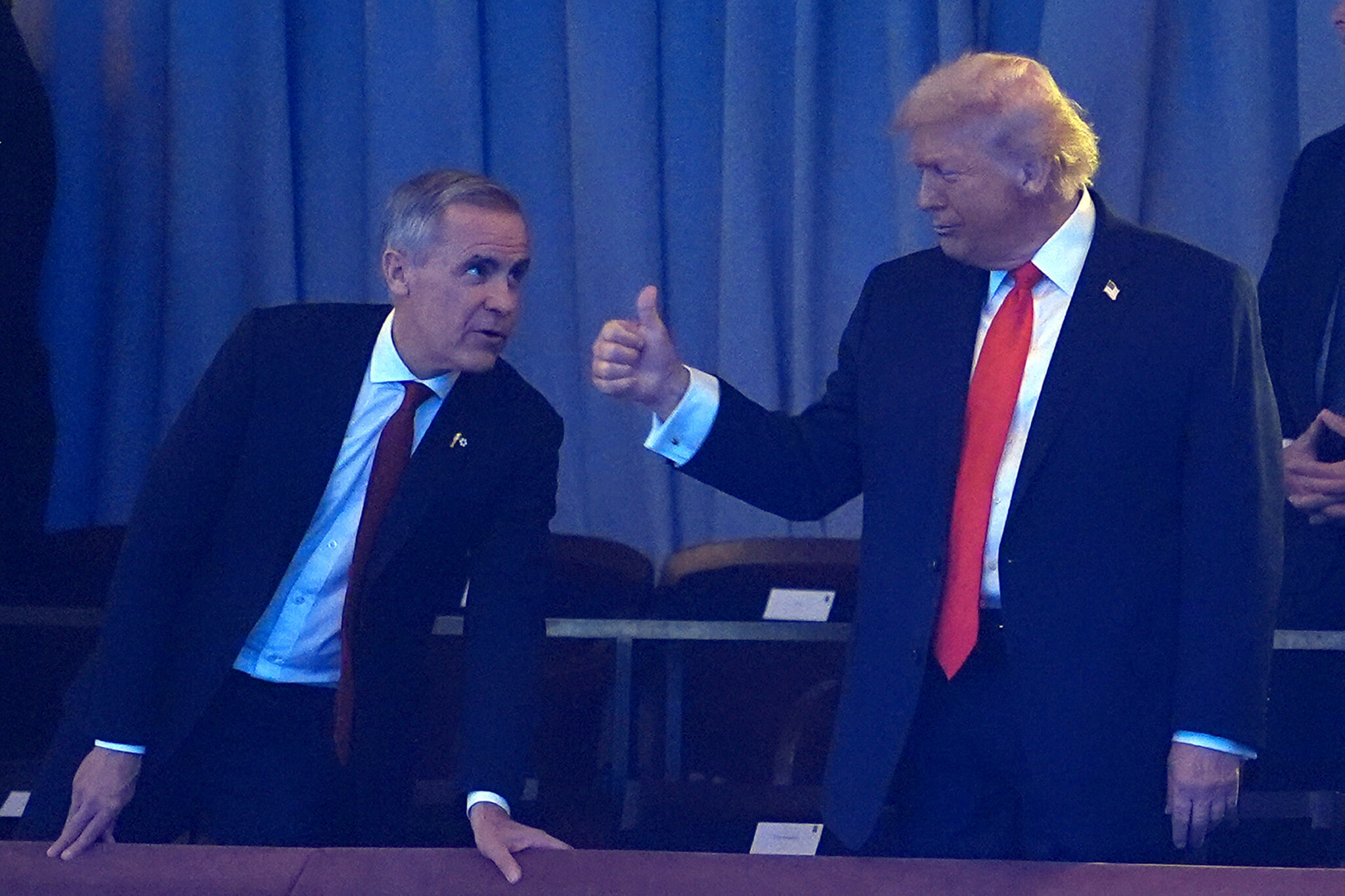
Prime Minister Mark Carney’s government has spent the past 72 hours attempting to assert, clarify, then walk back, its position on the U.S.-led military offensive against Iran, creating confusion among many allies and Canadians about where the country stands on the conflict.
The mixed messaging, raised in a podcast discussion between Hub co-founders Rudyard Griffiths and Sean Speer, represents a significant communications stumble for a prime minister who has built his reputation on foreign policy acumen.
What began as a surprisingly supportive statement for American military action has evolved into a series of contradictory positions from different cabinet ministers, culminating in the prime minister himself expressing regret over Canada’s stance while questioning the war’s legality.
Carney’s initial statement was unusually hawkish
It was quite the about-face from the prime minister’s initial public statement. On the day the war broke out, Carney largely stood behind U.S. President Donald Trump’s decision to attack Iran and take out the regime’s leadership, including Iranian Supreme Leader Ayatollah Ali Khamenei.
“Canada supports the United States acting to prevent Iran from obtaining a nuclear weapon and to prevent its regime from further threatening international peace and security,” read part of Carney’s official joint statement with Foreign Affairs Minister Anita Anand.
Speer and Griffiths were taken aback by Carney’s initial support of the U.S. attacking Iran.
“What was interesting is that Prime Minister Carney hewed a hawkish line, a line that separated him, for instance, from European leaders who chose a more moderate or restrained reaction,” Speer noted. “The statement was probably amongst the most hawkish and positive with respect to America’s offensive of any world leader across the board.”
My statement on Iran-related hostilities in the Middle East: pic.twitter.com/NcC8Pzq2Ba
— Mark Carney (@MarkJCarney) February 28, 2026
But the hawkish tone didn’t last long and the shift was jarring to political observers. Two days later, Anand released a somewhat contradictory statement on X.
“We call on all parties to prioritize the protection of civilians and civilian infrastructure, to return to negotiations, and to advance a diplomatic resolution to the crisis,” read part of the foreign affairs minister’s statement on March 2.
Anand’s counterstatement confused many observers.
“Everyone who saw that Tweet and read the statement was dealt with a little bit of a case of whiplash here,” Griffiths said, “Because this seemed to hew back to the much more traditional foreign affairs kind of positioning, which is always one of de-escalation, negotiation.”
Cabinet ministers walk back the position
By the following day, Defence Minister David McGuinty had called for all sides to lay down their weapons and settle things at the negotiating table.
Please see my statement on the ongoing situation in the Middle East: pic.twitter.com/AJ1lxBVzY6
— Anita Anand (@AnitaAnandMP) March 2, 2026
“At this stage let’s hope that cooler heads prevail. Let’s hope that things calm down. Of course we’re watching this very carefully…but Canada will use its diplomatic efforts to try and stabilize the situation.”
Three Canadian officials, three different stances on Iran: Foreign Affairs Minister Anita Anand favours diplomacy, PM Mark Carney backs U.S. strikes, and Defence Minister David McGuinty calls for a ceasefire. pic.twitter.com/yJcQ7g3Zb0
— Juno News (@junonewscom) March 3, 2026
The prime minister’s latest statement created more confusion
Yesterday evening, Prime Minister Carney then released another statement both admitting that international bodies had failed to contain the Iranian nuclear threat and admonishing the U.S. and Israel for initiating a war with Iran without UN approval or consultation with allies, including Canada.
“We take this position with regret, because the current conflict is another example of the failure of the international order. Despite decades of United Nations Security Council resolutions, the tireless work of the International Atomic Energy Agency, and a succession of sanctions and diplomatic frameworks, Iran’s nuclear threat remains. And now the United States and Israel have acted without engaging the United Nations or consulting with allies, including Canada.”
After decrying the failure of the rules-based international order, he then added that all sides needed to “respect the rules of international engagement.”
Carney’s follow-up statement not only contradicted his initial one, but the new statement was conflicting in itself.
“I thought we were against the failure of the international order,” Griffiths said. “And yet we’re now in favour of that. But we’re regretting that we’re in favour of that. Do I have this right?”
Speer responded: “I’m not sure. And it’s not obvious that the government isn’t either.”
Since publishing this story, Carney flip-flopped yet again. Wednesday the prime minister said he could not categorically rule out the possibility of Canada getting involved militarily in the conflict, telling a news conference the nation will “stand by our allies when it makes sense.”
Internal Liberal party pressure drove the reversal
The backtracking appears driven by pushback from within Liberal ranks. Lloyd Axworthy, a former Liberal foreign affairs minister during the Chretien years, publicly criticized Carney’s initial support for Trump’s offensive.
“You wonder if in part because Prime Minister Carney found himself offside European leaders, in part because he was starting to get pushback from the caucus [that he walked back his support],” Speer said.
Griffiths suggested Anand’s statement represented trying to fix Carney’s initial statement, which was offside with much of the Liberal base, and that she played “cleanup duty.”
The episode undermines Carney’s core political proposition
The communications failure strikes at the heart of Carney’s political brand.
“He’s made the case over the past year that he is the right person for a crisis,” Speer noted. “This is as much of a crisis as one can imagine. And on the face of it, it looks like the prime minister’s government is failing this test so far.”
The episode represents a significant stumble for a government that has been “surprisingly good at communication” since the election, Griffiths observed.
“This week was the first major stumble at a critical moment when precisely you don’t want to have that stumble,” Griffiths added.
The confusion risks alienating both international allies trying to understand Canada’s position and the Trump administration, as crucial trade renegotiations on CUSMA approach this July.
Prime Minister Mark Carney’s government is facing criticism for its inconsistent messaging regarding the U.S.-led military offensive against Iran. Initially, Carney expressed support for the U.S. action, a stance considered unusually hawkish compared to other world leaders. However, subsequent statements from Foreign Affairs Minister Anita Anand and Defence Minister David McGuinty presented a more cautious approach, emphasizing de-escalation and diplomatic solutions. Carney later released another statement expressing regret over the war’s initiation without UN approval, creating further confusion. This apparent backtracking is believed to be driven by internal pressure within the Liberal party and has undermined Carney’s reputation for foreign policy acumen, potentially impacting international relations and upcoming trade negotiations.
Why did Prime Minister Carney's government initially support the U.S. military action against Iran, a stance considered 'hawkish' by observers?
How might the conflicting messages from Canadian officials impact Canada's relationship with its allies and the U.S., especially concerning trade negotiations?
What internal factors within the Liberal party may have contributed to the government's shift in its position on the U.S.-led military action in Iran?

Comments (0)