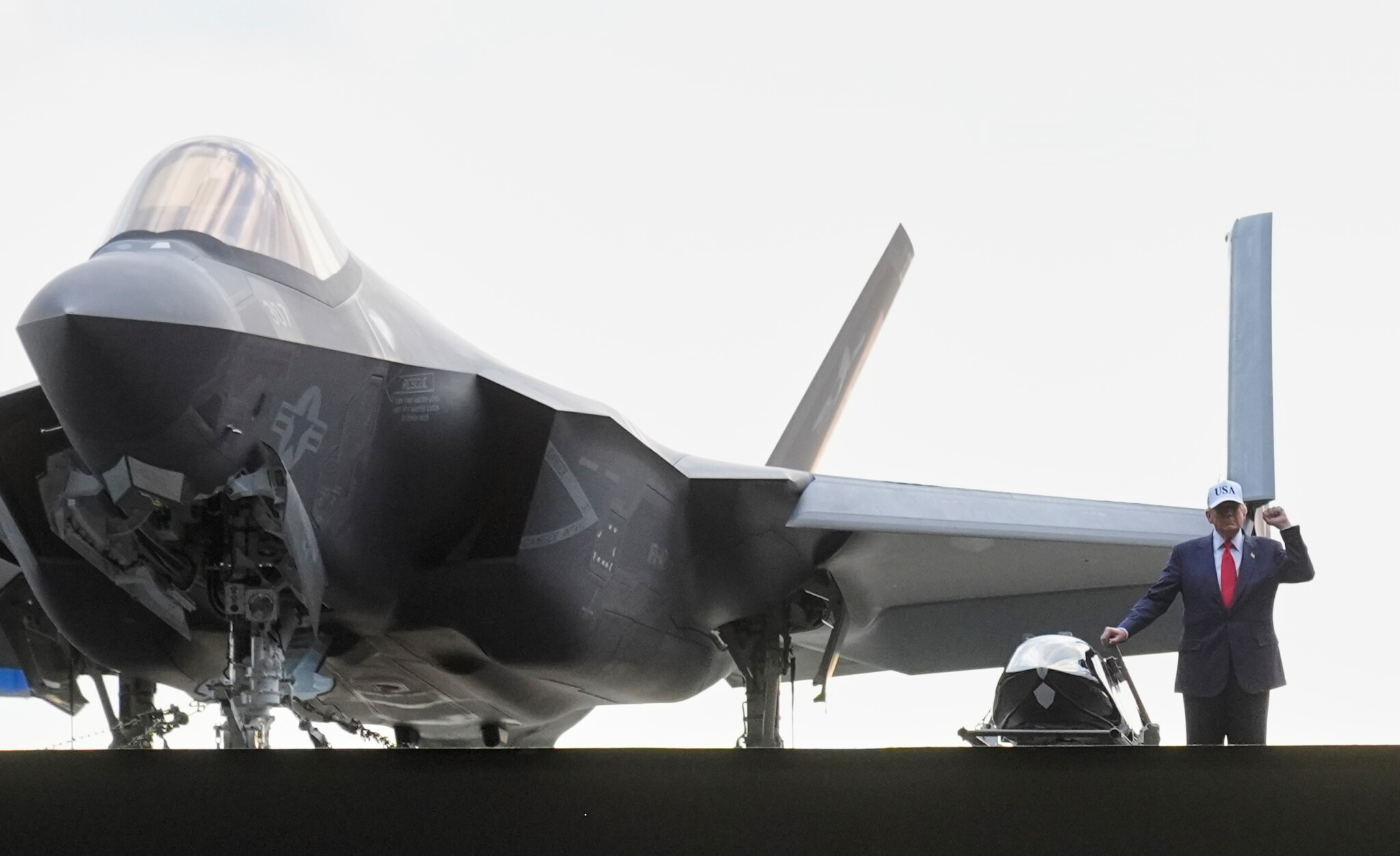

We are about a week removed from the onset of the U.S.-Israel attacks on Iran. With President Trump reluctant to commit to American troops on the ground, the war, to date, has been waged primarily in the air, with bombers, fighter jets, drones, and ballistic missiles as the all-important variables.
So what are the primary lessons we’ve learned so far?
1. The return of the great airpower debate
For much of its history, airpower has been defined by a central question: can it actually win a war without requiring soldiers on the ground? Early theorists, searching for alternatives that could avoid the carnage of the First World War, hoped it could. Similarly, in more recent interventions, such as in Kosovo and Libya, Allied airforces have sought to achieve their war aims while avoiding any casualties whatsoever. President Trump has likewise been searching for a way to quickly achieve the U.S.’s aims (a la Venezuela) without getting bogged down in the quagmire of yet another protracted war in the Middle East.
Unfortunately, airpower’s track record as the primary means of military force has been poor, and is unlikely to change as a result of this war. Historically, states under air strikes alone have rarely reacted to coercion by acceding to demands; it is even rarer to see a bombarded government collapse. Venezuela’s recent turn, (overlooking the short capture operation), might be argued to be one of the few examples. However that outcome bears few similarities to the situation in Iran.
Airpower is most effective at degrading and suppressing a state’s warmaking capacities temporarily, but not fundamentally undermine existing power structures within a state. Indeed, the president’s recent call for Kurdish militias to overthrow the regime, is a tacit acknowledgement that airpower on its own is insufficient to overthrow the Iranian regime.

2. A new paradigm of air warfare is emerging
Leaving aside the questions of political efficacy, it’s clear that airpower is going through a dramatic shift in platforms, force structures, and capabilities. We have been discussing this for a number of years, particularly in the context of the Ukraine War, but the past six months have seen three clear demonstrations of this new doctrine, variously named penetration dominance or multi-domain operations. The key idea is to break through an enemy’s tightly integrated air, land, sea, space, and cyber defences and overwhelm them quickly, disrupting the entire enemy system at once.
Airpower is playing a major role in the ongoing U.S.-Israel conflict with Iran and modern warfare more generally. While airpower alone is insufficient to achieve decisive victory, it’s undergoing a dramatic shift towards integrated, multi-domain operations, highlighting the importance of 5th-generation fighter jets like the F-35. The need has never been greater for integrated air and missile defence systems. Canada’s lagging defence capabilities and doctrine must be addressed with urgent investment in integrated systems and increased munition production.
Given airpower's limited success in the Iran conflict, what alternative strategies should the U.S. consider to achieve its objectives?
How does the conflict in Iran highlight the need for countries like Canada to adapt to emerging air warfare doctrines and invest in advanced military capabilities?
With concerns about munition stockpiles, how might the U.S. and Iran's industrial production capabilities impact the outcome of the conflict?






Comments (16)
The Leopard tanks we had in the 80s had an optics system made by Zeiss in East Germany. The US is still an ally even if the current president is an idiot