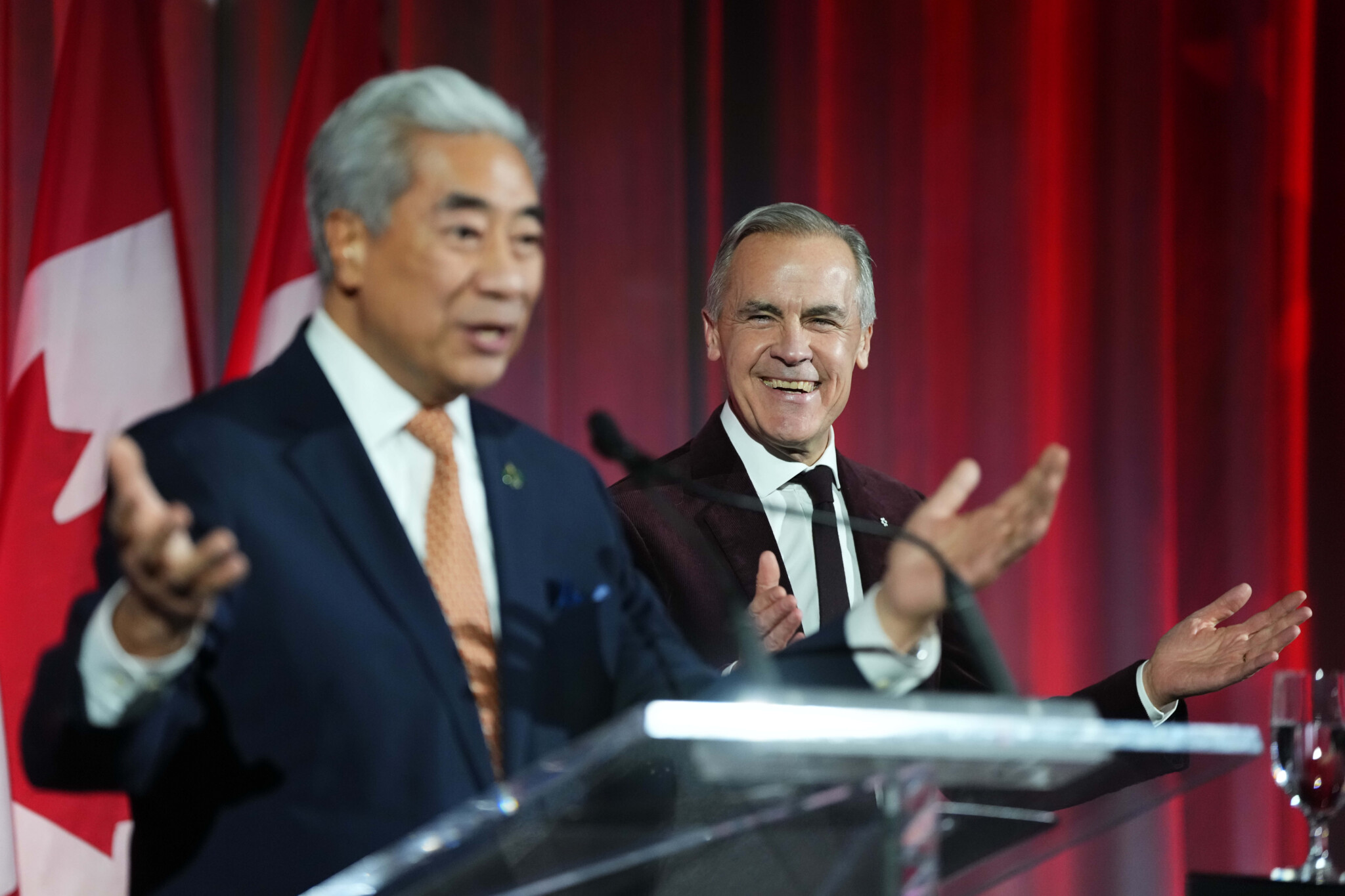
Former Nunavut NDP MP Lori Idlout deciding to cross the floor to the Liberals this week is yet another slap to the face of the Canadian electorate.
The fourth floor-crosser in four months, the smiling line-up of opposition MPs jumping ship to shore up support of the Liberal government just shy of a majority government—all-but-assured to secure one after three byelections are held on April 13—undermines the spirit of our democracy. Our constitutional democracy, where voters pick from several candidates, under competing party banners and platforms, to represent their and the country’s best interests, should be protected from deceptive chameleons.
When duly elected MPs decide to switch sides, less than a year after being elected, they’ve misrepresented themselves to their constituents, subverting the democratic process.
An MP’s constituents should be granted the opportunity to decide if they still want their elected official to represent them, now that they’ve shown their true party colours.
If your constituents elected you into office when you were a Liberal, NDP, Conservative, or Green candidate, you shouldn’t be able to then switch parties without facing an immediate byelection.
And Canadians overwhelmingly agree.
At the start of March, an Ipsos survey of 1,001 Canadian adults found 69 percent agreed with the following statement: “If my Member of Parliament switched to a different party, there should be an immediate by-election in my electoral district.” Yesterday, a new Angus Reid poll backed up the same strong sentiment, where another 74 percent of Canadians disagreed that MPs should be allowed to cross the floor.

MPs crossing the floor allows for de facto bribery, corrupting Canada’s democracy
Politics is a dirty, rough-and-tumble game of course. And floor crossing is allowed under our parliamentary system. Seats belong to the politician, not the party.
But democracies like Canada’s are supposed to have guardrails, laws, to deter and punish the most corrupting forces of power.
MP Idlout (Nunavut)—as well as Conservative MPs Chris d’Entremont (Nova Scotia’s Acadie—Annapolis), Michael Ma (Ontario’s Markham—Unionville), and Matt Jeneroux (Alberta’s Edmonton Riverbend)—all had really disparaging things to say about the Liberals during the last election campaign and after being elected to Parliament.
For example, Idlout, who backed NDP leadership candidate Avi Lewis just last week, has repeatedly disparaged Carney’s Liberals.
“I am disgusted by the Carney government’s response to Nunavut. Nunavummiut deserve better,” said Idlout last August.
In February, Idlout blasted the Liberals for their lack of details in their renewal of Inuit Child First Initiative funding, saying the government had “chosen to ignore the concerns of Nunavummiut.”
All these floor-crossers admitted to having backroom conversations with the Liberals, then deciding to cross the floor and dramatically change their tune. The question arises: What was promised to them and agreed upon in those private meetings? What was their price?
Even if federal funding flowing to Nunavut since late 2025 was planned well in advance, Idlout’s defection now inevitably casts it in a different light—particularly given her admission that the Liberals had been courting her since late last year. That context invites scrutiny of several recent announcements, including $277 million for three water-treatment facilities and $250 million to build 750 new homes in the territory.
Not to mention that Michael Ma was given VIP MP treatment, joining Prime Minister Carney on his trips to China and Qatar. Or that Matt Jeneroux was made his special advisor on economic and security partnerships and joined him in India, Australia, and Japan.
Backroom courting or quid pro quos, i.e. bribes, between elected opposition MPs and the ruling party in between elections means these elected officials are betraying the greater electorate.
As a result, this year, the Carney government could secure a majority. The Liberals would then avoid the added scrutiny and checks and balances the voters wanted, when they granted them a minority government.

Canada should adopt a law forcing turncoat MPs to immediately face their voters
To stop this cheapening of our democracy, a bill should be put forward, to force byelections for any MP who decides to switch party allegiance. This has been tried in the past. In 2006, then NDP leader Ed Broadbent introduced a private members bill that called for floor crosser’s seats to be immediately declared vacant, triggering a by-election.
Yes, the Conservatives have a history of welcoming red Tories with open arms to the fold, like the Liberals are doing now with opposition MPs. Days after the 2006 election, Prime Minister Harper welcomed Liberal MP David Emerson into the Tory fold and even made him a minister. But Conservative Leader Pierre Poilievre has an opportunity to turn the cynical page and propose a law that could put an end to the sordid tradition (over 300 MPs have floor crossed since the start of Confederation) once and for all.
Elected MPs who cross the floor have a poor record of reelection. The same goes provincially. In one major case in Alberta, nine Wild Rose MLAs (including the province’s current premier Danielle Smith) who defected to the Progressive Conservatives all failed at being reelected.
Putting forth a law, enforced by Elections Canada, that would initiate immediate byelections for all floor crossers would surely all but eliminate the practice.
In the past, Manitoba and New Brunswick have put forth laws that banned floor crossing, requiring provincial politicians to sit as independents or resign to trigger a byelection they could then rerun in. But neither law lasted very long.
However, given the repeated abuse federally, Parliament would be wise to outlaw the practice and begin to restore the electorate’s waning confidence in the institution.
Otherwise transactional, floor-crossing politicians like Jeneroux, Ma, d’Entremont and Idlout can continue to say they won’t entertain switching parties one week, claiming they need to hold the government to account, but the next week walk into Liberal caucus to a procession of pats on the back.

Graeme Gordon is The Hub's Senior Editor and Podcast Producer. He has worked as a journalist contributing to a variety of publications, including CBC,…
The recent trend of MPs crossing the floor to join the Liberal party undermines Canadian democracy. The author highlights Lori Idlout’s defection as a prime example, questioning the motivations behind such moves and suggesting potential quid pro quos. Gordon contends that these floor-crossings allow the Liberals to potentially secure a majority government, circumventing the voters’ original intent. He advocates for a law mandating immediate byelections for MPs who switch parties, similar to past proposals, to restore public trust and deter this practice, citing historical examples and public opinion polls supporting such a measure.
The article suggests floor-crossing undermines democracy. How so, according to the author?
What potential motivations for floor-crossing are implied in the article, and what examples are given?
What solutions does the author propose to address the issue of floor-crossing?






Comments (9)
If you jump ship from one party you should need to swim to the one you want to be on.
Our more progressive media and pundits are avoiding the substantive issue of voter intention by dismissing objections as hypocritical. Is the CPC being hypocritical complaining about floor crossers? Arguably yes. And, now that it impacts them, the NDP has decided to criticize the practice as well.
But even if the position is self-serving that doesn’t mean it is wrong. The vast majority of Canadians vote for a party & platform as represented by the party leader. Floor crossing without accountability does nothing for the credibility of our system of government (federally or provincially).