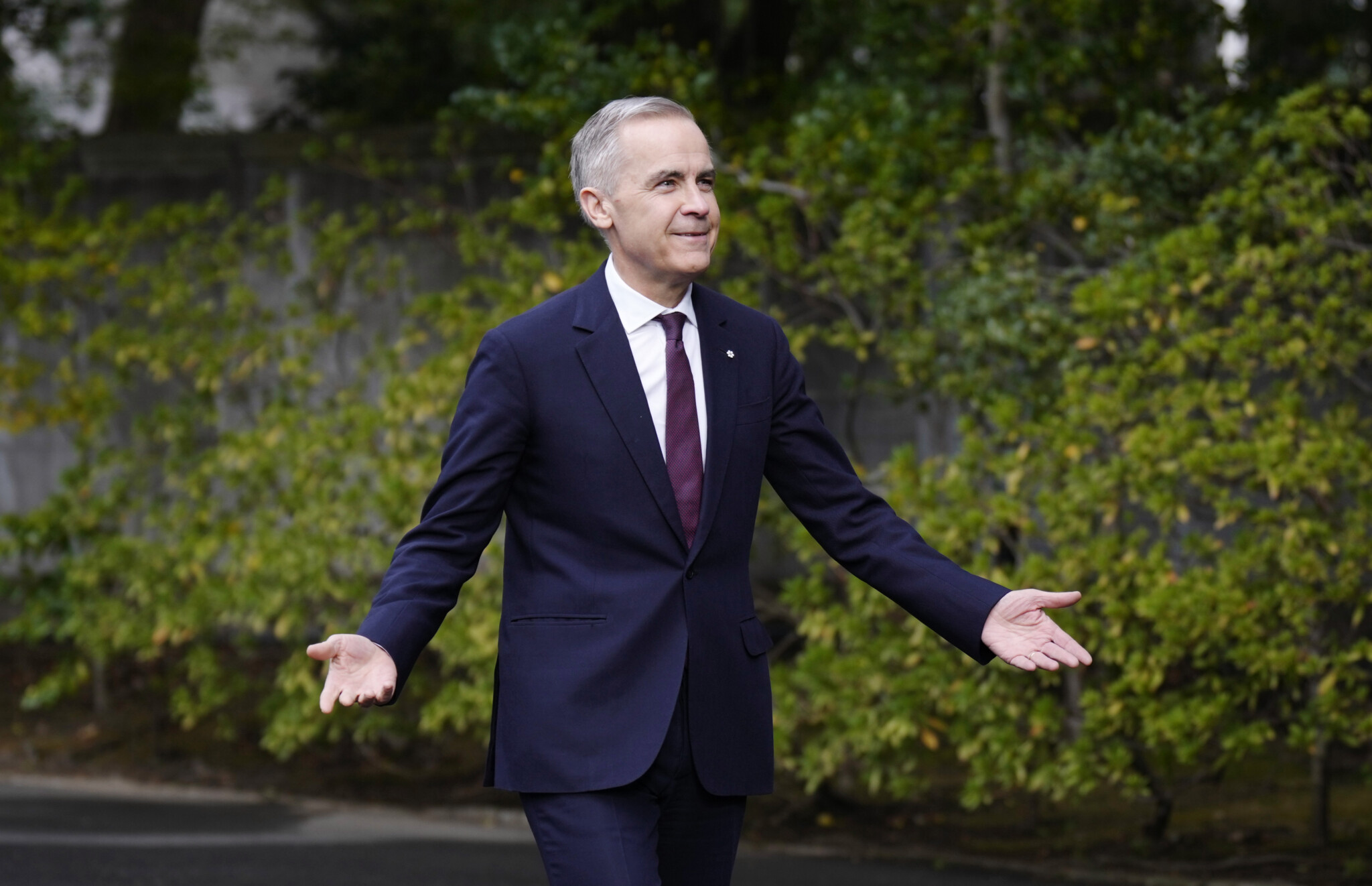
One year ago, Mark Carney was sworn in as Canada’s new prime minister. The question hanging over him then was simple: Could a central banker thrive in elected politics?
For most of his career, Carney worked in institutions designed to be insulated from public opinion. At the Bank of Canada and later the Bank of England, the job was to resist political pressure, not respond to it. Expertise and independence were the currency. The public did not need to like his decisions, even if they stabilized the system.
But we all know politics runs on a different fuel. Here, authority does not come from models or forecasts. It comes from public permission.
One year later, Carney has adjusted well to his new reality and accumulated a significant amount of political capital. Our latest Abacus Data polling shows the Liberals leading nationally by six points, government approval above 50 percent, and Carney himself sitting at a net favourability of +20.

Political capital, though, is more than polling numbers. It comes from public trust, and trust gives leaders a particular kind of power: the ability to persuade and bring people along when decisions are difficult, complex, or the timing or destination is uncertain. When the public believes a leader understands the moment and is acting in good faith, they are far more willing to listen and far more willing to grant them time.
Based on the polling data, that’s where Prime Minister Carney finds himself today.
The reason has less to do with traditional metrics of performance than with how Canadians see the world right now—the new environment we find ourselves in.
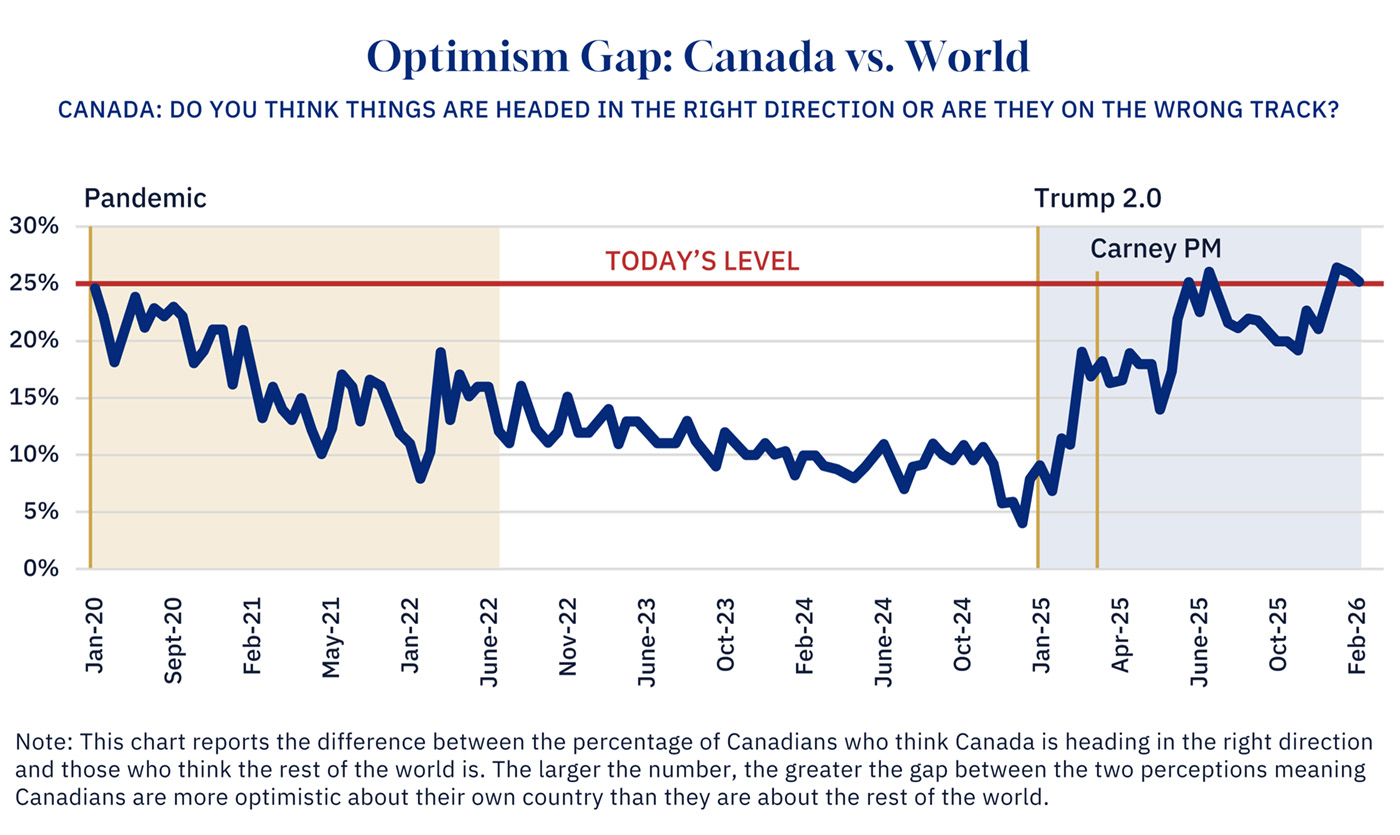
Most Canadians believe the biggest threats to their well-being are external, not domestic. When we ask people about the direction of the world, the numbers are bleak. Just 14 percent say the world is on the right track.
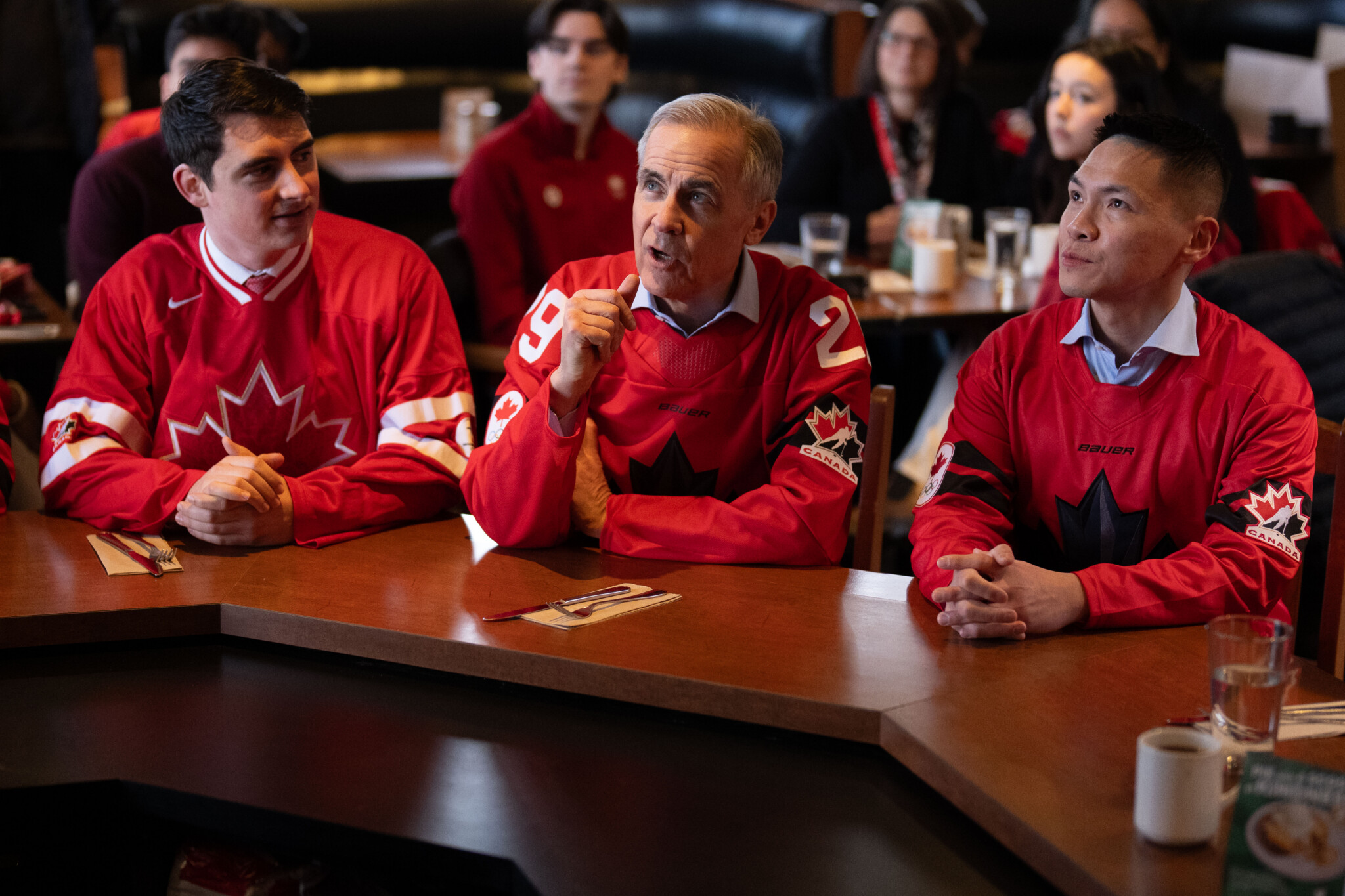
Prime Minister Mark Carney watches an Olympic gold medal hockey game between Canada and USA, along side New Westminster-Burnaby-Maillardville MP Jake Sawatzky, left, and Burnaby Central MP Wade Chang, right, during a watch party in Burnaby, B.C. on Thursday, Feb. 19, 2026. Ethan Cairns/The Canadian Press.
Here at home, things are viewed differently. Forty-two percent say Canada is headed in the right direction, and 45 percent say it is on the wrong track. For the first time since just before the pandemic in early 2020, the country’s mood is essentially balanced.
I think when voters believe the biggest threats to their lives come from abroad rather than from their own government, they evaluate leaders differently. They are less focused on desiring disruption and more focused on wanting competence, stability, and judgment.
In other words, the ability to manage risk is the trait most in demand.
Based on my data, most Canadians believe Carney fits that bill.
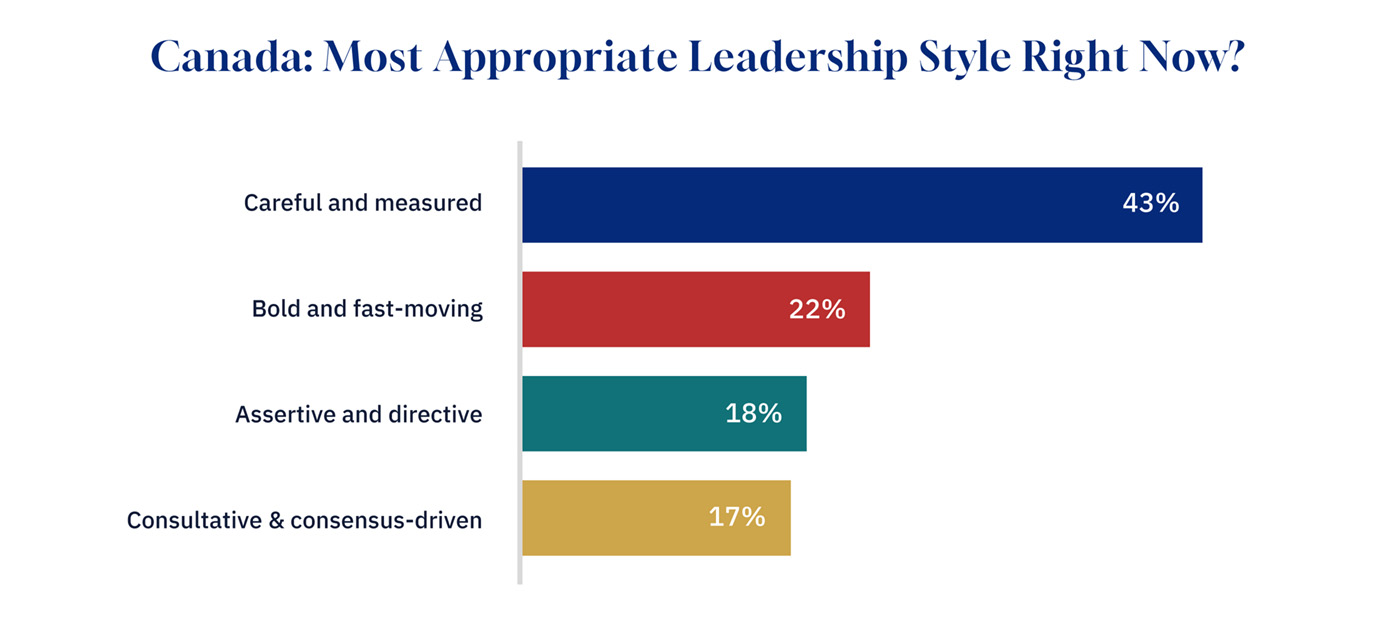
When we ask Canadians what kind of leadership the country needs right now, the most common answer is “careful and measured.” Forty-three percent say that is the style they want. Far fewer prefer aggressive or fast-moving leadership.
The leadership archetypes Canadians gravitate toward right now are the builder, stabilizer, and protector. Those descriptions align closely with Carney’s public persona. His appeal is not rooted in ideological excitement but in perceived competence.
When Canadians think about Carney, the most common emotional responses are “reassured,” “confident,” and “motivated.” They see him as someone capable of managing complexity. For many, he feels like a bulwark against a world that increasingly feels out of control.
Graphic Credit: Janice Nelson.
Little progress, but the public is still patient
That alignment between the public mood and Carney’s brand helps explain why many of his voters believe he is succeeding or at least moving in the right direction, even if his critics point to a lack of tangible results.
When people feel anxious about the environment around them and attribute that anxiety to external forces, they often grant leaders more room to manoeuvre. Our research tracking the government’s priorities shows Canadians broadly agree with the direction Carney has set. Large majorities say those priorities matter and would improve their lives if achieved.
Graphic Credit: Janice Nelson.
But when we ask about progress, the answers are more mixed. On affordability and housing, the two issues Canadians care about most, many say they have yet to see meaningful improvement.
However, that has not translated into a decline in political support.
Instead, Canadians appear to be separating direction from delivery. They seem willing to grant time if they believe the government’s compass, held by the prime minister, is pointing in the right direction.
The broader environment reinforces that patience. Tariff tensions with the United States, threats of annexation, instability in global markets, and now a war in Iran have sharpened the sense that the world is becoming more volatile.
The man for the moment
In that context, voters appear willing to defer to someone they see as having the right experience and judgment for the moment.
Carney’s speech in Davos earlier this year illustrates how this dynamic works.
In that address, he argued the world is entering a more dangerous phase where power politics is returning and the old rules-based order can no longer be taken for granted. His prescription was what he called “values-based realism”: build strength at home, diversify economic relationships abroad, and work through smaller coalitions that can actually deliver results.
Our polling suggests Canadians largely agree with that diagnosis. Nearly three-quarters say Canada should be more assertive in defending its interests, and almost seven in 10 support diversifying partnerships so the country is less dependent on any single ally.
The speech landed well at home partly because it signalled that Canada’s leader was aligned with how other countries are beginning to think about the world. It also reinforced the perception that Canada is being led by someone equipped for the moment.

The moment can change
But it would be a mistake to assume Carney’s position today reflects permanent political strength. Environments can change.
Some of his advantage is structural. Donald Trump has reshaped the political environment in Canada. The instability many Canadians associate with the United States makes a steady technocratic leader look appealing by comparison. Remember, contrast is almost everything.
Part of Carney’s support may therefore be the political space created by fear of external disruption rather than enthusiasm for a particular domestic agenda. Political capital built in those circumstances can be powerful, but it can also be conditional.
If voters begin to believe the biggest threats to their lives are no longer outside the country, but inside it, the political calculus could change quickly.
That is why delivery will eventually matter.
View reader comments (24)
Affordability remains the dominant public concern. If Canadians conclude that Carney’s stability is not improving their day-to-day economic reality, patience could fade.
There is also a more immediate challenge tied to Carney’s professional instincts.
Central bankers and corporate executives are trained to communicate sparingly and precisely. Politicians operate in the opposite environment. Silence or ambiguity quickly creates space for others to define the story.
We saw a glimpse of that recently in the confusion surrounding the government’s position on Iran. While the episode is unlikely to cause lasting damage, it illustrated just how quickly uncertainty can fill a vacuum when explanations are not clear, consistent, or easy to understand.
If Carney still has a political learning curve to navigate, I think it is this one. Explaining not just what the government is doing, but how he is thinking about the choices in front of him. Bringing the public along with him.

Steady as it goes
For now, though, Carney benefits from a powerful alignment between the public mood and his leadership style.
When threats are perceived to be internal, like government policies, corporate decisions, and identity conflicts, populist appeals promising disruption and change (or a nostalgic promise to return to what was) can be attractive. But when people feel the world is fragile and unpredictable and the threats are external, the instinct often shifts. Voters begin looking for steadiness rather than confrontation.
There’s evidence that the appeal of populist politics may be receding globally. Since Trump returned to the White House, several elections hint at this shift. In Australia, voters backed a pragmatic centre-left government over more confrontational populist rhetoric. In Portugal, moderates united to defeat a hard-right challenger. And in a recent German state election, mainstream parties held ground as voters prioritized stability and competence over insurgent alternatives.
For now, I think most Canadians have made a quiet calculation. The person in the prime minister’s office may not have solved their problems yet, but he looks like someone capable of steering the country through them. Instead of solving problems, many Canadians are looking for a leader who will prevent them from getting worse.
As long as Canadians continue to believe the biggest threats to their well-being are external rather than domestic, the goodwill they have for Carney will likely endure.
One year into Mark Carney’s tenure as prime minister of Canada, he maintains a significant level of public trust and political capital, despite limited tangible progress on key domestic issues like affordability and housing. Polling data indicates the Liberals lead nationally, with Carney enjoying a positive favourability rating. This support stems largely from Canadians’ perception of external threats and a desire for competence, stability, and judgment in leadership. Canadians view Carney as a capable manager of complexity, particularly in a volatile global environment. However, this support is conditional, and delivery on domestic priorities will be crucial for sustaining his political standing. His communication style, typical of a central banker, needs adjustment to effectively engage the public.
How does the public's perception of external threats influence their evaluation of Prime Minister Carney's leadership?
What are the potential risks to Carney's current political capital, and what could cause a shift in public opinion?
How does Carney's 'values-based realism' approach resonate with Canadians, and what specific policies reflect this strategy?






Comments (24)
Mr Carney’s biggest asset is that he isn’t Justin Trudeau. He has a calm demeanour and a certain amount of gravitas (which appeals to the Boomers and seniors), but I’m waiting to see if he actually accomplishes anything.