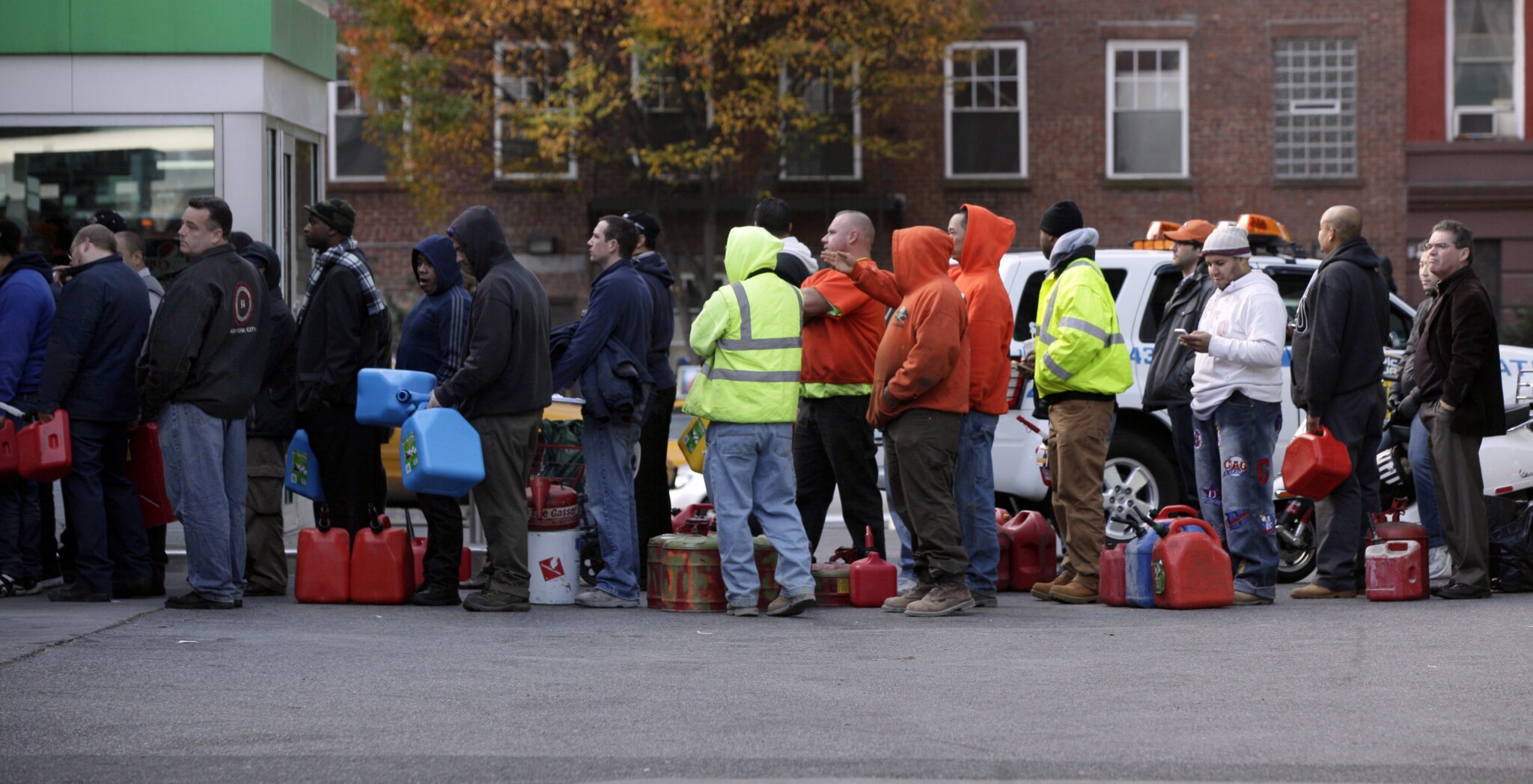
Past is prologue when it comes to oil shocks.
Oil crises rarely surprise us; we just forget the script between acts.
We’ve seen enough of them. Price spikes are triggered by war, revolution, embargo, sanctions, or blockade. Think of the Second World War, the 1973 oil crisis, the Iranian Revolution and Iran-Iraq War in 1980, the 1990 Gulf War, the 2003 invasion of Iraq, and, more recently, Russia’s 2022 invasion of Ukraine.
Shakespeare had it right: What has already happened often sets the stage for what comes next.
So, what comes next in this latest Iranian war?
A historical flashback is found tucked away in a little-known government archive in Ottawa: an original Canadian set of gasoline rationing stamps from 1979.
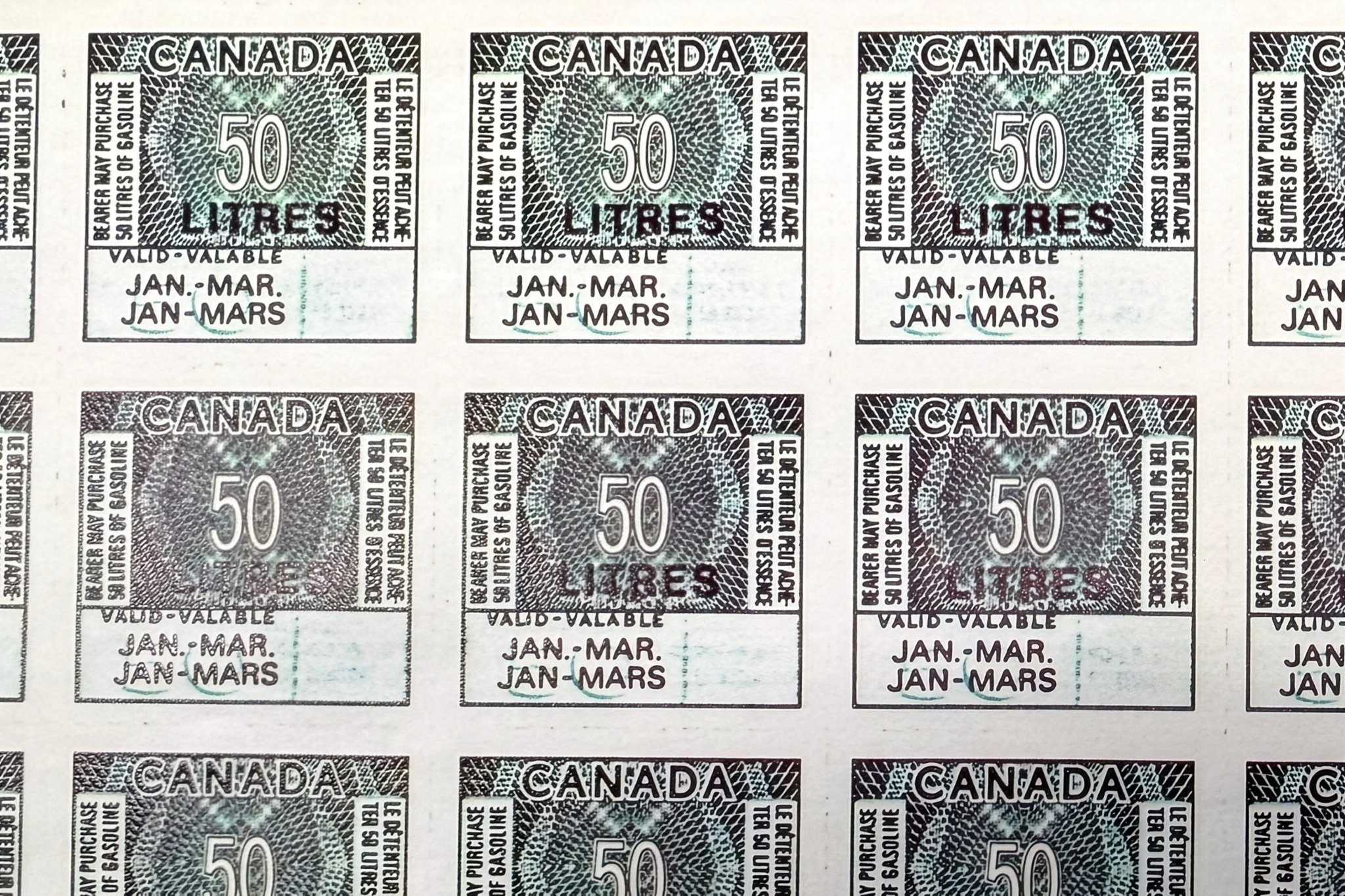
Note: Text in fine print on stamps reads: Bearer May Purchase 50 Litres of Gasoline. Source: Natural Resources Canada.
Back then, government officials had developed a national gasoline rationing system complete with printed proofs of ration books and allocation models. Under moderate shortages, private motorists might receive up to 50 litres; in more severe disruptions, that could fall to about 20. Essential services—ambulances, freight carriers, farmers—would receive priority access.
Canada never mass-printed or distributed these stamps because, fortunately, supply stabilized before they had to. But the stamps offer a glimpse of what one of the upcoming acts could look like if today’s tensions in the Persian Gulf—which have led to the current closure of the Strait of Hormuz, a critical chokepoint in the global oil supply, as well attacks on oil and gas facilities across the Gulf region—extend much longer: rationing, hoarding, and governments stepping in to manage scarcity.

The main acts in an oil crisis
Oil crises tend to move through recognizable acts, much like a story arc in a play.
Act I is the geopolitical jolt—often involving a military threat on an oil-rich stage such as the Middle East.
Act II is the price spike—short and dramatic, followed by the first wave of fear about damage to the global economy. We are well past that stage.
Act III is the scramble—governments, markets, and consumers all adjust in real time to the same uncomfortable realization: the world still runs on oil, and supply chains must keep flowing.
Cue the entrance (stage left) of the strategic petroleum reserves.
On March 11, the 32 countries of the International Energy Agency (IEA) announced a coordinated release of roughly 400 million barrels of oil,IEA Member Countries to carry out largest ever oil stock release; IEA; March 11, 2026 the largest ever.
But consider the arithmetic. Roughly 20 million barrels of oil transit the Strait of Hormuz every day—around 20 percent of global oil flows. A back-of-the-spreadsheet calculation suggests that a 400-million-barrel release buys the world something like 20 days of breathing room.
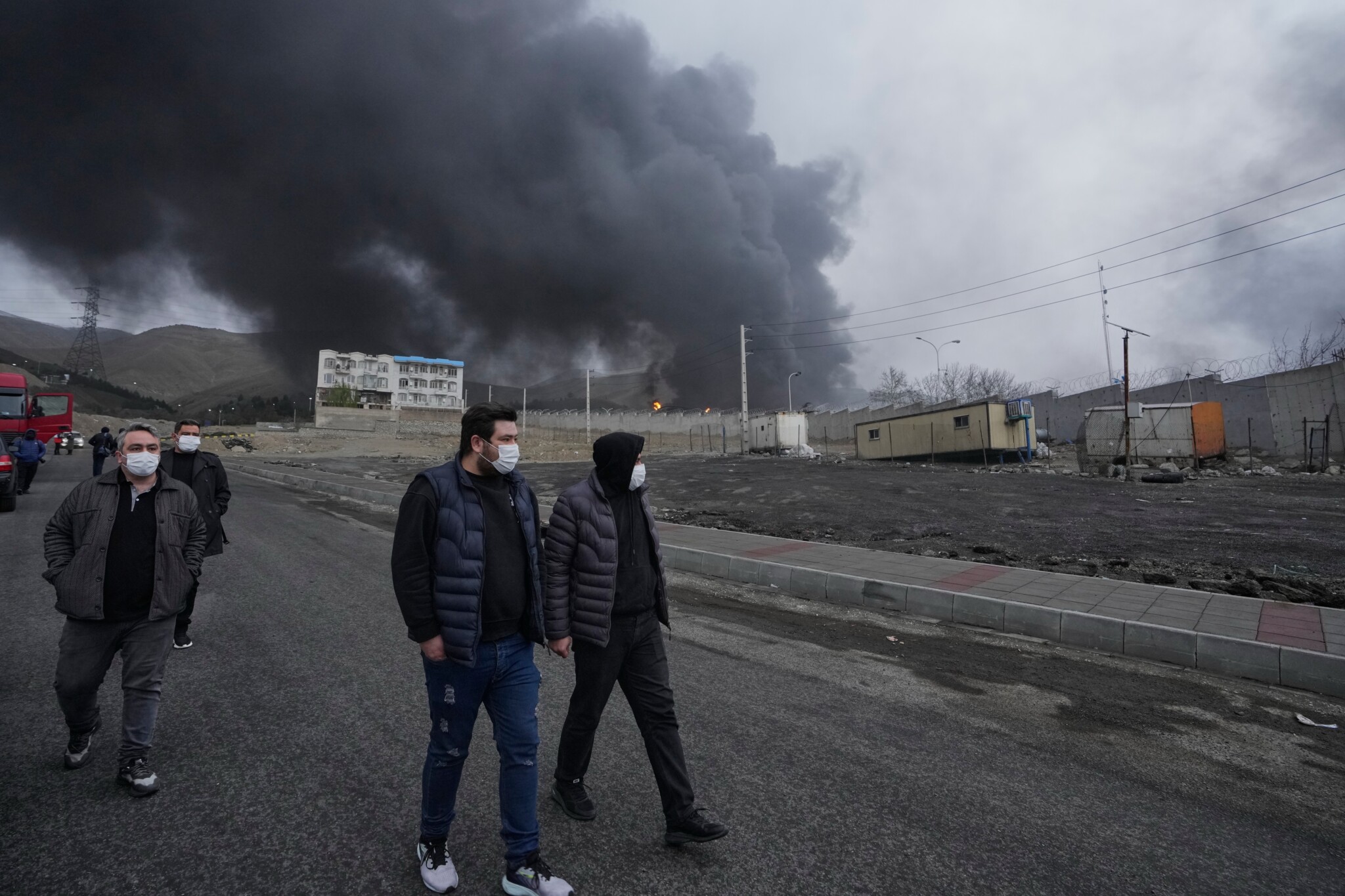
Four men walk as a thick plume of smoke from a U.S.-Israeli strike on an oil storage facility late Saturday rises behind them in Tehran, Iran, Sunday, March 8, 2026. (AP Photo/Vahid Salemi)
In theatrical terms, that’s not a solution. It’s an intermission.
And intermissions are always followed by another act.
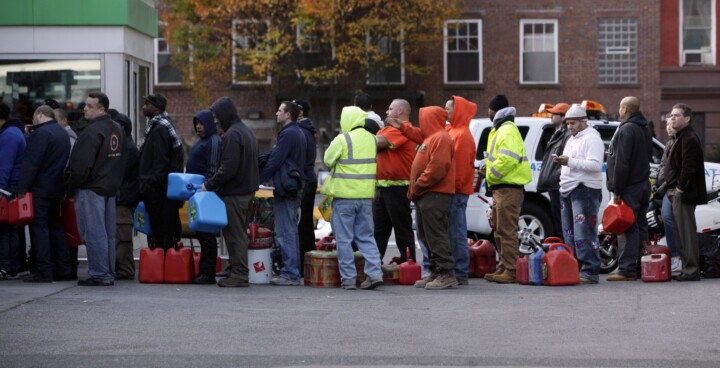
Act IV is the return of rationing and hoarding.
When oil shocks deepen, and markets cannot quickly rebalance supply, policymakers begin reaching for administrative tools—rationing, priority allocation, and consumption controls.
That possibility is no longer theoretical. In Australia, supply fears are triggering precautionary behaviour, with regional businesses and consumers stockpiling fuel. The opposition party is urging the government to invoke emergency powers to ensure supply shortages are prioritized amongst essential services.Supply fears trigger fuel rationing in Australia; Argus; March 9, 2026 China is tightening controls on exports of oil products and other strategic materials, as the country prioritizes domestic supply and seeks to shield its economy from wartime disruptions.China Tightens Export Controls on Strategic Materials Amid Iran Tensions; NTD News; March 7, 2026
When global supply gets suddenly disrupted, policymakers face a dilemma: Should scarce fuel be allocated by price or policy?
The final act: building resilience
We all wish we could leave at the play’s intermission—that there will be a quick resolution to this conflict without further damage to the world’s supply chains and economies.
Unfortunately, even another week of impairing the Strait of Hormuz could well lead to rationing and hoarding, especially in countries that don’t have domestic access to oil and natural gas production.
Canada would seem to be immune, given its status as the fourth- and fifth-largest producer of oil and gas, respectively, in the world.Energy Fact Book, 2025-2026; Natural Resources Canada; February 2, 2026 However, the majority of central Canada’s vital supplies are not sourced from within the nation, but from imports, dominantly from the U.S. Further, post the 1970s energy crises, Canada elected not to create a strategic petroleum reserve for the central provinces, nor did it build cross-country pipelines to be energy self-sufficient.
But there is little dividend in endlessly litigating what could or should have been done decades ago. The more constructive question is what Canada should do now and in future to shield ourselves and our allies against such economic malaise.
The answer is not complicated, though difficult to execute quickly. Canada must double down on building durable supply chains for vital commodities—energy, fuels, critical minerals, and the infrastructure that moves them. That means growing domestic production and ensuring that reliable supplies flow nationally and through exports to allies who are calling on Canada for help in building their resilience.
Resilience is now a strategic asset. The lesson of the past 50 years is not that crises repeat like a Shakespearean tragedy. It is that countries with secure, diversified supply systems weather the tragedies far better than those that don’t.
Oil crises follow typical stages: geopolitical jolt, price spike, scramble for resources, and the potential return of rationing and hoarding. It is critically important to build resilient supply chains for energy, fuels, and critical minerals to mitigate the impact of disruptions. While Canada is a major oil and gas producer, its reliance on imports for central Canada and lack of strategic reserves make it vulnerable during the current crisis, precipitated by the conflict in Iran. Canada must increase domestic production and invest in reliable supply chains to bolster national and allied resilience.
Given historical oil crises, what measures beyond strategic reserves might governments implement to manage supply disruptions?
The article suggests Canada isn't immune to oil shocks. What vulnerabilities does it face despite being a major oil producer?
What does the author suggest Canada should do to build resilience against future oil crises and protect itself and its allies?






Comments (0)