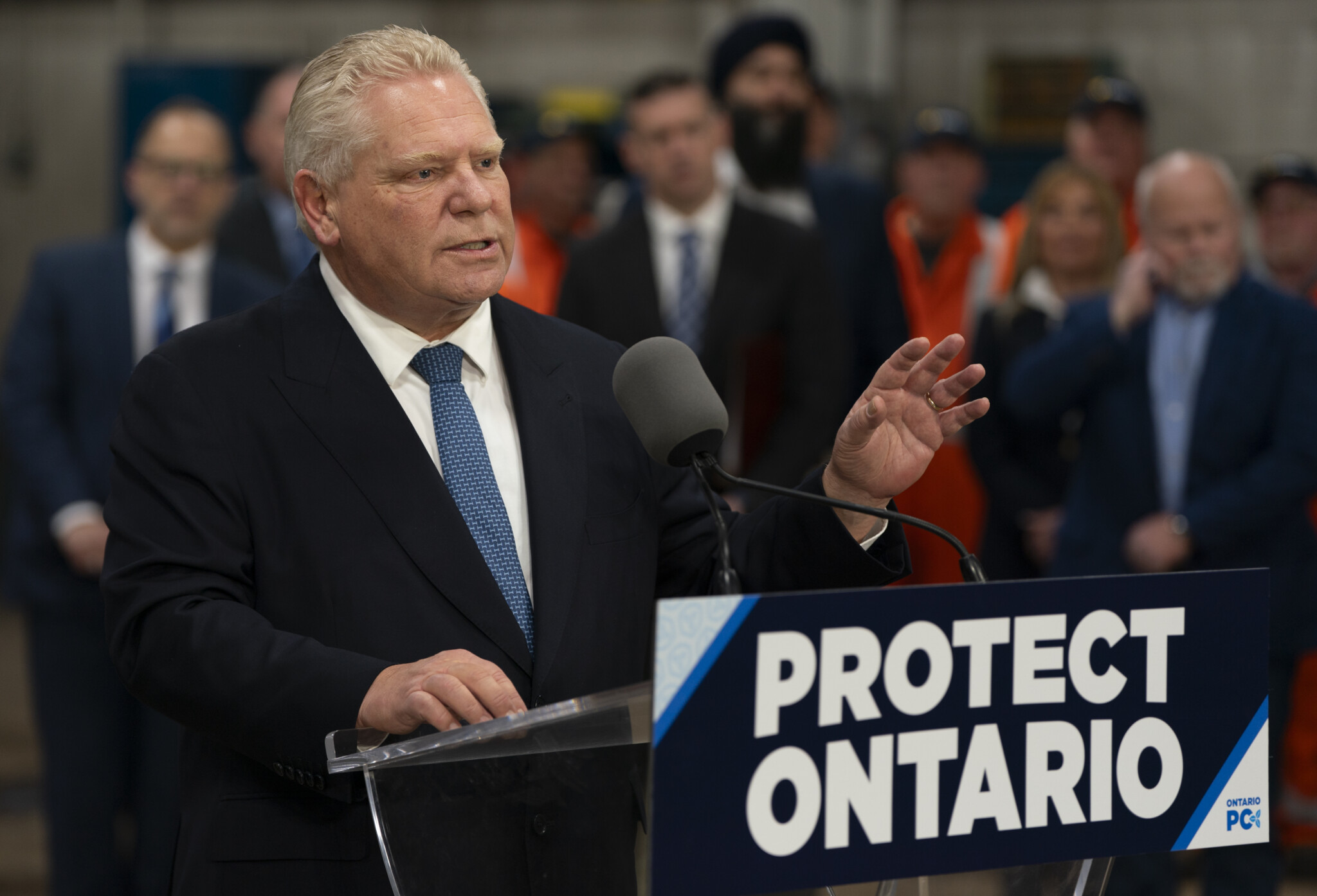
When Finance Minister Peter Bethlenfalvy rises in the Ontario legislature on March 26th to deliver his sixth budget, he will confront an economic picture that bears a striking resemblance to the one that faced federal Finance Minister Michael Wilson almost 40 years ago.
Wilson dealt with an American president who had just rewritten the rules of tax competition, a Canadian tax system that had drifted into complexity and uncompetitiveness, and a window of political opportunity borne from economic anxiety. The parallels to Ontario in 2026 are hard to ignore, and the lessons from Wilson’s response are worth revisiting as Queen’s Park considers its plans.
View reader comments (0)
Wilson’s 1986 moment
In 1986, President Reagan signed the Tax Reform Act that slashed U.S. corporate rates from 46 to 34 percent and top personal rates from 50 to 28 percent. The move threatened to drain investment and talent from Canada. Our tax system had become unwieldy and uncompetitive. The pressure on Wilson to respond was intense.
Wilson responded with the most comprehensive tax reform Canada had undertaken in decades. He replaced 10 personal income tax brackets ranging from 6 to 34 percent with three brackets at 17, 26, and 29 percent. He broadened the base, eliminated many tax carveouts, and introduced an entirely new consumption tax in the GST.
It was controversial and cost significant political capital. But Canada emerged with a simpler, more competitive system that, coupled with provincial tax changes a decade-plus later and federal corporate rate reductions, helped support economic growth through the 1990s and 2000s. As Brian Mulroney later reflected, the question in Wilson’s mind was always: “Is this good for Canada? If it’s good for Canada, we’re going to do it.”

Ontario’s challenge today
Ontario today faces a version of the same challenges. Trump’s tariffs have created immense uncertainty, operating like an invisible tax on the economy. When the rules keep changing, businesses hesitate to expand, new ventures get paused, and capital flows elsewhere. And his administration’s corporate tax incentives, permanent personal tax changes through the One Big Beautiful Bill Act, and deregulation campaign have made the United States more attractive to the mobile capital and talent Ontario desperately needs.
The underlying economic picture in the country and province was challenging even before factoring in the current trade war and geopolitical shocks. Canada’s real GDP per capita was stagnating and falling behind peer countries. Canada fell to 19th among OECD countries and to 71 percent of the U.S. level, down from 83 percent a decade ago. We are, for the first time, below the OECD average. Business investment per worker has dropped to just 55 cents for every dollar enjoyed by American workers. For machinery and equipment, the tools workers actually use to drive higher paycheques, Canadian workers receive only 41 cents.
The dynamic is familiar: an American tax shock that hits competitiveness, a Canadian tax system that has grown increasingly complex and uncompetitive, and a window of political opportunity created by crisis.
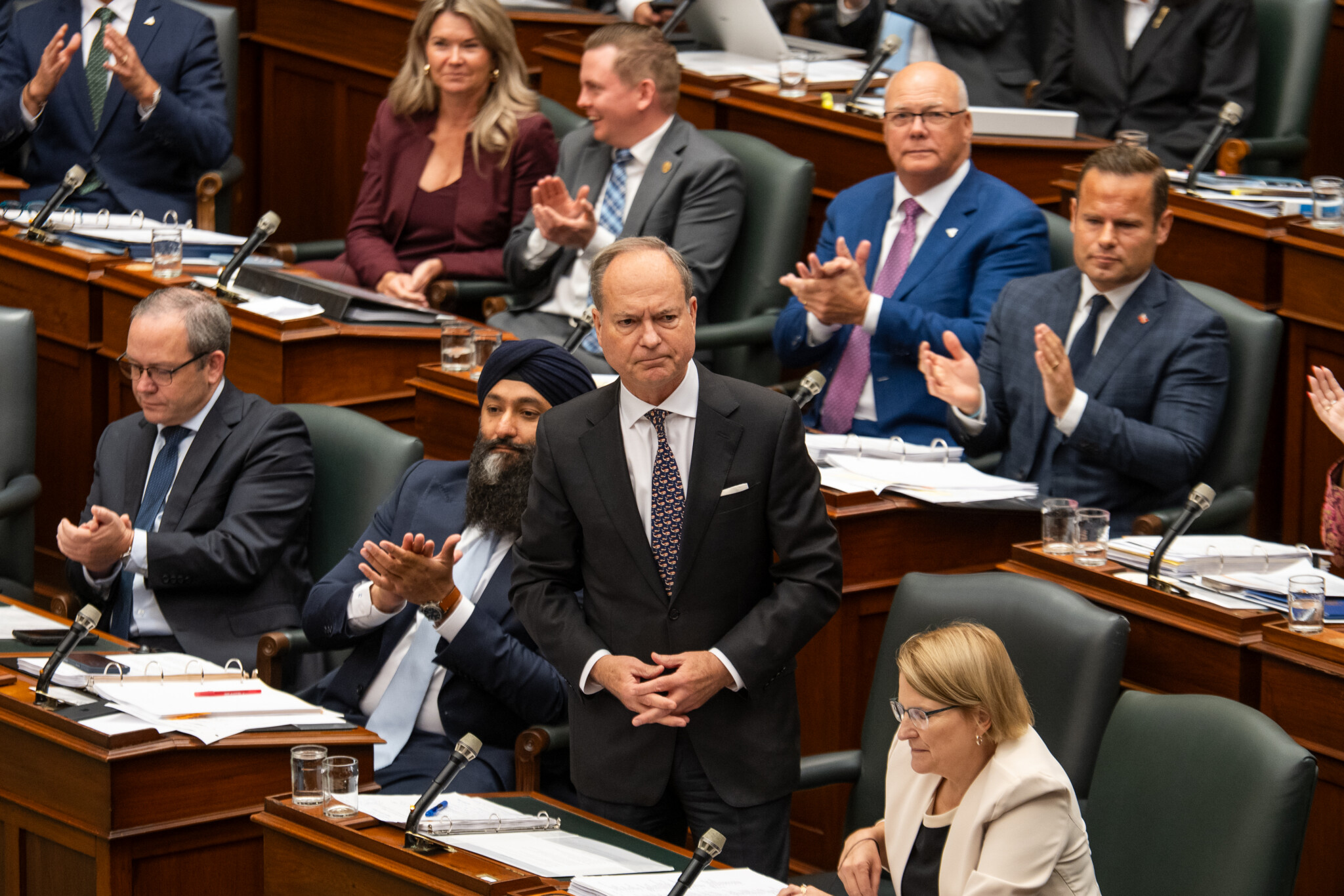
Minister of Finance Peter Bethlenfalvy speaks during Question Period at Queen’s Park in Toronto, on Monday, Oct. 20, 2025. Laura Proctord/The Canadian Press.
Lessons from Wilson’s approach
The Ontario government committed to a “multi-year tax action plan” in its Fall Economic Statement, and the March 26th budget is expected to deliver the early stage and vision. Credit should be given to the government for recognizing the moment.
Wilson’s experience offers three lessons that are directly relevant.
Think comprehensively, not incrementally
Wilson’s reforms worked because they were structural. A boutique credit here and a marginal adjustment there would not send the necessary signal to global capital. The C.D. Howe Institute, the OECD, Deloitte, TD Economics, professional accountants, and many other analysts have converged on the same conclusion: Canada’s tax system needs a fundamental overhaul. That kind of consensus is rare, and it gives a government pursuing such reform significant cover.
Sequence reform and bring the public along
Wilson didn’t drop comprehensive reform on an unsuspecting public overnight. He started with a discussion paper in 1986 outlining reform principles. That was followed by a detailed 1987 white paper proposing specific changes. The 1988 budget implemented the income tax reforms. The GST came later, in 1991, after Canadians had already experienced the benefit of lower income tax rates.
This sequencing was deliberate. Deliver visible benefits first, then introduce the harder medicine. The approach built trust and gave people time to understand the full package. If the March 26th budget lays out a framework and direction, even if some elements require further federal coordination or take years to fully implement, it could follow the Wilson playbook.

Shift the tax mix
The core of Wilson’s reform was trading less efficient income taxes for a more efficient consumption tax. The same logic applies today. Canada as a whole derives less than 22 percent of all government revenue from consumption taxes, well below the OECD average of 31 percent. So there is room to move.
What an ambitious Ontario tax plan would include
Tax policy is a powerful lever, but it is one lever of many. Jumpstarting Ontario’s productivity and economic growth will require bold changes across multiple policy pillars: regulatory modernization, competition policy, trade and transport infrastructure investment, immigration reform, and public sector efficiency. The federal government also plays a big role, not just because the tax system straddles both levels of government, but because many other necessary policy pillars do too. Fortunately, the new administration in Ottawa seems more open to productivity-enhancing reform than its predecessor.
That said, there is plenty Ontario can do on its own. An ambitious provincial tax plan would address several priorities.
Simplify the personal income tax system
Ontario has five statutory tax brackets, but once you layer on the surtax, which adds 20 percent on basic provincial tax above roughly $5,800 and an additional 36 percent above roughly $7,400, the effective number of rate tiers balloons to about seven. It is needlessly complex. Most Ontarians cannot calculate what they actually owe without professional help.
The top combined federal-provincial rate in Ontario reaches 53.53 percent, fifth-highest in the OECD. The Carter Commission stated decades ago that rates should stay below 50 percent, on the principle that no government should take more than half of what a citizen earns on the incremental dollar. Ontario is past that threshold, partly the result of Ottawa’s four-point increase to the top federal rate in 2016.
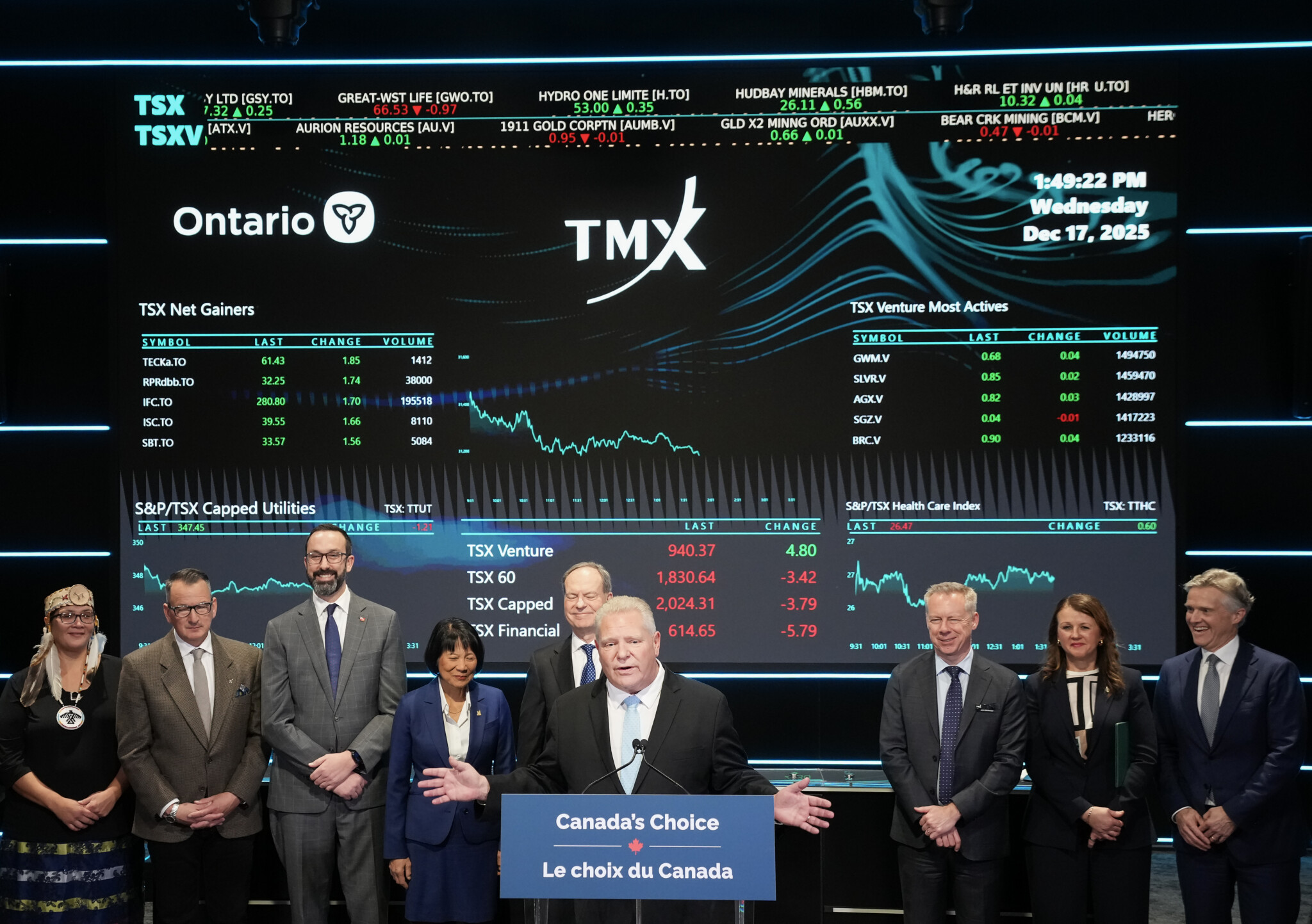
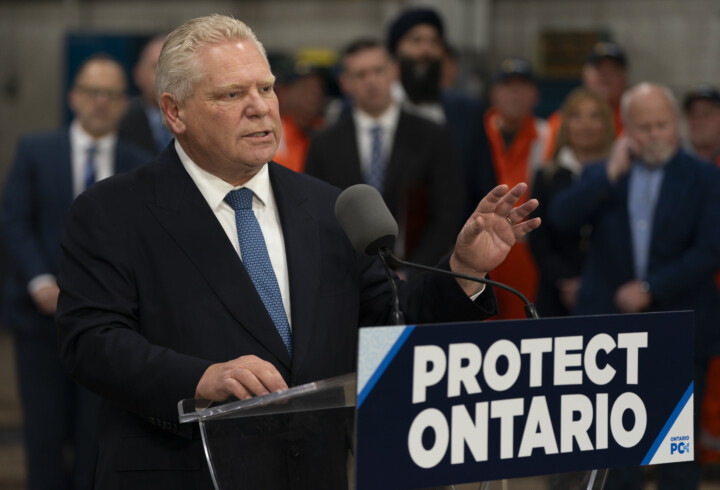
Ontario Premier Doug Ford speaks at a press conference in Toronto on Wednesday, Dec. 17, 2025. Nathan Denette/The Canadian Press.
The two highest Ontario brackets, at $150,000 and $220,000, are not indexed to inflation and have not increased in over a decade. Every year, more highly skilled Ontarians get pushed into higher brackets simply because prices have risen. It’s a stealth tax increase, and it should end.
An ambitious plan would compress the effective seven tiers down to three or fewer, bring the top combined rate well below 50 percent over time, and raise the income thresholds at which the higher rates apply. For context, the top federal rate in the United States applies at over $850,000 CAD. Ontario’s top provincial rate hits at $220,000. That gap is costing the province talent, particularly as it seeks to attract and build its tech, AI, energy, critical minerals, advanced manufacturing, and defence sectors.
Make corporate taxes more competitive
Ontario’s general corporate rate of 11.5 percent, combined with the 15 percent federal rate, produces a combined 26.5 percent. That was once competitive. It isn’t anymore. Canada’s combined corporate tax rate now sits at or above the U.S. rate and OECD average. Both the provincial and federal rates need to come down. Being middling isn’t good enough for a small open economy facing hostile tariff threats. We need a corporate tax system that acts as a calling card for investment, not one that blends into the pack.
Ontario should also consider a permanent, broad-based investment write-off, allowing businesses to deduct the full cost of capital investment in the first year. This is far superior to the federal government’s approach of narrow, temporary, sector-specific incentives that are politically driven and add complexity. A broad, permanent write-off sends a clear message: invest in Ontario.
The small business tax rate also deserves re-examination. It’s well-intentioned, but it creates a “tax cliff” that discourages firms from scaling up. When a small business in Ontario crosses the threshold, its combined fed-prov tax rate more than doubles, from 12.2 to 26.5 percent. So firms stay small, splinter into multiple entities, or limit their growth deliberately. This is not the kind of incentive that firms need to grow.

How to pay for it
This is always the hardest question, and Ontario’s $13.4 billion projected deficit makes it harder. All the serious research points in the same direction: shift the tax mix away from income and profit taxation and toward consumption taxes or even social contribution taxes.
Raising the HST (and ending the growing list of exemptions) is politically difficult for any government. But it deserves serious consideration as part of a package that delivers meaningful income tax relief, which is the same logic that underpinned the GST. Everything costs a little more at the register, a hard pill to swallow in the current affordability environment, but working Ontarians keep substantially more from their paycheques, and lower-income households can be protected through enriched transfers.
The key is to couple a potential increase with more comprehensive tax reforms. The case for this shift only strengthens as Ontario’s population ages. Retirees consume but don’t earn employment income, making consumption a more stable tax base than wages.

If there’s no appetite for that conversation, the alternative must include a thorough overhaul of Ontario’s thicket of provincial tax credits, the dozens of narrow carve-outs for specific activities that have accumulated over decades. Many are poorly targeted. Eliminating them would broaden the base and create fiscal room for rate reductions.
A genuine spending review should also be part of the equation, a line-by-line examination of every ministry’s budget to create additional fiscal capacity for reform.
The window is open
Wilson’s experience also offers a counterintuitive political insight: comprehensive reform can actually be easier to advance than piecemeal changes. When reform is incremental, opposition concentrates around each individual measure. When the package is broad enough that most people gain something, the coalition in favour grows larger than the coalition against.
This is encouraging for Ontario. The Fall Economic Statement’s multi-year tax action plan suggests an appreciation for a sustained, sequenced approach. The March 26th budget is an opportunity to lay the foundation for that kind of vision.
Forty years ago, Wilson chose ambition over caution. Canada emerged with a tax system that supported growth for two decades. The political costs were real. But the economic dividends were undeniable. Ontario faces a similar moment and has an opportunity to seize it.
Ontario needs a bold, comprehensive tax reform plan to spur economic growth and counter economic threats from the United States. The province’s current tax system is complex and uncompetitive, hindering investment and talent attraction. Simplifying the personal income tax system, making corporate taxes more competitive, and shifting the tax mix towards consumption taxes are all key, alongside implementing a sequenced approach to reform, starting with visible benefits and building public trust.
How could Ontario's tax reform mirror Wilson's 1980s reforms, and what are the potential benefits and risks?
What specific tax changes does the author suggest for Ontario, and how would they address current economic challenges?
Given Ontario's deficit, how feasible is a major tax overhaul, and what alternative funding mechanisms are proposed in the article?





Comments (0)