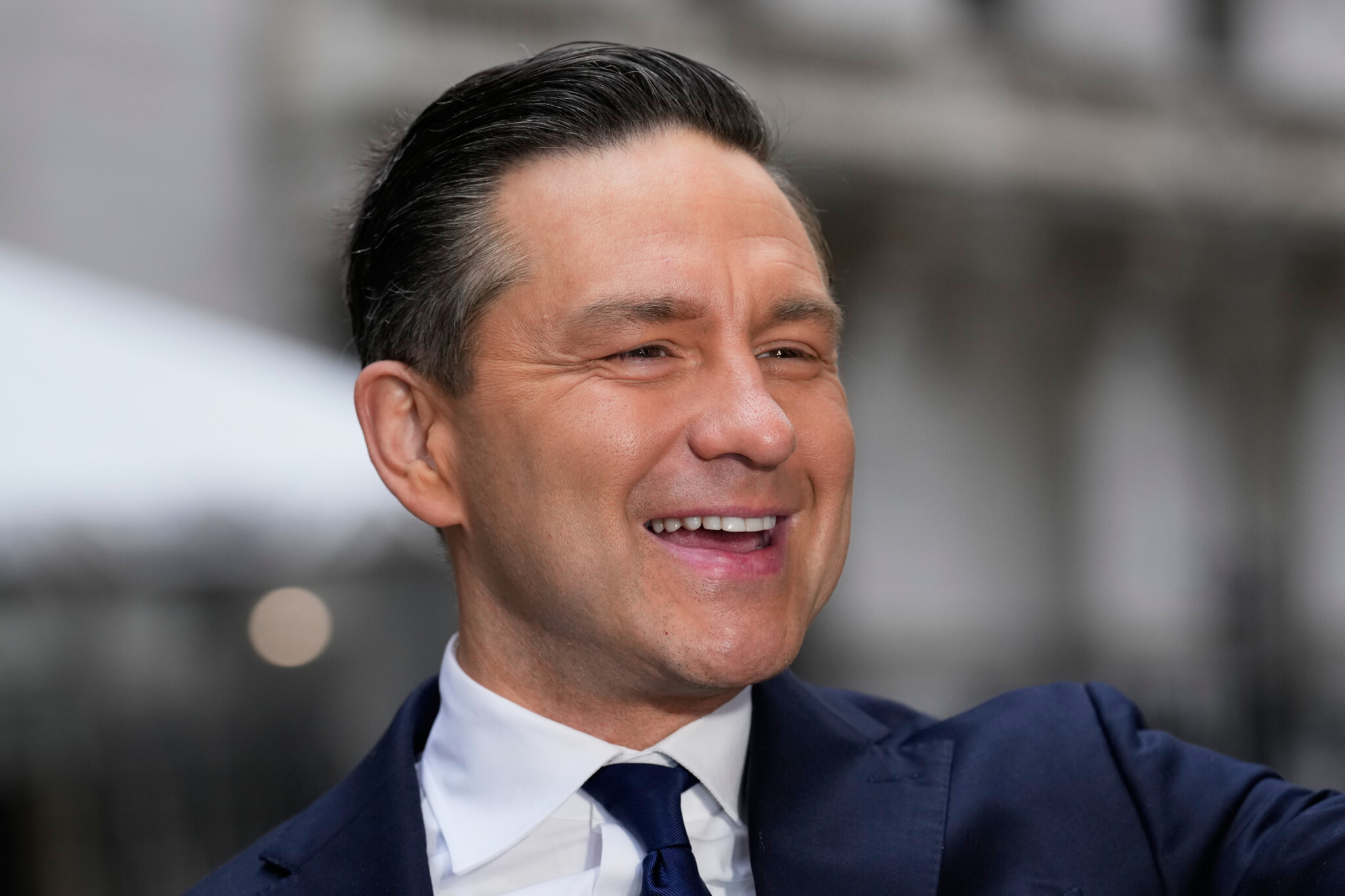
Pundits and commentators have noted a different presentation and tone from Conservative Party leader Pierre Poilievre. There’s a prevailing sense that, in light of his huge favourability deficit relative to Prime Minister Mark Carney, he and his team have sought to improve his image with a so-called “charm offensive,” including his viral interview with U.S. podcaster Joe Rogan.
We tested this political intuition about Poilievre’s recent content and tone, and the results affirm people’s perceptions. Using transcripts from Poilievre’s post-election media appearances—speeches, press conferences, and news and podcast interviews—his rhetoric is scored on a net sentiment index: positive, aspirational language minus negative attacks. This score is expressed as a “negativity rate” per hundred words of speech (words spoken by hosts, moderators, or reporters are taken out and scored separately, though obviously they influence the content of Poilievre’s responses). The results show that Poilievre has made a notable change in messaging and presentation.
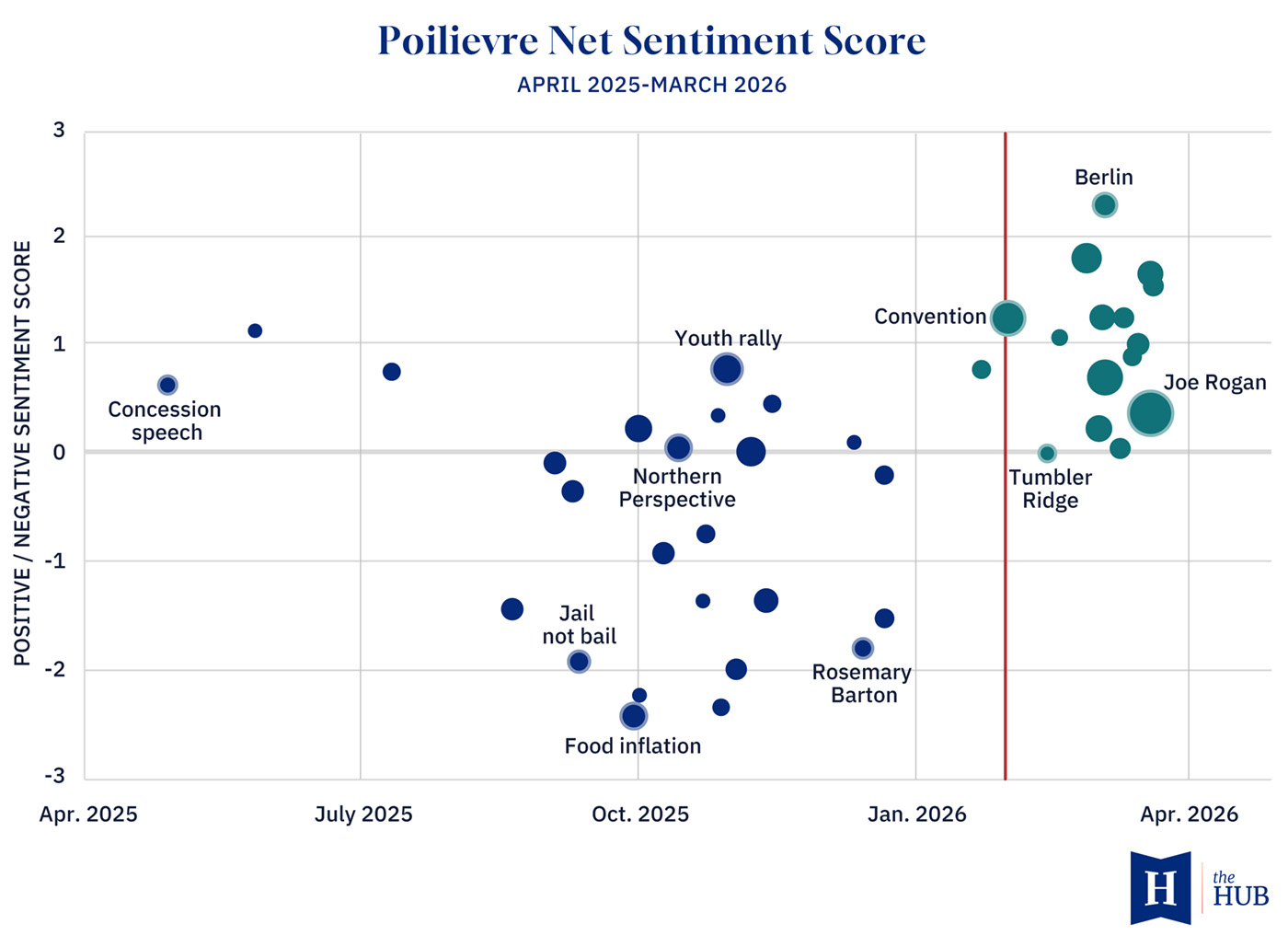
Graphic Credit: Janice Nelson.
The clear turning point in the data occurs during the lead-up to the Conservative convention in January 2026. In the 40 weeks between the 2025 election and the convention, Poilievre delivered public comments once every two weeks, averaging about one attack every one to two minutes (net sentiment score: −0.53). In the seven weeks since the convention, Poilievre is making public appearances at five times the rate, and his mean sentiment score jumps to +0.97.
This shift in tone is roughly equivalent to the difference between Poilievre’s most combative press conferences and his Nov. 7 “fireside chat” with investor Michael Liebrock at the Economic Club. Poilievre’s recent net positivity is all the more remarkable considering his increasing mentions of Trump and tariffs, both of which score negatively on the sentiment index.
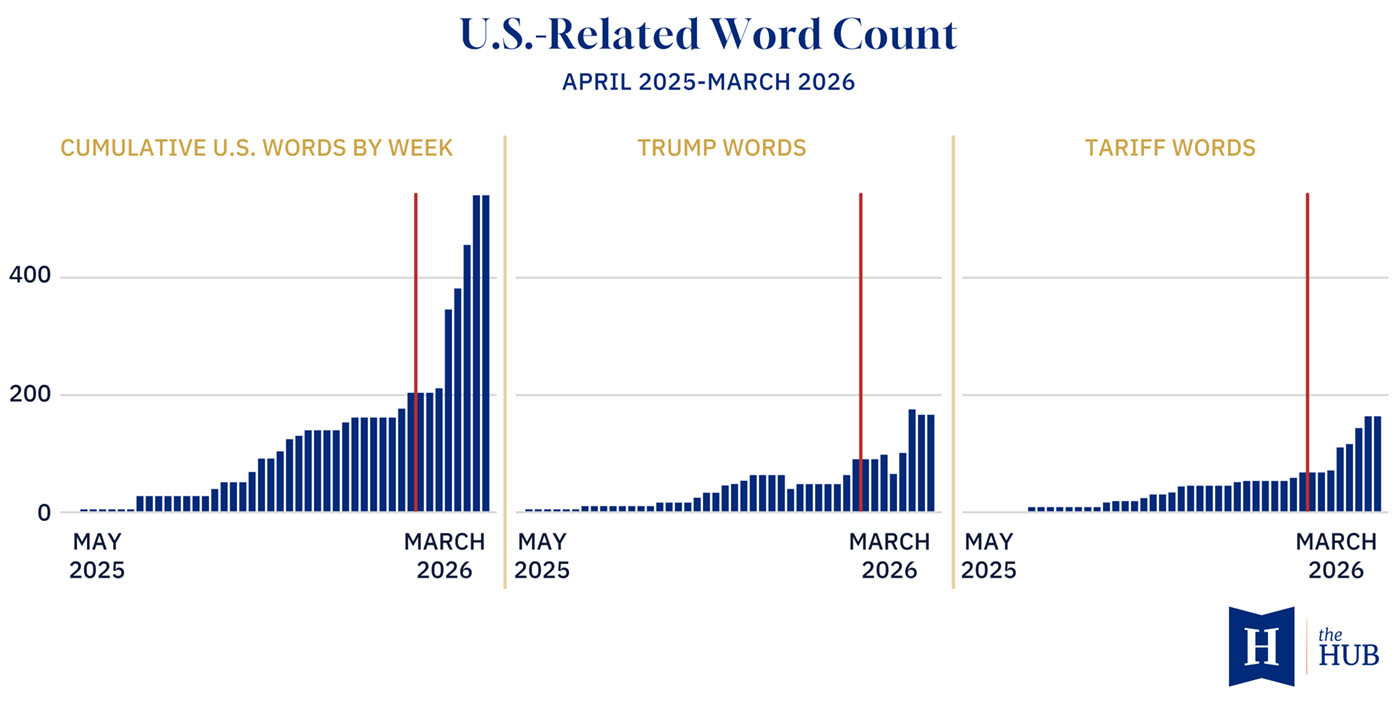
Graphic Credit: Janice Nelson.
Three simple rules for a new leader look
Go away. Almost half (46 percent) of Poilievre’s negative scores are direct attacks on Justin Trudeau, Mark Carney, and the Liberals; Poilievre is more positive abroad because foreign audiences don’t know or care about ex-prime ministers or Canadian party politics. What remains is sovereignty language, national pride, and alliance-building language, all of which score highly on the sentiment measure. Poilievre’s Berlin speech at the Konrad Adenauer Foundation, extolling Canadian natural gas, receives the highest sentiment score in the data (+2.29).
Kiss up, don’t kick down. If Poilievre sometimes comes across as haughty or smart-alecky, one way to keep him positive is to put him in front of more established hosts or audiences. This strategy is not without its drawbacks, but Poilievre delivers a more positive message before moderated elite audiences than in his own speeches or any kind of media appearance. Poilievre’s speech on Feb. 26 at the Economic Club with questions from a former senior colleague, Lisa Raitt, produced the second-highest sentiment score in the data (+1.99).
View reader comments (0)
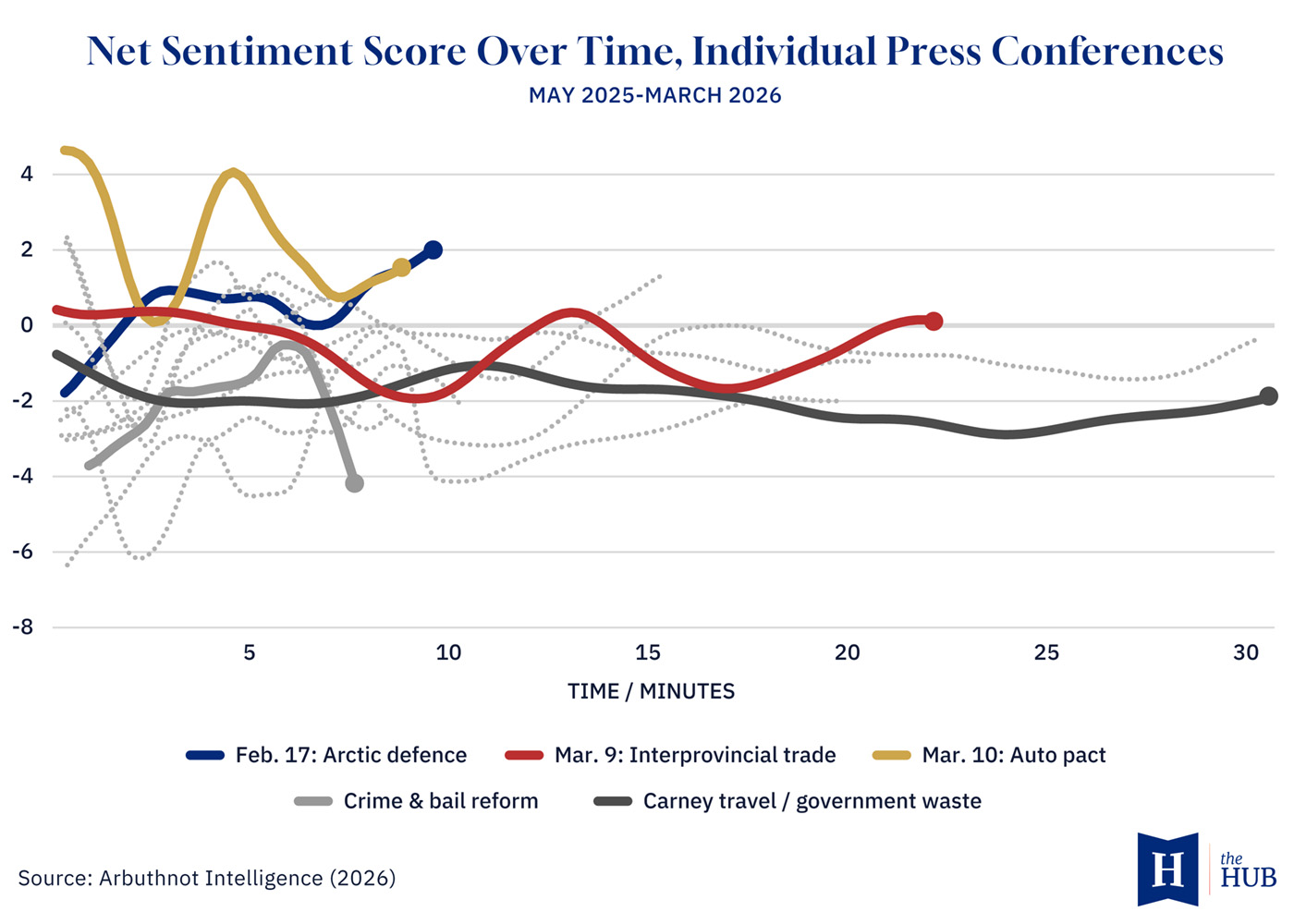
Get out more. On average, press conferences are Poilievre’s most negative format. In particular, fall 2025 represented a period of negative appearances powered by eight strongly negative press conferences where Poilievre stands in front of the House of Commons and criticizes Liberal failure. But in 2026, Poilievre put together a string of positive-sentiment press conferences by getting out of Ottawa and delivering remarks on specific policies like inter-provincial trade, the auto pact, and strategic energy and critical-mineral reserves. Instead of standing alone at the podium, he is flanked by his hosts or Conservative MPs, and invites them to speak. He brings props and banters with the media. Starting in February 2026, he starts overruling event hosts to take every question.
Is the mainstream media biased?
Defenders argue that Poilievre comes across negative owing to persistently negative mainstream media coverage. The CBC has been a particular target of Conservative ire: Poilievre has called it “liberal propaganda,” made defunding the CBC part of the Conservative platform, and barred Conservatives from appearing on the network for long stretches of his leadership.
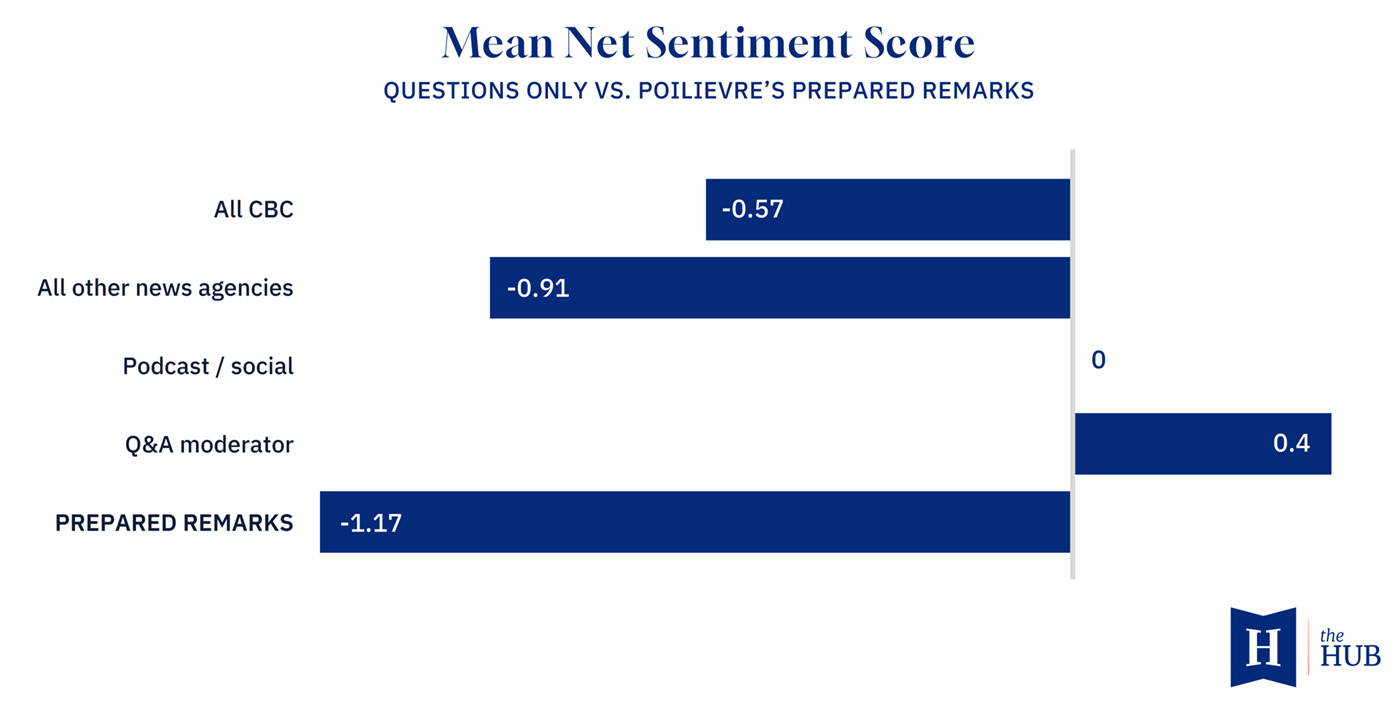
Graphic Credit: Janice Nelson.
The data suggest a more nuanced answer: the mainstream media are negative, but almost never more negative than the leader they’re questioning. A separate sentiment analysis of all 517 English-language questions posed to Poilievre shows that the Ottawa press corps (mean sentiment score: -0.13) does ask more negative questions than do podcast hosts (+0.0) or Q+A moderators (+0.4). But CBC questions are actually more positive (net sentiment score -0.57) than those from other networks (-0.91).
But the cause of persistent press gallery negativity is arguably Poilievre himself—and not necessarily just because of his combative style or tone, but because of the topics he touches on. Press conferences are preceded by 10-15 minutes of prepared remarks; in fall 2025, Poilievre held press conferences on the housing crisis, food inflation, violent re-offenders, and Carney’s failures in the budget and on trade. In these remarks, Poilievre’s mean sentiment score is -0.73, while the questioner’s mean sentiment following them averages -0.26. As far as these appearances are concerned, Poilievre out-attacks his own press corps by an insult a minute even before a single question can be asked.
Graphic Credit: Janice Nelson.
A change in supporting cast and setting precipitated the starkest format-specific reversal in the data: before the Conservative convention, Poilievre’s nine press conferences were the most negative of any format (mean sentiment score: -1.04), while three post-convention press conferences (+0.85) were more positive than his speeches, interviews, or even moderated appearances.
How durable is Poilievre’s new, positive image? Is it truly a reinvention, or is it a political calculation owing to differences in audience, format, or political polling? Only Poilievre can know.
Read more at https://arbuthnotlab.substack.com/
Conservative Party leader Pierre Poilievre has shifted his tone and presentation in a deliberate “charm offensive” to improve his image. Using a net sentiment index to score Poilievre’s rhetoric in post-election media appearances, analysis reveals a significant change after the Conservative convention in January 2026. Before the convention, Poilievre’s rhetoric was more negative, characterized by frequent attacks. Since then, his public appearances have increased, and his sentiment score has become more positive.
How has Poilievre's messaging changed since the 2025 election, and what data supports this shift?
Does the data suggest mainstream media bias against Poilievre, or is there another explanation for negative coverage?
What strategies has Poilievre employed to improve his image, and what are the potential drawbacks of these approaches?




Comments (0)