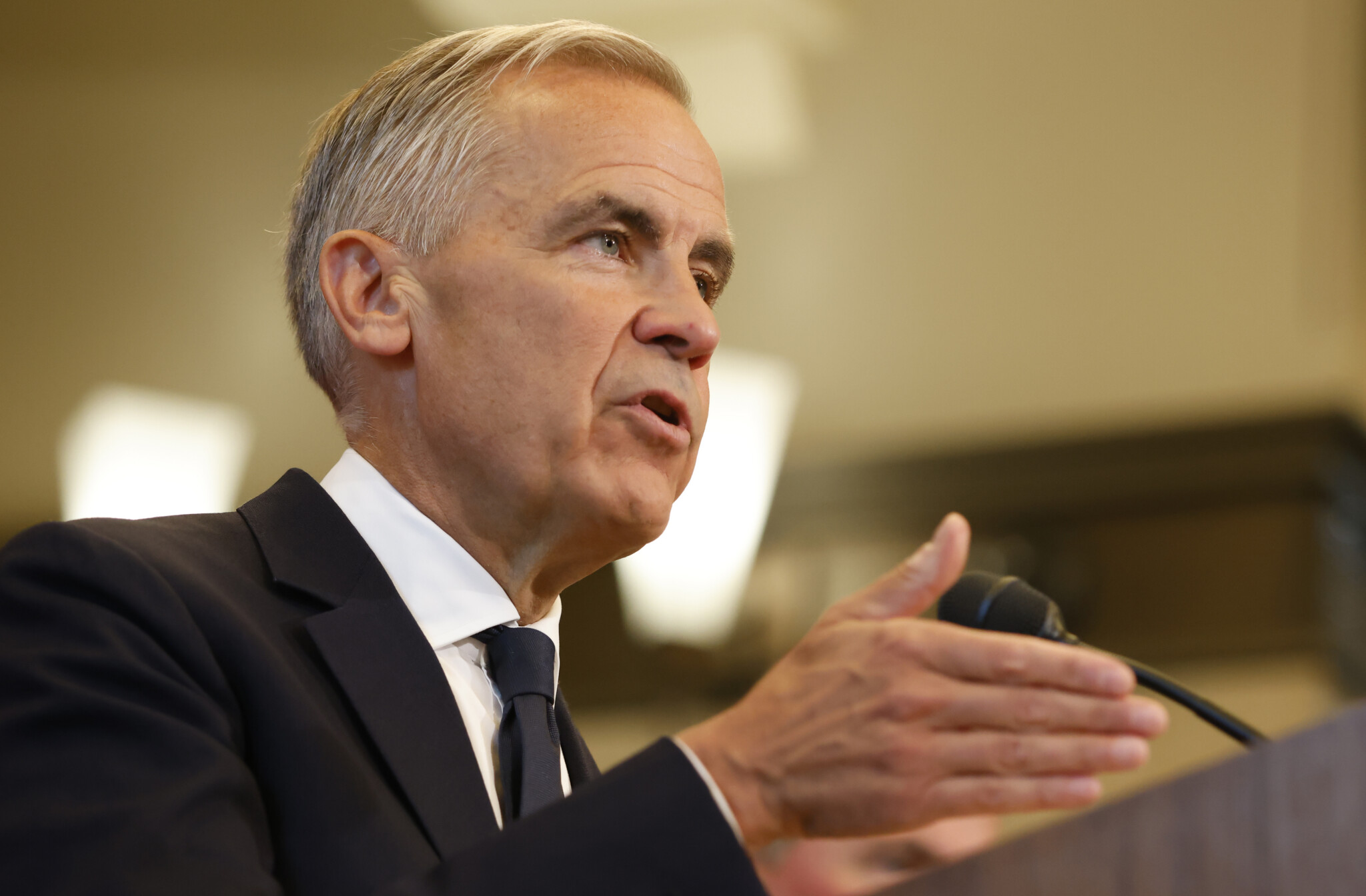
Prime Minister Mark Carney will address the European Parliament in Strasbourg next month and attend the European Union’s State of the Union address on Sept. 16, part of a diplomatic push to deepen trade ties beyond the U.S. after Canada-U.S. negotiations collapsed. The government said the outreach will bring greater security and long-term prosperity—but critics say Carney is courting European lawmakers while refusing to recall Canada’s own Parliament in the middle of a trade crisis he himself has likened to a war.
The invitation came from European Parliament President Roberta Metsola, and the Prime Minister’s Office confirmed Wednesday that Carney has accepted and will address the chamber in Strasbourg, France. His speech is scheduled for the day after European Commission President Ursula von der Leyen delivers the EU’s annual State of the Union address. The PMO said the prime minister’s engagement with Europe since the election is building Canada’s position in a shifting global environment and will produce lasting economic and security benefits.
The trip will take place before the House of Commons returns to debate the escalating dispute with the U.S., and the PMO has confirmed Parliament will not be recalled early despite Conservative demands for an emergency debate after talks broke down. Conservative deputy leader Melissa Lantsman asked on social media whether the plan was “for real,” saying a prime minister who describes the country as being at war should not fly to Strasbourg while declining to summon the legislature of the nation he described as under attack. A PMO official noted Carney spoke to Canadians about the collapse of negotiations in a speech and news conference on Saturday, a day after they fell apart.
“Parliament exists to hold government accountable, and a crisis of this scale is exactly when that accountability matters most, not something to defer for a month thinking that one press conference will do the trick,” Lantsman said.
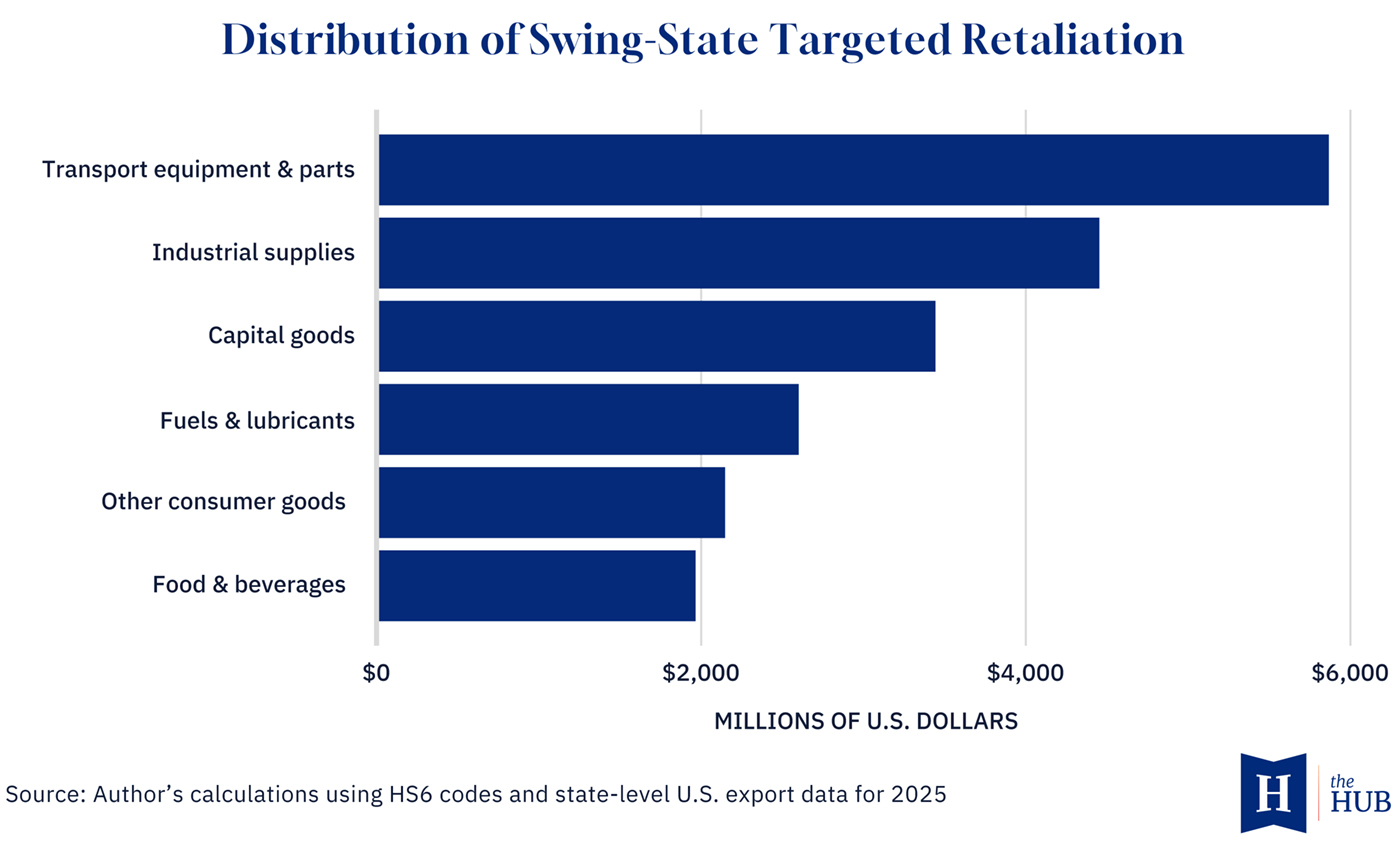
The diplomatic announcement landed amid escalating rhetoric on both sides of the border. Ottawa has laid out a strategy to retaliate against $27.6 billion CAD in U.S. products, with countermeasures set to take effect Sept. 8. U.S. President Donald Trump said that Canada has little the U.S. cannot source elsewhere: “I mean, there are a couple of things that would make it a little inconvenient, but we can get them elsewhere. And it’s time to teach Canada you can’t do this any more.”
Whether the European outreach amounts to a genuine strategic pivot or a symbolic gesture has been a running question in Hub commentary on the government’s foreign policy. Rudyard Griffiths, the publisher of The Hub, has argued that Carney’s international positioning often delivers visibility without requiring Canada to commit real resources. “…There is a more cynical, and perhaps more accurate, interpretation: this is foreign policy on the cheap,” he wrote, observing that gestures costing nothing in blood or treasure still pay “soft power” dividends.

Other analysts contend the larger economic gains lie at home rather than abroad. Kevin Lynch, writing in The Hub, and James R. Mitchell, a former senior official in the Privy Council Office, noted that while the prime minister has abolished federal barriers to internal trade, he has spent little political capital pressing the provinces to follow. “Yet eliminating internal trade barriers would add as much as 3 to 4 percent to Canada’s GDP—more than the list of hyped major projects,” they wrote.
The scale of the diversification challenge is also documented in a Fraser Institute paper by economists Jock Finlayson and Steven Globerman, which found that geography, low cross-border friction and decades of integrated production make Canada’s dependence on the U.S. market extraordinarily difficult to unwind, with freight costs accounting for only about 10 percent of the drag that distance imposes on trade.
Carney’s itinerary also includes a Toronto stop ahead of the European trip: an investor summit at which the federal government will make its case to major institutional investors that Canada remains an attractive place to deploy capital. Ottawa’s countermeasures against American goods come into force Sept. 8.
Prime Minister Mark Carney is set to address the European Parliament in Strasbourg next month as part of a diplomatic effort to strengthen trade ties with Europe following the collapse of Canada-U.S. negotiations. Critics argue that Carney’s decision to engage with European lawmakers while refusing to recall Canada’s Parliament amid a trade crisis is contradictory. The Prime Minister’s Office asserts that this outreach will enhance Canada’s global position and provide long-term economic benefits. However, some analysts question the effectiveness of this strategy, suggesting that internal trade barriers present a more significant opportunity for economic growth.
Ask about this article — or anything in Canadian politics, economics, and public policy — powered by The Hub’s 5,000-article archive and deep area expertise.



Comments (0)