‘Plans always fail first’: Retired soldier Cole Rosentreter on how to fix Canada’s defence procurement
Episode Description
Cole Rosentreter, a retired infantry sergeant turned aerospace founder, joins Alberta Edge to scrutinize Ottawa’s new Defence Industrial Strategy. Drawing on his combat experience in Afghanistan and his work developing icing-detection technology now used on Canada’s Chinook helicopters, Rosentreter argues Alberta’s industrial depth and extreme-weather expertise positions it to play a central role in Arctic security. The opportunity is significant, he says—but only if procurement reform and political will keep pace.
This podcast is generously supported by Don Archibald. The Hub thanks him for his ongoing support.

Episode Summary
As geopolitical competition intensifies in the Arctic, Ottawa’s new Defence Industrial Strategy faces a simple test. Can it deliver real capability?
On Alberta Edge, retired Princess Patricia’s Canadian Light Infantry sergeant turned aerospace founder Cole Rosentreter contends that while the funding is significant, Canada’s defence gap stems from slow procurement and stalled execution—lessons shaped by his time in combat and training, as well as his current work in extreme-weather aviation technology as CEO of Pegasus.
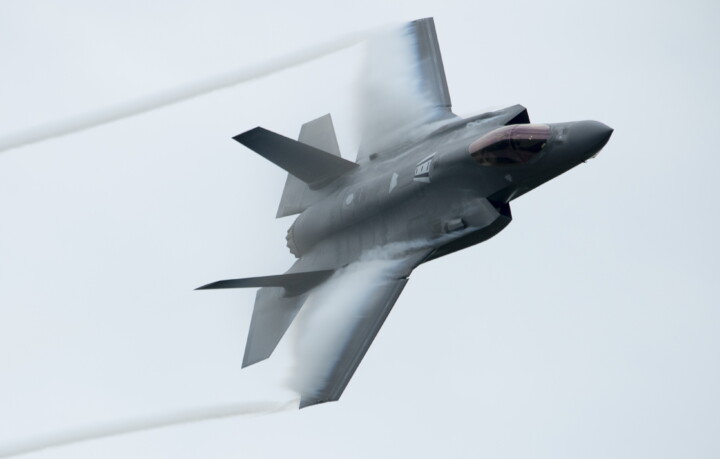
The federal government’s strategy promises tens of billions in new defence spending, a stronger domestic industrial base, and a push to direct more procurement to Canadian companies. But Rosentreter warns that large dollar figures and sweeping announcements mean little without structural reform. In his view, Canada’s procurement system remains too slow, too risk-averse, and too prone to political theatre. He points to the country’s repeated revisiting of major platform decisions, including fighter jets, as an example of how delay can undermine capability. In an era of heightened instability, he argues, speed and clarity matter more than rhetorical positioning.
The conversation quickly turns north. As the Northwest Passage becomes more accessible, Rosentreter says the region is no longer a distant frontier, but an emerging strategic arena. Russia has invested heavily in Arctic military infrastructure, and China has declared itself a “near-Arctic power.” Canada, by contrast, struggles to project sustained presence across its vast northern territory. Rosentreter describes Arctic operations as logistically unforgiving and technologically demanding, underscoring that sovereignty will never be secured through more maps and statements.
At the same time, he sees opportunity—particularly for Alberta. The province’s industrial base, built around oil and gas, mining, and advanced manufacturing, possesses skills and certifications that are often transferable to aerospace and defence. Combined with strengths in artificial intelligence research and engineering talent, Rosentreter argues Alberta could play a larger role in national defence if procurement pathways were more accessible to innovative firms.
His own company’s work in extreme-weather aviation—tackling in-flight icing through adaptable sensor systems—began as a practical solution to operating drones year-round in harsh Canadian conditions. That technology now supports military aviation, illustrating how local problem-solving can evolve into national capability.
Ultimately, Rosentreter contends that Canada must “be brilliant at the basics.”


Comments (0)