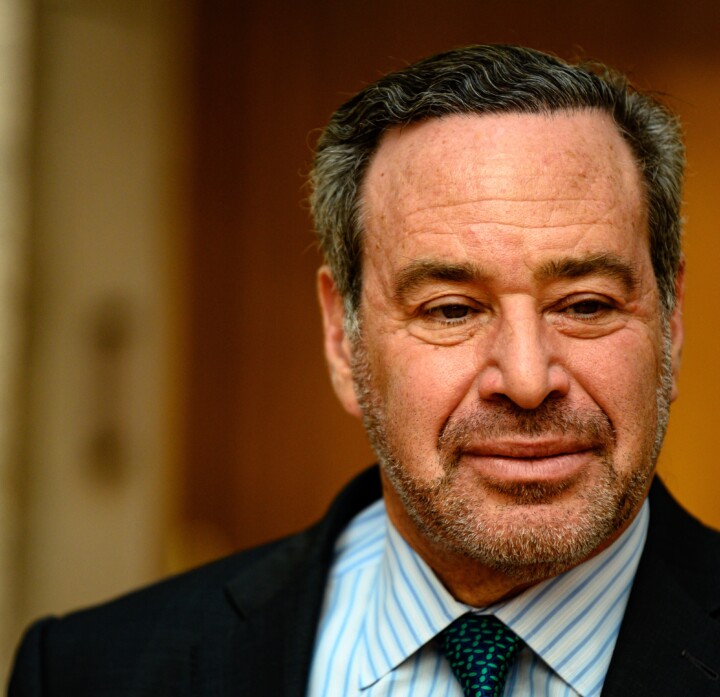
‘Trump wants a weaker Europe severed from North America and at Russia’s mercy’: David Frum on Trump’s approach to Putin and the Russia-Ukraine war
Leading author, journalist, and thinker David Frum and The Hub’s editor-at-large Sean Speer discuss Trump’s gathering of European leaders in the White House and its significance for the Russia-Ukraine war and America’s relationship to the world more broadly. In the second half of the show, they discuss the deterioration of Canada-U.S. relations due to Trump’s tariff and immigration policies, highlighting a significant drop in Canadian tourism to popular destinations like Las Vegas.
If you liked what you heard in the first half of the program and wish to subscribe to full-length editions of In Conversation with David Frum, please consider becoming a Hub Hero. Hub Heroes also gets access to all our paid content on TheHub.ca. All these benefits are conferred for one year. Sign up now!
Program Transcript
This is an automated transcript. Please check against delivery.
SEAN SPEER: Welcome to In Conversation with David Frum. I’m your host, Sean Speer, editor-at-large at The Hub. I’m grateful to be back in conversation with David for another installments of our bi-weekly video and podcast series on the key issues concerning Canadian policy and politics. In the first half of today’s show, free for all listeners and viewers, we’ll discuss President Trump’s gathering of European leaders in the Oval Office and its significance for the war in Ukraine and America’s relationship to the world more broadly. On the second half of the show, exclusive for the Hub’s heroes and fellows, we’re going to talk about some of the nascent signs of the harms of Trump’s tariffs on the Canada U.S. economic relationship, including, perhaps somewhat counterintuitively, rising unemployment in Las Vegas. David, thanks for joining us, as always.
DAVID FRUM: Thank you.
SEAN SPEER: We have to talk about this major meeting of European leaders in Washington this week. What, in your view, was the significance of the meeting and the group of leaders, including President Zelensky traveling to Washington together on the Ukraine file. What’s your mental model for thinking about it?
DAVID FRUM: I think you should see this as a massive vote of non confidence in the Trump administration’s leadership by all the NATO, European allies. President Trump arranged this meeting in Alaska with Vladimir Putin, which was a shocking, shocking meeting in so many ways. It’s shocking in that there’s supposed to be diplomatic isolation of Putin to punish him for his atrocities in Ukraine. When the United States president and the Russian leader meet for face to face, the rule of thumb has always been they meet in a third country unless relations are unusually warm. That inviting a Russian leader to American soil is a sign of friendliness and warmth and things going well. So it’s a, it’s an extra honor that that was remarkable. Having it on soil that Russian chauvinist nationalists claim is properly theirs is even more outrageous. And then finally, there was no staff work, there was no preparation. And Trump emerged from the meeting repeating Russian propaganda about Ukraine more abjectly and dogmatically and robotically than ever. Vladimir Zelensky had asked for a. He’d asked to be president, President. He’d asked for a briefing afterwards. Instead, he got a summons to Washington. European leaders, remembering what happened the last time Zelenskyy was summoned to Washington, arrive in a phalanx to say, we are here as a body because we don’t trust you. We think you are going to repeat Russian propaganda at our friend, our ally, Zelensky, and we are here to protect them from the supposed and Former leader of NATO. You. And we have seen in the time since that meeting, the Trump administration is indeed following evermore the Russian line. It was as if Vladimir, as if Vladimir Putin’s brain hold on Trump had weakened a little bit. So he needed to get there in person to reassert his dominance over Trump. That dominance having been reasserted, we have this big rift in NATO, which is, should Ukraine be abandoned, should it be carved up, should defensive installations be given away? And it is fraught. And it is a visible demonstration of the lack of confidence and the justified lack of confidence in American leadership under Donald Trump.
SEAN SPEER: Yeah.
DAVID FRUM: Yeah.
SEAN SPEER: That’s a fascinating way to think about the meeting. How should we think, David, about the meeting’s outcomes?

DAVID FRUM: Well, I think there’s a lot we don’t know. The Russians have a series of demands on Ukraine, including the demand of the handover of a fortified belt that they have not been able to defeat. When people, I mean, it’s. You can’t compare this exactly to Yalta or to Munich, but one of the things that is kind of a tingling reminiscent of Munich was the reason Hitler wanted the Sudetenland from Czechoslovakia, as it then was in 1938, 39, was not just that he wanted to carve up Czechoslovakia, but the Sudetenland was where the Czech fortifications against Germany were. So when you handed over the Sudetenland, you left the rest of Czechoslovakia absolutely defenseless against Nazi Germany. And in the same way Putin is demanding the areas the Ukrainians have fortified and reinforced against him, he wants them handed over. He’s also making all kinds of other demands. No foreign assistance to Ukraine, the vulnerability of Ukraine. What this has always been about is will Ukraine retain its national independence or not? And Trump, and even more his vice president, are repeating the Putin line. And that’s where we are. We have not yet seen actual concessions to the Russians yet, but the United States continues, and the United States apparently continues to sell weapons to the Europeans to give to the Ukrainians. Trump claims he’s adding a 10% markup, which if true, is appalling. And it’s also worth remembering that while the United States Senate is considering an aid measure of its own to Ukraine, that measure is $800 million. To put that in context, that’s 4/5 of what the United States government is going to spend to fix up the bribe or the gift from the a mayor of Qatar to Donald Trump personally for him to take away from the White House with him for his use after he ceases to be president. So 800 million for Ukraine. A billion to sweeten up the gift from Qatar.
SEAN SPEER: As you say, David, there’s still a lot we don’t know about the consequences of this meeting. But there are reports that Trump has ruled out US Ground troops, but left the door open to air support for European peace, keep European led peace peacekeeping mission. How should we understand that? Is that a meaningful win for Ukraine and Europe or simply the least bad option?
DAVID FRUM: Given Trump’s instincts, I really think that the way we report on this needs a big cold glass of ice water in the face after this meeting. So look what is going. The Trump Putin relationship is so alarming that we actually find ourselves in the Western world unable to face it. And so we, the policy community, the media community, we are suckers for any indication that things are maybe a little less terrible than they look. And so Trump will say he’ll read a letter from Melania about how the Russians shouldn’t kill children, and people will say, ah, this is a pivot. He will say, I’m leaving the door open. That’s not doing it. That’s simply saying all the other terrible things I’m saying. Here’s one thing I am not saying. That doesn’t mean there’s any real help. So when you say, so, he said, no, no, no, no, no, then the question is asked about air support, and he says, I’ll think about it. We’ll think about it very strongly. We’ll think about. We’ll give you an answer in two weeks. All of his usual dodges, but people need to understand, we need to face the reality here, which is that the United States under Trump is moving into alliance with Russia to carve up Ukraine. And the restraint is the diplomatic one of these protests by the European allies. And maybe they will prevail, but if they prevail, it will not be because Donald Trump had some second thought or there’s some part of him that is playing this both ways. He is playing this one way and one way only.
SEAN SPEER: David, I want to read something to you on this broad subject, because it had me thinking this week. I entered the world of conservatism, broadly defined in the early to mid-1990s as a young person. And at that time, there was pretty broad consensus in conservative circles about the Soviet Union and indeed Russia. And although we’ve talked about it in the past, I’m still struck by the extent to which people in and around the president, including, of course, Vice President J.D. vance, are inclined to side with Russia over Ukraine. In these circumstances. I saw something from former conservative Foreign Affairs Minister in Canada Maxime Bernier, who posted on X. The west must realize that Russia won the war. This war would have certainly not happened if Russia had been guaranteed that Ukraine would not join the, join NATO. Canada should never have participated in this war. For lasting peace, Ukraine must be neutral and Russia must be able to keep the conquered territories, unquote. Help our audience members understand where, how and where these ideas manage to infiltrate North American conservatism.
DAVID FRUM: Well, a point to Bernier for using the phrase conquered territories. That, that is a little touch of reality. And, and in whatever dark cave Bernier has locked his brain, it’s, it’s good to see that little chink of sunlight reaching him. That yes, these are conquered territories, invaded territories, yes, you know the why of why. More and more important voices in North American conservatism have ended up here, including to the point where there are some of the most you’ll now hear on important right wing podcasts, that it was a mistake that the United States entered the Second World War against Hitler, that it should have been on the other side. That I mean this, this is as they rehabilitate, as they defend Putin, they also, they show the parallelism by also rehabilitating the Third Reich. I’ve, I wrote an article now, it’s down nearly 25 years ago called Unpatriotic Conservatives in National Review. And it’s like of all the things I’ve done, it’s weirdly one of the most long lasting because the people I wrote about are still mad about it. And if you follow the rule that Bill Clinton used to enunciate, a hit dog will holler. The fact that they’re still hollering a quarter of a century later is interesting. And the thesis of that article was as certain segments of the right lost faith in their own society, as they lost their belief in the vitality and dynamism of North America with all of its racial mixing, multi ethnic multicultural, as they hated that, that they invented this utopia in much the same way that the Communists of the 1930s invented an imaginary workers paradise in the Soviet Union, so they’ve invented an imaginary white man’s paradise in post Soviet Russia.
Now, it’s not true. I mean, even if, look, even if what you want is a white man’s paradise, Russia is not it. The white men of Russia are dying of cancer and industrial accidents at age 58. I mean, and having terrible standards of living. And it’s not that in any way, it’s A more multi ethnic society than the United States. What are you talking about? But it exists in their brain and it becomes then this point of fantasy and critique of their own society. So I think it is driven by unpatriotism, by a lack of pride in what they, what their own societies have accomplished. And just like the Communists of the 30s, they create an imaginary paradise somewhere else. But that, as we saw in the 1930s, that fantasy can lead you can lead people from disaffection to disloyalty. And in the 1930s we saw it led some to outright treason. And the dangers are there in the 2000s of a repetition on the other side of the ideological spectrum of the same pattern, disaffection to disloyalty. And what we are seeing from the Trump administration is so questionable as to raise the fear that history is repeating itself in its fullest dimension 90 years later. Yeah.

SEAN SPEER: Let’s come back to the European delegation for a moment and what the meetings might tell us about America’s broader relationship to the world. There’s been a lot of reporting, as you know, about how the European leaders essentially adapted their language to suit Trump, including talking of deals and, and terrorists and all the rest. What do you make of them speaking in Trump’s idiom?
DAVID FRUM: Well, Europe reinventing itself as a military power is going to take a long time. And there are, and it’s, it’s a difficult thing for them to do for a lot of reasons, institutional, cultural, political. And it’s difficult to do without Great Britain being part of the European Union, because a lot of the force and project, a lot of the expeditionary force of European potentials always come from Great Britain, which has that tradition, even though it’s sadly weakened in recent years. So they need to keep America in the game. And they have also learned that the one thing that may work on Trump to restrain him from going all the way down the Putin highway is flying. So they flatter him. Their institutions, unfortunately, well, fortunately for them, but unfortunately for Ukraine, don’t allow the one thing that really does work with Trump, which is flattery plus bribes. They can’t bribe him, but they can flatter him. And so that’s what they’re doing. But they have to be thinking very hard about reinventing Europe in a way that it is strategically independent from the United States. Now, it needs to be said, this is a tremendous loss. So much of Canadian foreign policy since 1945 at least, and even earlier, has been about preventing that from ever happening, keeping the two halves of the Atlantic soldered tightly together. If Canada’s had one supreme foreign policy mission, that has been it. But if that mission is a failure because the Americans won’t cooperate anymore, Europe needs the capability to defend itself, and that means greater unity and cohesion.
SEAN SPEER: In that vein, if one were to steel man the Trump argument, it may sound something like this. The administration’s use of leverage and its asymmetrical power vis a vis the Europeans has led both to a trade deal on favourable terms for America and Europe assuming greater responsibility for its own defence. What would you say to that argument? Why is it wrong or what does it miss?
DAVID FRUM: Well, you use the word steel man, and maybe not everyone who listens is familiar with this term. And I don’t know the exact origin, but from a certain kind of, there’s a certain kind of school of logic that says a steel man is the opposite of a straw man. It’s taking your opponent’s argument and giving it in its strongest form. But one of the things, I would say one of the problems with steel manning is it tends to turn into hallucination. So you, you can always create. So why did the husband strike his wife in the face? Well, you know, there’s a lot of evidence that vigorous stroking of the cheeks can stimulate an immune response and a healthier complexion. So that is the steel man argument. It’s just lunatic. It’s not what’s going on. So, yes, you can make up fantasy arguments for why Trump is doing what he’s doing. And there are people at some of the think tanks in Washington that try to straddle the line between Trump and Republicanism as it used to be. There’s a lively industry of creating these steel man arguments, but they just don’t respond to anything that’s real. I mean, Trump, Trump, if Trump were trying to create a healthy European response, he wouldn’t be adding a 10% surcharge, as he says he is, to European defense purchases, and he wouldn’t be actually punishing European partners like Poland who work closely with Ukrainians. So, yes, you should normally try to think about how does this look from the other person’s point of view? Can I come up with the best case? But you have to keep your feet in reality here and just say there is no explanation of what the Trump people are. The argument of the pivot to Asia is false. If they’re pivoting to Asia, they wouldn’t be picking a quarrel with India.
SEAN SPEER: Yes.
DAVID FRUM: The argument that they are trying to be more neutral and distant from European politics. Well, you wouldn’t in that case allow Viceroy’s advance to traipse around the European continent. Spending going to Munich in the spring and saying the government we want of Germany as the alternative for Germany and then visiting England in the summer and saying, oh, by the way, I want the most extreme elements in the pro Russian anti atlanticist right to prevail over traditional Toryism. They are actively engaged in European politics, but in very sinister ways.
SEAN SPEER: Final question for this part of the conversation. I want you to pick up the point that you were making about Europe’s own strategic future. Help our audience understand more what it means for Europe to assume greater independence in terms of its own economies and security. Or should we understand this as a temporary improvisation until American politics stabilizes?
DAVID FRUM: Well, a lot of things begin as temporary improvisations and become permanent. A point I’d want to stress here is North America. The United States and Canada has agreed with this, have since 1945 had two imperatives for Europe, which is certainly they wanted to see the Europeans do more for their own defense. But remembering the traumas of European history and not trusting any individual European country to lead, the view has always been that this project of doing more was always to be integrated within transatlantic security structures led by the United States. That was always the idea. Yes, it was good if Germany or France spent a point more of GDP on defense. That was very welcome, but what was never welcome in the past was a European initiative independent of North America. Now that is what is taking form. It is worth remembering that the European GDP, if you combine all of Europe plus Great Britain, is comparable to the United States in such a world. Europe has the economic wherewithal to become a competitive superpower in a world in which, you know, the United States, China and India would be the other three united Europe, including Great Britain, could be the fourth. And it would after a while it only becomes a memory that they used to be very friendly with the North Americans who have isolated themselves. There are cultural reasons, but if those if the United States is hostile enough and dangerous enough to Europe, it could cut Europe loose and it will find that an independent, united armed Europe will discover it has strategic interests that are at variance with the United States. I mean, one obvious place is in the Middle East, where Europe will not be as pro Israel as the United States and could put some real weight behind an anti-Israel policy. But another reason is to say Europe may not agree with the United States on containing China. Europe may say we’re very far away and in fact we find the Chinese to be certainly not a highly moral regime, but a predictable and reliable one, unlike the fitful, unpredictable and often crazy American regime. We will do more business with them because at least they honour their commitments and the Americans don’t. Yes, that. As I said, I want to say I’m not predicting this. This is the world that could happen. This is the thing that Trump is when you steel man him, let’s really steel man and say let’s really think about what European strategic autonomy would look like and how unwelcome that would be to the United States, how unwelcome it has been to all the great American presidents of the post war period of both parties. They’ve all said stronger Europe bonded to North America. That was always the goal. And Trump wants a weaker Europe severed from North America at Russia’s mercy. Not thinking about any of the reactions that could likely follow.
SEAN SPEER: On that sober note, we’ll end the conversation here for our free audience and pick it back up after the break for the hubs heroes and fellows. For those who want to hear David’s thoughts on slowing Canadian tourism, United States and its economic effects, you can go to thehub.ca to sign up and get the full versions of In Conversation with David Frum and other exclusive content.

David Frum is a leading author, journalist, public intellectual, and staff writer at The Atlantic. He previously worked as a speechwriter for…