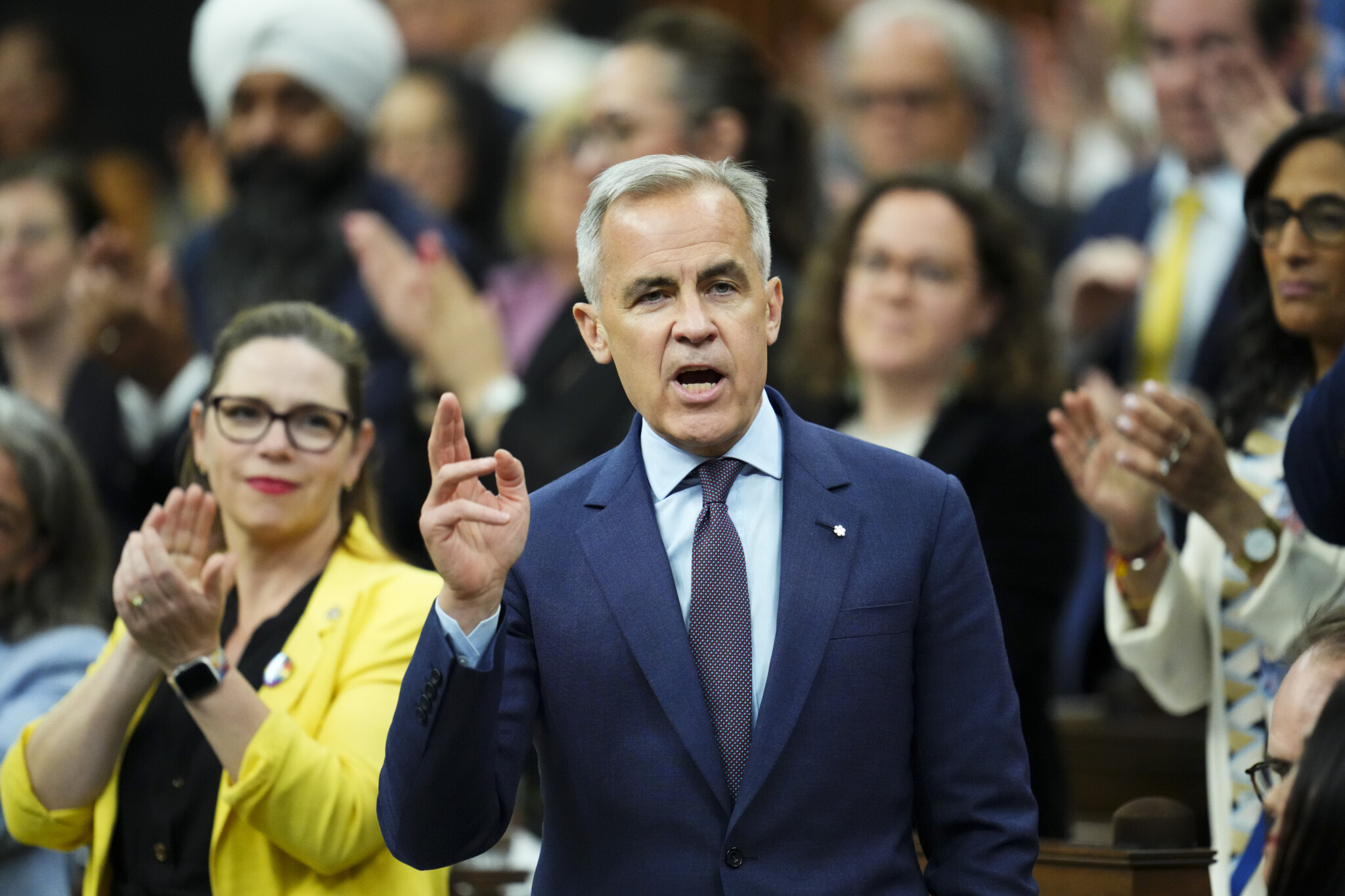
‘$92 billion on the deficit’: What Carney and Poilievre need to do when Parliament reopens
Kory Teneycke, conservative strategist, co-founder of Rubicon Strategy, and three-time campaign manager for Premier Doug Ford, joins Rudyard Griffiths to analyze the political dynamics as Parliament returns in mid-September. They examine Prime Minister Mark Carney’s early challenges, from trying to deliver on ambitious promises like internal free trade and major infrastructure projects, managing a potentially massive budget deficit, to holding together his progressive coalition. They also discuss Pierre Poilievre’s return to Parliament, his need to reset his approach, and how Canada’s political landscape has effectively become a two-party race, with the NDP’s collapse creating opportunities for both the Liberals and Conservatives.
You can listen to this episode on Amazon, Apple, and Spotify.
Program Transcript
This is an automated transcript. Please check against delivery.
RUDYARD GRIFFITHS: Welcome to Hub Hits. Rudyard Griffiths here, special guest in studio, Kory Teneycke, president co-founder of Rubicon Strategy, campaign manager Doug Ford in the last three elections. Kory, thanks for coming into HubHQ.
KORY TENEYCKE: My pleasure. It’s great to be here.
RUDYARD GRIFFITHS: I want to do two things with you today on the show. First, talk about federal politics. Parliament’s coming back mid September, and I want to focus on the two protagonists, the two major protagonists, Mark Carney and Pierre Poilievre. So let’s begin with Mark Carney. What are you going to be looking for in those early weeks when Parliament comes back to get a sense of, like, the tone and direction and I guess the leadership style of this relatively new prime minister?
KORY TENEYCKE: Well, I think he’s got a lot on his plate right now that we’ll see what it looks like when the House comes back. But I think they’ve raised expectations very high, both during the election campaign and in the months over the summer and leading into the summer. Things like internal free trade in Canada. Everyone’s talked about it for decades and there’s a reason why it hasn’t really, really happened before. It’s quite difficult. It’s quite a hard thing to do. And so legislation around that, what does it look like? Where are the trade offs? Not everyone is going to be happy. Everyone is happy at a high level when you say we’re going to do more trade within Canada, but then there are real consequences and trade offs and things that happen. And not every constituency out there in every part of the country is going to love what that looks like if it comes to pass. So, you know, that’s one small area. The much bigger area I think is around these major projects. And I think it’s easy to have a lot of support from premiers and across the country and from Canadians generally when it looks like you’re going to be able to do everything on everyone’s wish list. I doubt that will be true in the end. And so which projects are you proceeding with? Which aren’t, are you not? And what does the rest of the world think of that?
We’ve already seen some tension with First Nations around what is consultation, what is adequate consultation. That is where I think this is probably going to have its most problematic area in that legislation. What is the litigation risk around it? Is all this going to be trapped in the courts for years or stalled or encumbered with requirements they’ve imposed? I think that’s where it’s going to be a lot more challenging. So which projects do they choose? What does internal free trade look like? And then I guess the last big element would be where are we at with the United States on trade? And it kind of feels like pieces are moving on the board right now. But do they result in a deal? We’ve seen Canada make some concessions, some which I think you and I are probably pretty happy about, like the digital services tax, which myself and I think many conservatives and many people who aren’t conservative have thought, well that was a pretty ill-advised approach. But in giving that up, you know, has it advanced the trade negotiations? I guess no one really knows. We don’t have a deal. But like let’s I guess see what happens around that as well. That’s less about what happens in Parliament and more what happens with Dom LeBlanc and the Prime Minister and folks in Washington. But what we’ve seen in other countries is not encouraging.
RUDYARD GRIFFITHS: Yeah, let’s talk about the budget. There are, you know, numbers getting circulated out there that it could be a big deficit. I’ve heard numbers as high as 92 billion on the deficit. How does that play politically? Do voters care about this? Interest rates on longer duration Canadian debt have remained high over the course of this year. The five year all important five year Canadian mortgage bond is roughly where it is as it was in January despite ongoing cutting by the central bank at the front end of the bond curve. So Corey, these things matter. Large levels of debt and indebtedness lead to higher borrowing costs across society from consumers to corporations to governments. But does that matter? Does Mark Carney need to keep an eye on just how big this budget’s going to get?
KORY TENEYCKE: Well, I think he does have to worry about that. I think one of the other areas where you’ve seen the Conservatives score some points in the past and I think continue to have opportunities is around cost of housing and number of housing starts that we see. You know, housing starts have largely stalled out. We’re shooting this here in Toronto. We’ve got 25,000 empty condos that can’t be sold right now and we’ll probably have 10,000 more by the end of the year. That’s a challenge. You know, a they’re not very nice units in many cases and balance, they’re unaffordable for the type of family or person who would be well suited to live in that kind of space. So I think there’s more corrections to come. I think there’s potential for bankruptcies in that sector of the economy. But the political driver on that is there are a lot of Canadians who are younger who don’t think they will ever own a home of their own. And until we’re able to increase supply and bring costs down, that’s going to continue to be a political driver. And so there’s politics in that for sure.
RUDYARD GRIFFITHS: Yeah. Carney’s leadership style, what do you make of it? There was some sense around the Air Canada strike that maybe there were members of his caucus that weren’t all too excited about seeing Air Canada air attendants kind of forced back to work. He has this progressive wing in the party. How does he hold that? Especially if this budget is going to be a big flex economically, maybe a flex along some lines that are not entirely built around progressive principles like more pipelines or things that don’t really resonate with again a portion of the electorate that he was successful in holding to the Liberal Party during the campaign and was a big part of his very strong minority government.
KORY TENEYCKE: Yeah, I think it’s an important question. I think it’s a complicated answer as to what’s going on there. And it touches on Poilievre, which I guess we’ll get to in a minute.
RUDYARD GRIFFITHS: Yeah.

KORY TENEYCKE: The Carney government looks a lot more like a fourth term of Stephen Harper than a fourth term of Justin Trudeau. And so that has created, you would think, a lot of room on the left, but you’re seeing simultaneously the NDP essentially disappear. And so why has that happened? Well, I think there are a couple of things that have gone on. One, the Conservatives, you’ve seen this provincially with Ford and others, but you’ve seen it with Poilievre as well, a portion of the traditional NDP base that drive an F150 and have steel toe boots they wear to work and shower at the end of the day, not the beginning of the day. That kind of blue collar, skilled trades side of the party have long been cultural conservatives. And now you’re seeing them actually see some commonality politically with conservative parties who they feel are speaking more to the issues that they care about than NDP have. So they’ve lost a chunk of their support already to the Conservatives. So it’s sort of weird, you know, the collapse of the NDP is part of that is being a gain for Conservatives, but the other factor is political choices are a relative comparison. And if you look at some of the other voters that would typically vote for the NDP who are voting for Carney, who, let’s just be frank, he’s like a Bay street, you know, guy, a central banker, he wears, you know.
RUDYARD GRIFFITHS: Thousand dollar shoes to gay pride parades.
KORY TENEYCKE: Right, exactly. That sort of thing. Yet you wouldn’t, you wouldn’t think that that makes sense. But I think the support for the Liberals from those voters is a reaction to PollyV more than anything else. So I was listening to interest with a conversation you and Shawn Speier were having about, oh well, look at how well Poilievre has done at collapsing the PPC vote. Well, you can look at, I’ll use the Doug Ford example, not at all trying to collapse that vote, but that vote collapsed for him as well and virtually every other Conservative leader. So I’m not sure you need to do a lot about that. But the cost of spending too much time in the manosphere and things like that is it’s scared the crap out of a whole chunk of progressive voters that are motivating, motivated to vote for the Carney Liberals not because they love what’s on the policy agenda. They want to stop Conservatives for winning because they find whether it’s stylistic elements of Poilievre or whether it’s policy elements, I would say it’s far more stylistic given that I think the Venn overlap on Carney and Poilievre in the last election campaign from a policy perspective was mild right there, almost complete overlap. So the reaction to some of the stylistic things I think the Conservatives have done and some of the approach they’ve taken in Communic have driven progressive voters into the arms of a very unlikely candidate, Mark Carney.
RUDYARD GRIFFITHS: Yeah, perfect segue to talk about our other big protagonist as parliament comes back and that’s Pierre Poilievre. He’s back in the house. What’s your advice? Is it time for a big reset? You could look at some of these recent poll numbers, say coming out of abacus. That would suggest the Conservatives continue to have an edge on affordability, on housing, on some of their traditional perceived kind of policy competencies. Does he double down on that or does he try to build credibility on areas where he wasn’t scoring high in those polls? Which is Trump, which is trade, which are some of the other big concerns that Canadians have right now.
KORY TENEYCKE: Yes, you have to do more than one thing. We’ll come back to the NDP issue. You know, I’ve seen a lot of, you know, back padding around, getting 42% of the vote. Well, that’s a really great number in a three party race. It’s a really inadequate number in a two party race.
RUDYARD GRIFFITHS: Right.
KORY TENEYCKE: And I would posit that we’re probably for the foreseeable future in a two party race. And so you have to figure out what is your voter coalition going to look like? Who can you bring into your fold? I think the lowest hanging fruit is unlikely to be affordability voters. I think they’re with, I think they’re with Poilievre already and I think they’re likely to stay there. You can’t completely ignore those issues and those people. But the story of the election campaign is the loss of 55 plus voters, which is the core of every conservative voting coalition in my lifetime. Yeah. And to lose both men and women, but particularly men, that is shocking and that is around other things.
RUDYARD GRIFFITHS: What things, Cory? What do you think those voters saw in Mark Carney that they felt were absent in Pierre Poly? I mean, does he has a. Can he credibly become a substitute again for those voters?
KORY TENEYCKE: Well, I think they’re different for men than women. You know, obviously I’m generalizing here, but I think for a lot of male voters it was resume. And let’s just say the obvious. These resumes are not at all similar. You know, you’ve got somebody who’s had some jobs in politics and has really never had any private sector experience of any sort versus somebody who’s, you know, had some of the largest jobs in the economy that you can have. And so when you’re looking at for those voters, it’s like, well, you know, I like some of the things you’re saying, but I just don’t view you as a credible alternative as a candidate. So what do you do about that? He’s not going to go, and Pauliev isn’t going to go and get a job at Goldman Sachs and beef up his resume. But what you can do is broaden out your team. And so I, I like to use, I’ll mix match superhero storylines here. But, you know, they pursued very much a Superman storyline, right, where it’s, it’s Pierre for Prime Minister and it’s all Pierre all the time, all channels, all media. That’s one approach. I think when you’re up against Trudeau, that can be a really winning approach. But when you’re up against Carney, if you’re Poilievre, I don’t think that’s a winning approach. I think you need to make an Avengers movie. You need to have a team of superheroes. And look at the Avengers, they’re led by Captain America, a guy who has basically no superpowers. Took some steroids, I guess. Cool shield, cool shield. But you’re going to do a lot better if you got Thor and the Incredible Hulk and Iron man, the whole team. And there are some really talented people within that Conservative caucus and within the Conservative movement more generally. So whether you’re talking about premiers, other allies, broaden out your appeal and your team. And I think that’s one of the paths to try to buttress against that Carney effect around resume for women. I think it’s a different thing. And this relates more to Trump. I think stylistically, Poilievre can appear too Trumpian for those voters. I think he’s kind of off putting. I think he spends a little bit too much time in the manosphere and talking to Jordan Peterson, who, you know, is somebody who has a lot of appeal for certain conservative voters.
RUDYARD GRIFFITHS: But he’s already got those voters.
KORY TENEYCKE: He’s already got those voters. But he, you know, the sort of Peterson sort of environment is pretty radioactive to a lot of women. Right. And the, you know, the rhyming and the name calling and things like that, you know that I think it’s off putting to voters generally outside of your partisan core, you know, because it’s hard to. To say those things and do those things without coming across as a bit of a jerk.
RUDYARD GRIFFITHS: Yeah.
KORY TENEYCKE: And this gets to likability, which is, if you’re looking at best prime minister or favorability rate, his negatives are high. The Liberals are roughly 10 points up right now on ballot, but they’re 20 to 30 points up on best prime minister and likability. So these things kind of come together, I think, and what I would say would be a good strategy for them. One, broaden out your team. Some of those people on the team can do some of the spade work that you need to do to bring down your opponent’s favorability. But what’s wrong with having a Melissa Lanceman or someone like that out throwing the haymakers and throwing the spears at your opponent and save the slightly more statesmanlike appeal for the leader himself? I think that’s an obvious thing to do to improve your favorability. And I think it creates a little bit of brand differential from Trump, who is really the dominant figure in the news most days in Canada. If you’re looking at sounding a lot like Trump with the name calling and the sort of snide remarks to reporters, you’re putting yourself in that negative environment. And I think it creates headwinds for you that are unnecessary. So I think it’s a combination of those two things, softening his appeal and broadening it out of the team presentation.
RUDYARD GRIFFITHS: Final question. What’s your advice for what Pierre Poilievre should do with regards to the budget? Some would say that, look, he’s the leader of the official opposition. He should oppose. That should be their stance. In fact, some would say that’s their responsibility. Maybe politically it creates some advantages because the NDP get wedged into supporting a budget because the last thing they’re ready to do is go to an election and they now own a lot of the Bobby Banker kind of policy preferences that maybe Mark Carney will express in the budget. The other option could be, again, more of a statesmanlike approach and say there are some good ideas in this budget. There are ideas in this budget that are conservative ideas and therefore we will support it. It’s going to be a consequential decision. Where do you come down?
KORY TENEYCKE: I guess we’d have to see what’s in the budget to decide where you draw that line. If wrapped up in the budget are major infrastructure projects that are broadly popular with the conservative voting base, then that’s going to probably lead you more towards support if it’s a bunch of spending and a vague notion of what projects are going to proceed or what the upside of that is, then I think there’s a much better case to argue that the additional spending isn’t delivering the results that people need and it comes with other negative consequences, crowding other money out of the system, et cetera. So in that case, you’re probably not going to support it. I think generally opposition leaders of the opposition are going to default to vote against the budget, and I’d be pretty surprised if the conservatives don’t. But that doesn’t mean that everything they say about it needs to be negative. So I guess we’ll see around that. At the end of the day, the voters out there that are going to vote on the size of the deficit, the conservatives already have, I would say, by and large. And so you got to figure out how you’re going to change the conversation around that a little bit. I think the biggest opportunity that I see for the conservatives is around execution on some of these major projects when we’re talking about Trump and trade and all of that. I think there’s a notion that Trump is unpredictable, it’s unlikely anyone’s going to get a deal that lasts, et cetera, and so that kind of becomes awash. But on the major projects, I think the conservatives maintain a higher level of credibility that they can get those things done. And Carney has largely taken the Poilievre plan and is trying to execute on it. Well, there could be a case to be made that the person who came up with that plan would execute on that plan better than the person who borrowed it at the 11th hour. And I think that’s a much more fertile piece of ground to plant your garden in if you’re the conservatives right now.
RUDYARD GRIFFITHS: Okay, Smart analysis. Great insights as always. Kory Teneycke, Rubicon Strategies thanks for coming on, Hub Hits.
KORY TENEYCKE: My pleasure.